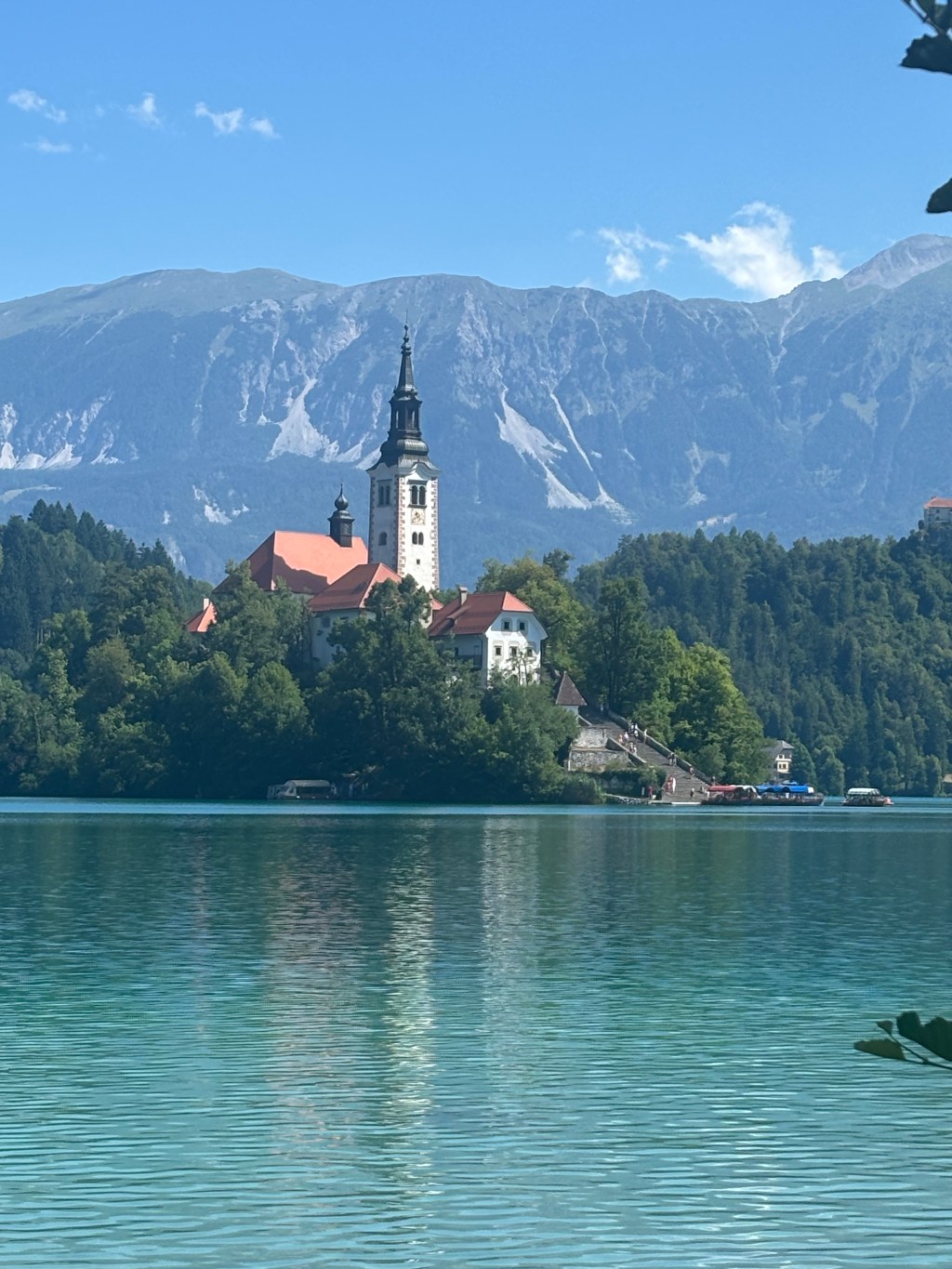
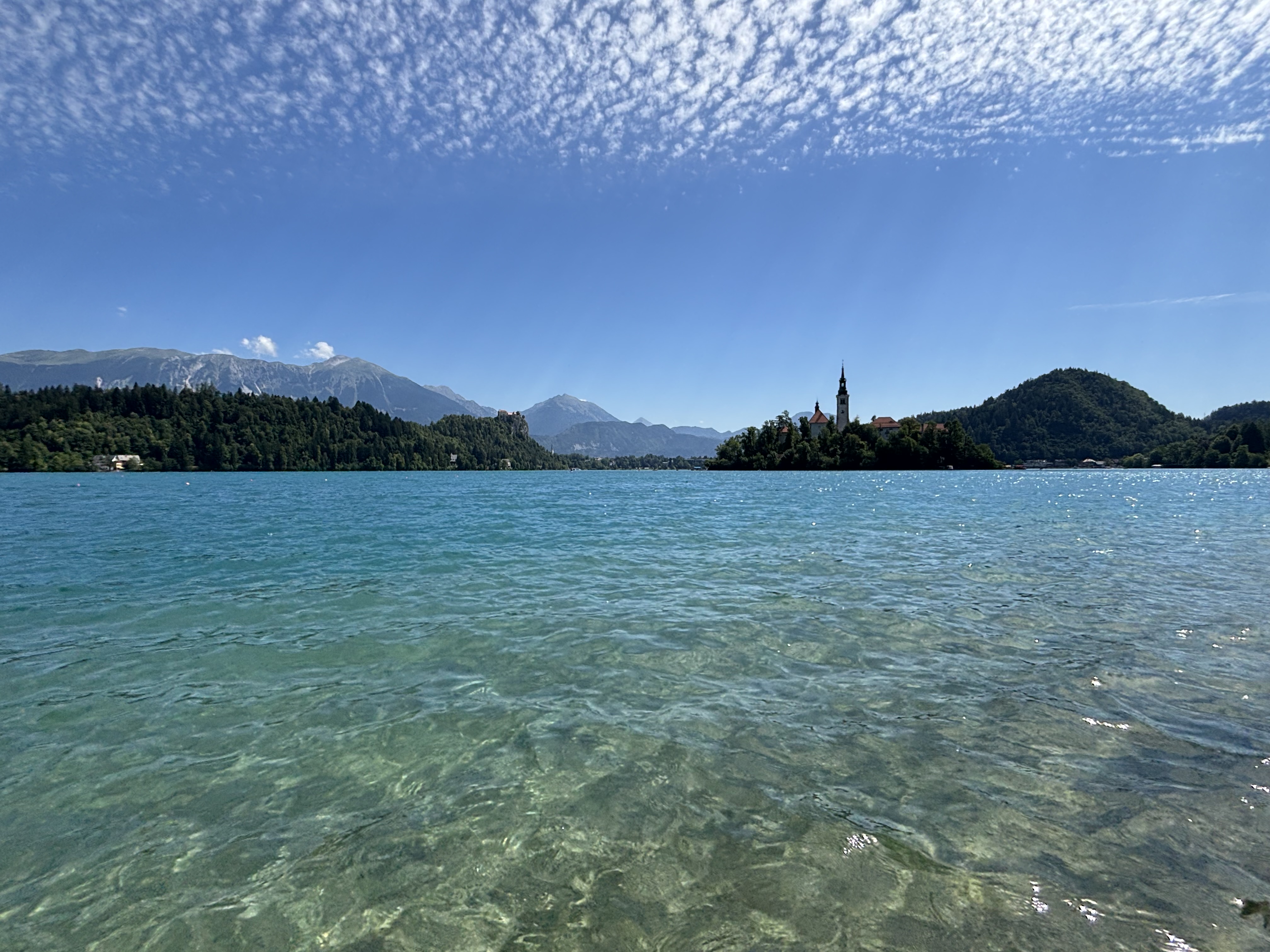
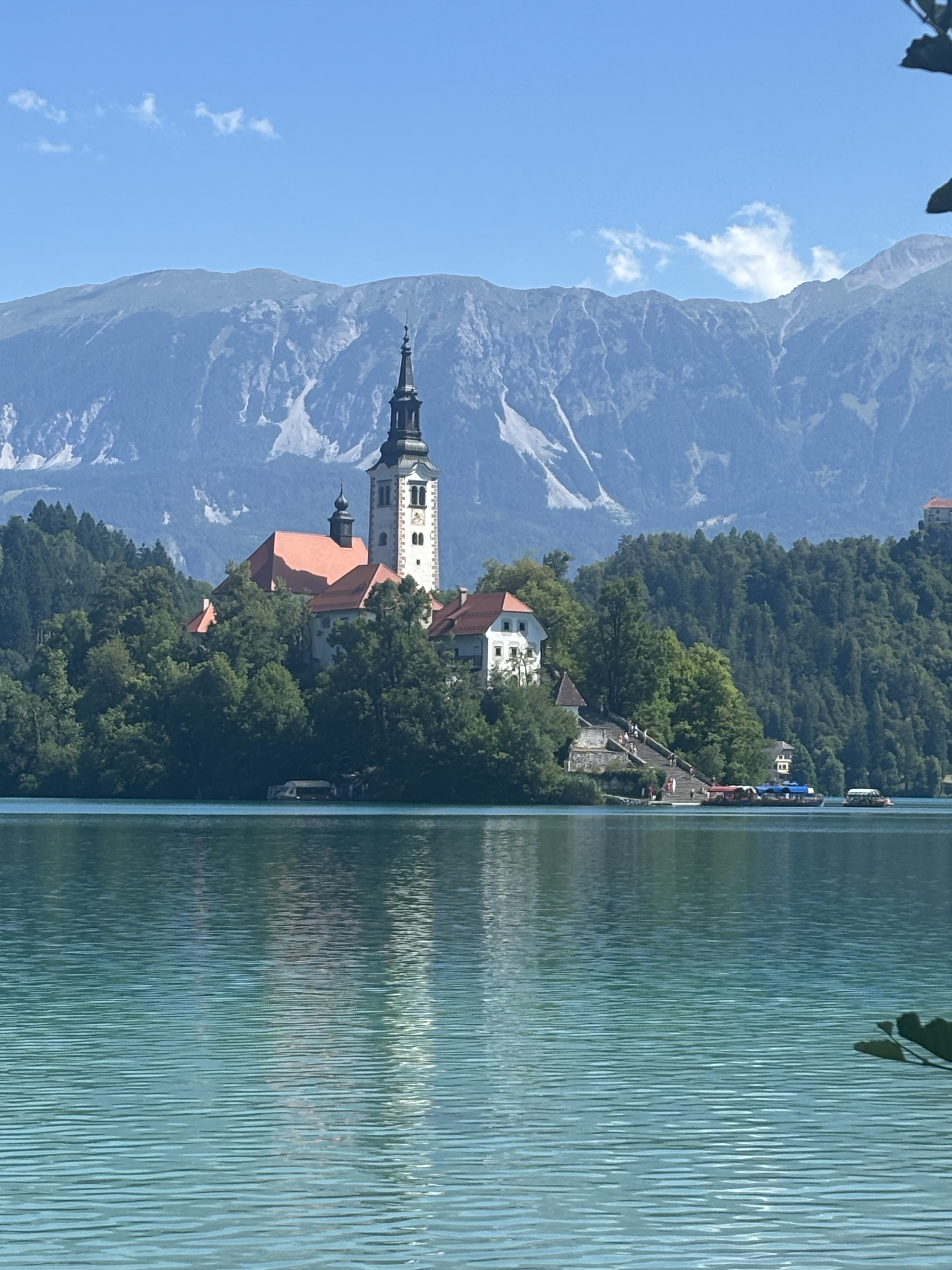
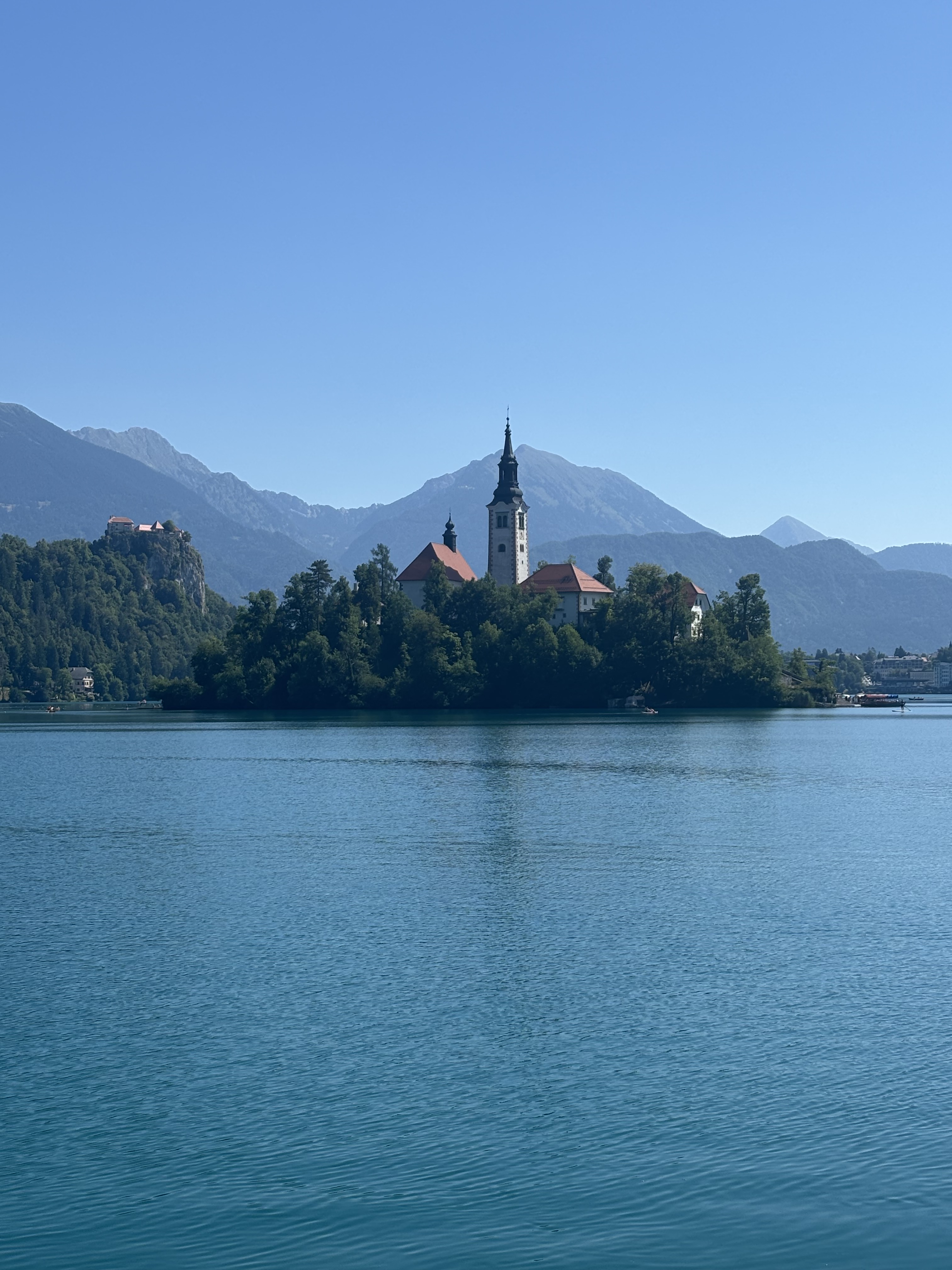
Lake Bled is easily the most iconic location in all of Slovenia. It’s the first image you are likely to run across when researching Slovenia and the one place most locals will ask if you’ve been to yet. But somehow it was one of the last major tourist attractions we checked out during our Ljubljana stay and someplace we are unlikely to visit again. It’s not that Lake Bled isn’t beautiful. Quite to the contrary, it’s lovely. But, if we’re being totally honest, it’s not jaw-droppingly gorgeous like Plitvice Lakes in Croatia, which we’d just seen a week earlier.
More importantly, Lake Bled is crowded. This is a big issue for us, as we just don’t do well around people. Traffic grinds to a halt as you approach the town, the boardwalks and picnic areas are packed with families enjoying their day at the “beach,” and it’s frustrating to have to plan your day around restaurant reservations or risk waiting around for an hour in a queue to avoid carnival kiosk street food. In fairness, though, the whole reason you go to Lake Bled is for the natural beauty, and it’s difficult to enjoy nature when you are surrounded by loud, sweaty humans. (It was seriously hot — around 95 degrees Fahrenheit — the day we happened to be there, so that may have influenced our overall mood and led to us perhaps not giving the lake the time it deserved to win us over.)
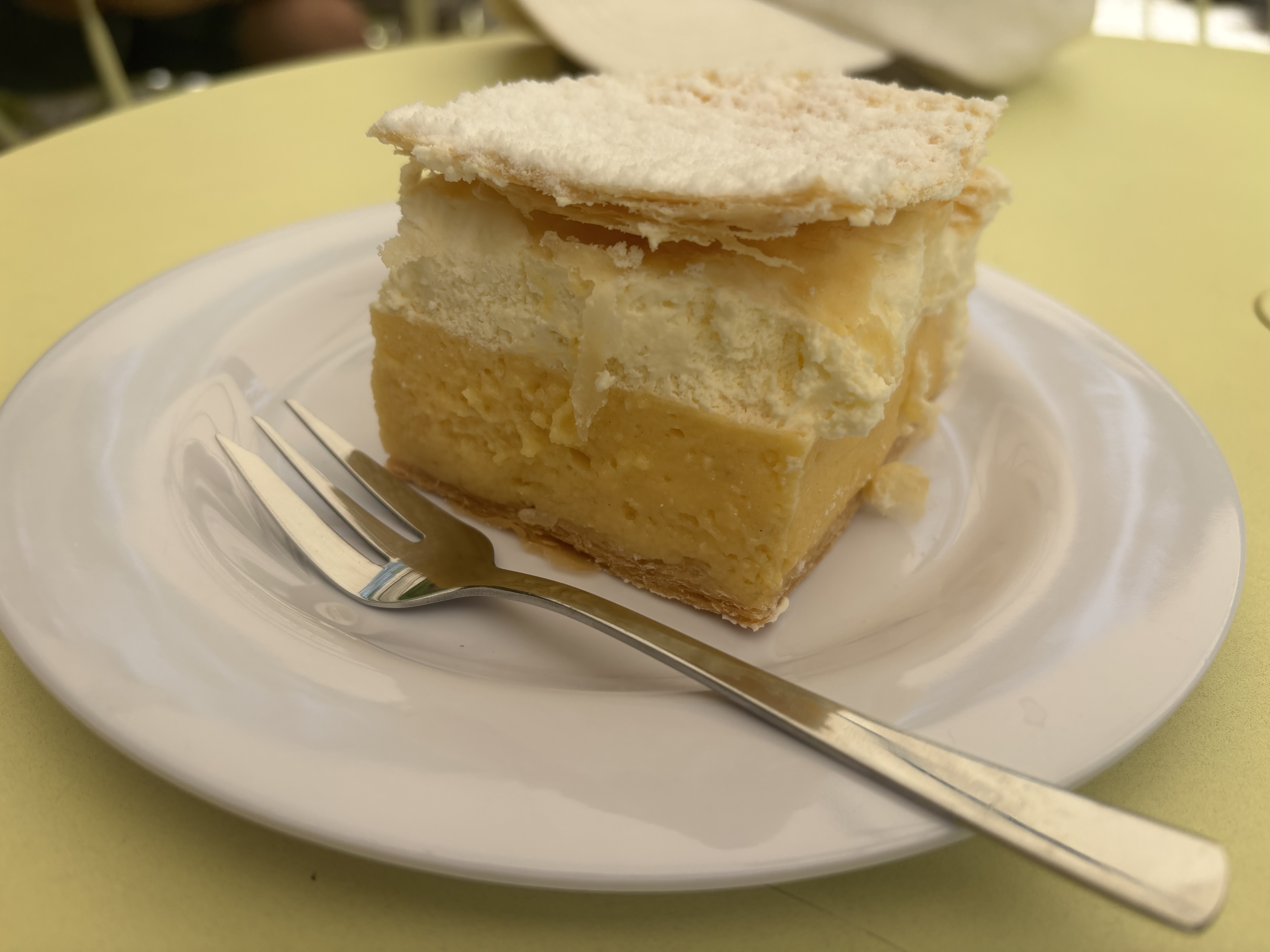
We spent the morning walking along the (mostly) paved trail along the (slightly) less crowded western end of the lake, enjoyed a nice cream-filled pastry at a lakeside café and returned for drinks and dinner in the town later the same evening. We opted not to take one of the traditional “pletna” boats to the island in the middle of the lake because the partial canvas awnings would not have done much to shield us from sun exposure. Likewise, we did not climb the hill adjacent to the lake to tour the castle on top because of the well-known mathematical equation: sun + stairs = misery. In fact, Darla did not even make it all the way around the western half of the lake before calling it a morning and retreating to the shade. So we admittedly did not partake in the full Lake Bled experience. But, if we’re being totally honest, we have zero regrets. We’re glad we saw what we saw, have a few pictures to prove we were there and likely will visit the less touristy Lake Bohinj instead the next time we’re in the area.


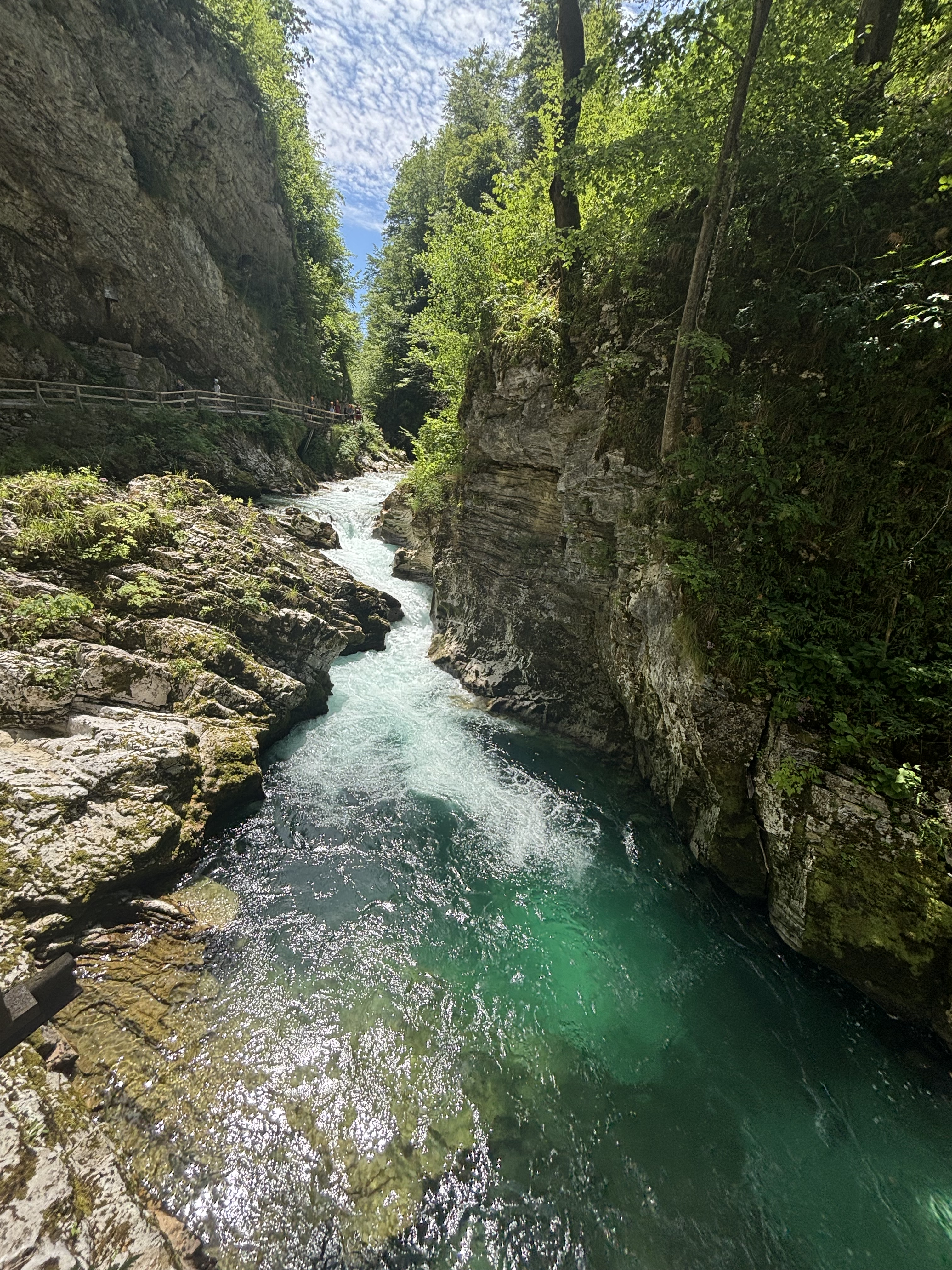
We spent the afternoon a few miles north of Bled hiking Vintgar Gorge. The parking situation was a little confusing, as there are multiple parking areas that appear to be quite far from each other, but we managed to find a spot in the lot closest to the park entrance. The park uses a timed entry system, and the gatekeeper will not allow you through the turnstiles even a second early. You are handed a helmet upon entry and sent on your way toward a trail alongside the Radovna River and an impressive array of waterfalls that meander through a canyon with sheer cliff walls on either side. The hike through the gorge itself is beautiful and relatively leisurely (aside from the occasional need to climb a few steps or duck below rock outcroppings), as it involves a walk of approximately one mile on mostly level ground. We were particularly relieved to discover that the temperature inside the canyon was at least 20 degrees cooler than anyplace else we visited that day. See pictures of happy hikers below. So far, so good.
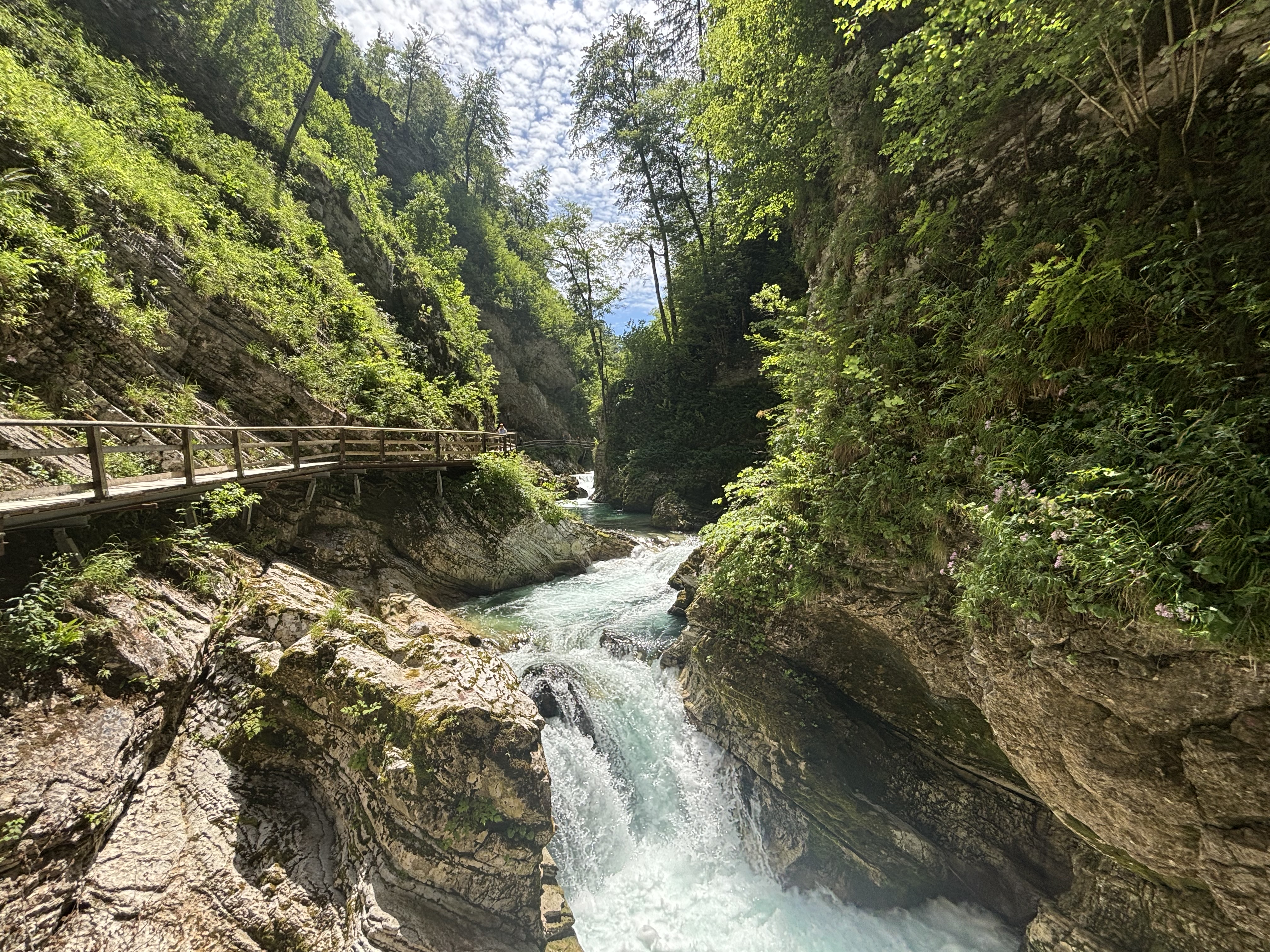
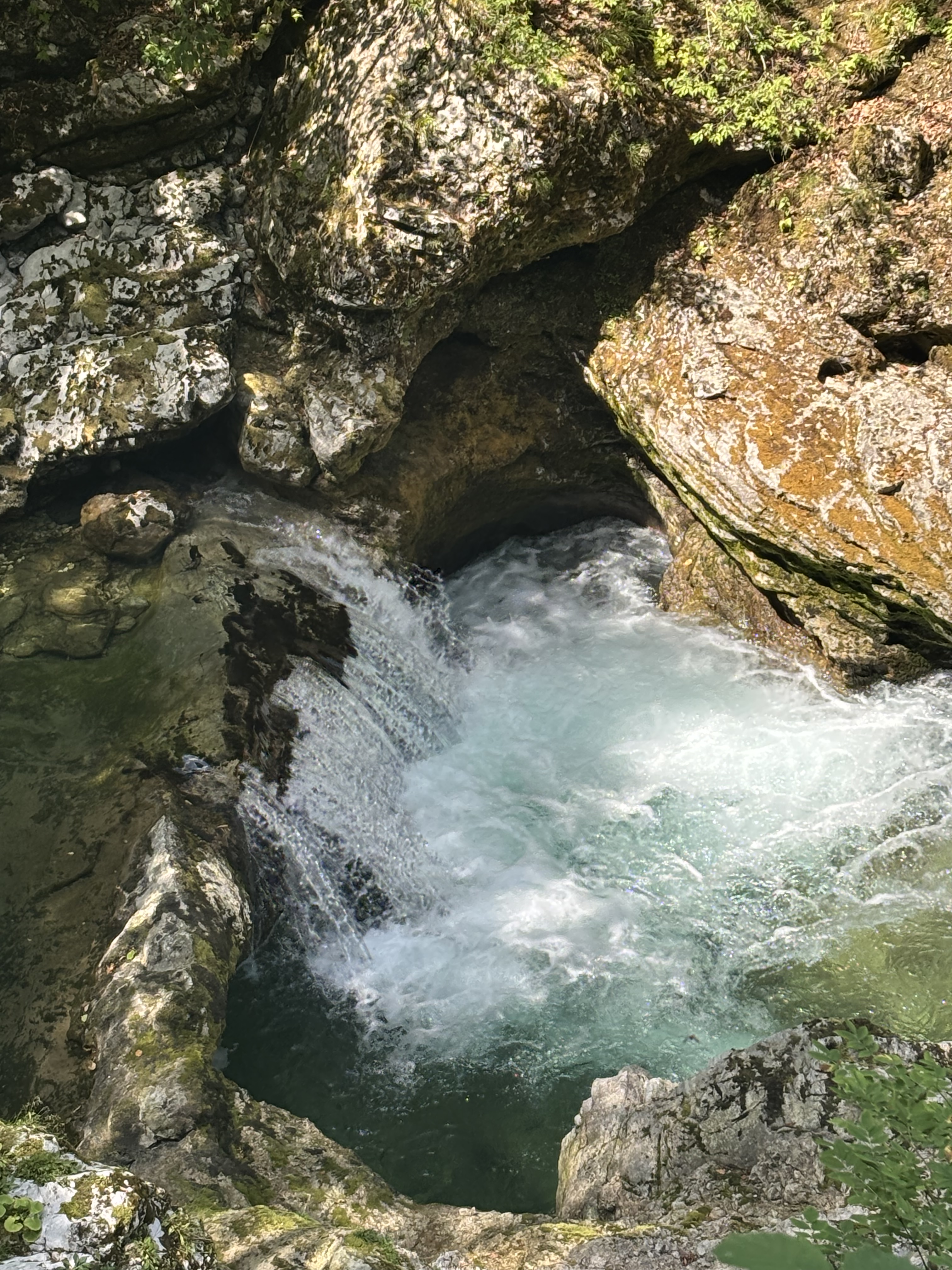
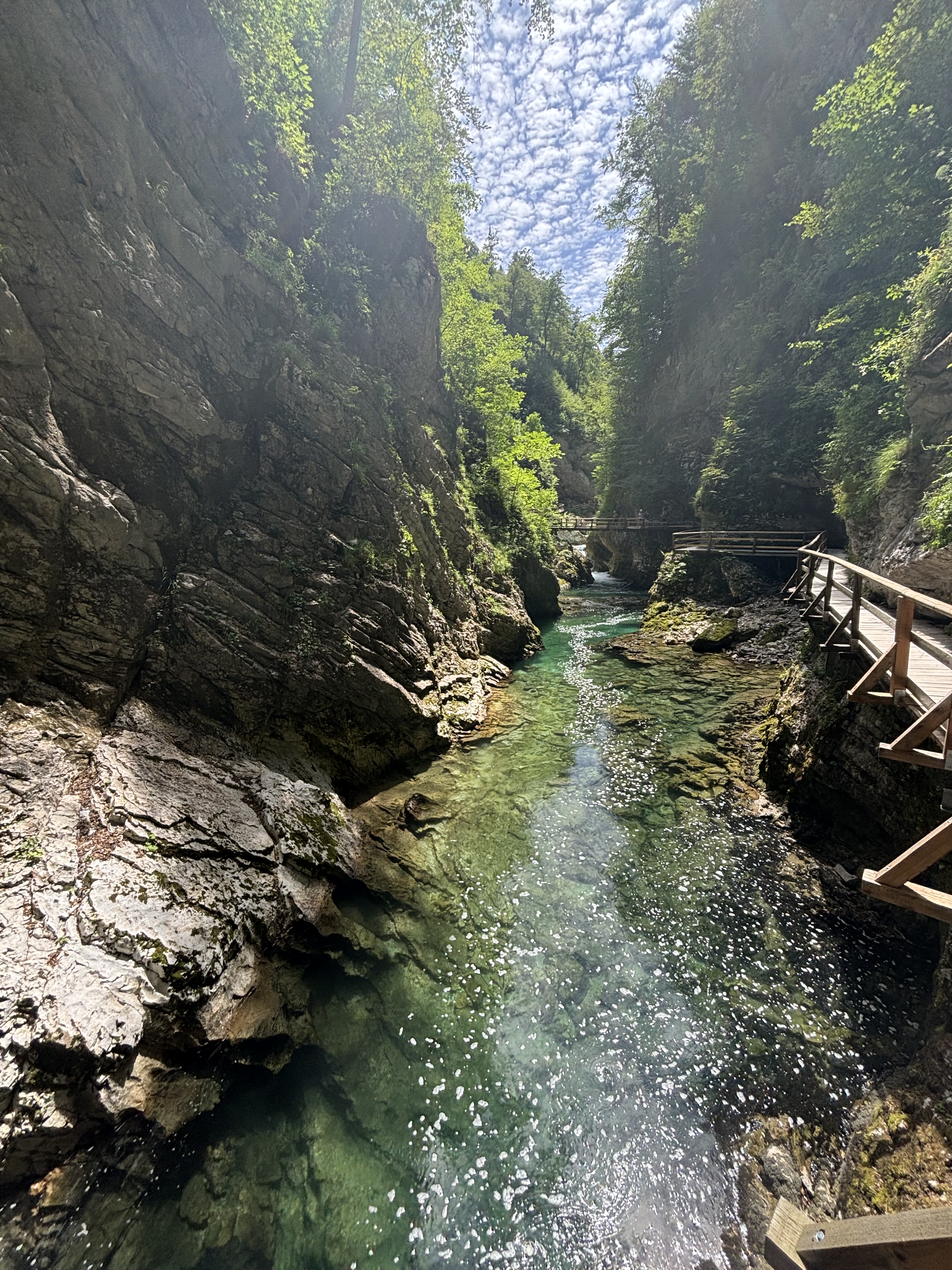

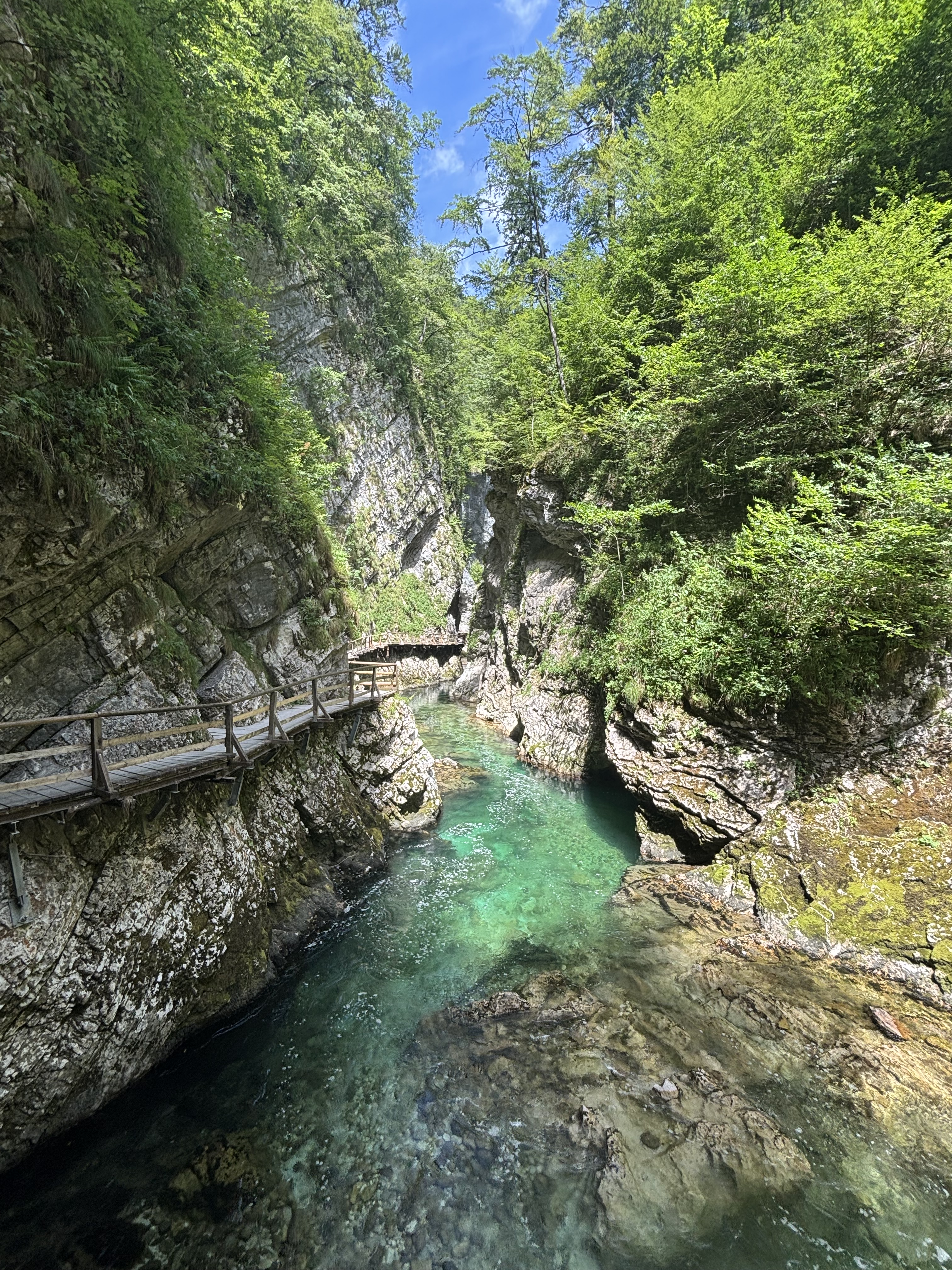
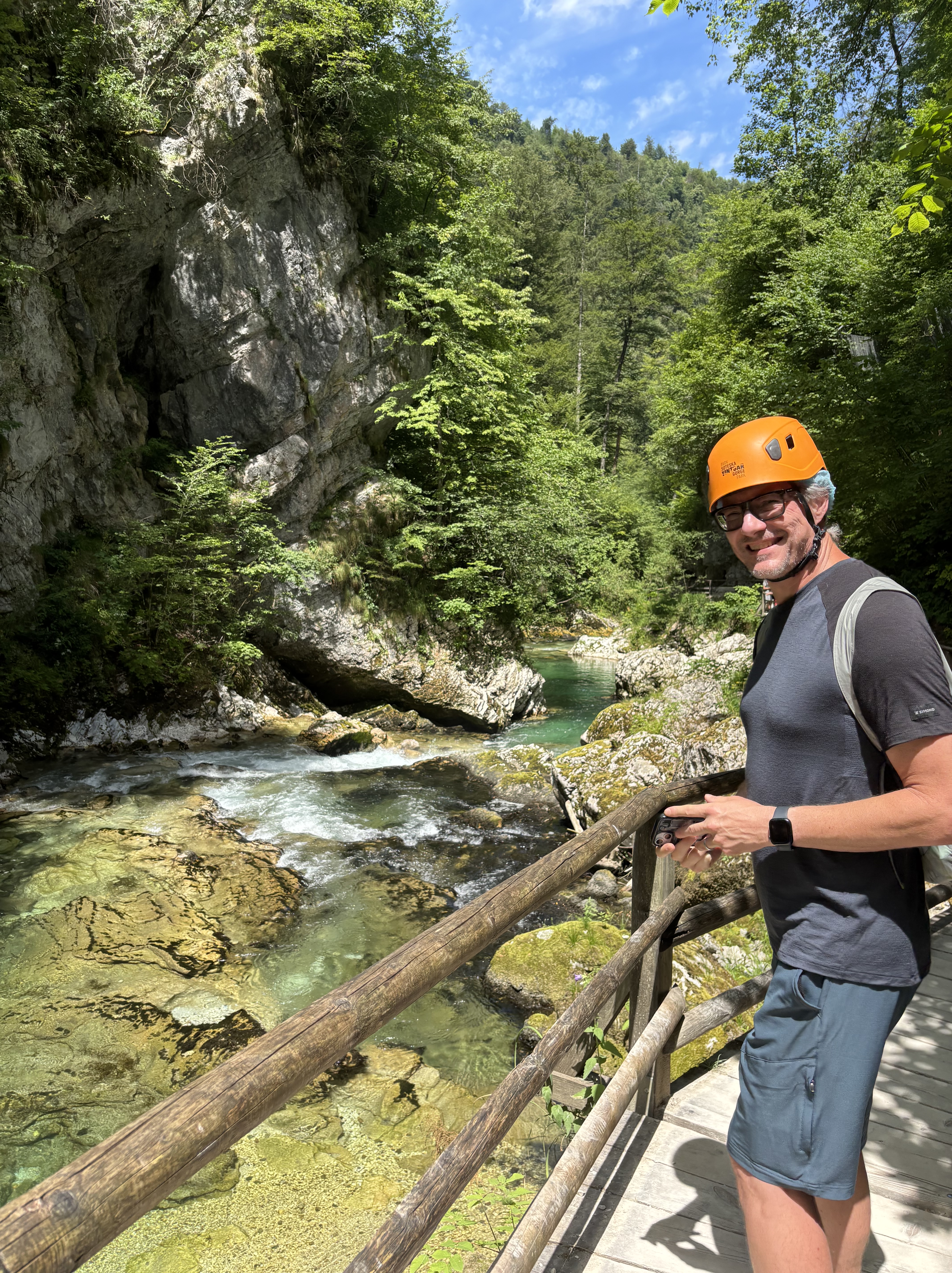
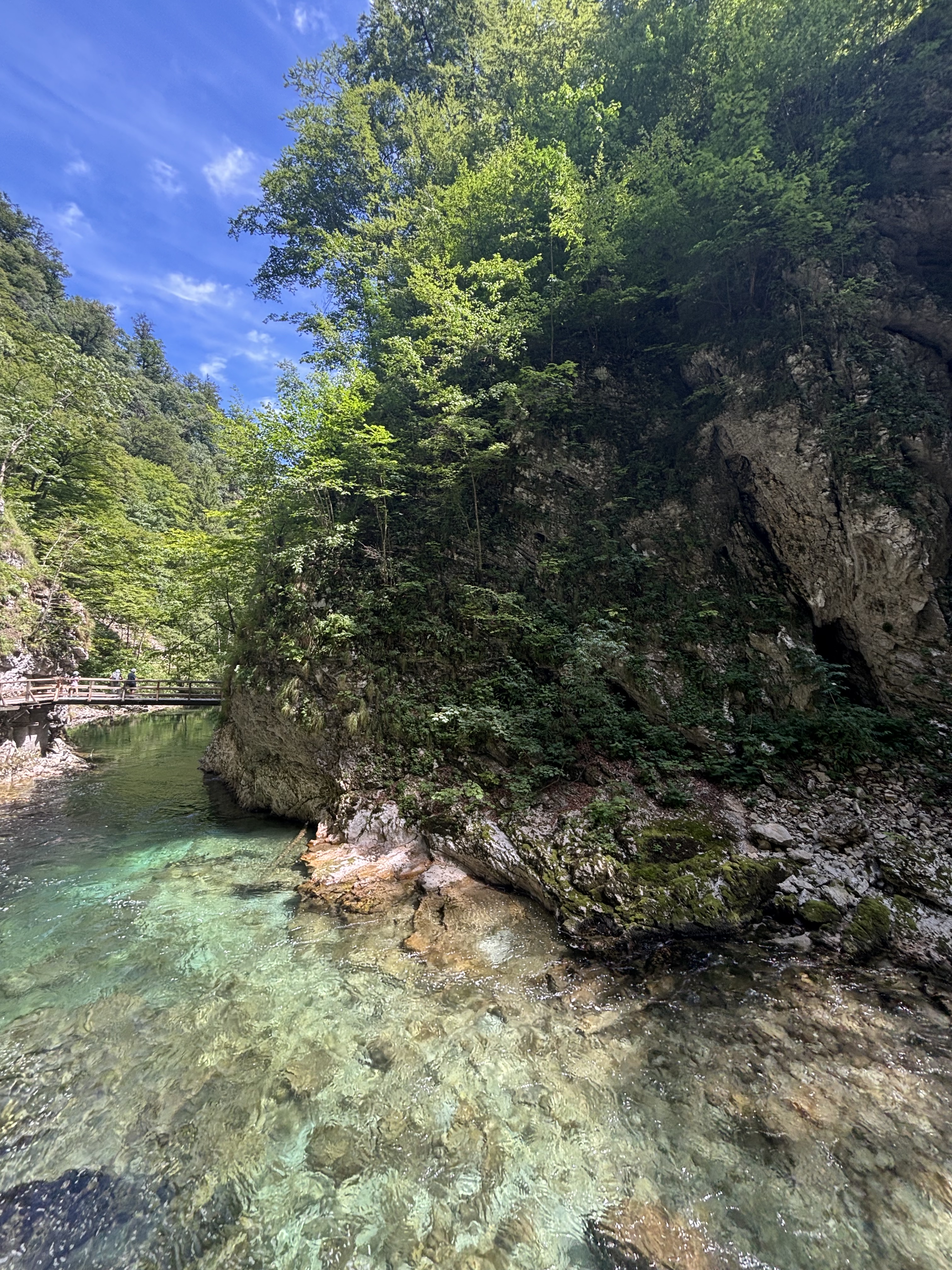
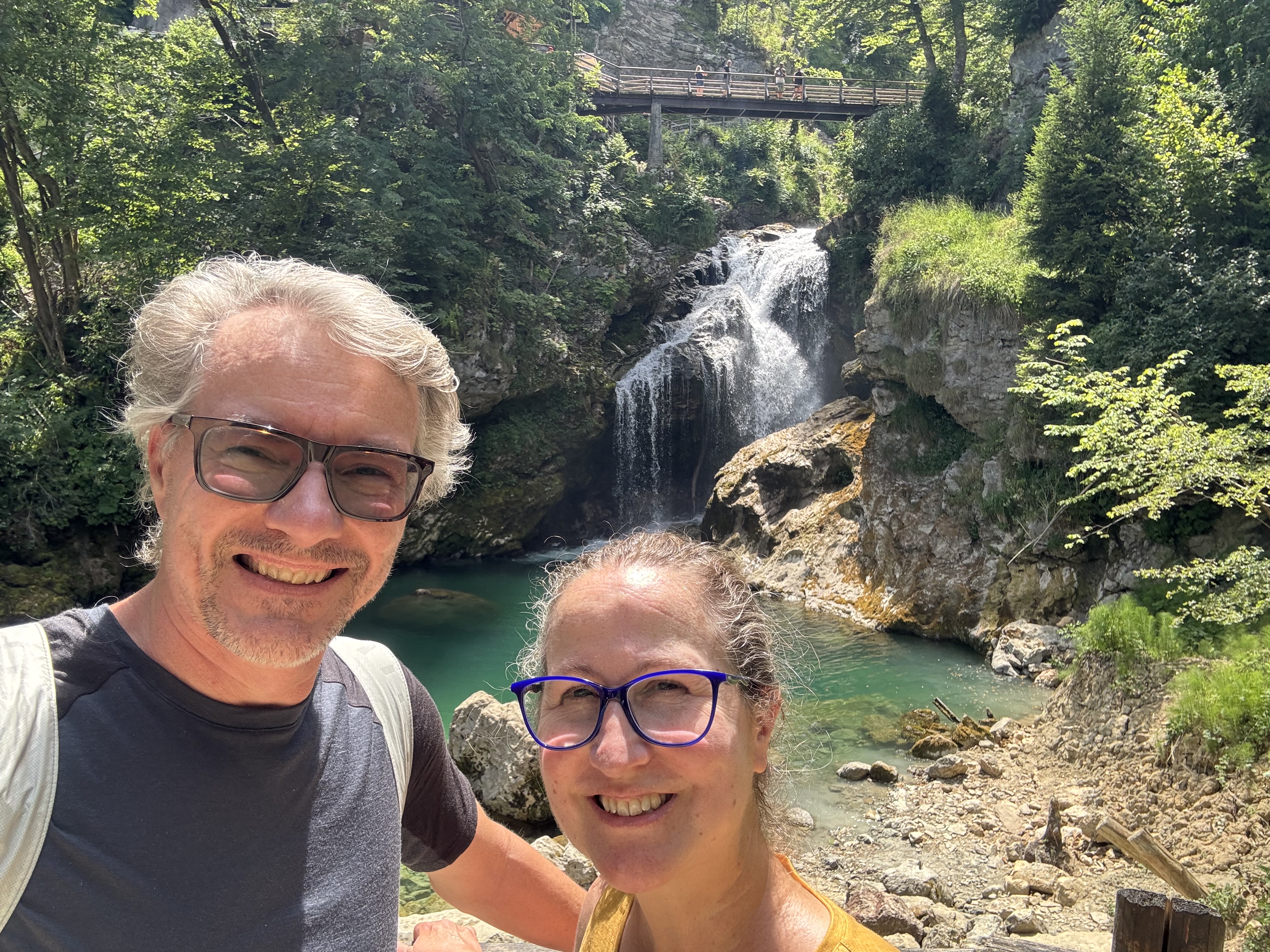
Unfortunately, things went sideways rapidly after we reached the end of the pathway and deposited our protective orange headgear in the bin. As far as we can tell, there is simply no good way to get back to the parking lot, and we clearly were no longer a primary concern of the park system or its staff. We consider ourselves to be in decent physical shape and really don’t know how the average visitor survives the trek back to their vehicle. We’d recommend booking a taxi to pick you up (but good luck given the remoteness of the location and the conspicuous lack of cell service) or at least investing in a couple of donkeys and a sherpa. After double- and triple-checking the maps posted outside the cafe, we ultimately chose what was described to us as the “easier” and more shaded “forest” trail. You know, something suitable for older visitors on a hot day.
Stuart found it to be a lovely albeit challenging 3-mile hike that was only complicated by the 90+ degree weather when the sunlight occasionally poked through the tree canopy. Channeling her inner Colleen Rafferty, Darla would tell you that her experience was a little different. Admittedly, at least half of the return journey is uphill (Stuart’s smart watch recorded 104 flights of stairs climbed that day) because you have to make your way around and back over the cliff that forms the west wall of the canyon to get back to the parking lot upstream. Darla was pretty convinced this was how her life was going to end. Hot, tired, sore and a little delirious, our notorious germaphobe found herself desperately lying down on any flat surface she could find and was convinced we had somehow taken a wrong turn and hiked to the Amazon rainforest by mistake. After much cursing and a few dozen more water stops, we eventually did find our way back to the car. Alas, all pictures of Darla on the return hike have been permanently destroyed by the official blog content monitor.
After our dinner in Bled (yes, we somehow were still on Day 1 of this side trip), we spent the night at a lovely new hotel in the Julian Alps, creatively named the Hotel Julian Alps. You’d think someplace high in the Alps would be a great escape during a heat wave, but you’d be wrong. Air conditioning historically has not been necessary in the Alps, but that’s no longer the case. (Thank you, climate change.) We really enjoyed the views of the countryside from our room in the morning and appreciated the supposedly curative powers of fresh mountain air, but sleep was hard to come by that night – even as tired as we both were – given the swelter effect. It’s pretty rare that we are both awake, showered, dressed and eager to jump in the car before 7 a.m.


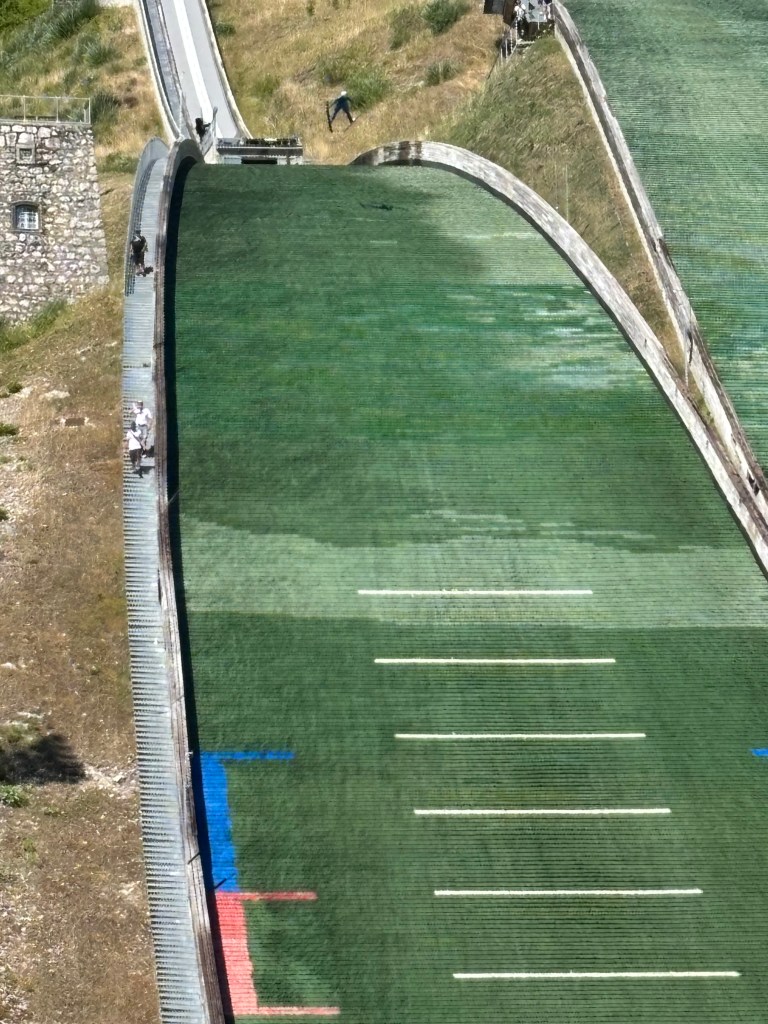
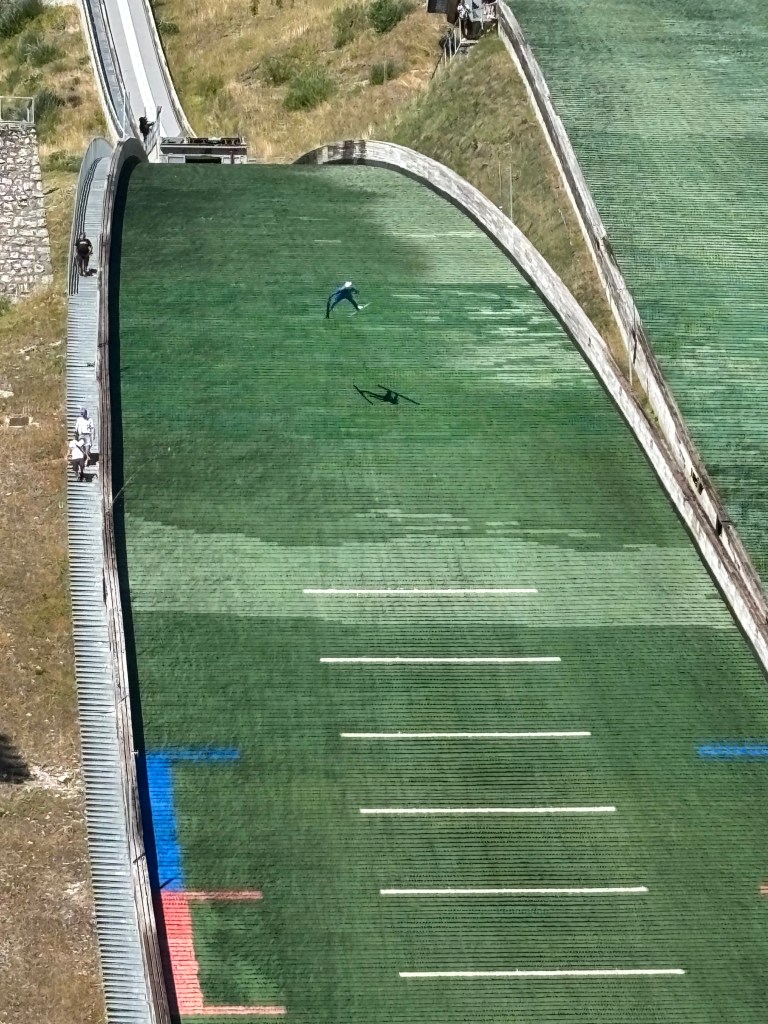
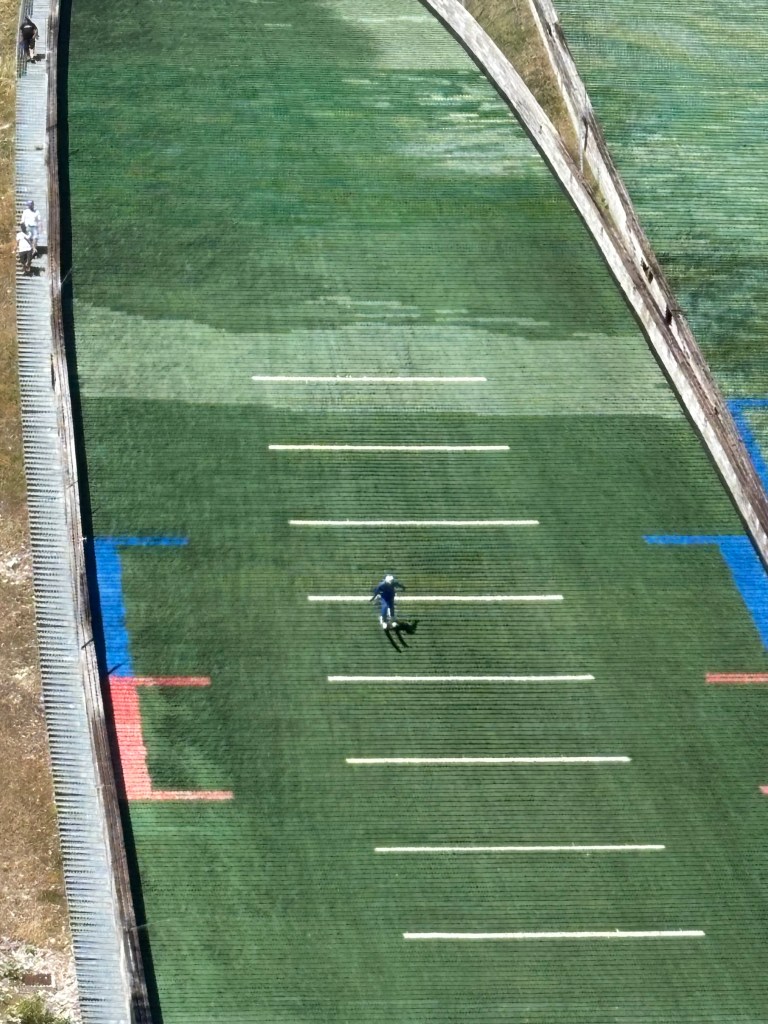
We took our time on the return trip to Ljubljana, beginning with a quick but rewarding detour by the Planica Nordic Centre on our way to the Vrsic Pass. As you might guess from the name, Planica is a winter sports mecca, including the world’s largest ski jumping complex (home to more than 200 ski jumping world records), an indoor cross-country ski center and the world’s steepest zipline. We didn’t expect to see much going on outdoors at this sort of venue since it was early July, but we were pleasantly surprised to discover that the slopes are covered in artificial turf, which allows the athletes to practice their technique year-round. It was a pretty cool sight.
The Vrsic Pass is a legendary sequence of 100 switchback turns through a steep, up-and-down series of linked valleys in one of the prettiest sections of the Alps on a road that was paved with concrete and cobblestones by Russian prisoners during World War I. There are a handful of war memorials along the route, and the area also is noteworthy as the location where Ernest Hemingway worked as a paramedic during WWI and which ultimately served as the inspiration for A Farewell to Arms. Likewise, a small Russian chapel honors many of the men who died building the road. But the real attraction is the view. This is one of the best places to see Mount Triglav, the tallest mountain in Slovenia and a prominent feature on the national flag. There are countless scenic vistas on either side of you and steep drop-offs below – if you are brave enough to look. Unfortunately, the road is uncomfortably narrow and shared with two-way automobile traffic, tour buses and a shocking number of spandex-clad bicyclists with an obvious death wish. It’s not for the faint of heart.
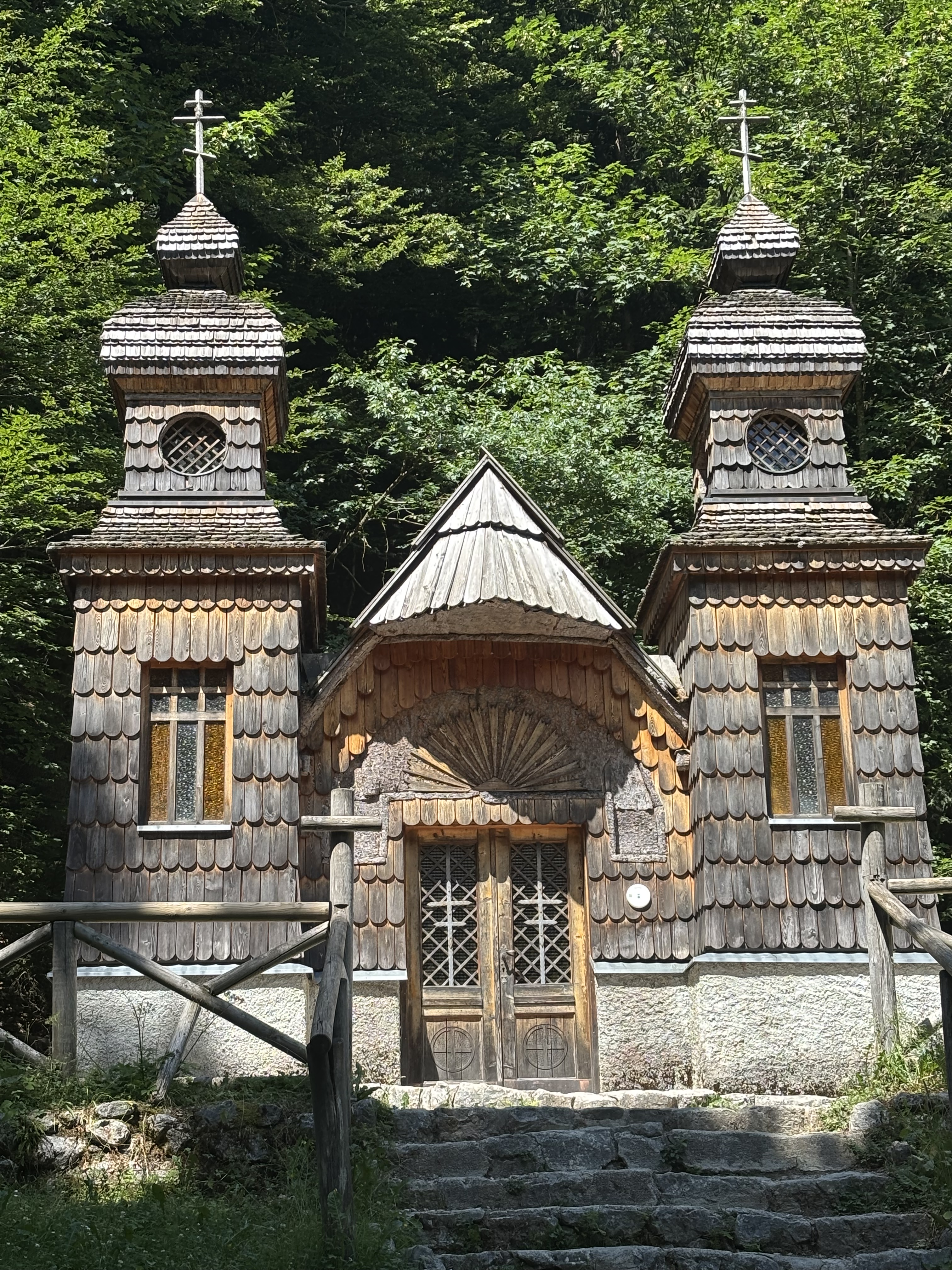

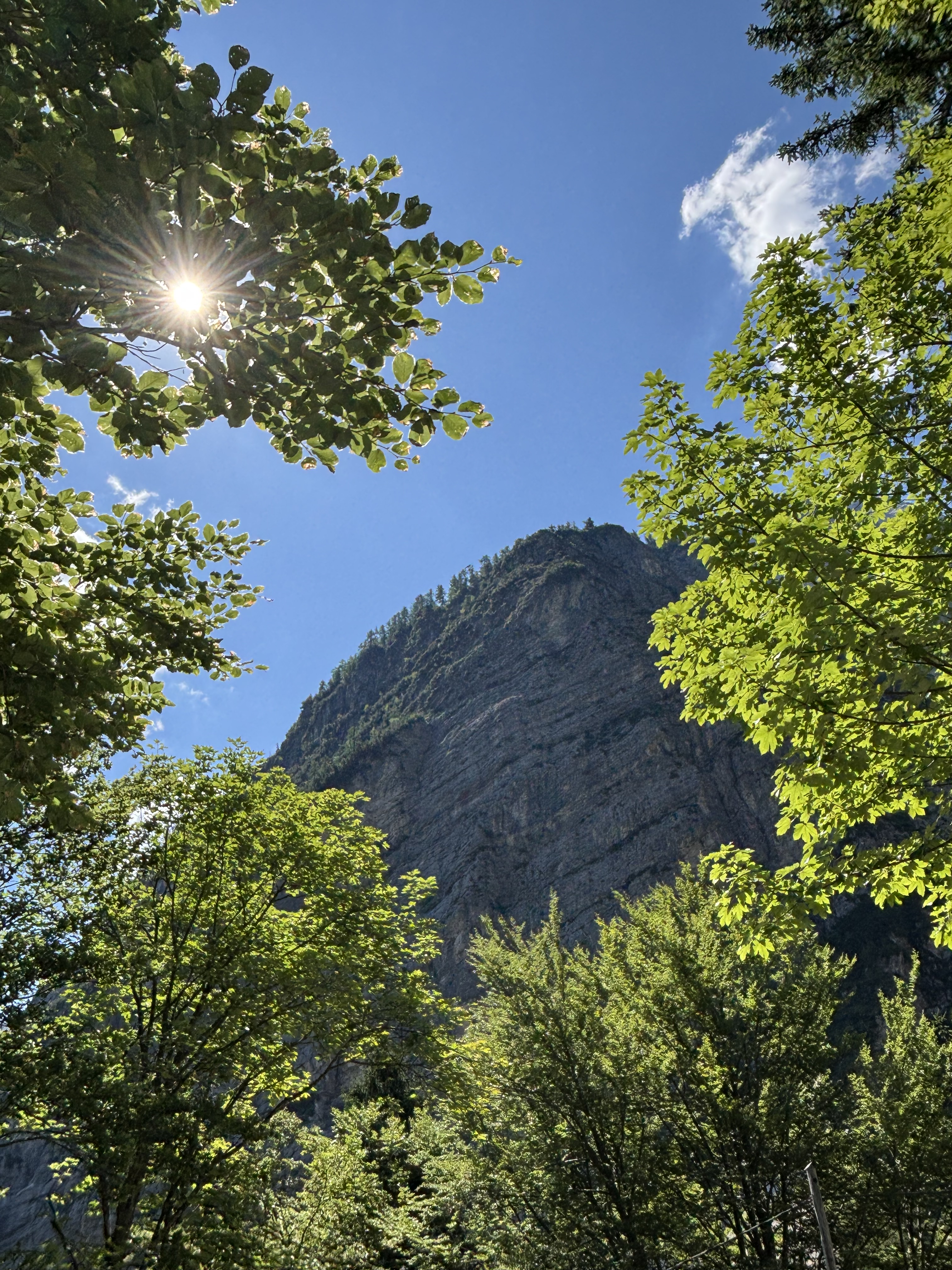
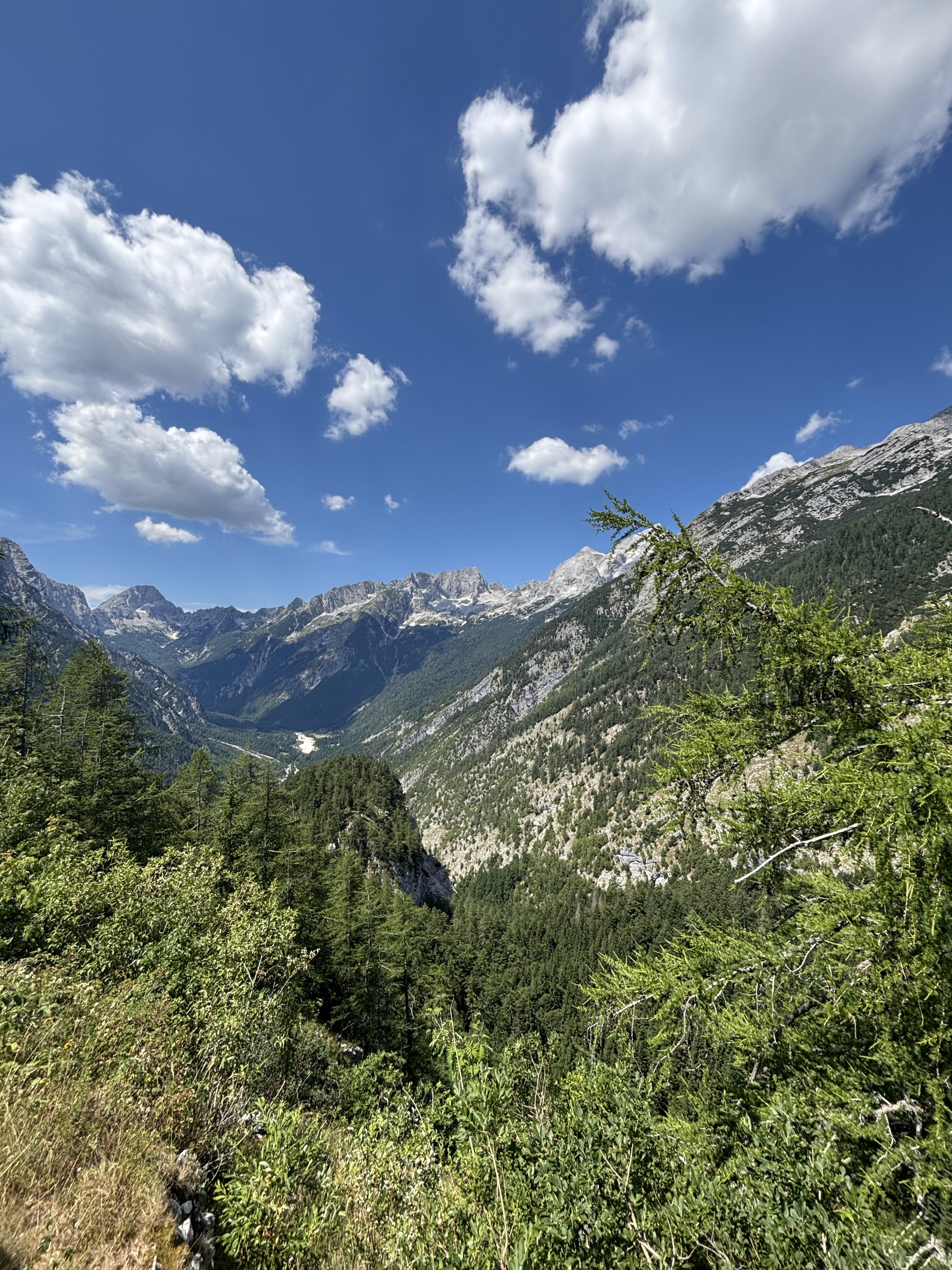
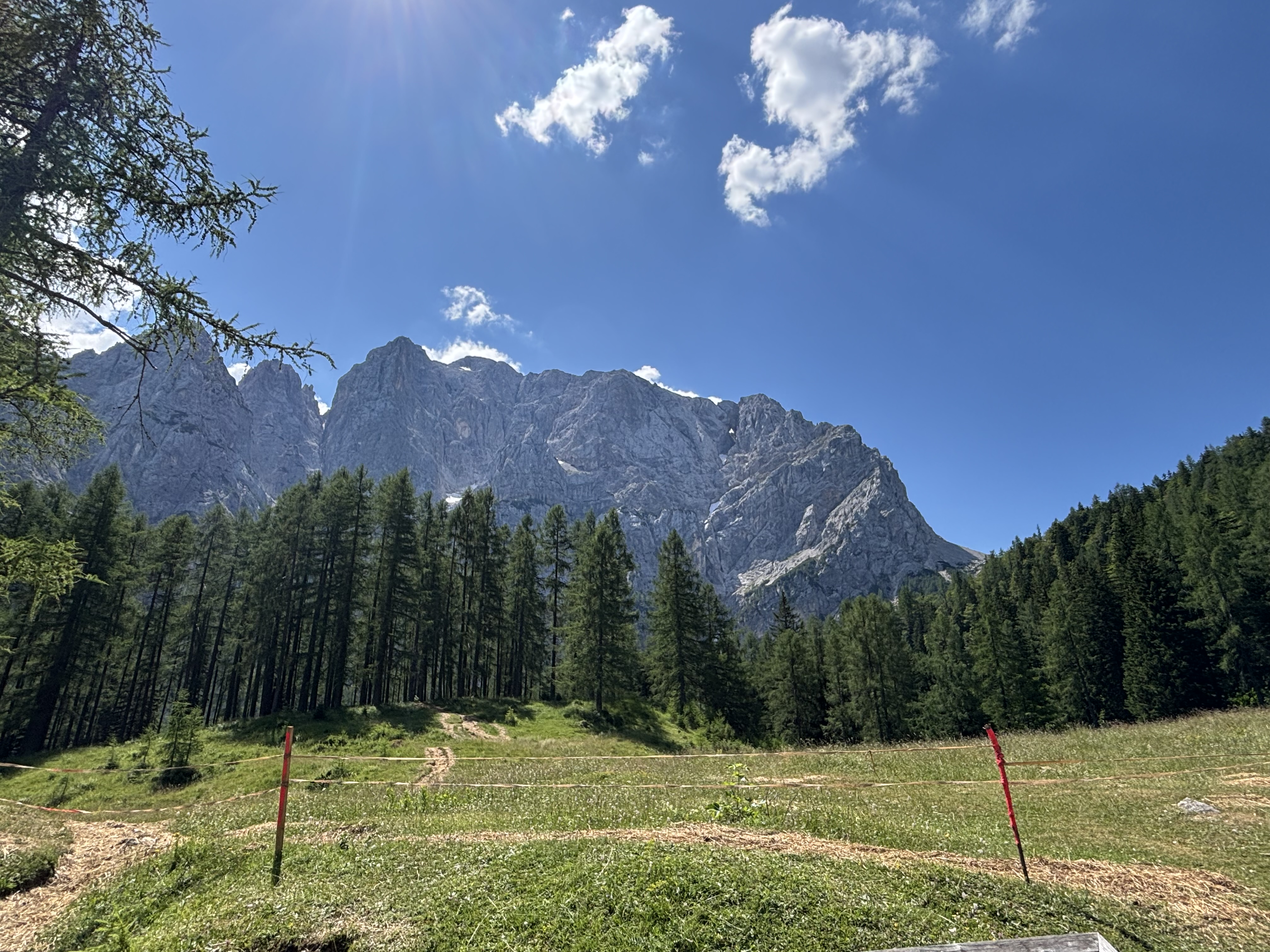

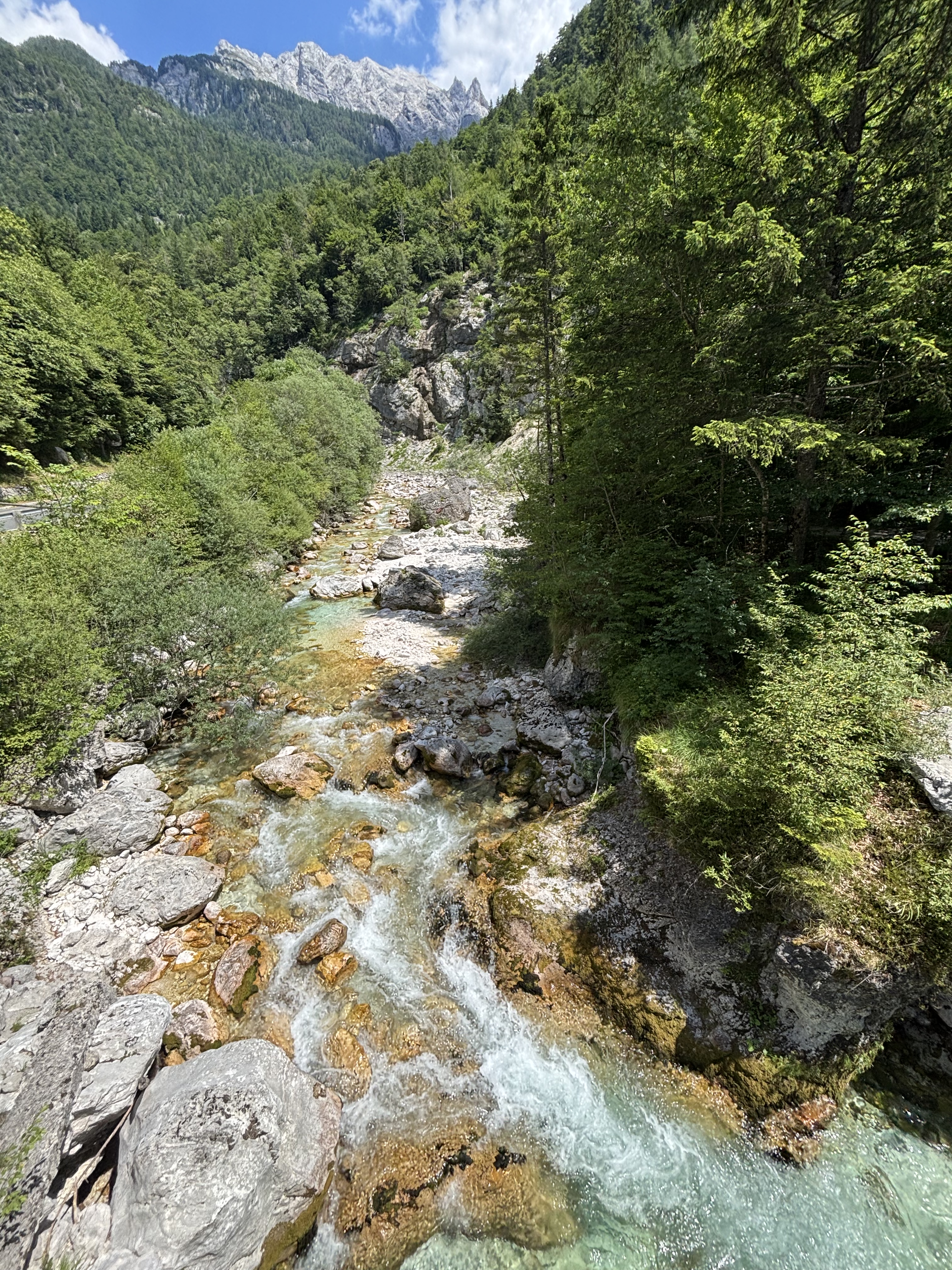
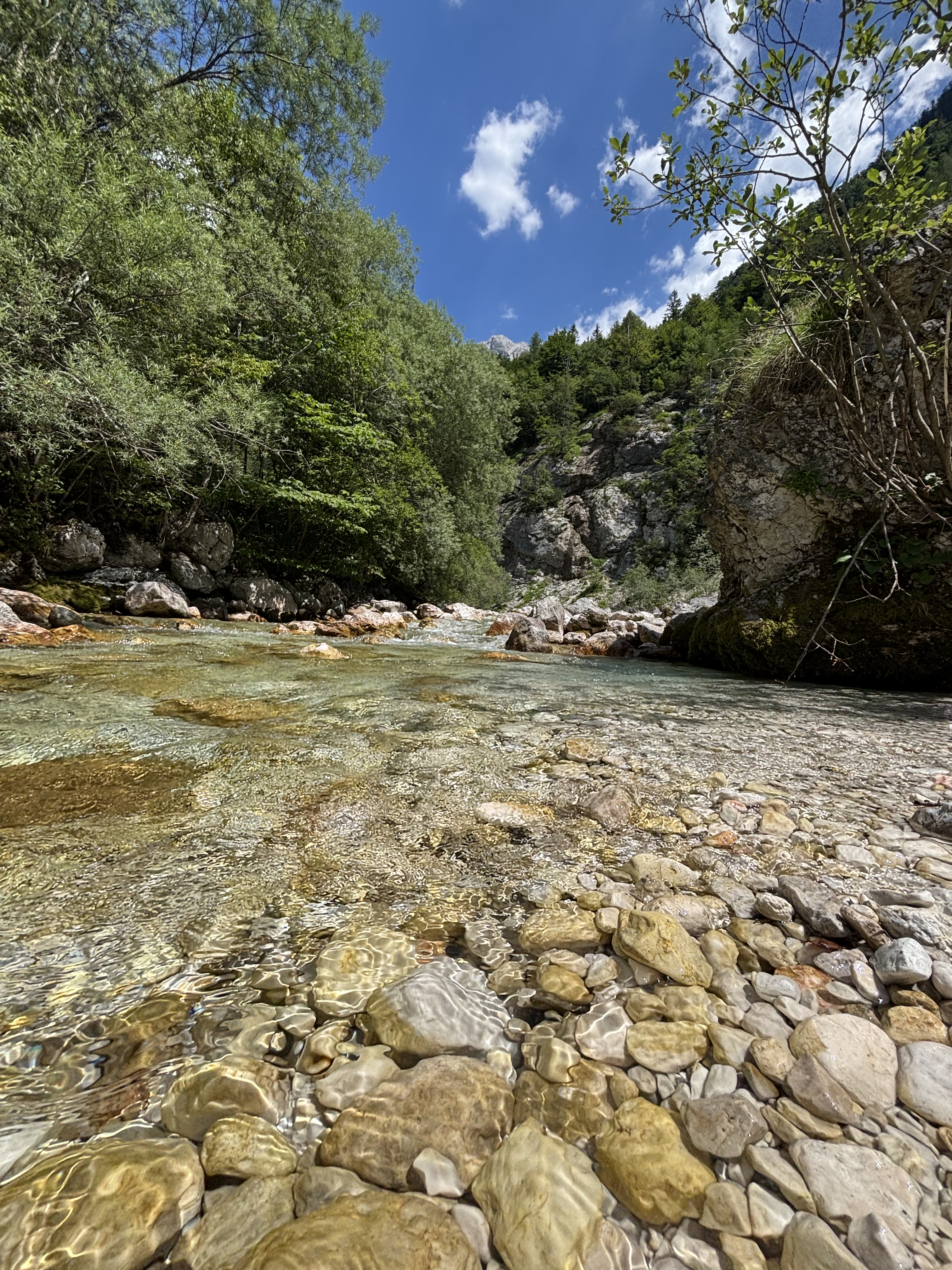
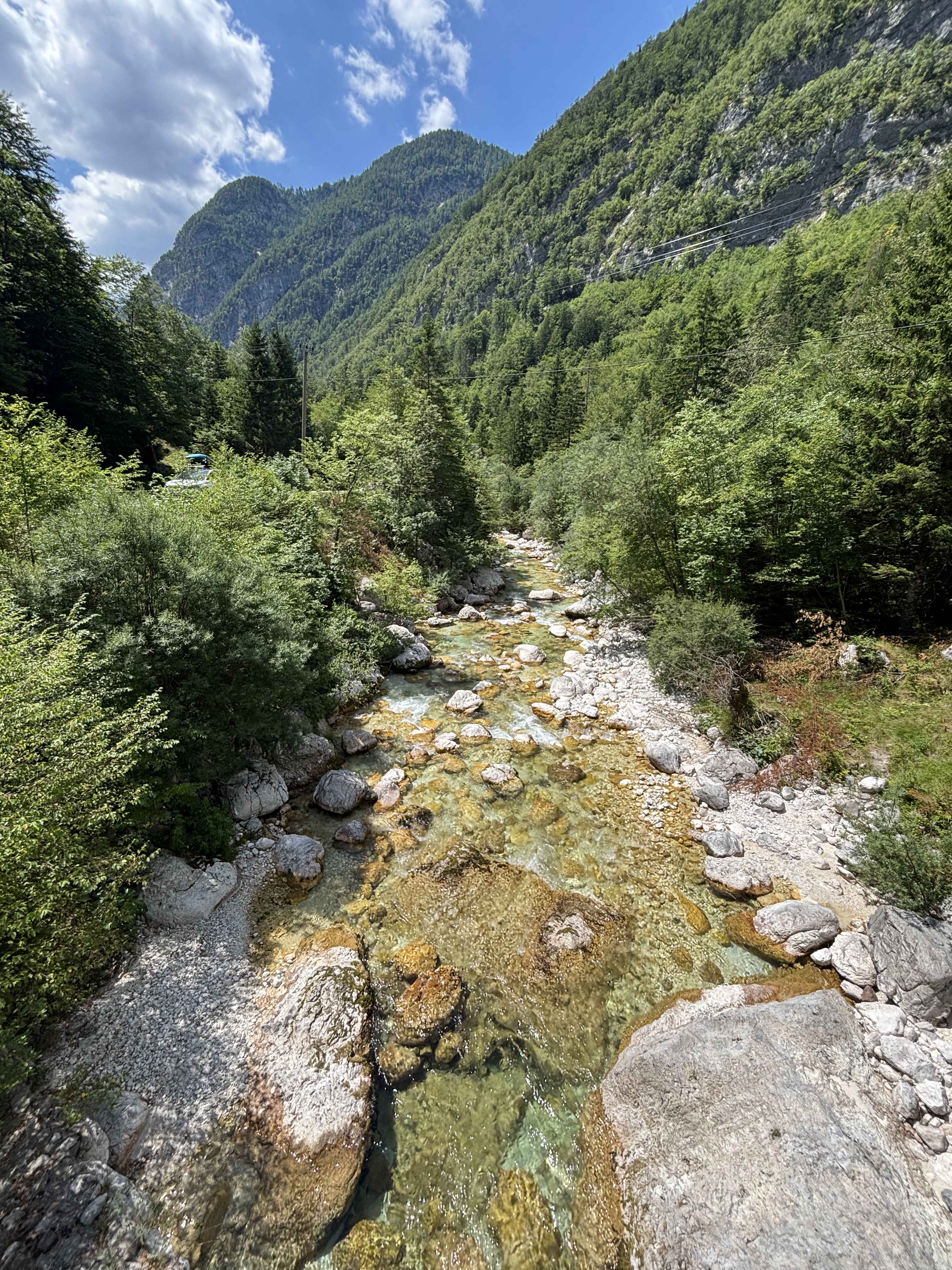
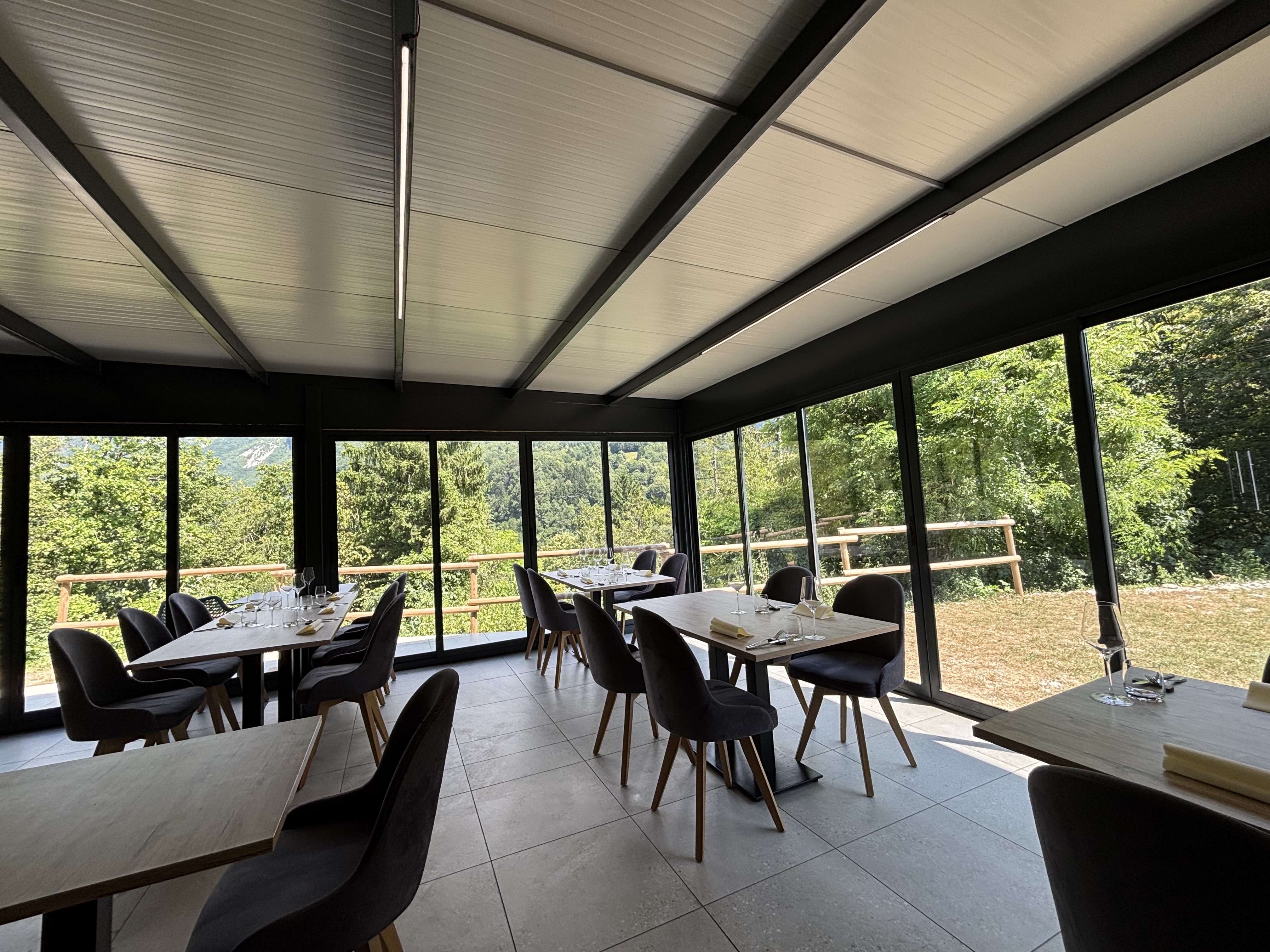
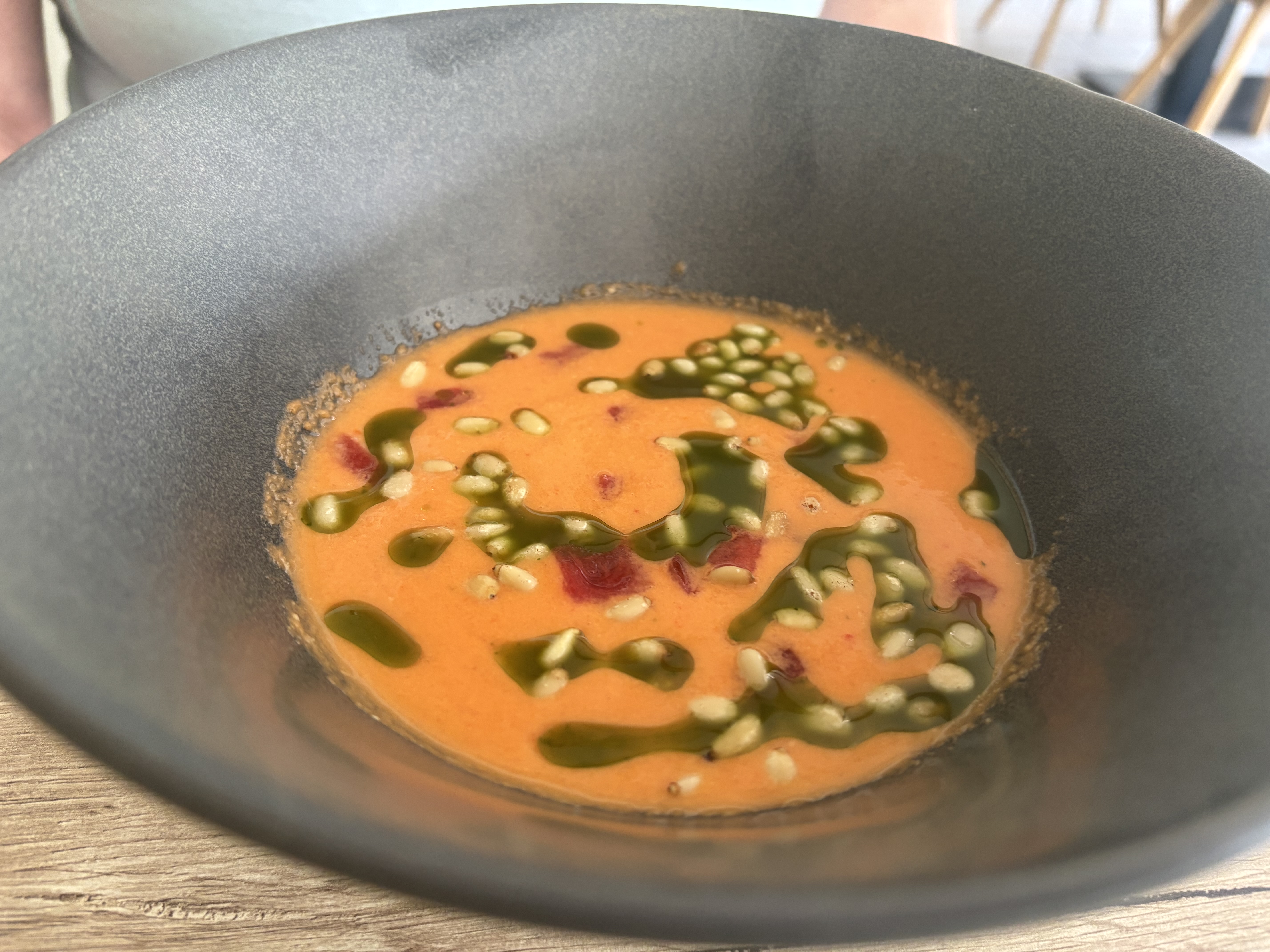
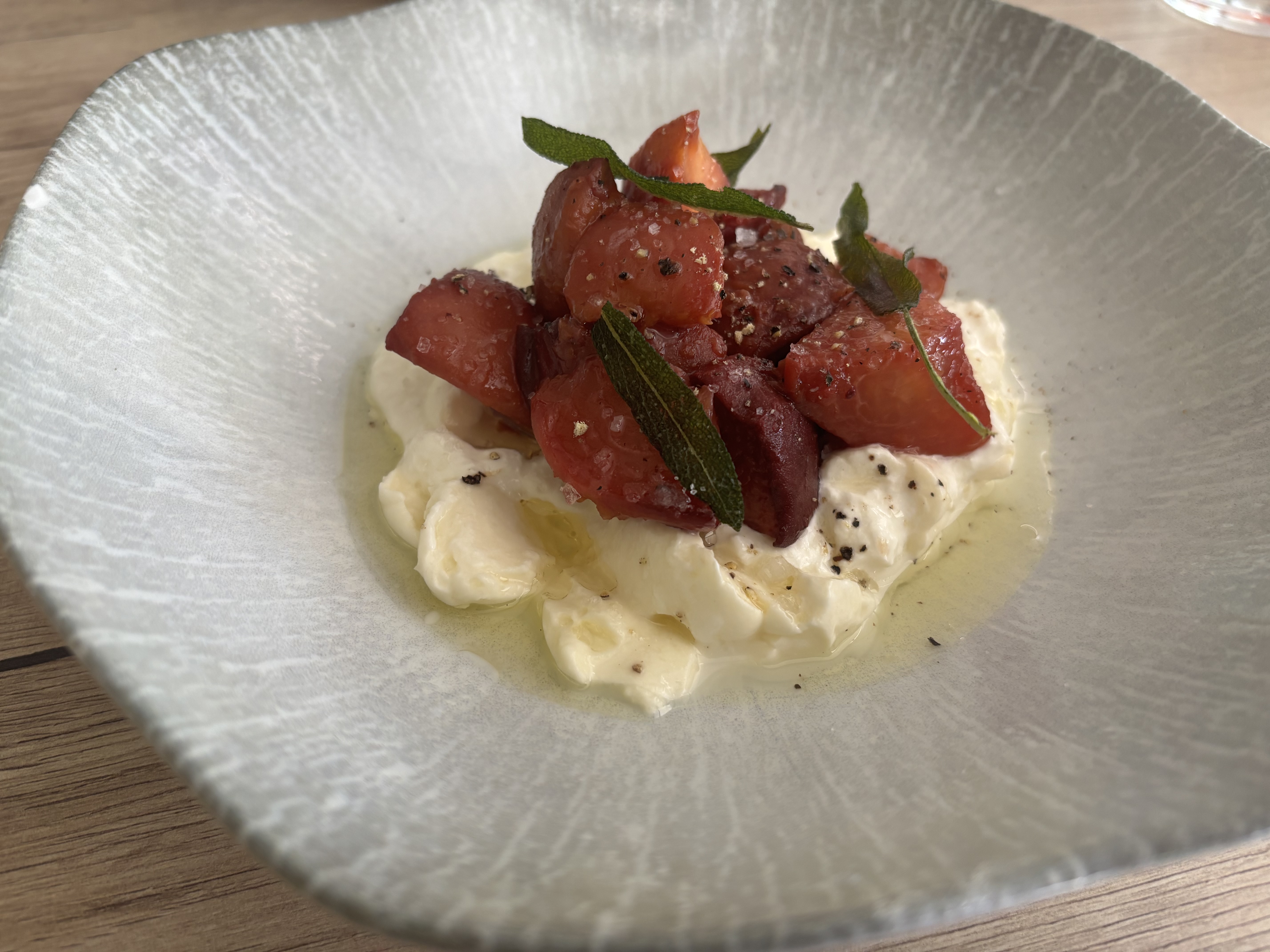
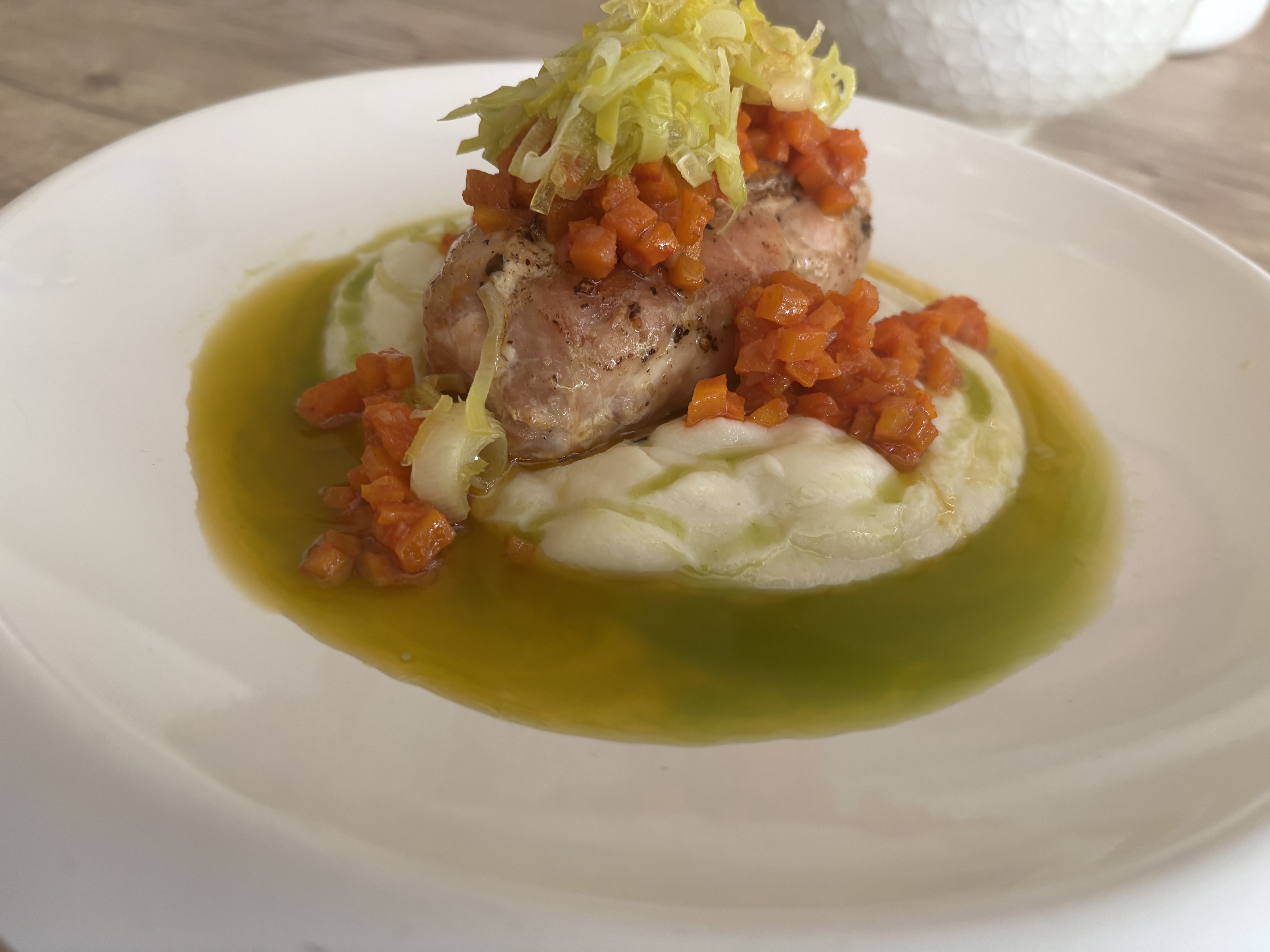
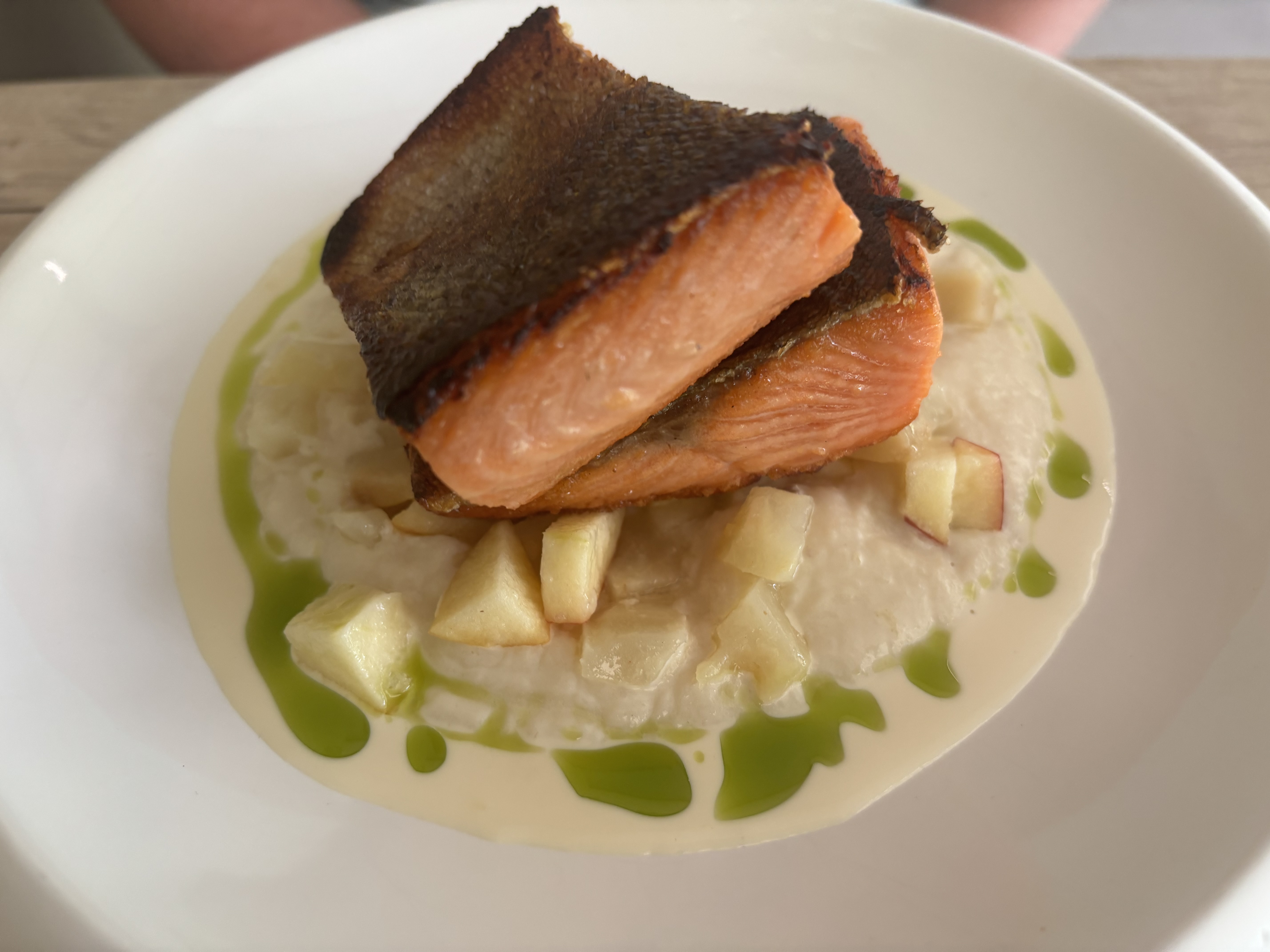
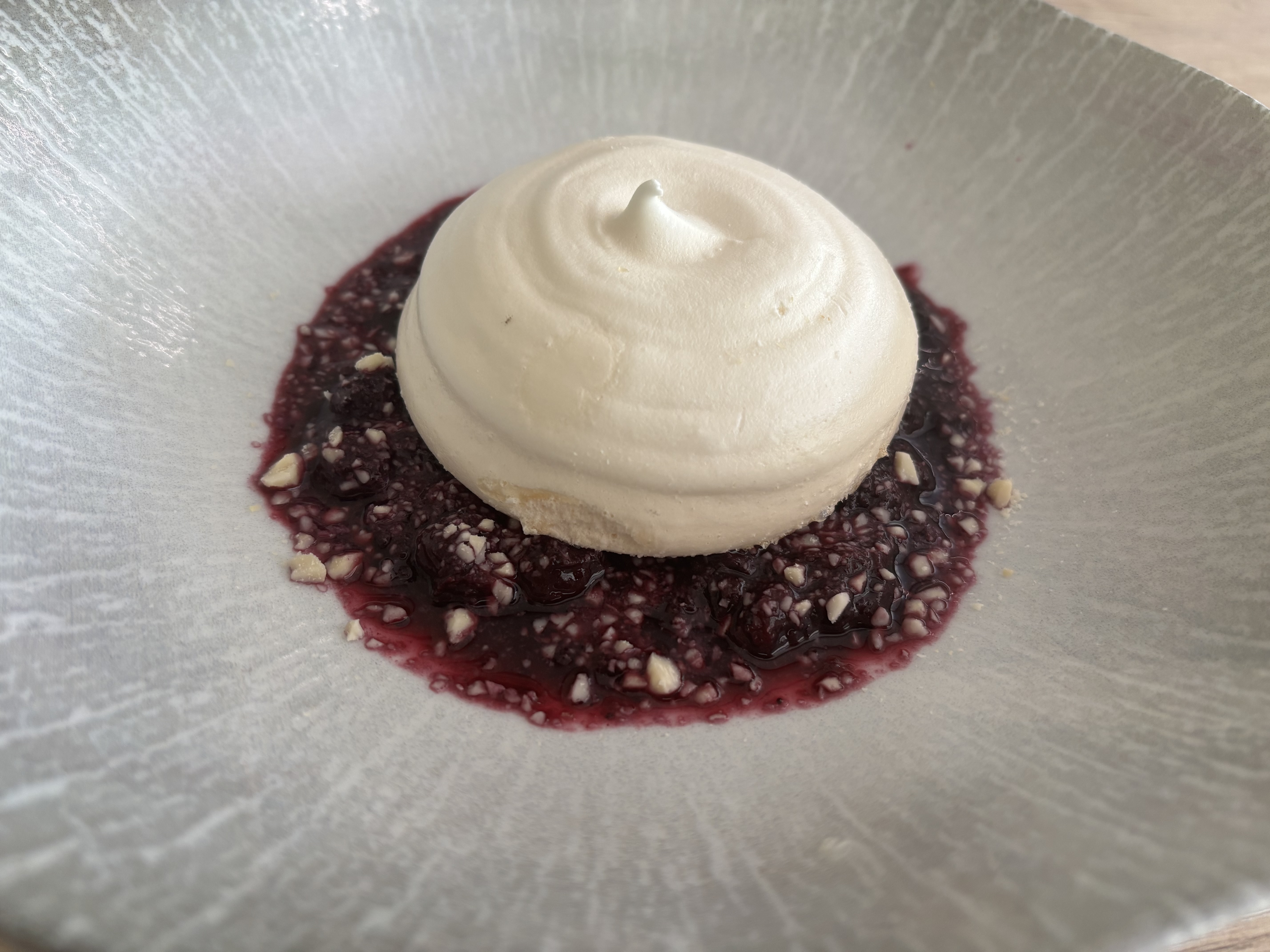
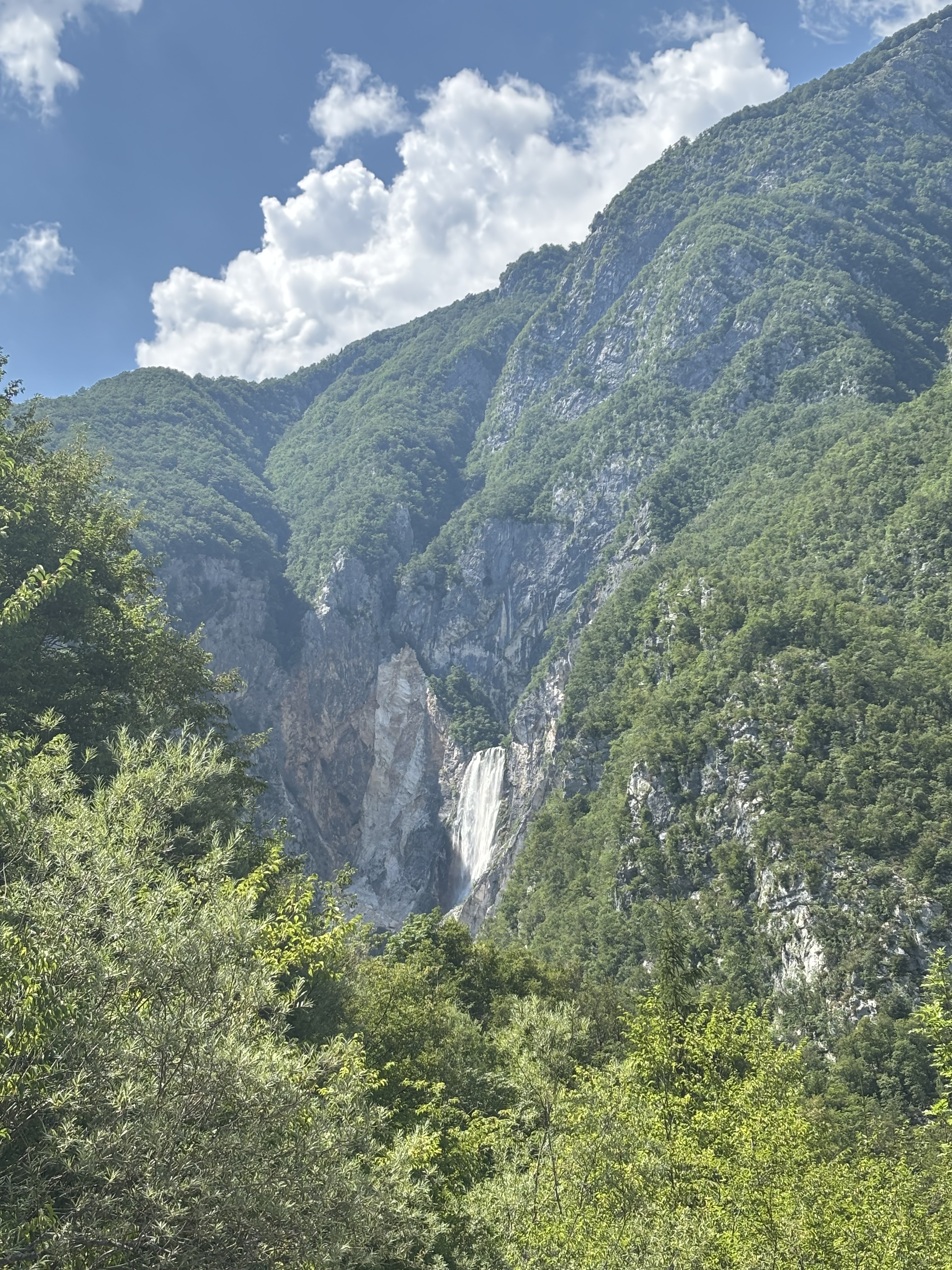
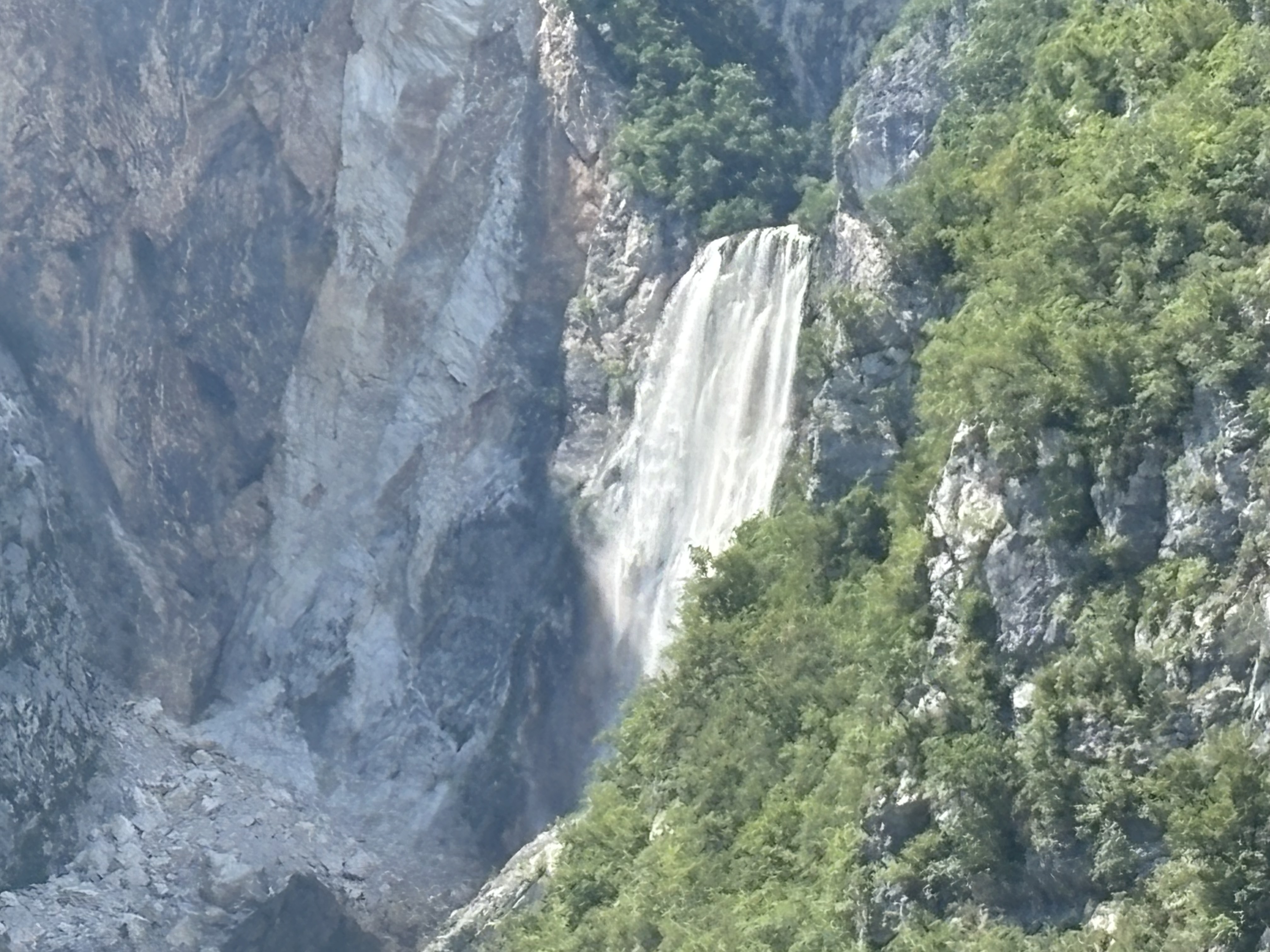
Even after you leave the pass itself, the beautiful scenery continues. With its crystal-clear water and slow-moving current, the Soca River is a treasure of western Slovenia. The road follows the river for several miles, and we were quite tempted to strip down to our undergarments and wade in to cool off. We lucked into a surprise fine dining lunch experience (with air conditioning!) at a tiny café (Bistro 9:45) in the woods outside the town of Bovec, which is best known as a jumping off point for white water rafting and other watersports. After lunch, we happened upon the highest-volume waterfall in Slovenia, Boka Slap, as we rounded a corner; we were impressed enough with what we saw to leave the car’s air conditioning behind us and brave the sunshine for a short hike to a better view. Boka Slap (“slap” is Slovenian for waterfall and also what Darla says you should do to anyone who ever suggests you hike the Vintgar Gorge) is almost 500 feet high and more than 50 feet wide, so it makes quite an impression when you see it thundering down from the side of a mountain to the river below. Sadly, the road to Lake Bohinj was closed that day for unknown reasons, so the surprise waterfall ended up being the last major site on our journey. But it’s no longer news that we absolutely LOVE Slovenia and safe to say we’ll be back someday.


 The Global Slowmad
Leave a reply to Anonymous Cancel reply