Our most astute blog followers may have already figured out that we just survived the worst blackout in Europe in years.
The power went out a little before noon local time on a day with perfect weather. We initially thought it was local to our apartment, as that has been a recurring issue for us. Our building is very old and comes with very old electrical wiring. We have learned through trial and error not to run the microwave and toaster at the same time, or more than two burners on the stove with the tv on. We have become pros at resetting our breaker box. So our first clue that something was up was when we realized our main power switch had not shut off for a change.
Even with this new realization, the first hour or so was not too bad. It was an ideal afternoon to leave the doors and windows open anyway, and our cell phone signal was holding up surprisingly well, so Stuart killed some time working out in the apartment and Darla chose to commence an epic mid-day nap. All was fine.
Early in the afternoon, we started seeing news reports online about the outage affecting the entire Iberian Peninsula and even parts of France. The cause was unknown, but officials were explicitly refusing to rule out the possibility of a cyberattack. We started reading speculation online that the situation could last for days. Huh. We lost cell service on our travel eSIM shortly after noon and lost service on our regular carrier a couple of hours later. Hmm. After a couple more hours, we decided that maybe we needed to venture out to see if we could find some shelf-stable foods in case this was an early-stage apocalypse situation. Keeping a watchful eye out for zombies and/or Cybertrucks, we made our way to a local mini-market and were delighted to discover breakfast cereal (we were going to need to do something with the milk in the fridge soon anyway), fresh vegetables, nuts, Cheetos and four gigantic bottles of water. Yeah, that was our big survival plan.
I must say it was a pretty pleasant way to begin the end of the world. The neighborhood treated the event as a good excuse for an impromptu and super-casual street party. (Later in the day, we would see a middle-aged woman strolling down one of the main thoroughfares in her bra with no shirt and zero cares.) The barber on the corner proved to be the keeper of all gossip; everyone who passed by would stop to ask him for an update. Unfortunately, most of these conversations were indecipherable to an English speaker. In hindsight, the most reliable prediction we heard for when the power would come back on ultimately came from an elderly woman sitting on the floor in the stairwell of our building who only spoke Portugese and probably would have been the subject of a Silver Alert had we been in Oklahoma, but we heard estimates early on that power could be out for as much as ten days. The shopkeepers we met were incredibly cheerful and accommodating. They only accepted cash, of course, but there was zero price gouging like we’ve often encountered in similar situations in the United States.
After our successful grocery run, we ended up finding an open café on one of the local plazas and sat on the patio drinking wine with a couple from the UK for a few more hours before heading back to our apartment for the night. We downed a couple bowls of cereal on our balcony in the twilight, as we had decided to save our yogurt (the last perishable item in the refrigerator) and granola for the morning. When the power finally came on a few minutes later, the entire neighborhood erupted in applause. It was weirdly moving.
The only unsettling part of this whole episode is that no one seems to know what caused the blackout or how to prevent another one. It’s a mystery that seems to have befuddled all the scientists on the continent and perhaps all the King’s men and horses too. The leading credible theories include: an overly integrated electrical grid, outdated grid infrastructure, too much reliance on alternative energy sources, not enough development of alternative energy sources, extreme temperature changes, extreme winds and the supernatural. Ok, the last one might be a stretch to those who believe in facts and science, but there seems to be just as much evidence for blaming this event on Colin Robinson (a totally different kind of energy vampire from one of our favorite tv shows).
In the end, it was a very memorable but ultimately unremarkable Monday.
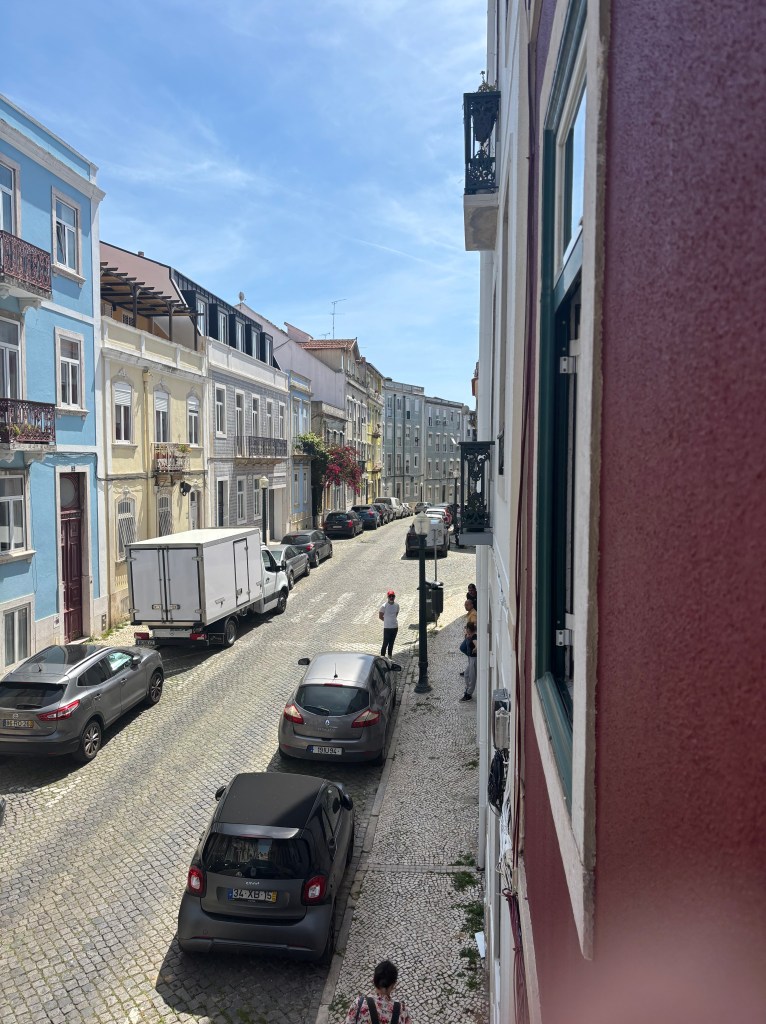
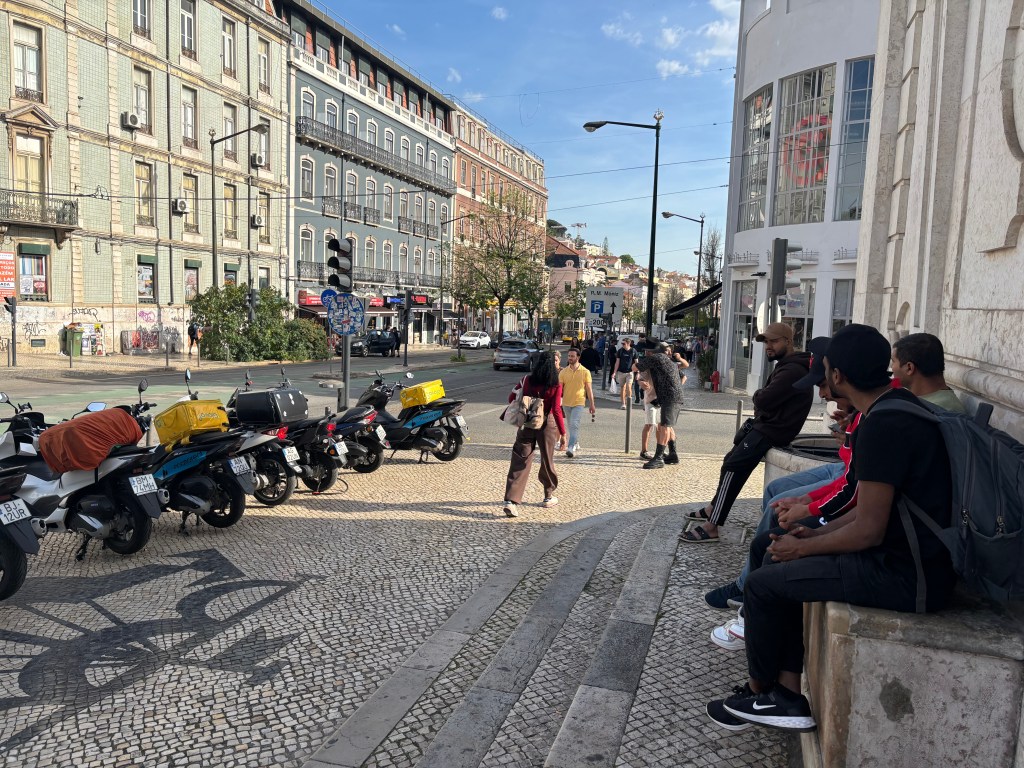
We did not take many pictures during the blackout because we were trying to conserve our phone batteries, but it looked a lot like any other day in Lisbon.


 The Global Slowmad
Leave a reply to Denise Bowen ( TFA Free Archivist) Cancel reply