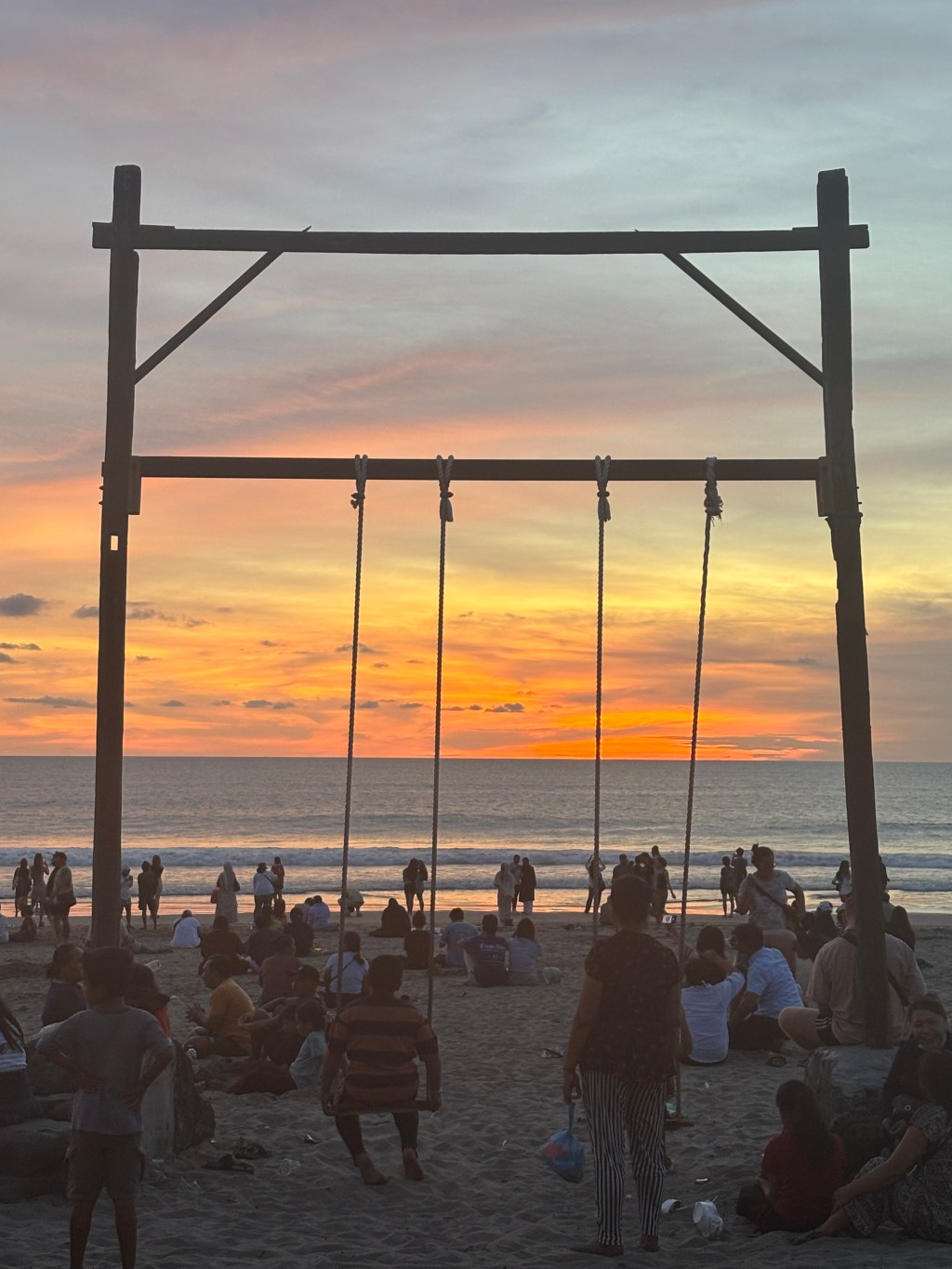
The island of Bali long ago earned a reputation as a relaxing, tropical paradise for surfers, spiritual trekkers and eco-adventurers. More recently, it has become (in)famous for overtourism and traffic congestion, so I was prepared for the worst. However, after having spent the prior week in Phuket, my Bali experience felt like travel easy mode. I guess everything is relative.
The DPS airport experience was stress-free and efficient. Like many other countries, Indonesia recently introduced an online visa pre-screening form that you complete in advance. Unlike other versions I’ve encountered, they actually found a way to simplify the process rather than just collect some additional revenue. My visa/immigration experience consisted of scanning my passport and posing for a picture at a self-service kiosk, then walking through a turnstile to exit the terminal. It really was that easy. No lines. No fingerprints. No retina scans. No questions about ongoing travel, currency or produce. No human interaction whatsoever.
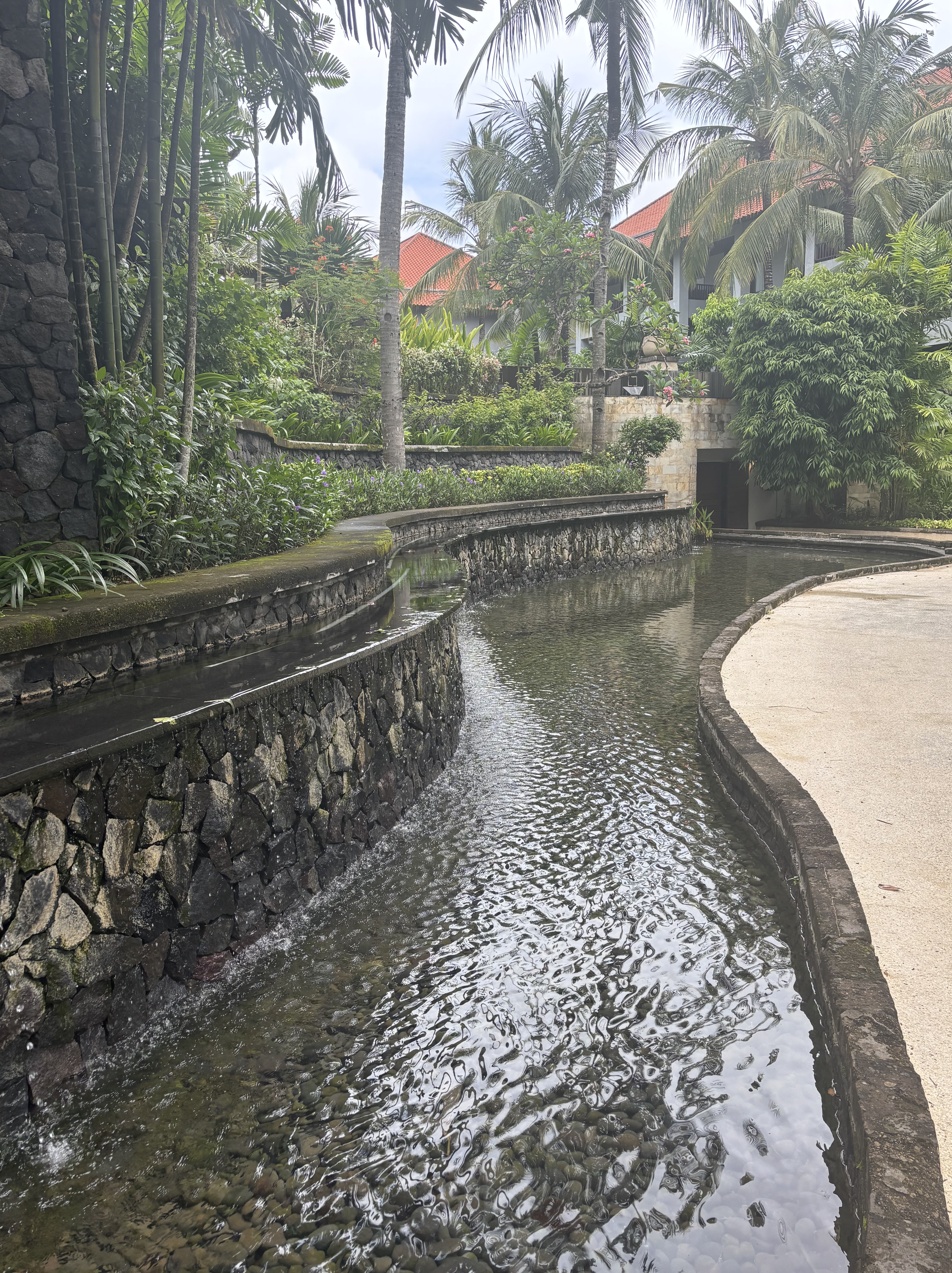
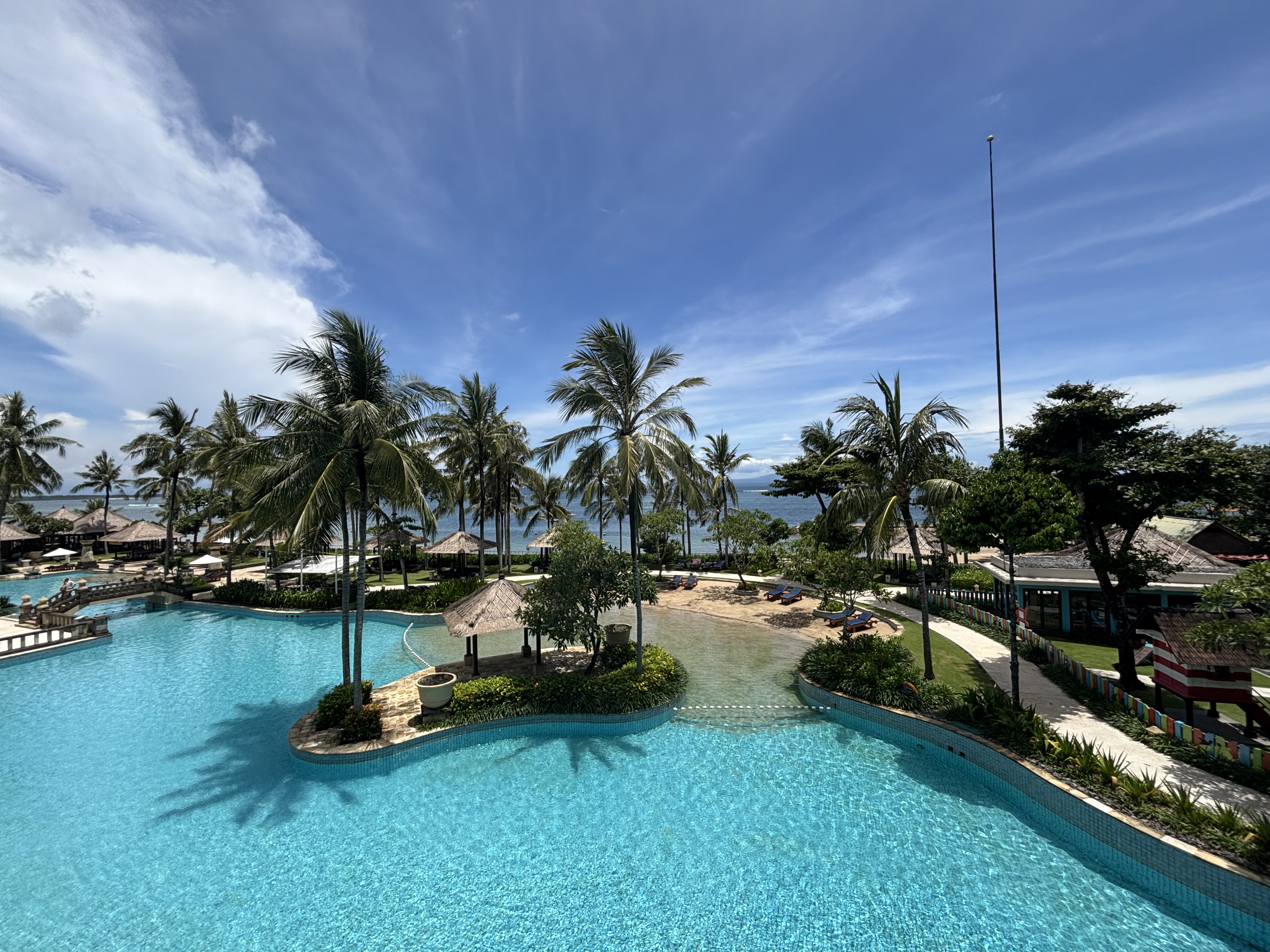
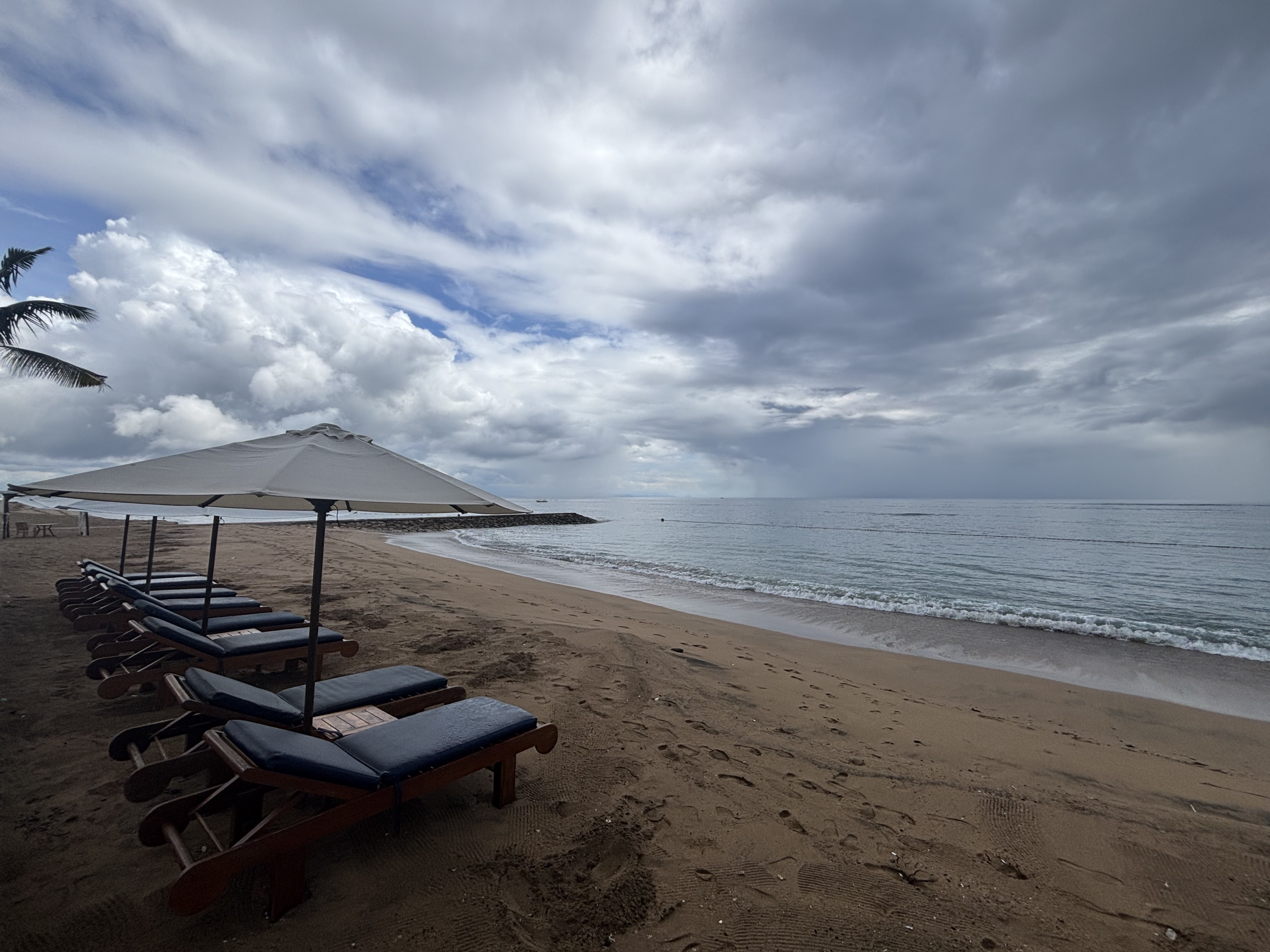
I spent two nights in an amazing ocean view room at the Conrad Bali in the Nusa Dua area thanks to an AmEx Platinum hotel credit. (I prefer to spend my first night at a hotel when arriving in the evening, so I don’t have to worry about meeting a host or figuring out a lockbox in the dark.) Nusa Dua Beach lies south of Denpasar, on the eastern side of the small peninsula that hangs off the southern edge of Bali. It is convenient to the airport thanks to a toll road across a large lagoon that also serves as a nesting ground for sea turtles. It is a great place to stay if you are looking for an upscale beach resort experience. Due to its isolation from the rest of Bali, it’s not the best place to stay if you are looking to experience local culture.
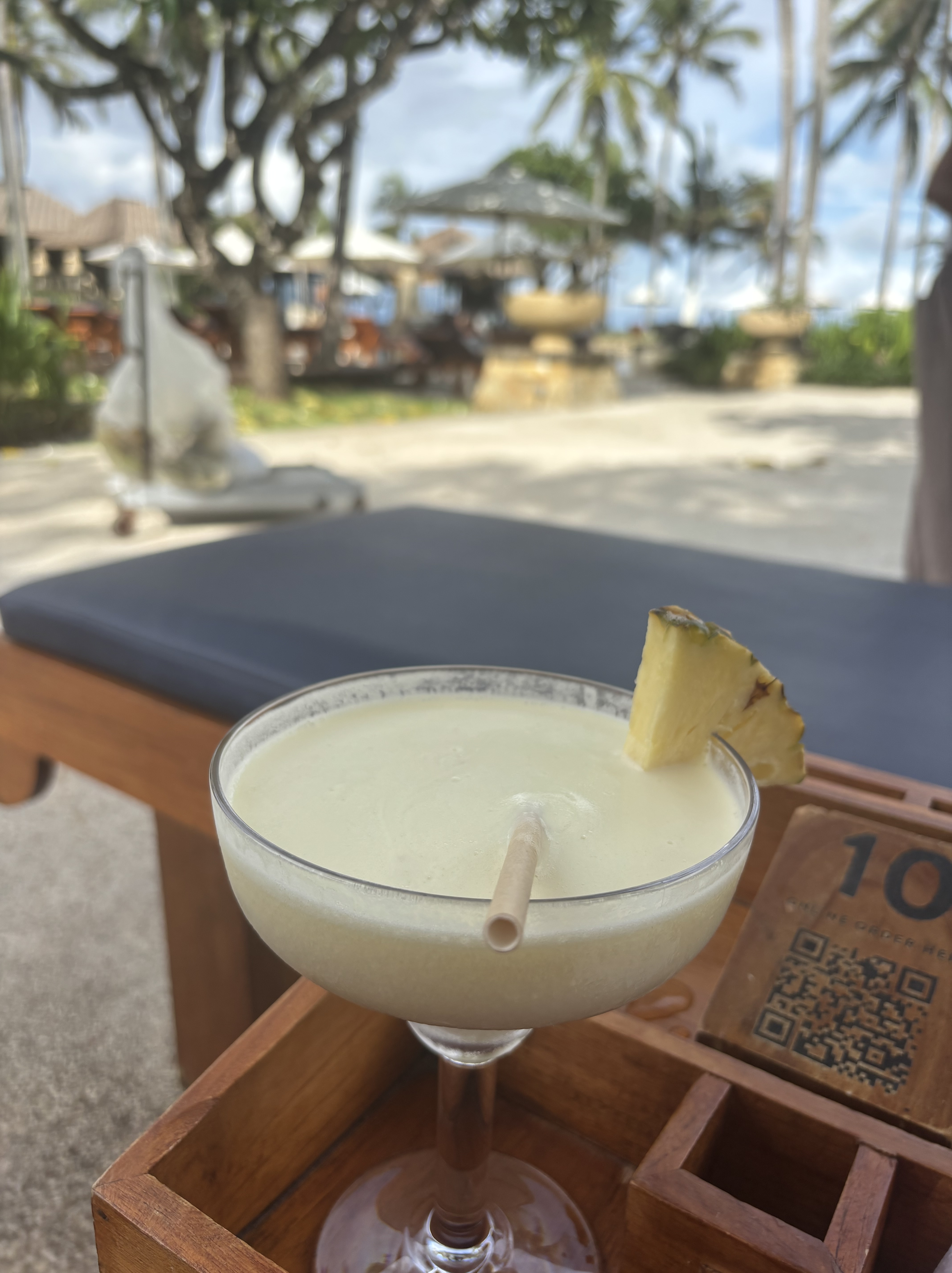
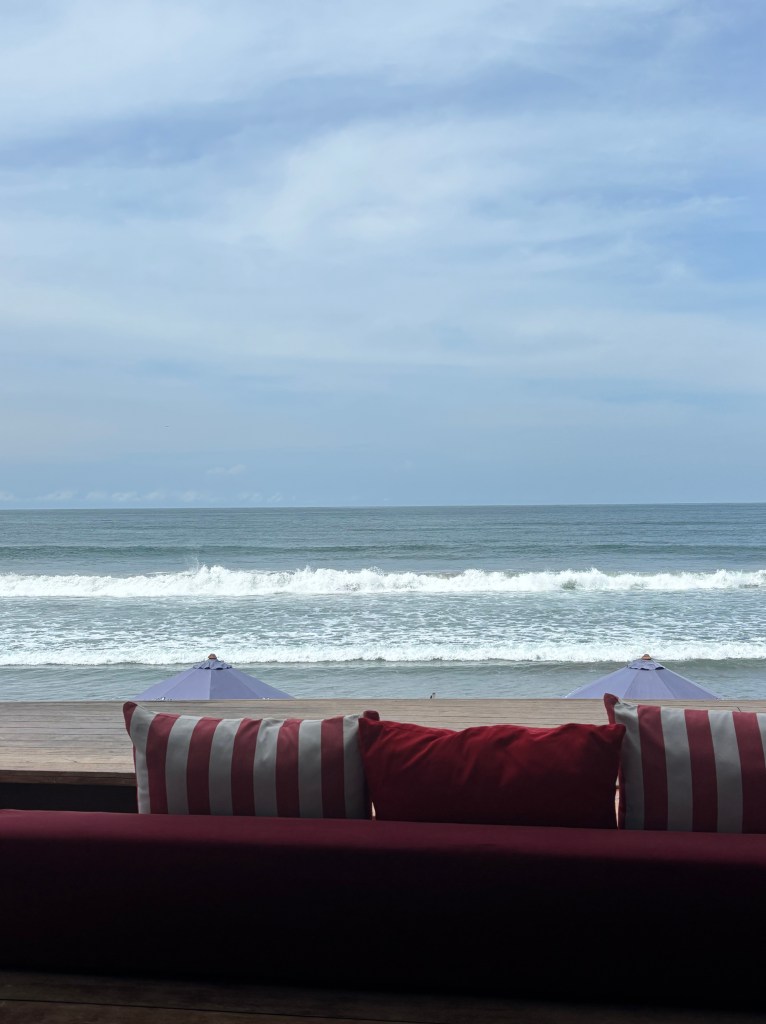
Fortunately, I still had five more days in Bali. For my second home base, I chose Seminyak, a popular and developed – but with no high-rise buildings – area on the west coast of Bali, north of the airport and due west of Denpasar. As recently as 15 years ago, it was a small village on the beach surrounded by rice fields and occasionally attracted surfers on a budget. Today, it has been absorbed into the westward sprawl of Denpasar and is the epicenter of the trendy Bali retail and dining scene. In front of the legendary surf breaks that originally made this stretch of coastline popular, the beachfront is dotted with a number of large, open-air beach clubs where families hang out on lounge chairs sipping smoothies during the day; a younger crowd takes over at night.
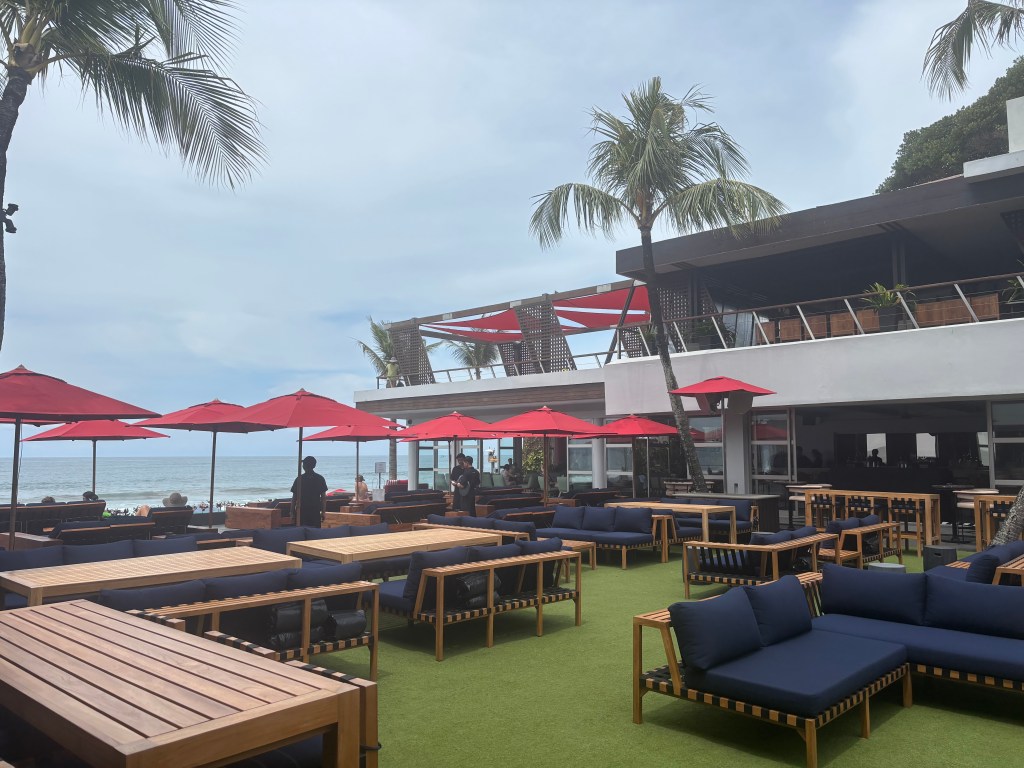
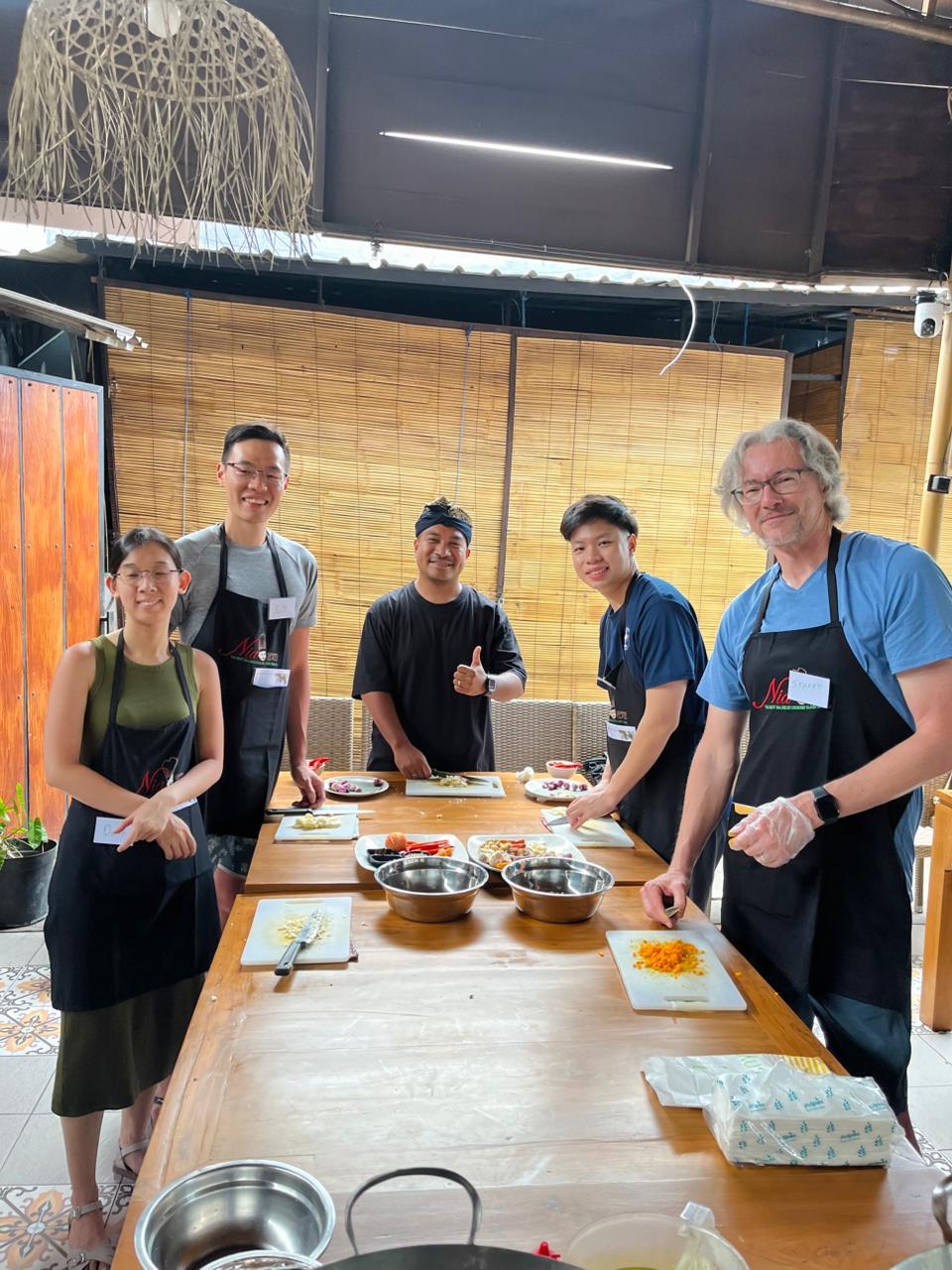
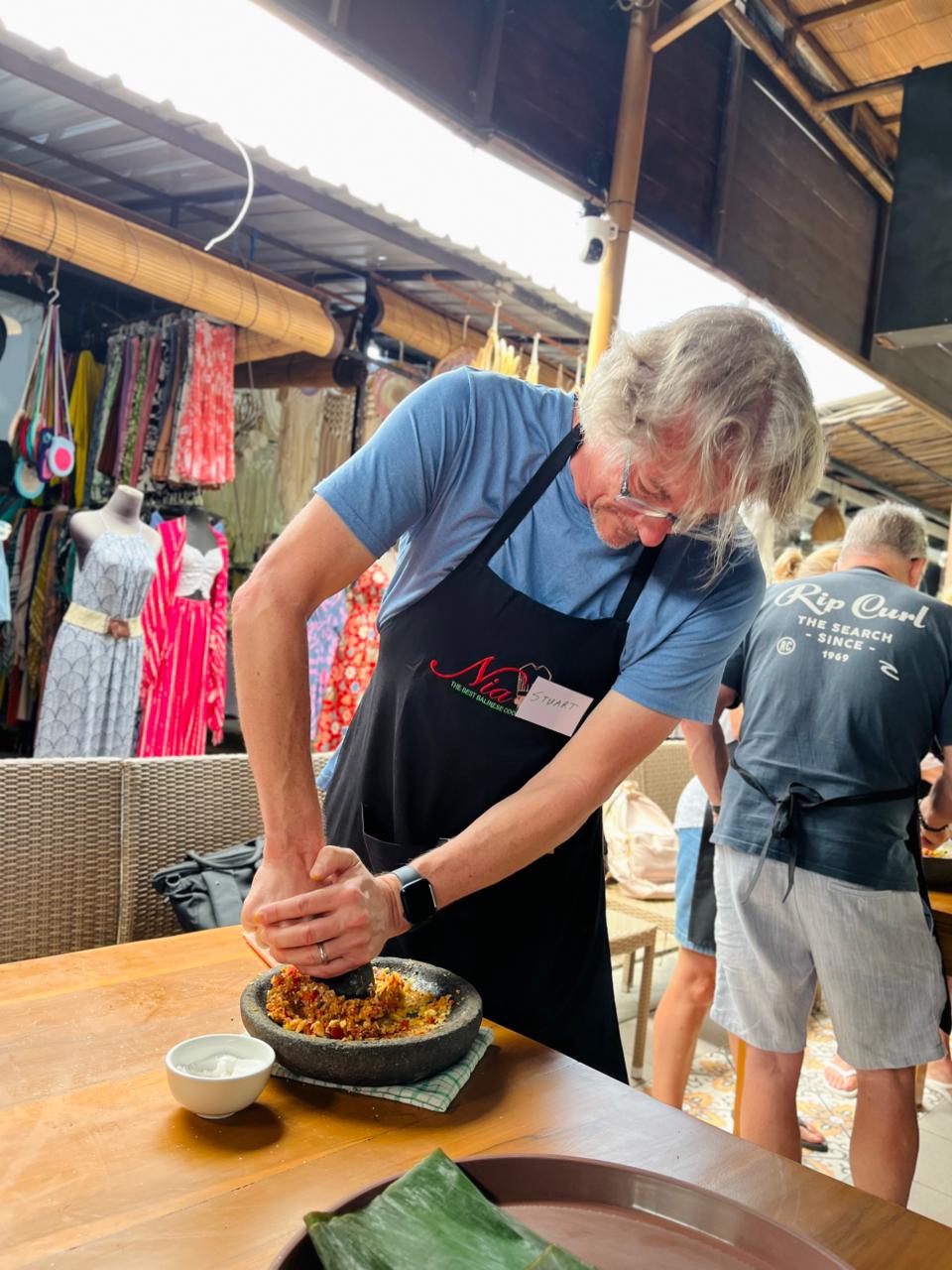
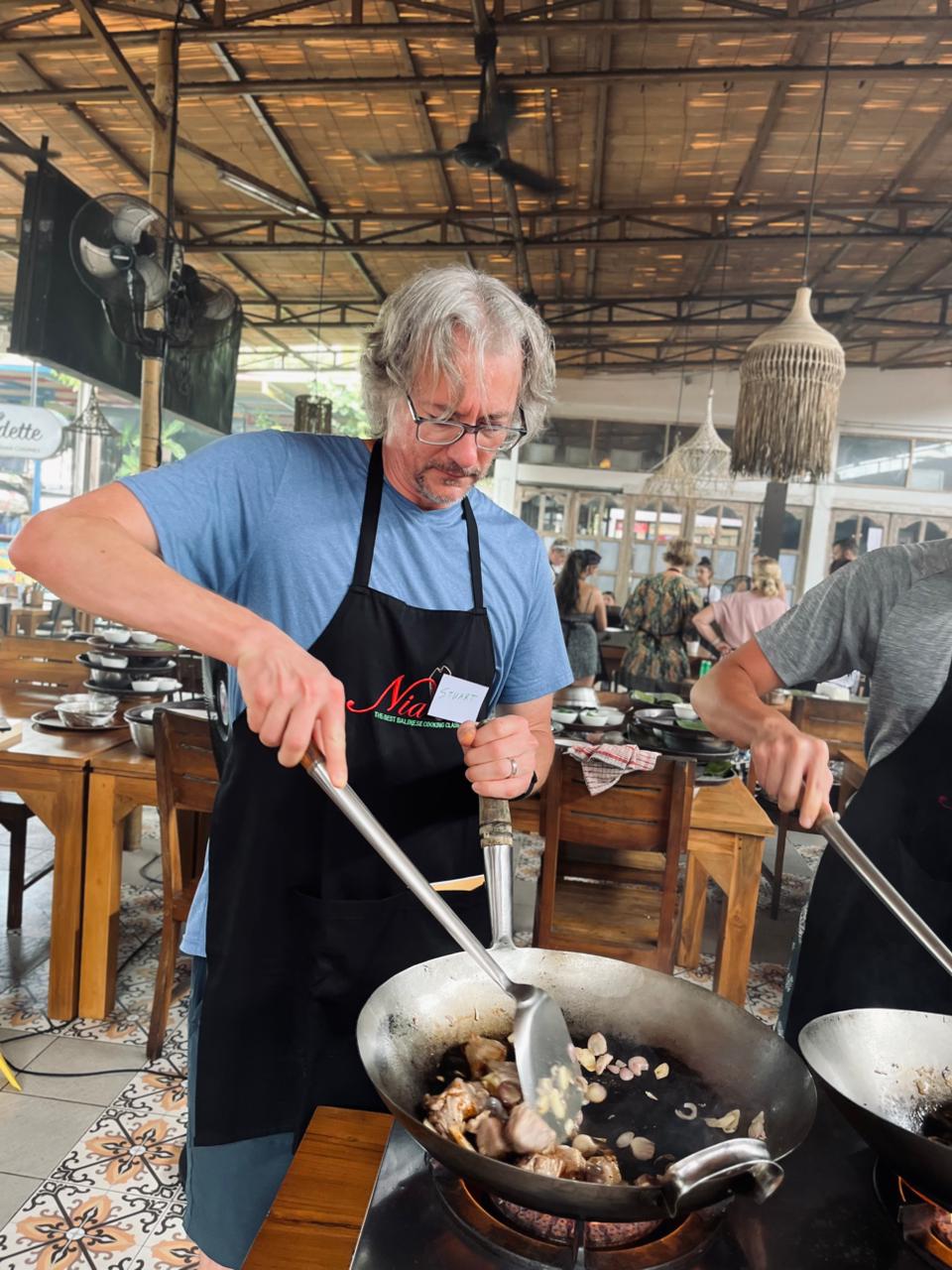
The narrow streets leading away from the beach are packed with pedestrians and people on motorbikes whizzing past a mix of boutique and name-brand retail stores, art galleries, bakeries and hipster coffee shops. I enjoyed some of the best and most affordable food of my entire trip there (including the best beef birria tacos I’ve had anywhere) and even took a class at a traditional Balinese cooking school. Shopkeepers said hello with a smile as I passed, but no one pressured me to get a massage or buy a cheap suit like I’d experienced in Phuket. Perhaps because Seminyak has become such a popular spot for digital nomads, the area had none of the annoying aggro-beach-bro element either. It felt like a very safe and moderately upscale surf town with a decidedly laid-back vibe, vaguely reminiscent of Encinitas, California.

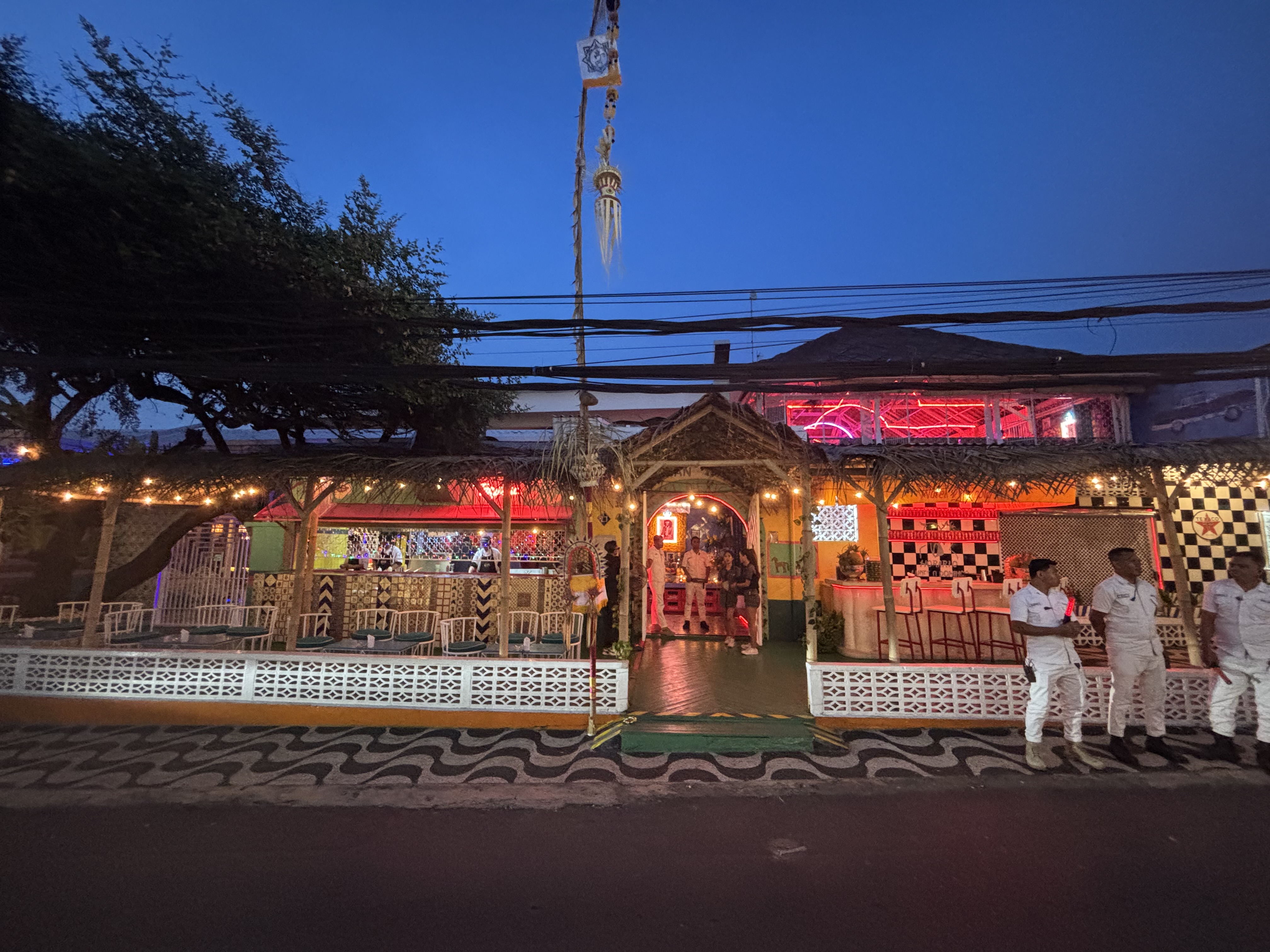
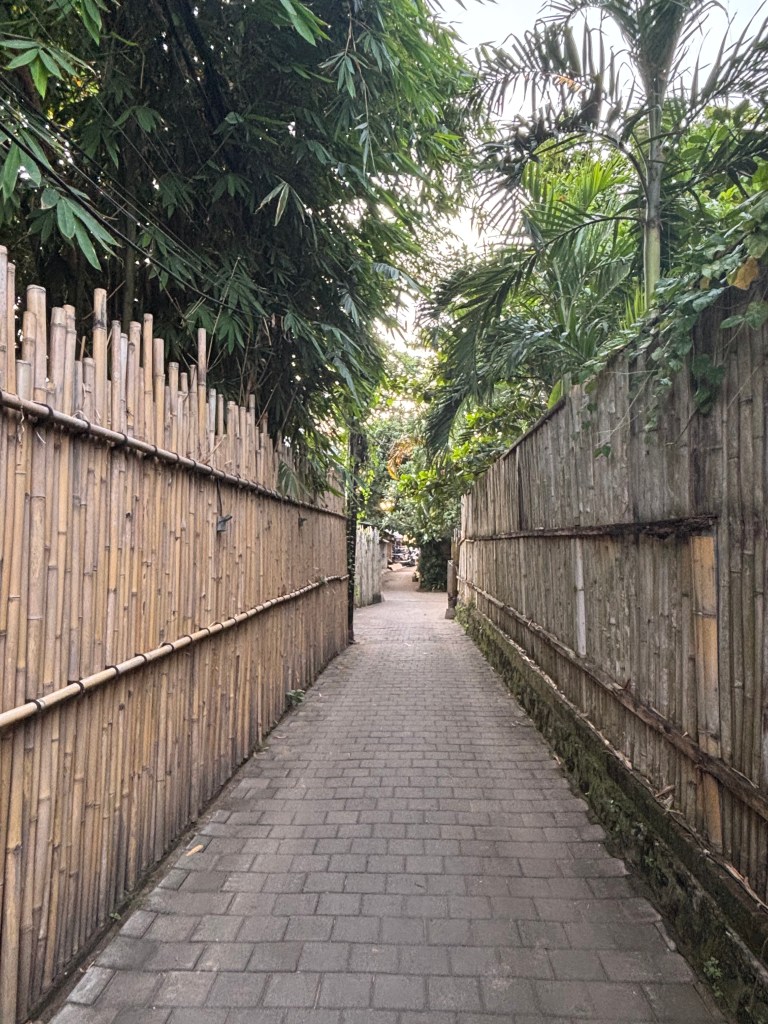
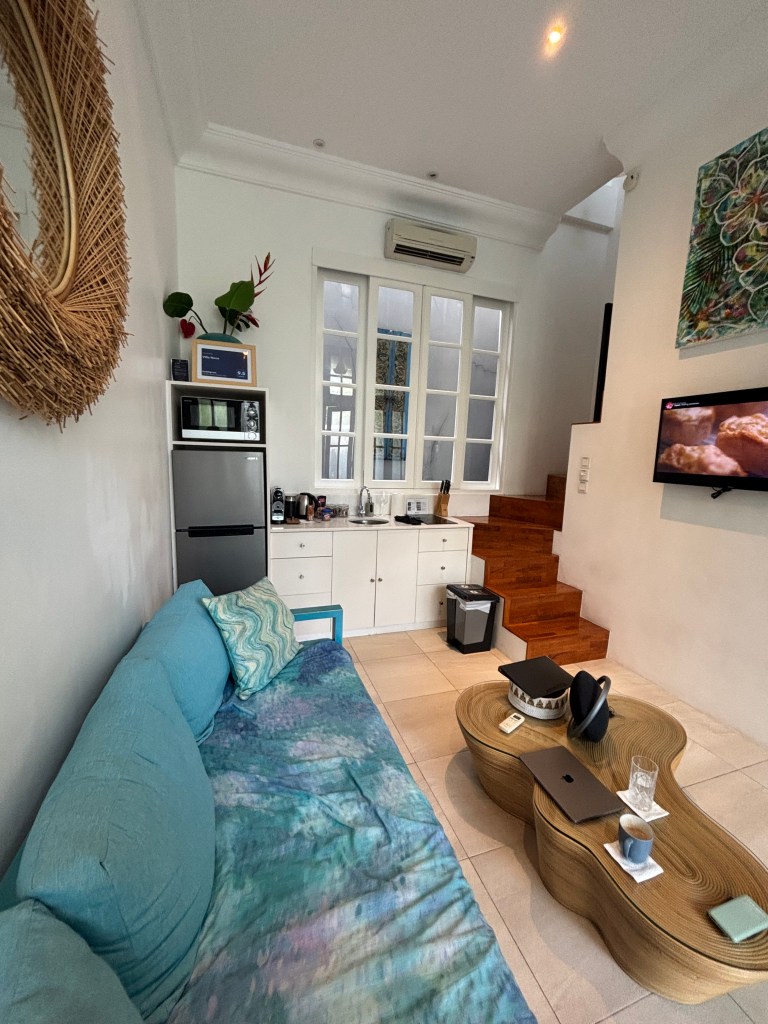
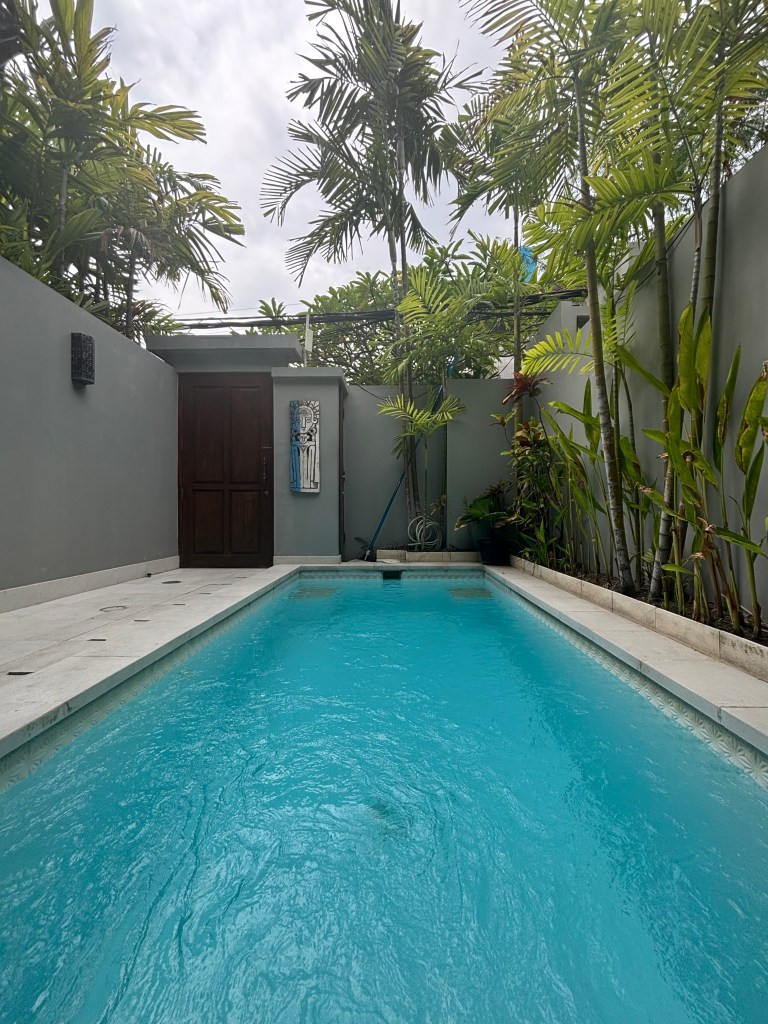
Hidden behind the busy main thoroughfares are narrow alleys lined with two-story private villas. It’s an entirely different – and delightfully peaceful – world. When researching short-term rentals in Bali, I had noticed that most of the AirBNB “guest favorite” apartments included a private swimming pool but very few of them were right on the beach. I took that as a clue and booked a modern villa with a private pool about five blocks from the beach for less than $100/night. No regrets. Tall fences ensure privacy, and there’s something to be said for having your own pool and a bamboo-lined courtyard where you can partake in the kind of indoor-outdoor living you typically only see on Bravo shows about Los Angeles real estate drama.
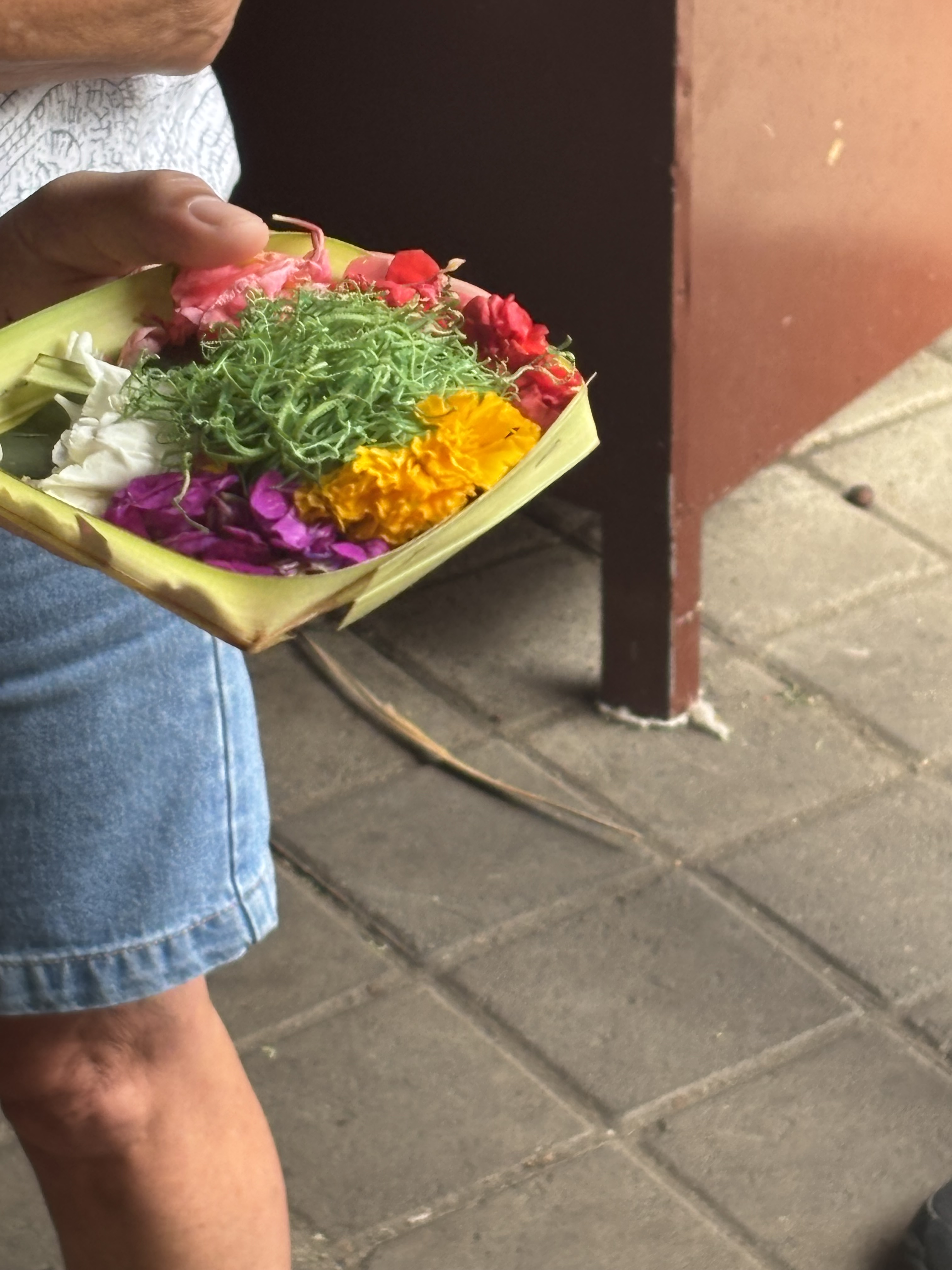
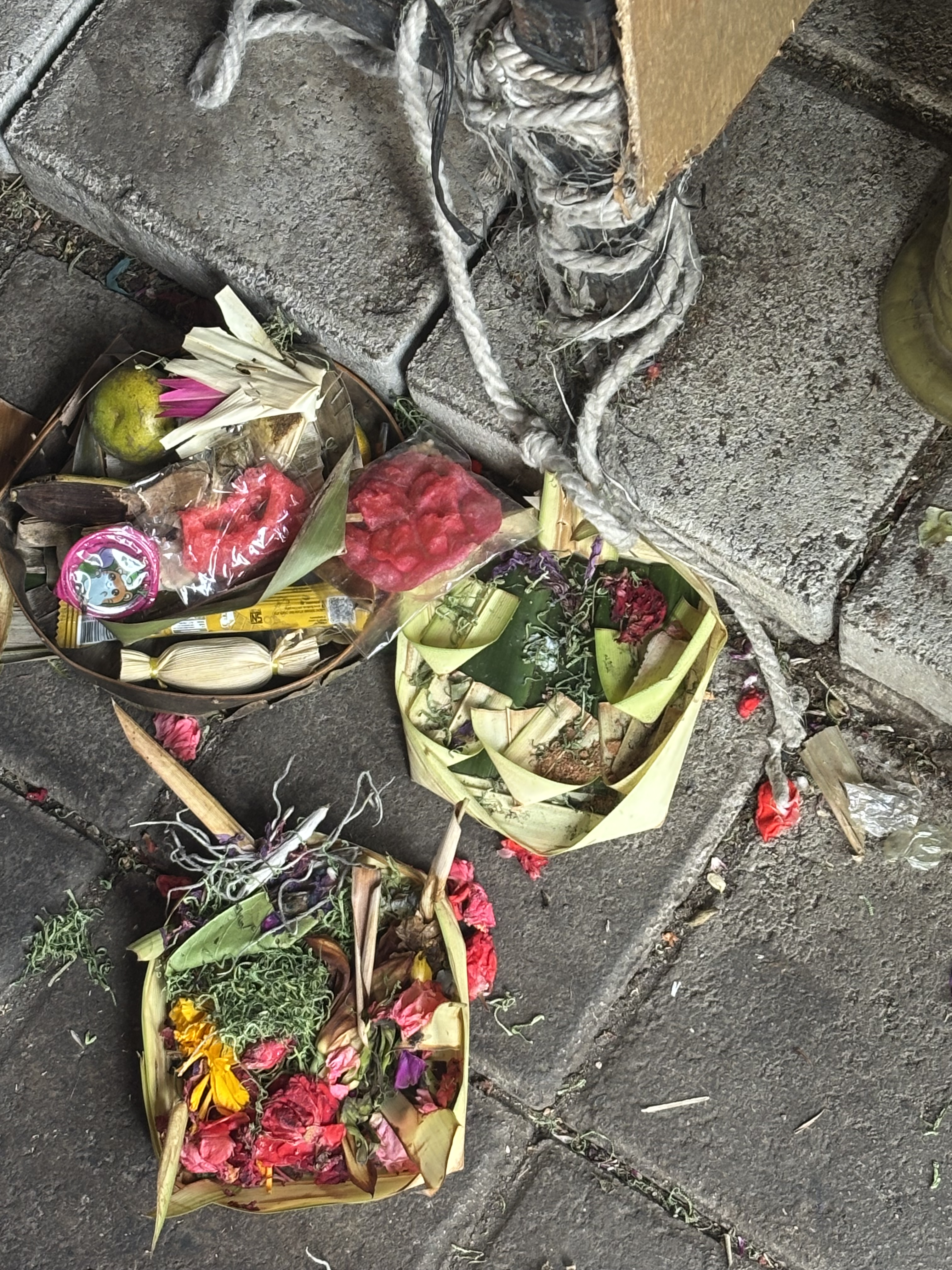
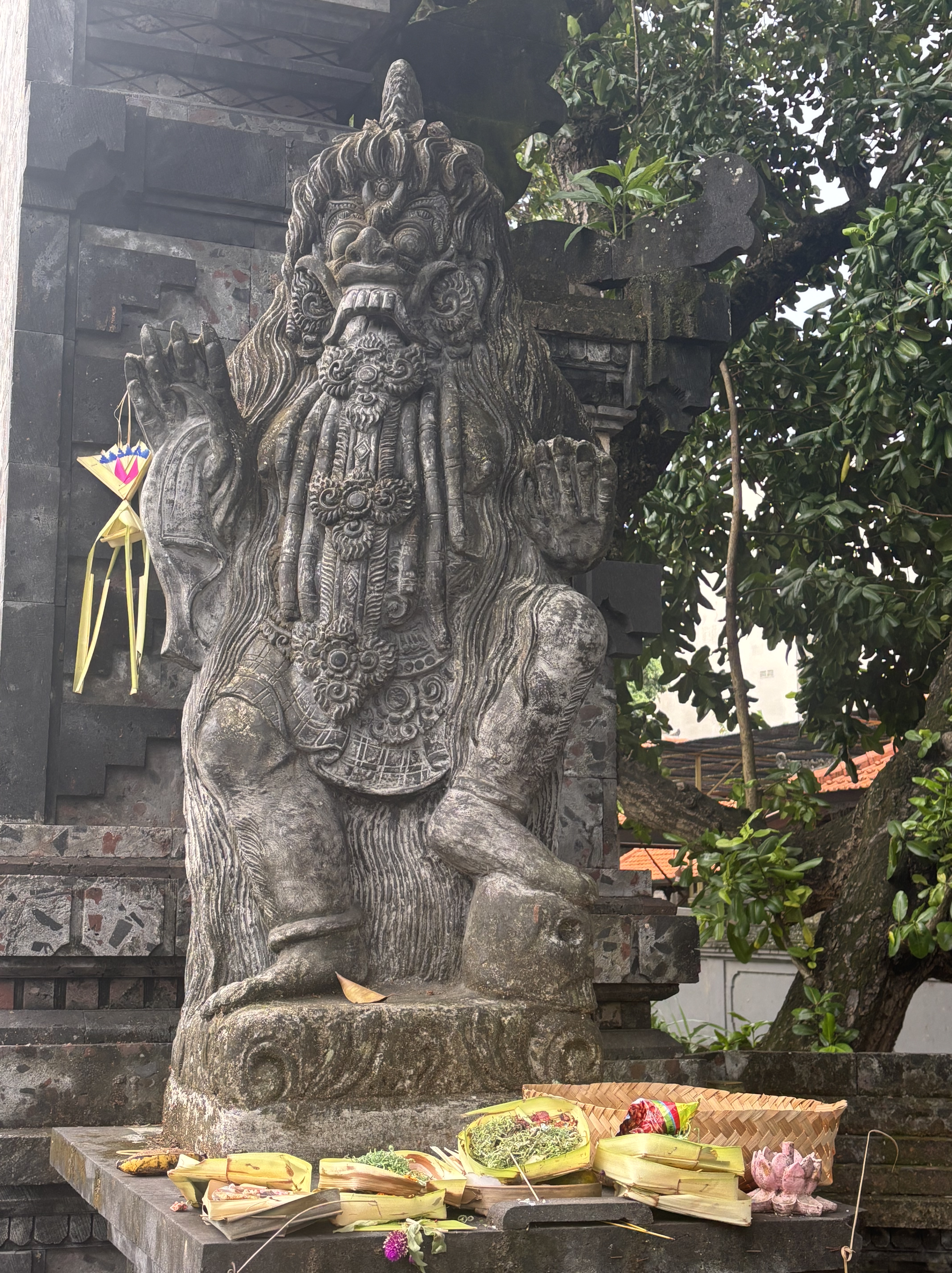
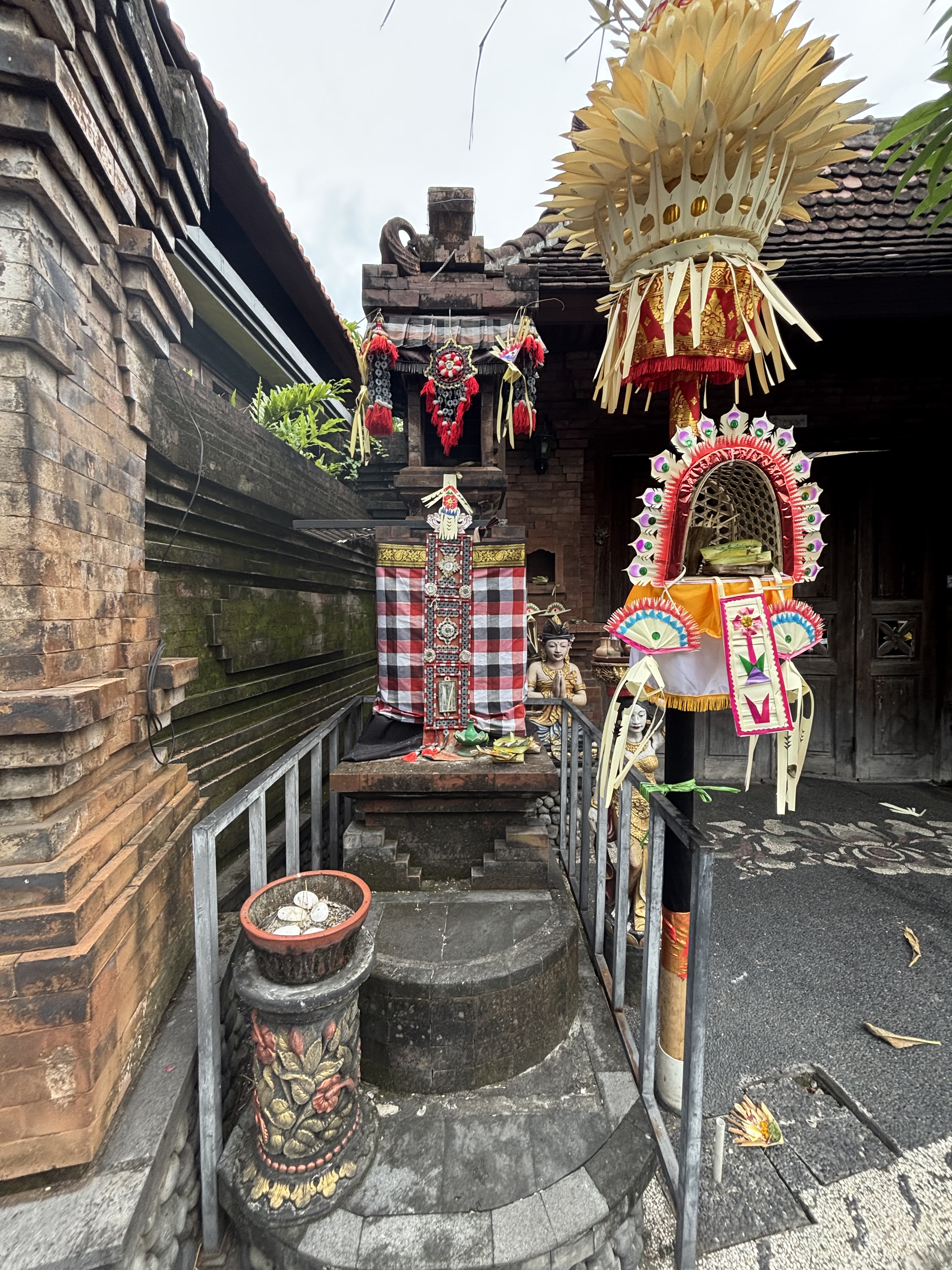
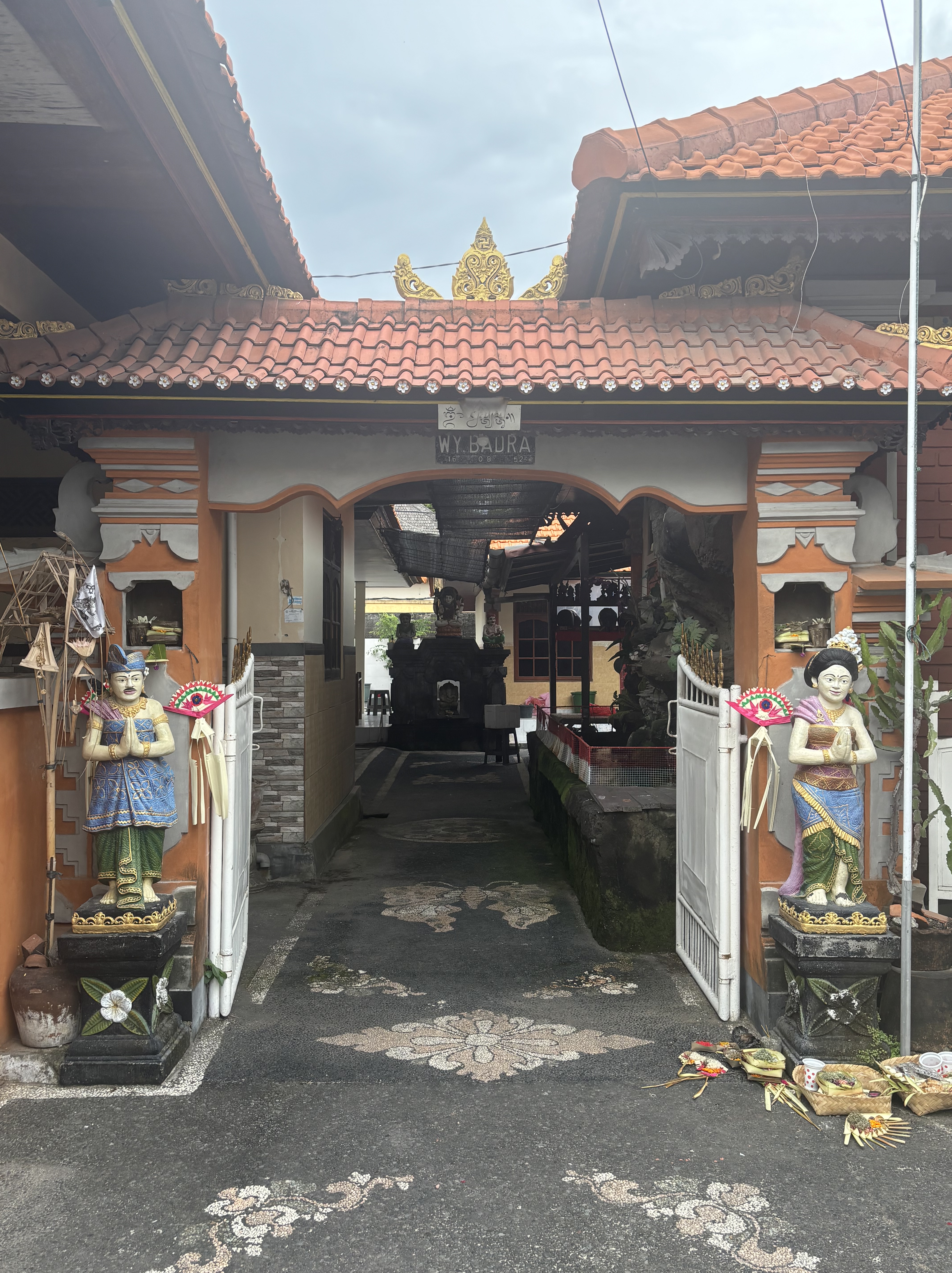
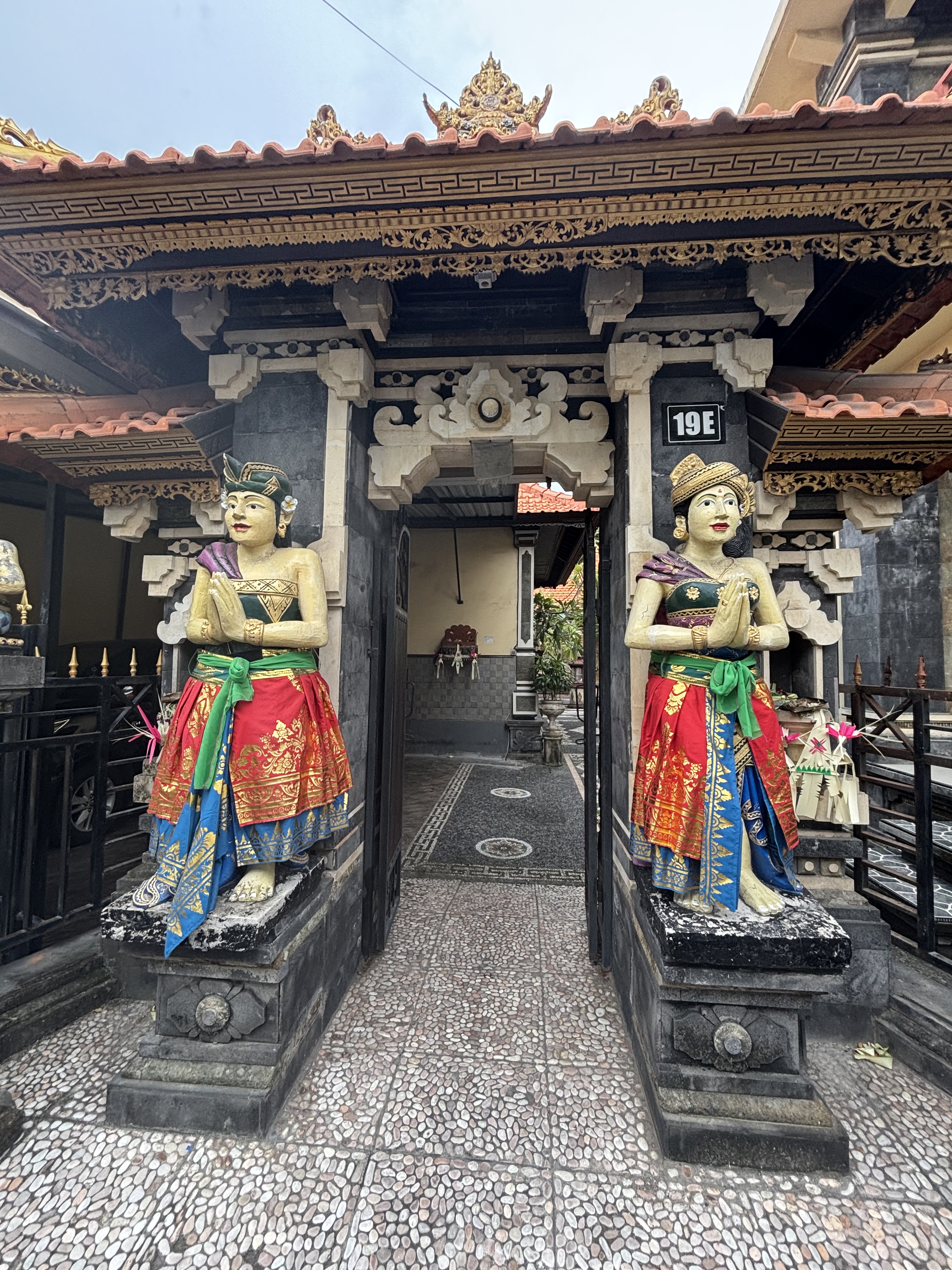
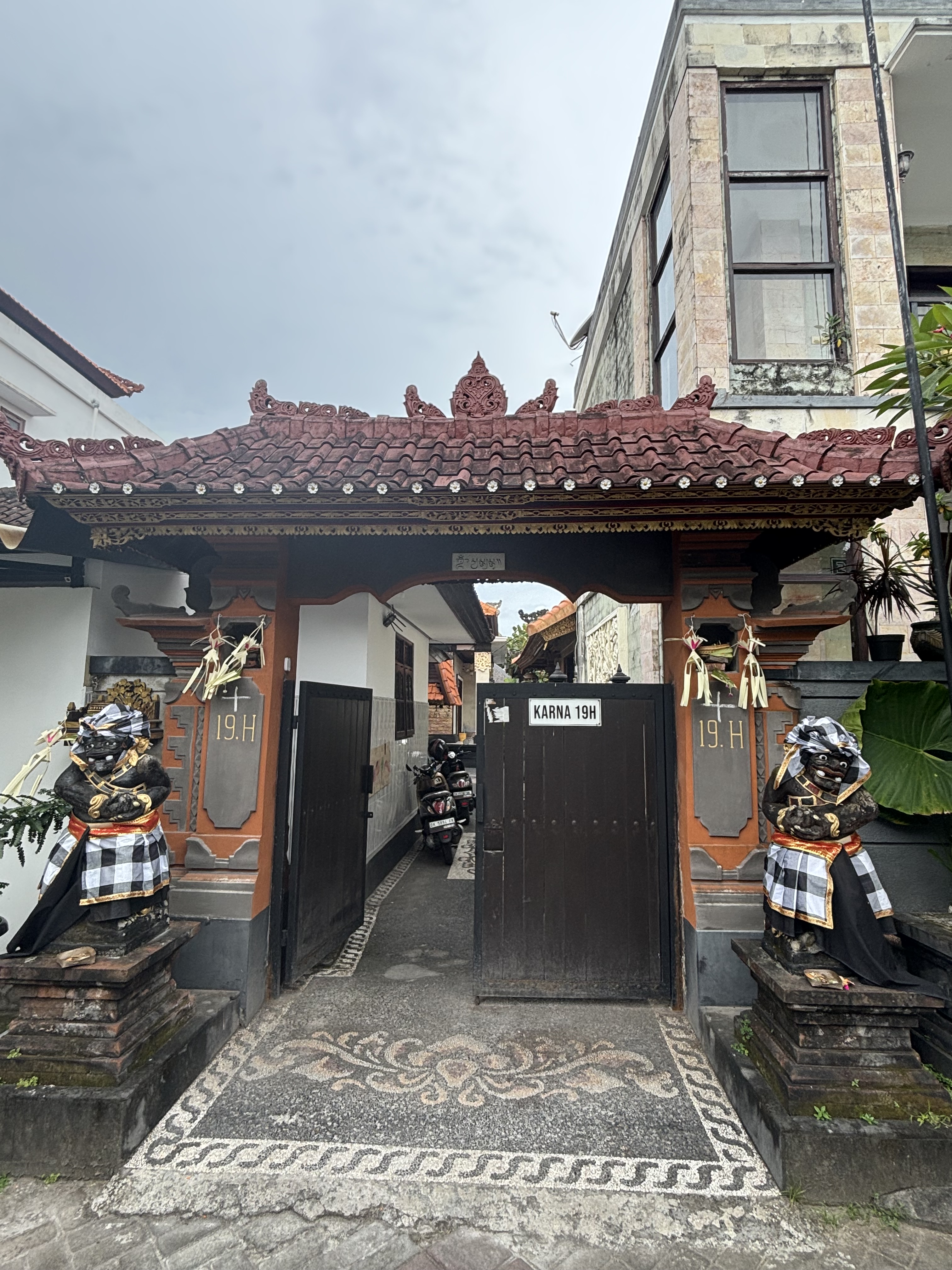
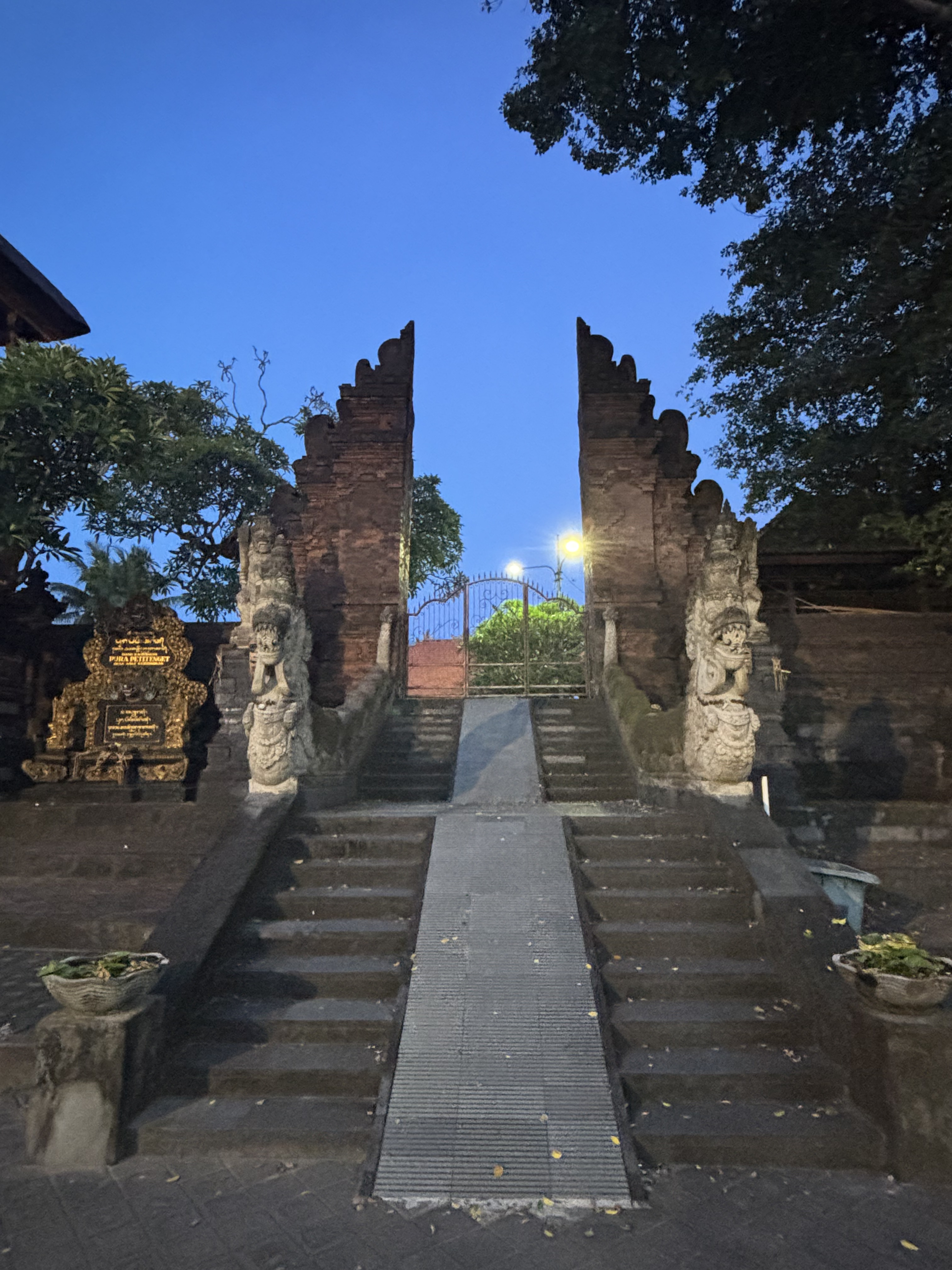
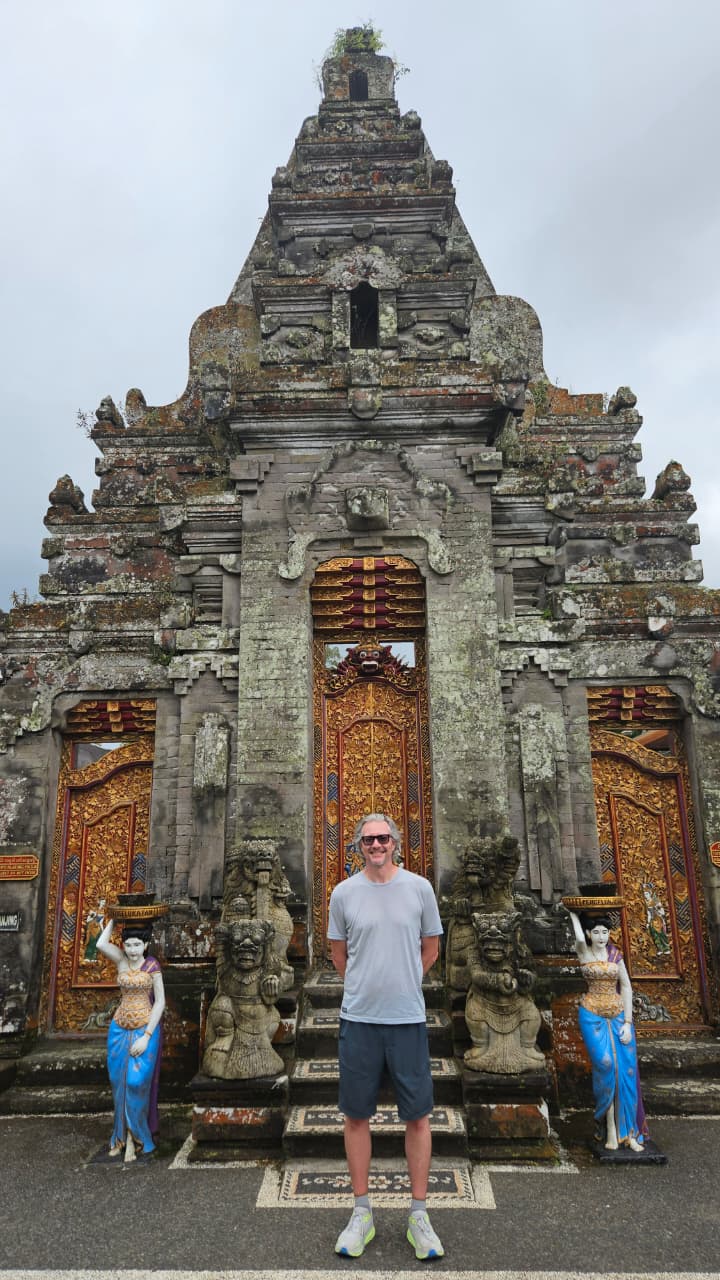
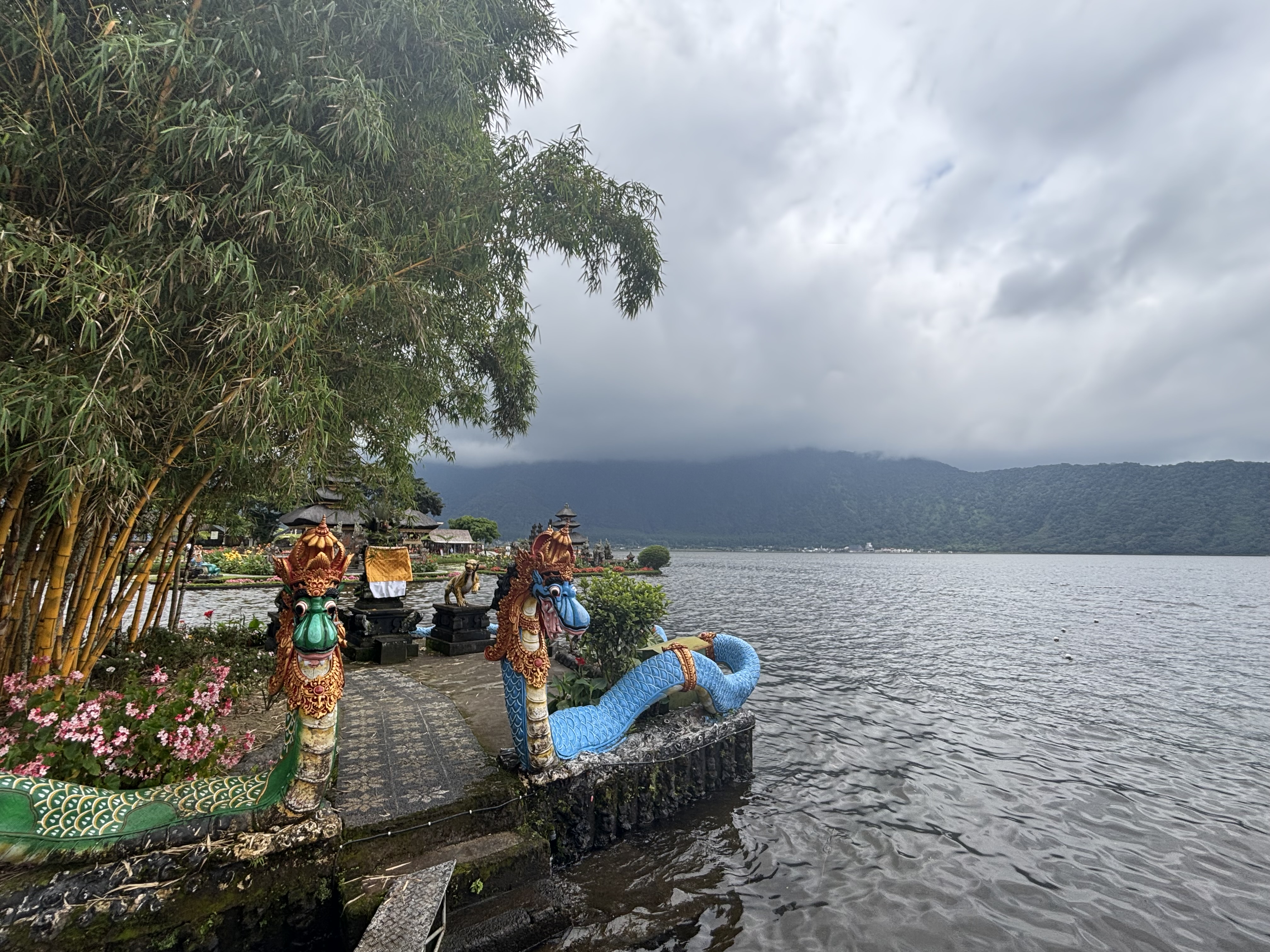
Indonesia is predominately Muslim, but most Balinese observe a unique blend of Hindu, Buddhist and indigenous beliefs. All of the locals I met described themselves as not being especially devout. That said, they still observe the custom of preparing daily offerings representing the circle of life (typically consisting of seeds, dirt, flowers, fruit and incense sprinkled with water and wrapped in a square of woven bamboo leaves) that are gently placed in front of doorways, gods and other areas where a blessing is desired. Ornately decorated temples can be found in some of the most unlikely places – perched along seaside cliffs, hidden in mountain valleys and down narrow alleyways.
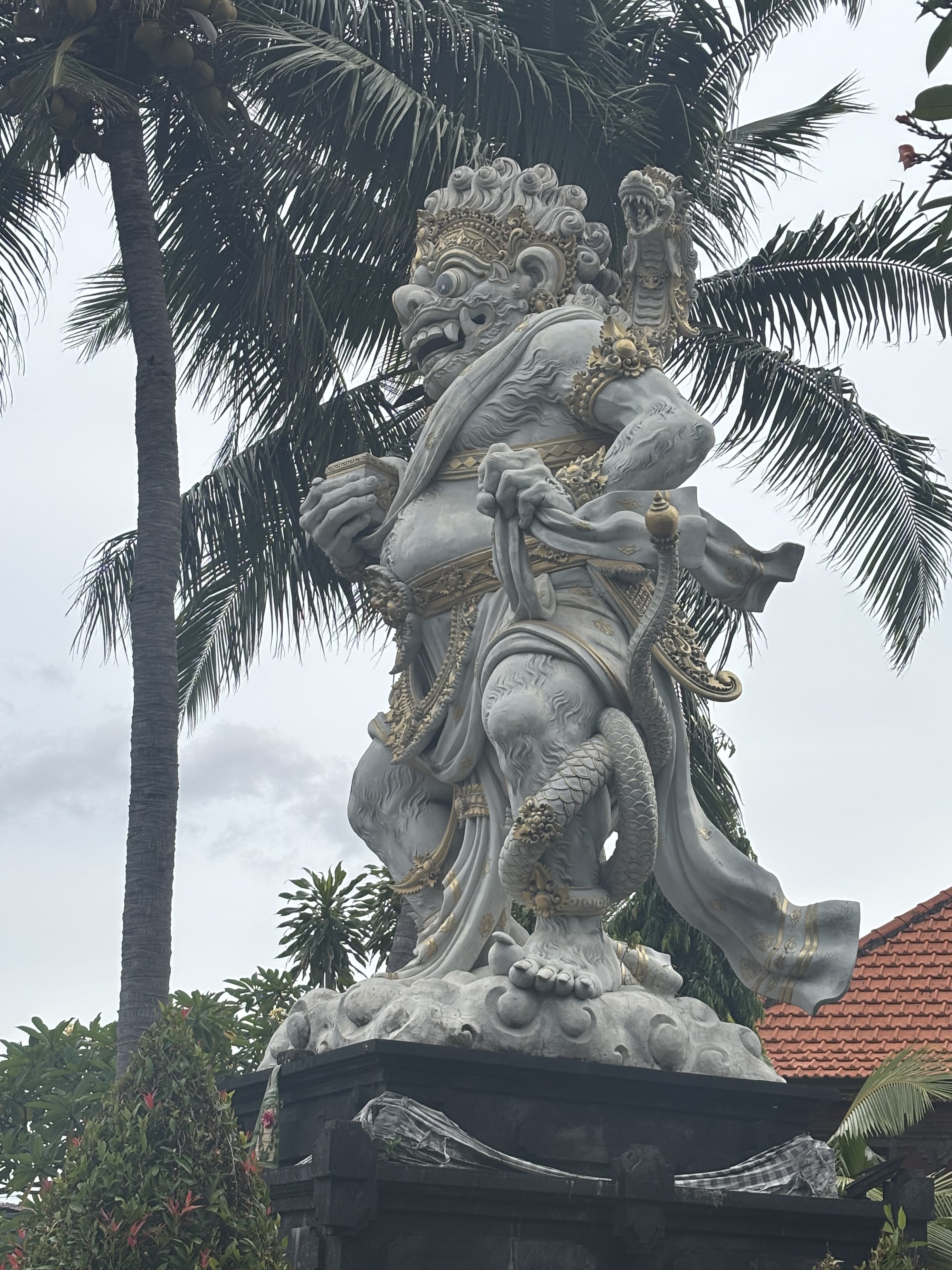
While southern Bali is a surfing destination, central and northern Bali is a tropical jungle paradise and spiritual retreat that has long appealed to an entirely different sort of traveler. Unfortunately, Bali has fairly earned its reputation for traffic congestion, so don’t make the mistake of thinking you’ll be able to rent a car for the week and casually tour around the island spending a night or two in several different villages these days. It can easily take a couple of hours to drive 10 miles – particularly going to or from the Instagram hotspots around Ubud, and you will need an advanced degree to understand the complex system of honks and flashes required to accommodate two-way traffic on the one-lane roads. Locals pile onto motorbikes and weave bravely through the (mostly stationary) tourist-filled minivan taxis.
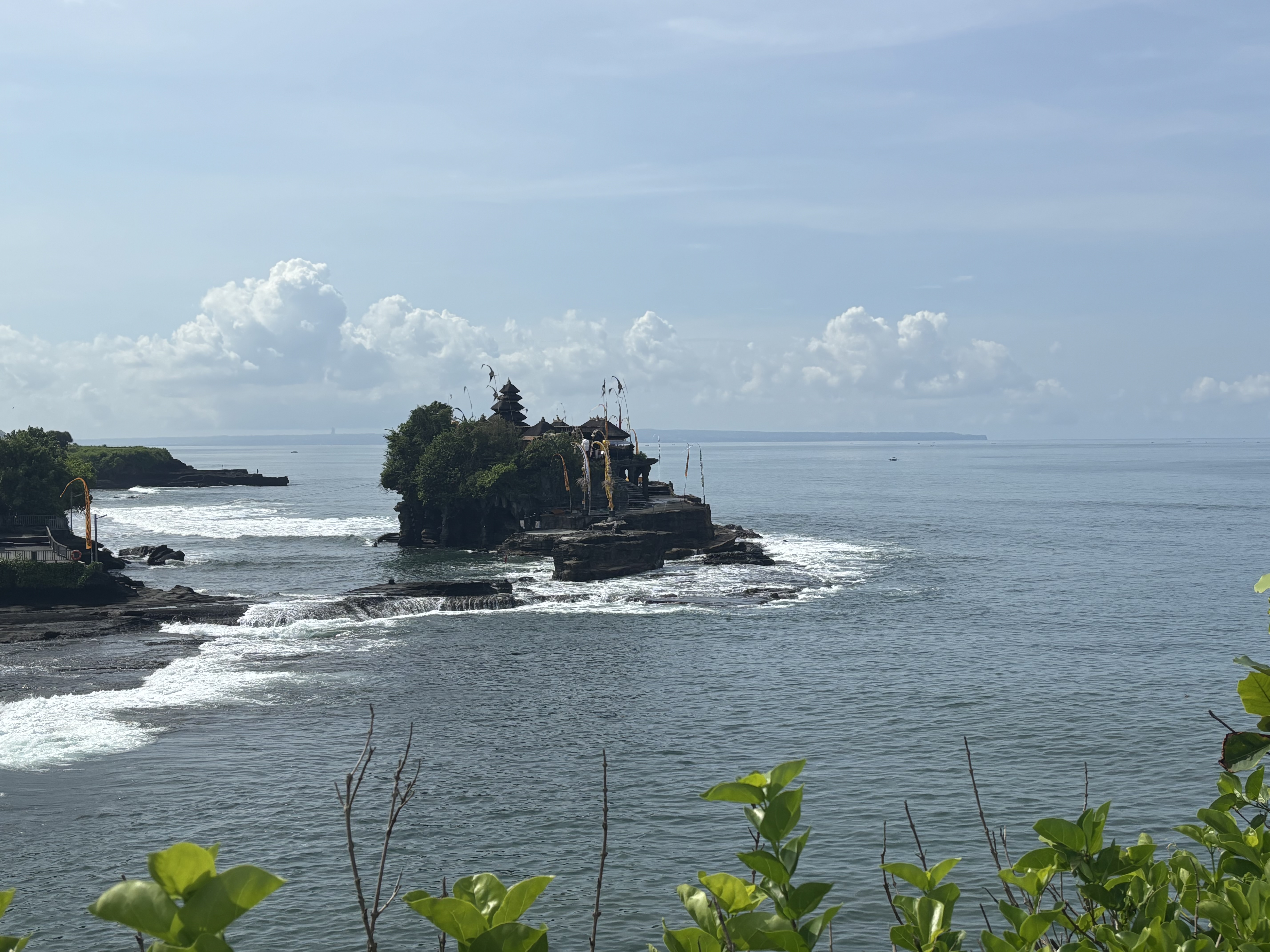
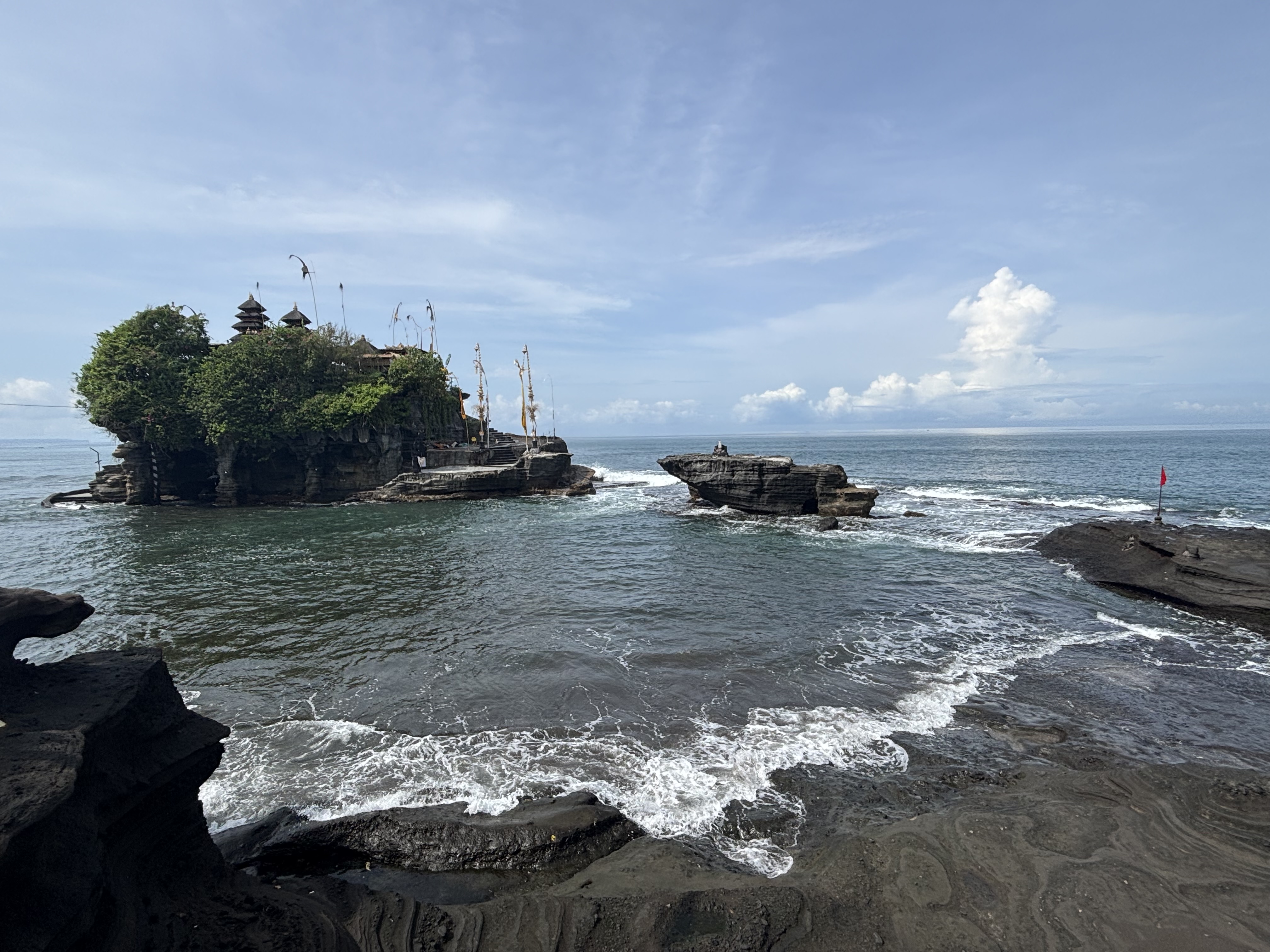
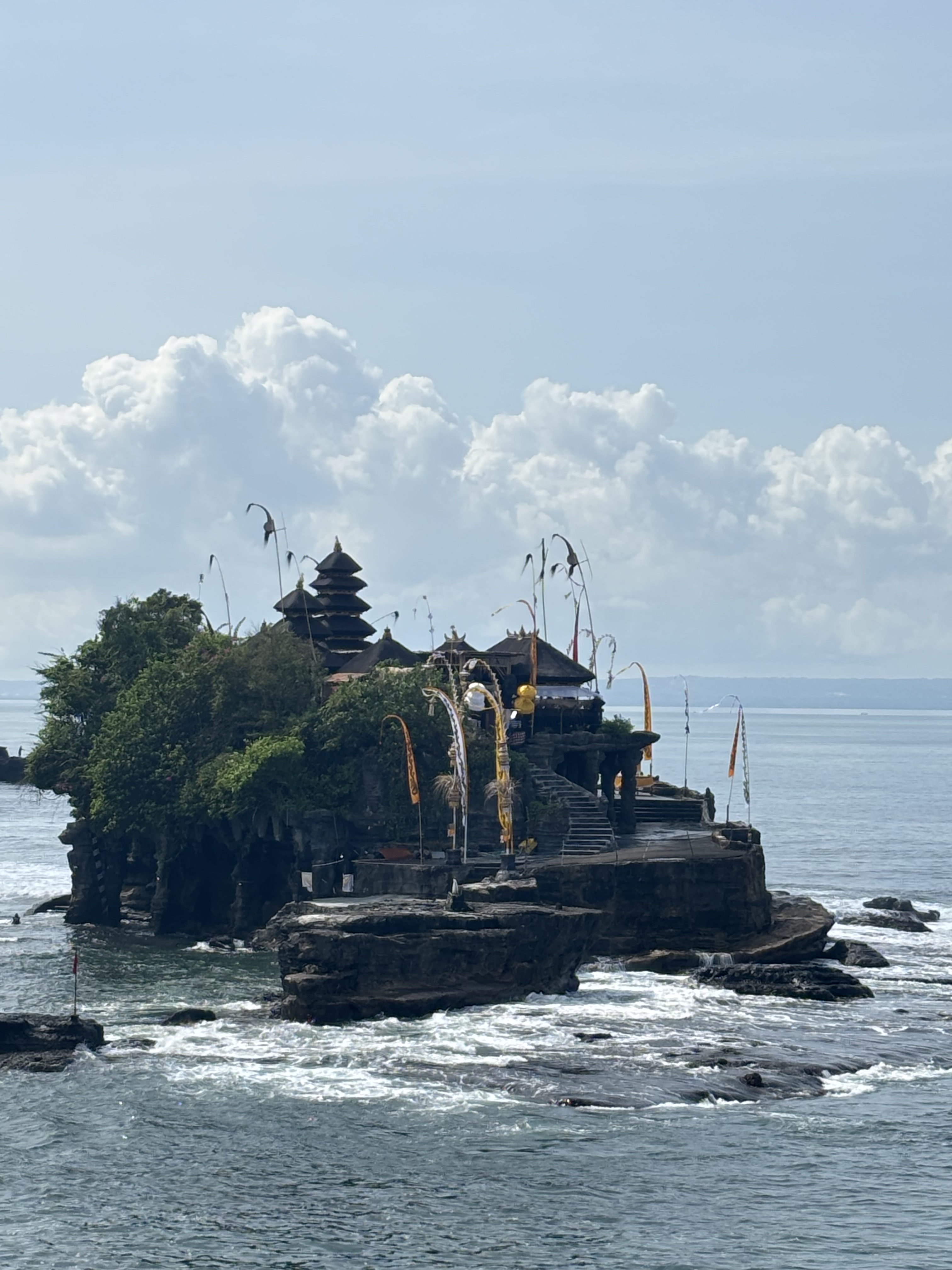
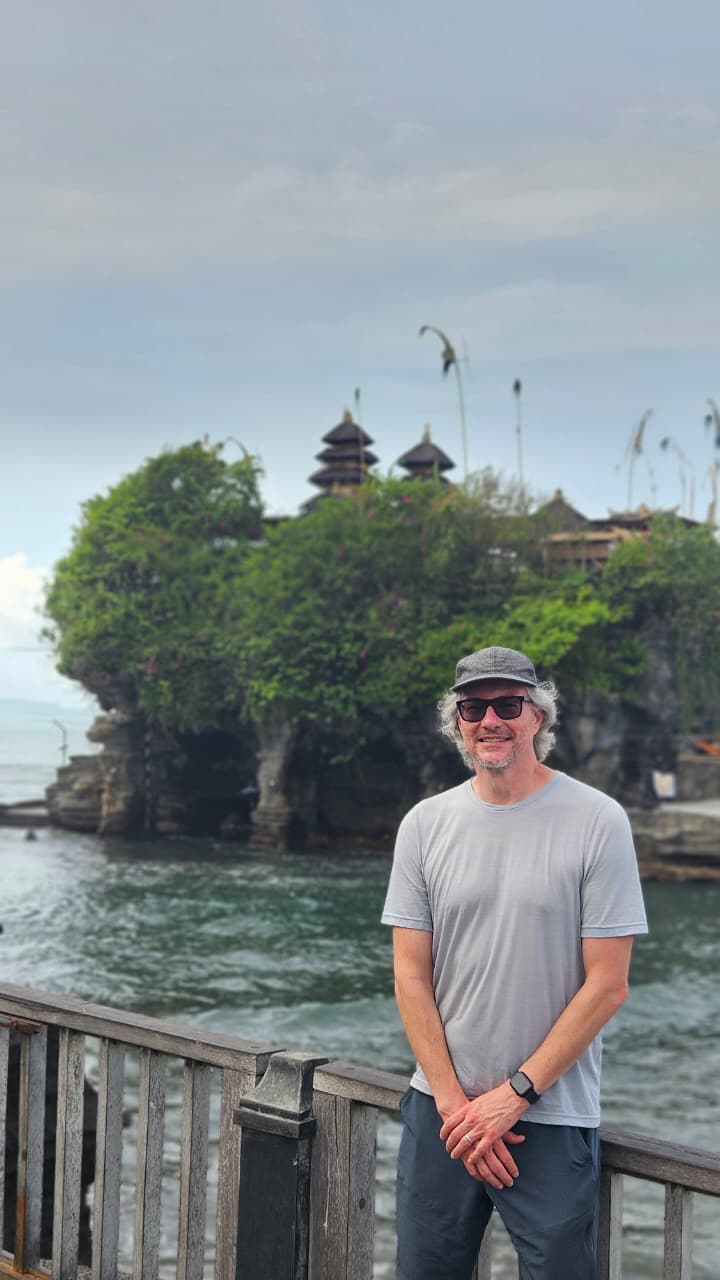
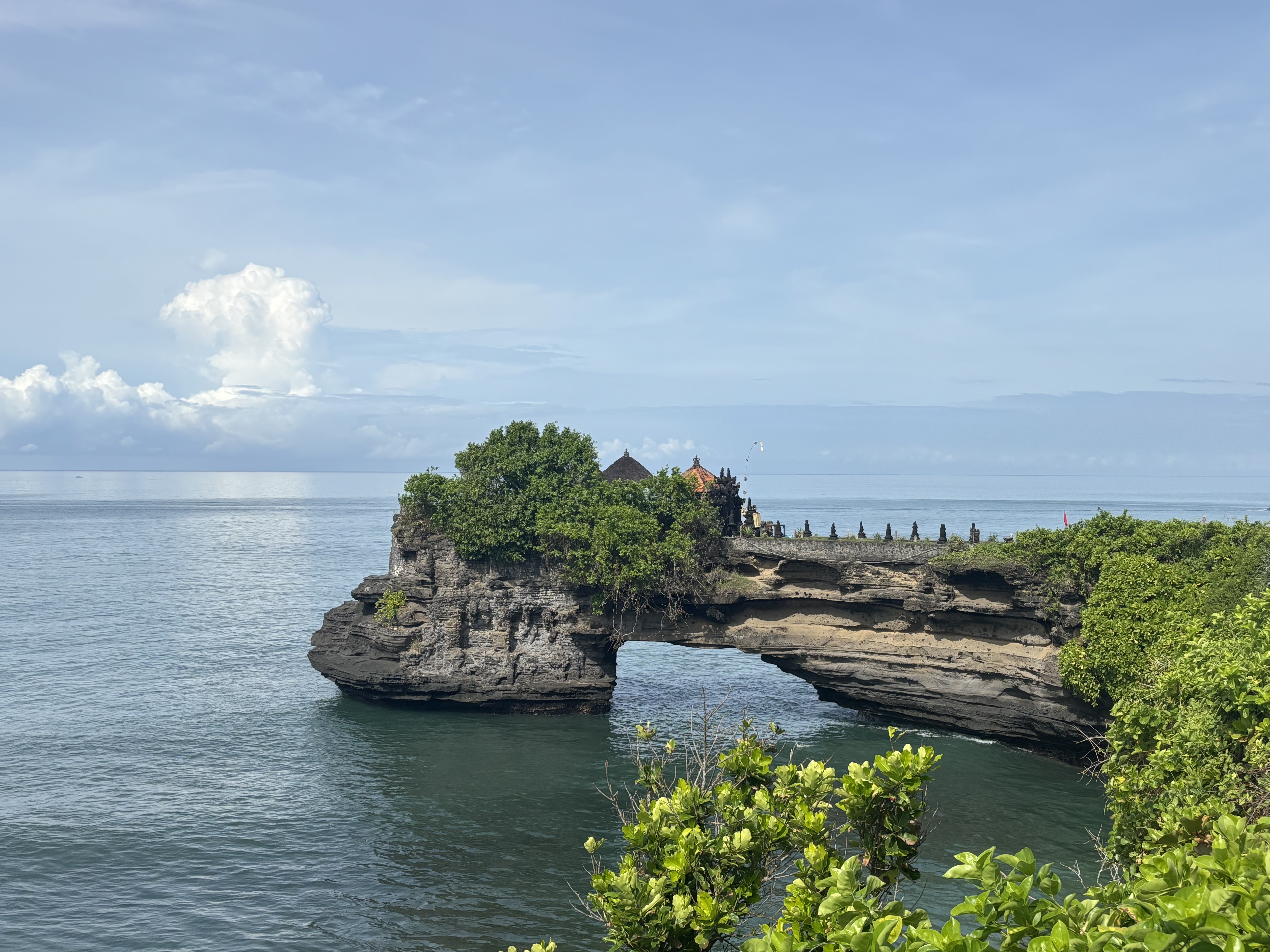
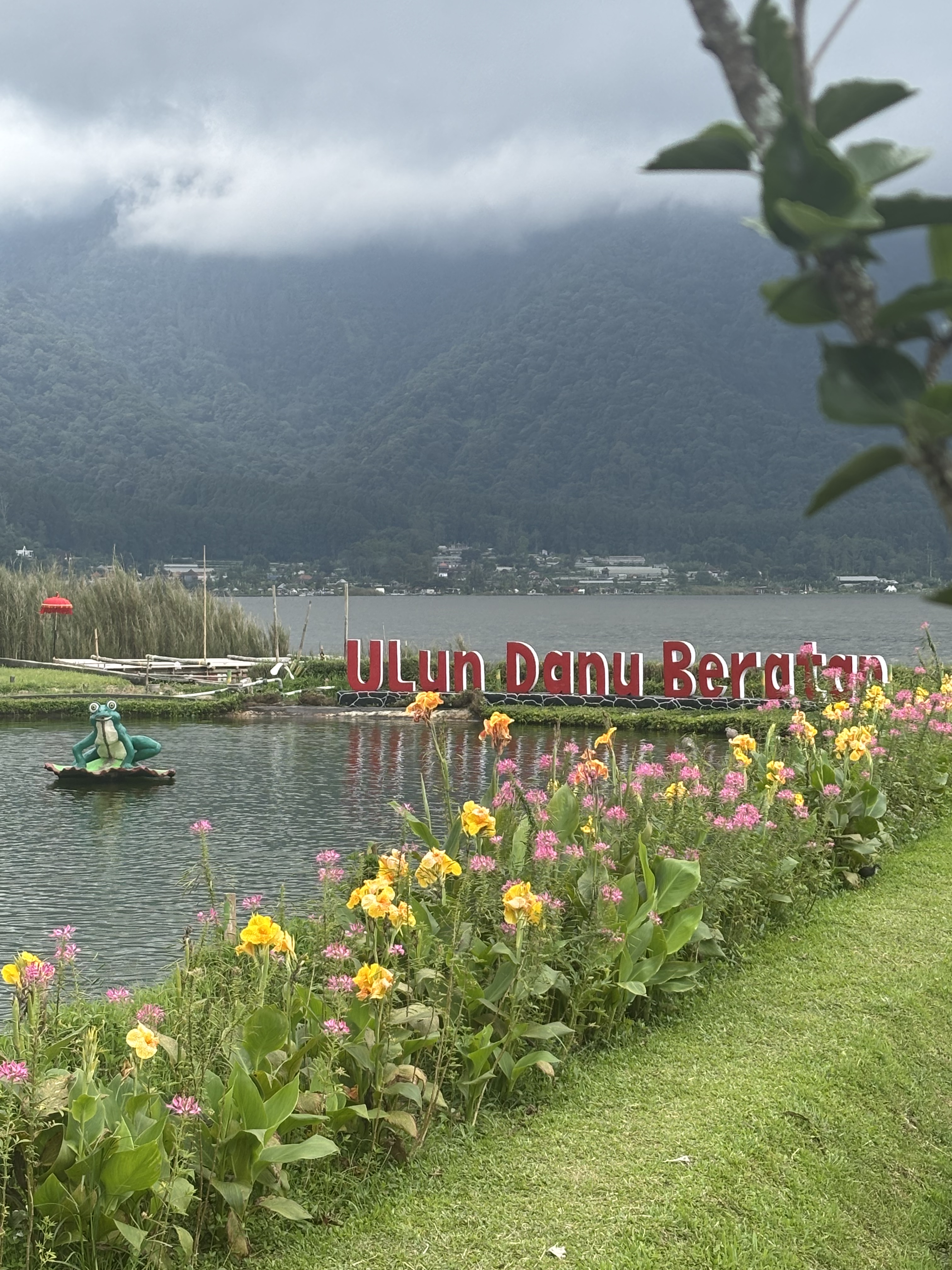
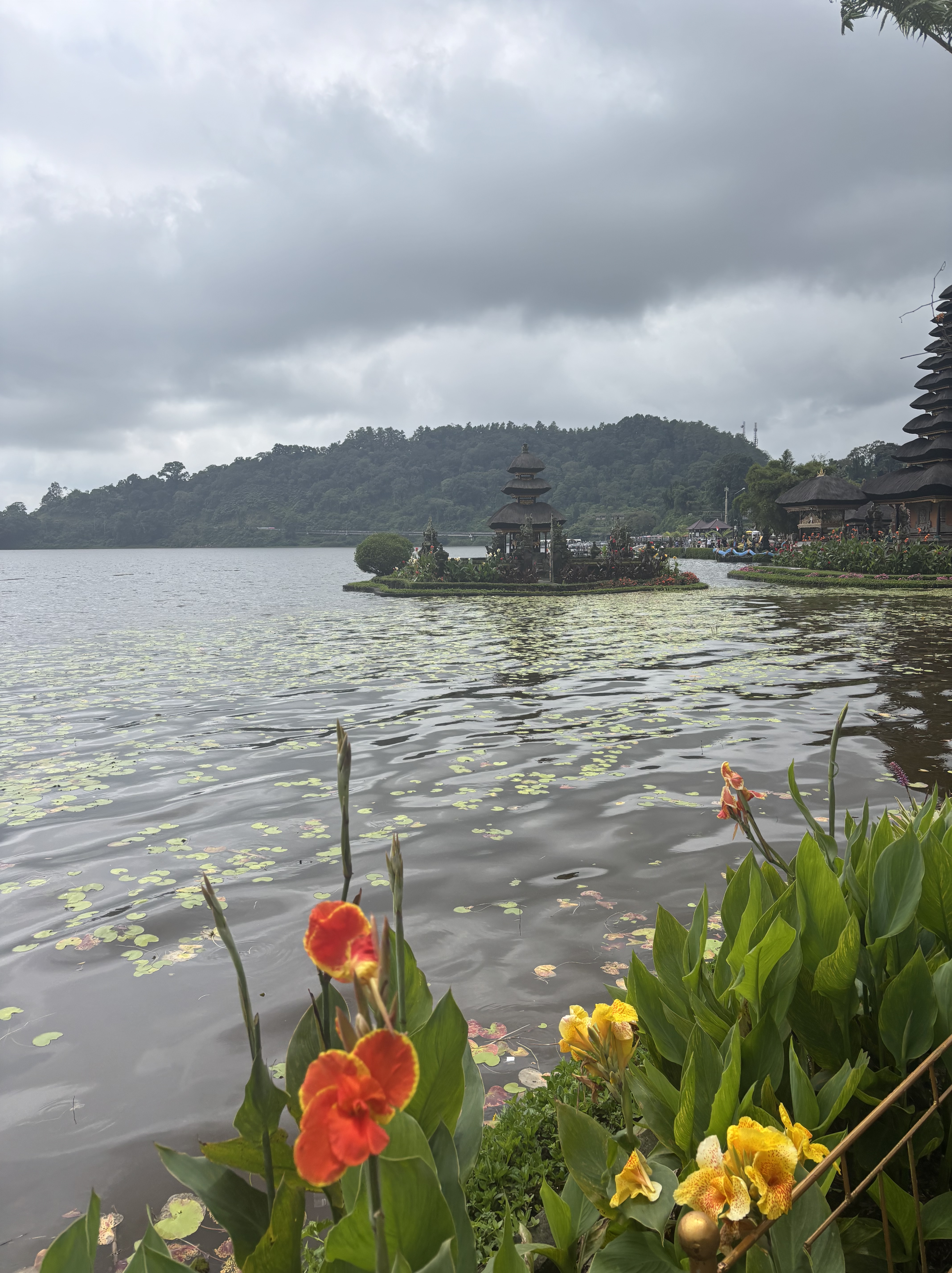
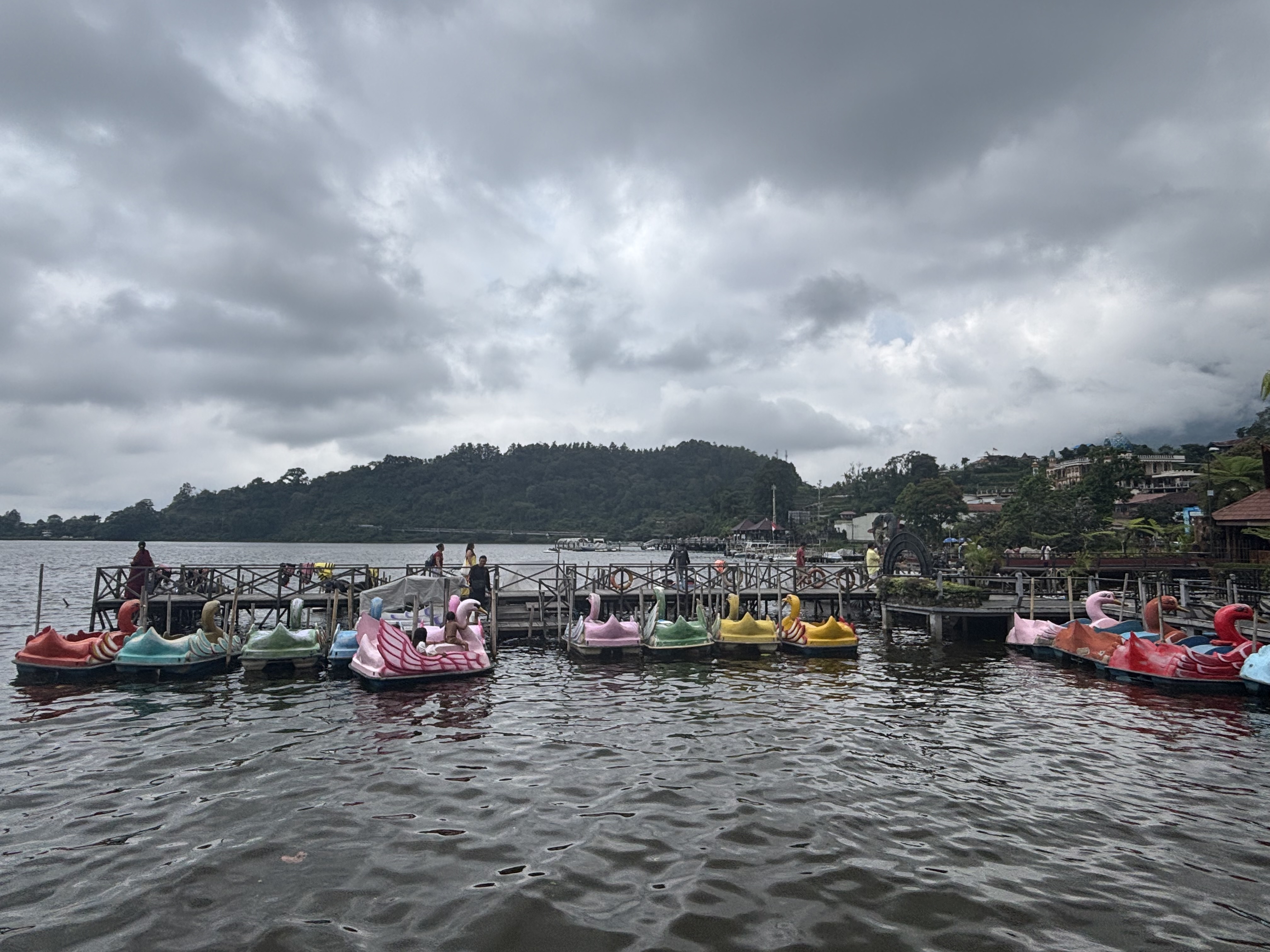
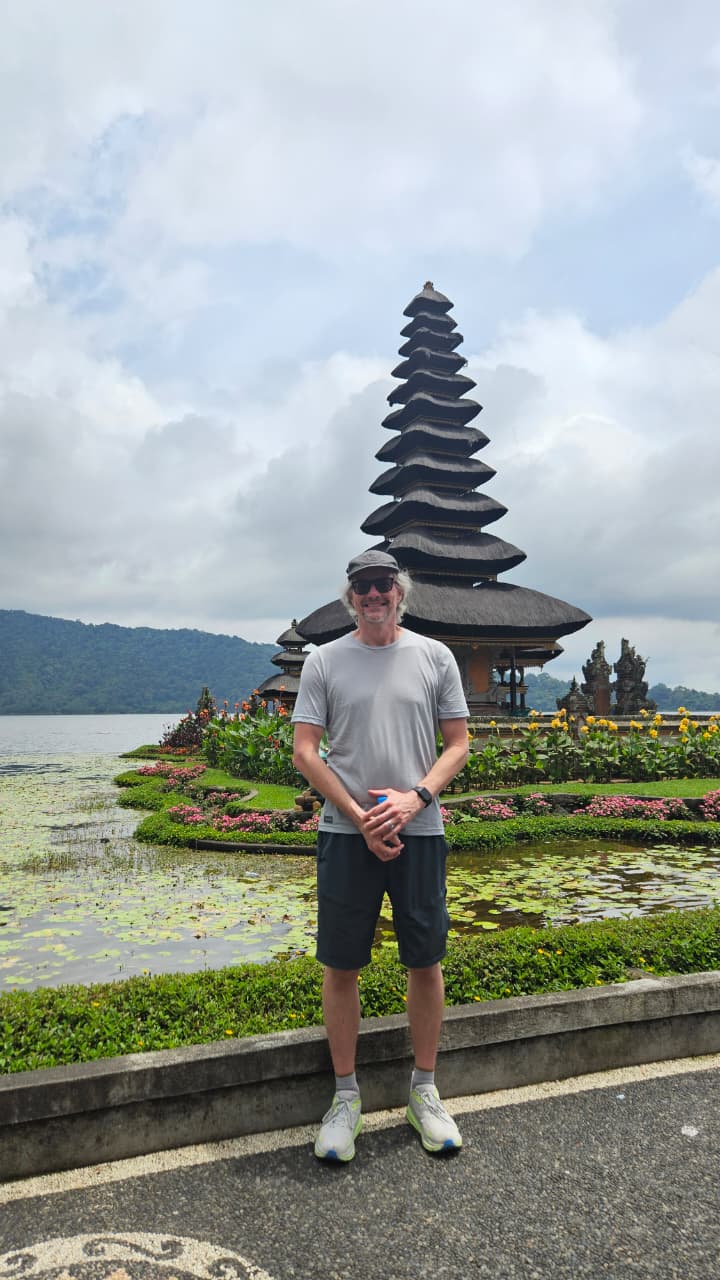
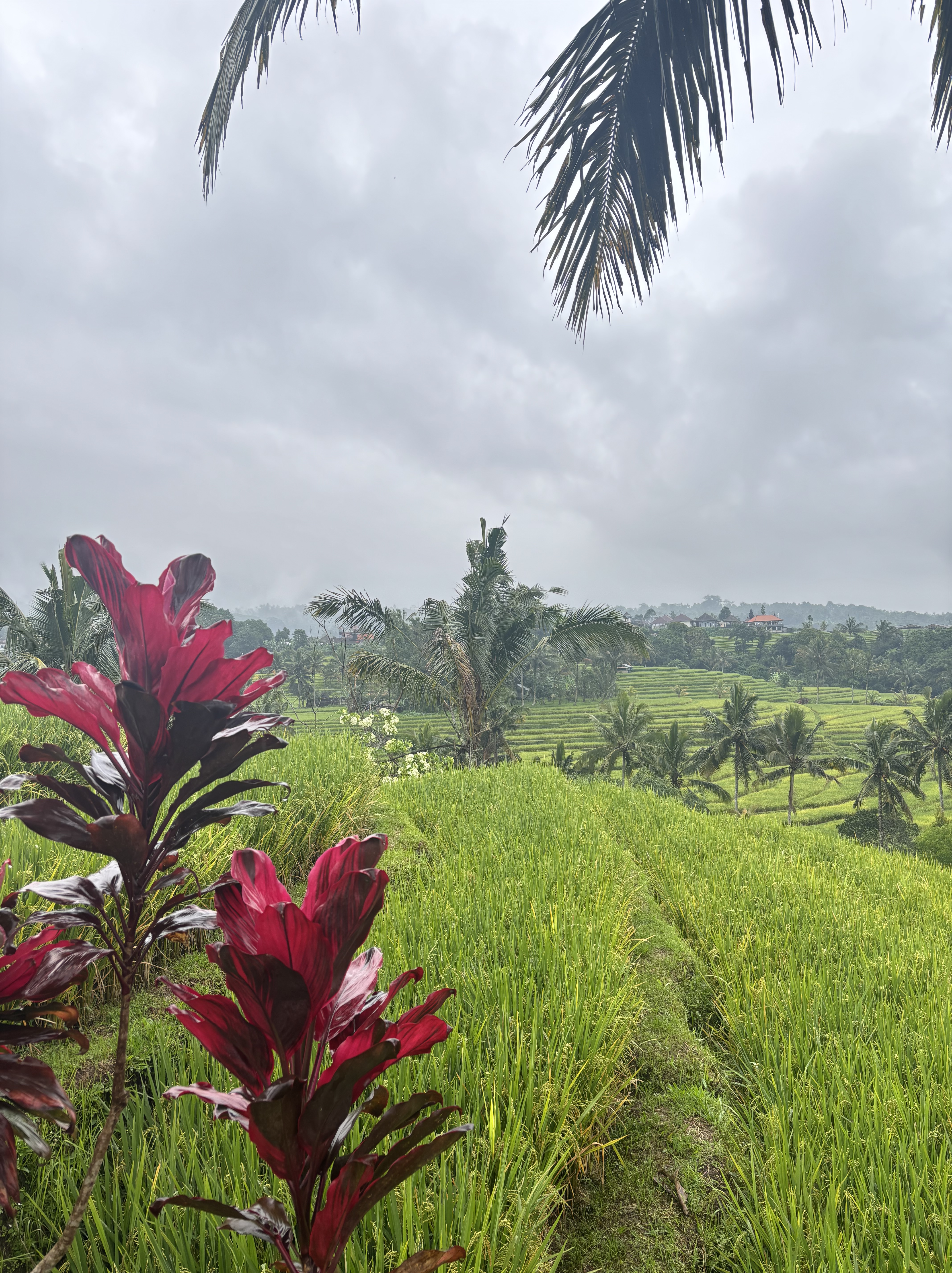
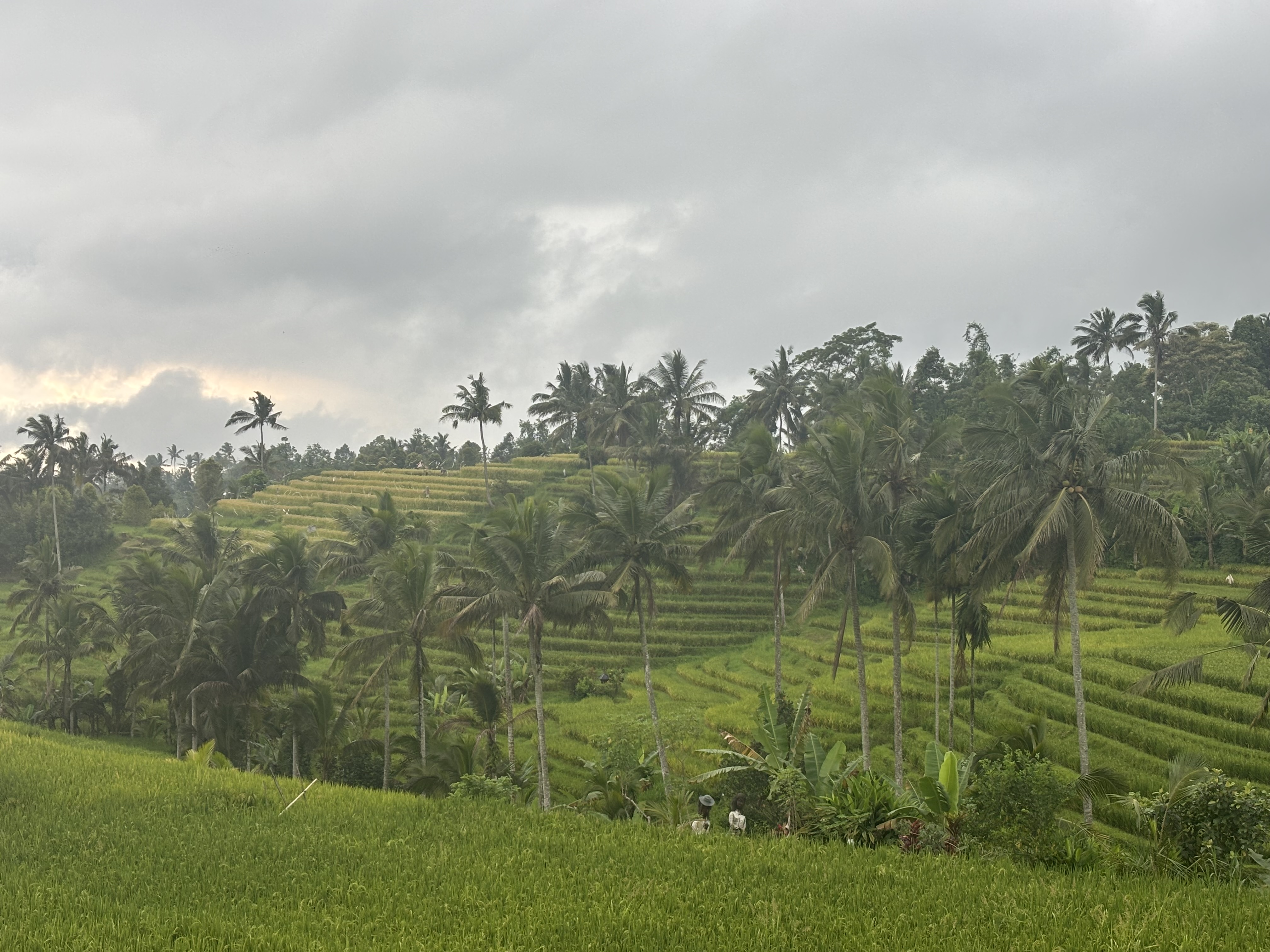
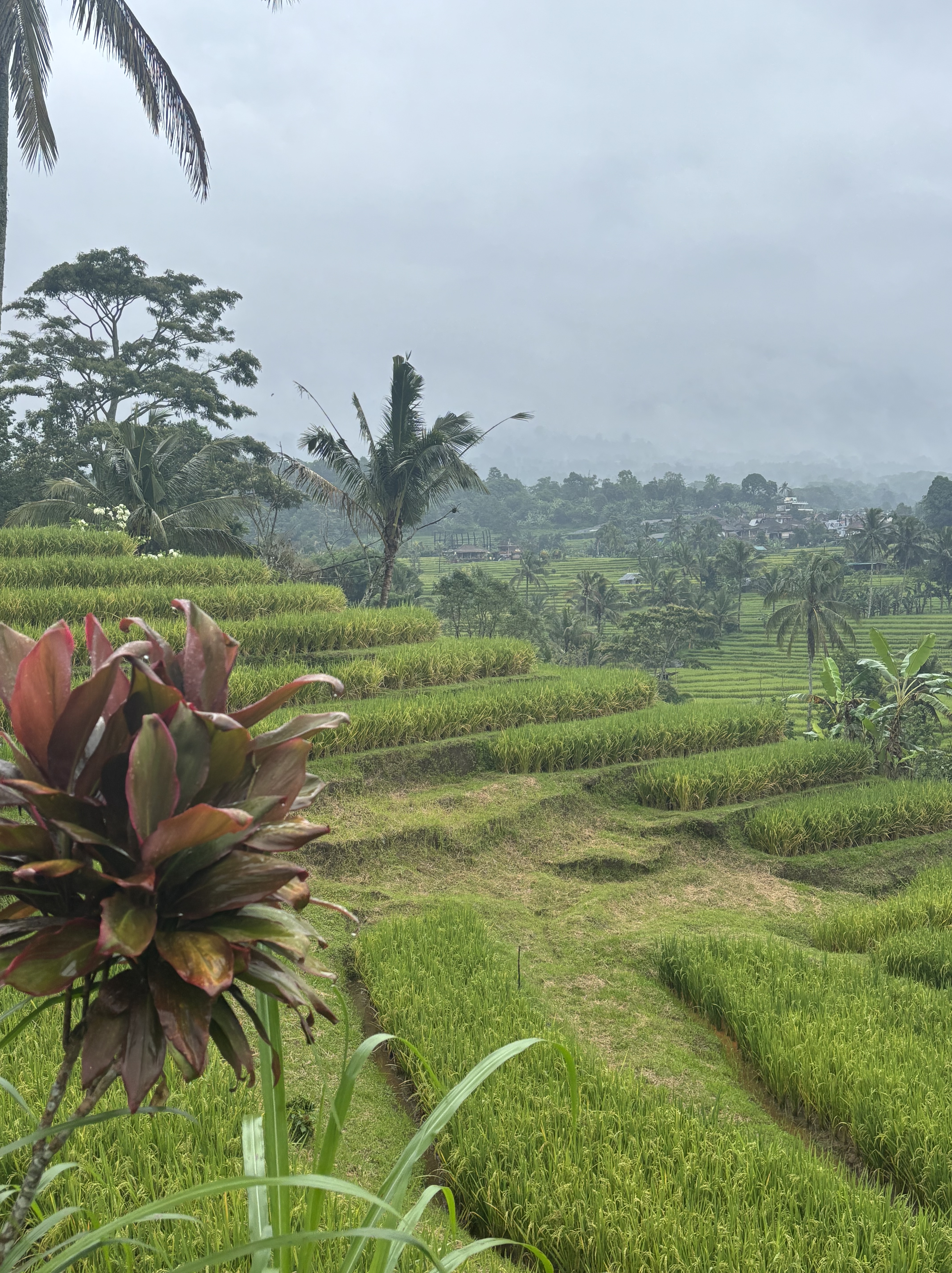
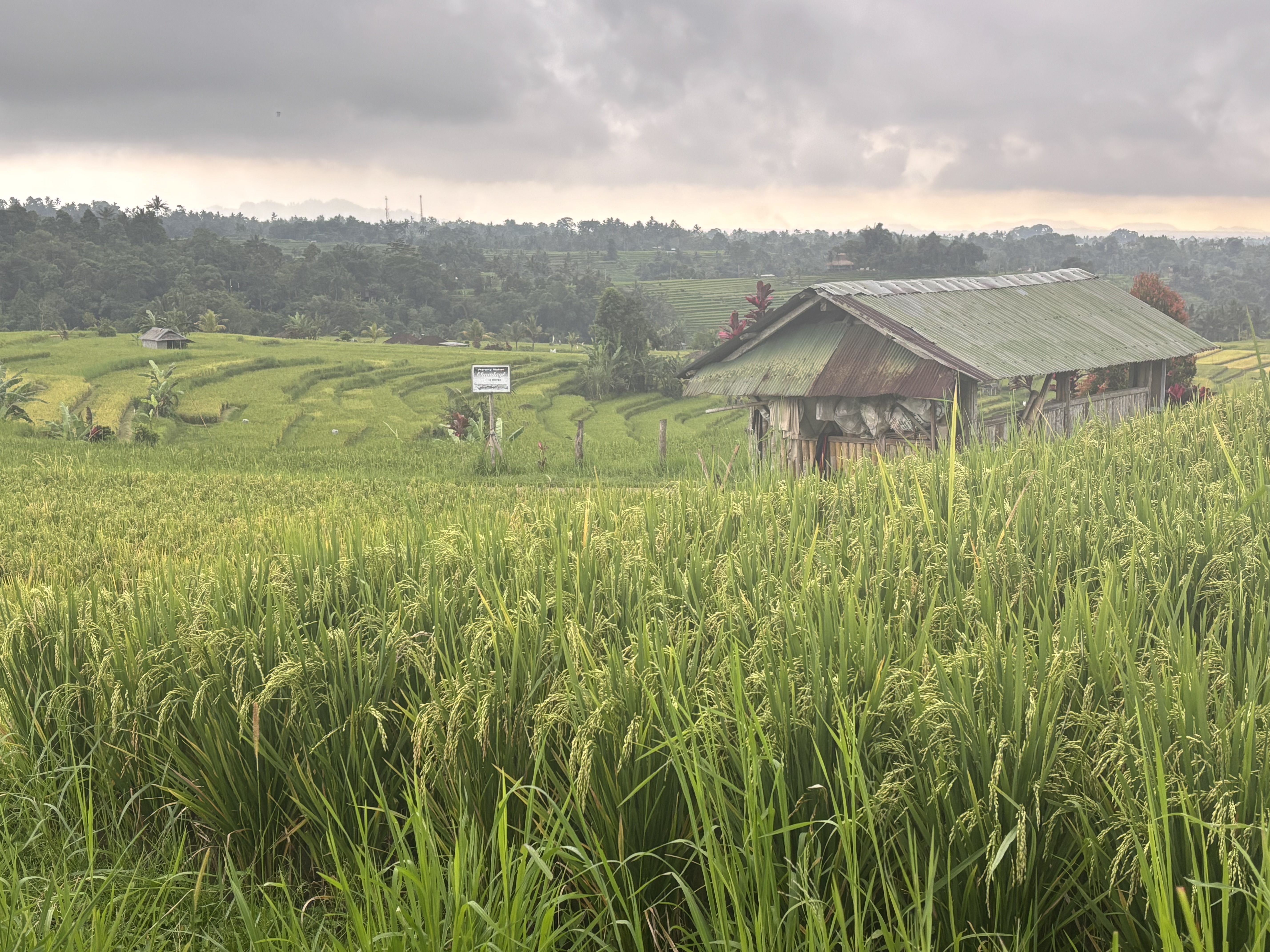
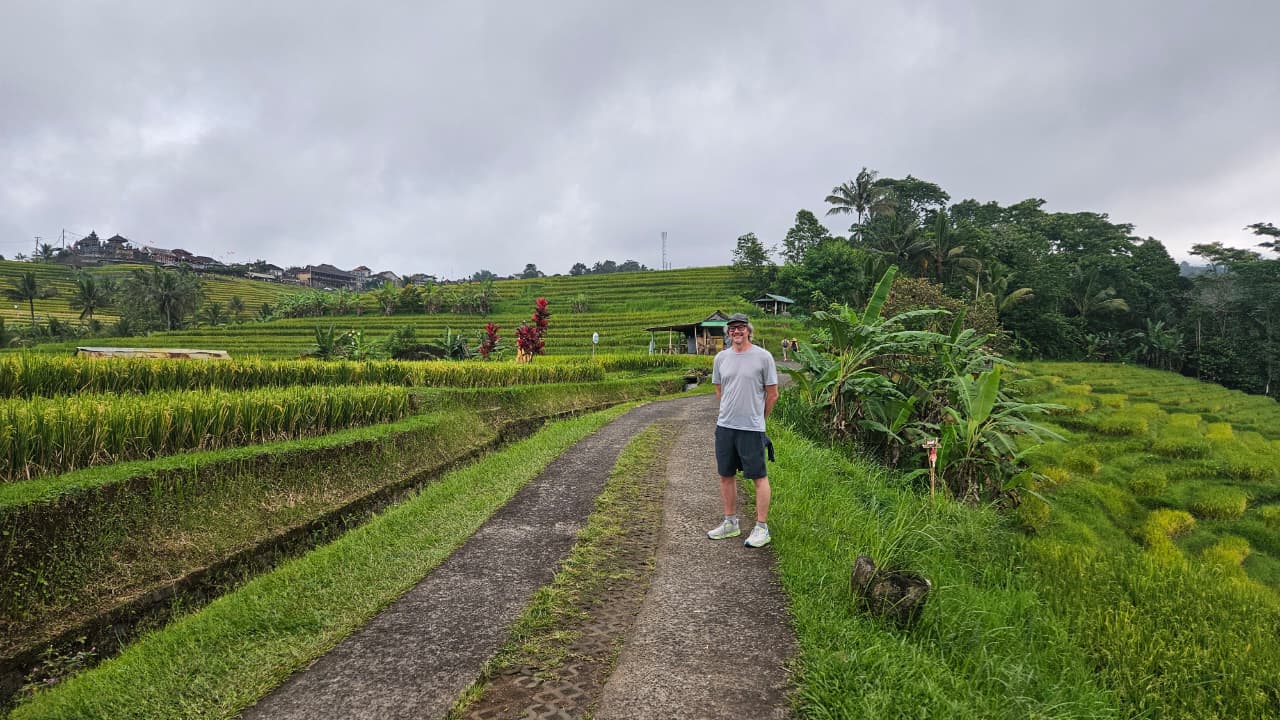
I hired a private driver to visit some of the UNESCO heritage and less-visited sights to the west and north of Ubud, which resulted in a quite memorable day of sightseeing and manageable crowds. (Another popular option is a sunrise hike to the top of a dormant volcano, but the 2:30 a.m. required departure time did not fit into what I was counting on as a rest and recuperation week.) We visited the 15th Century Tanah Lot temple that sits on a rock outcropping over the ocean, the 17th Century Ulun Danu temple built along a beautiful mountain lakeshore and the Jatiluwih rice terraces hidden in a series of rolling hills. The rich colors of the landscape were as vivid as any Instagram filter, and the lush green of the rice terraces (although blurred somewhat by an unfortunately timed rain shower) was breathtaking.
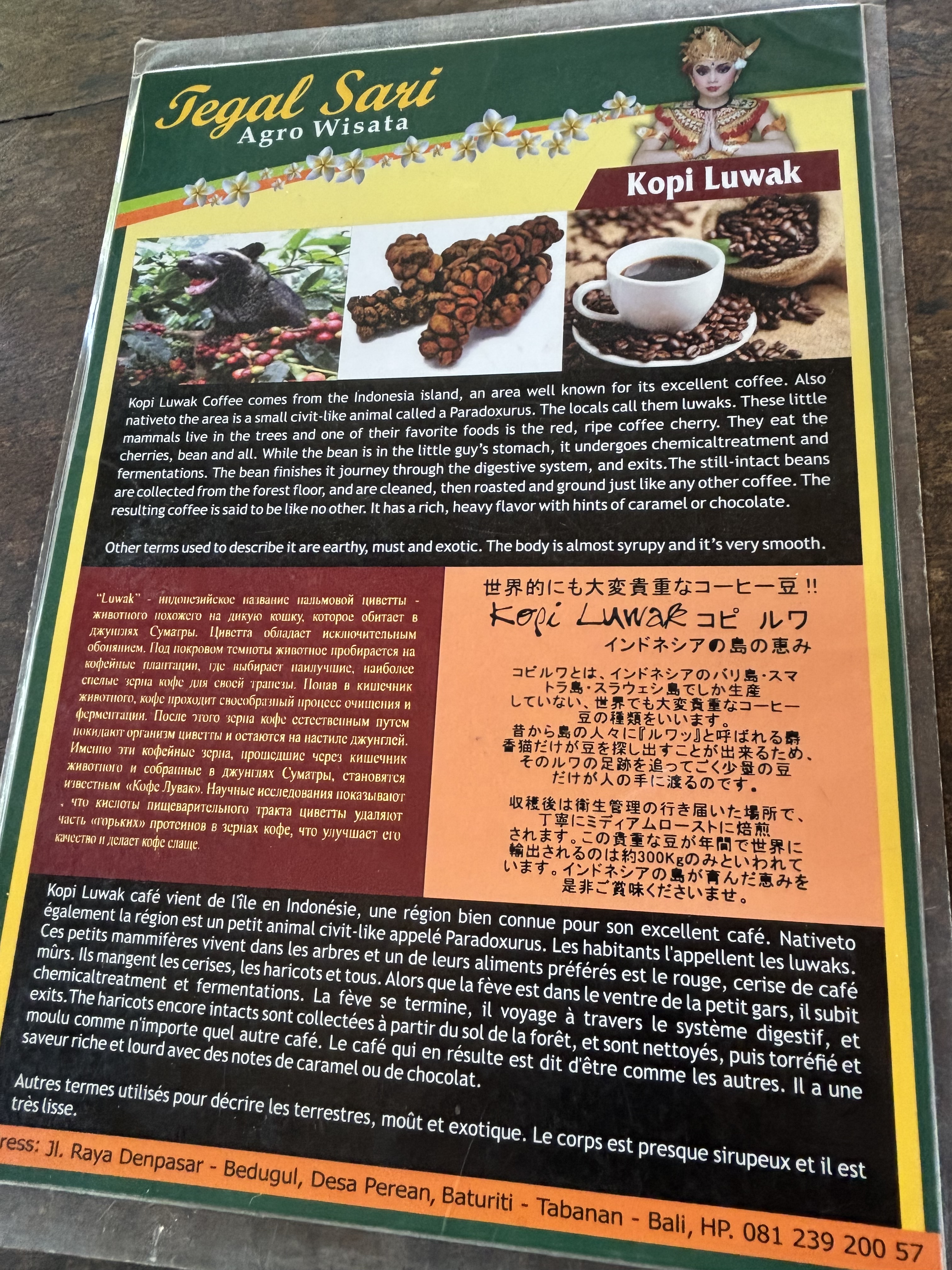
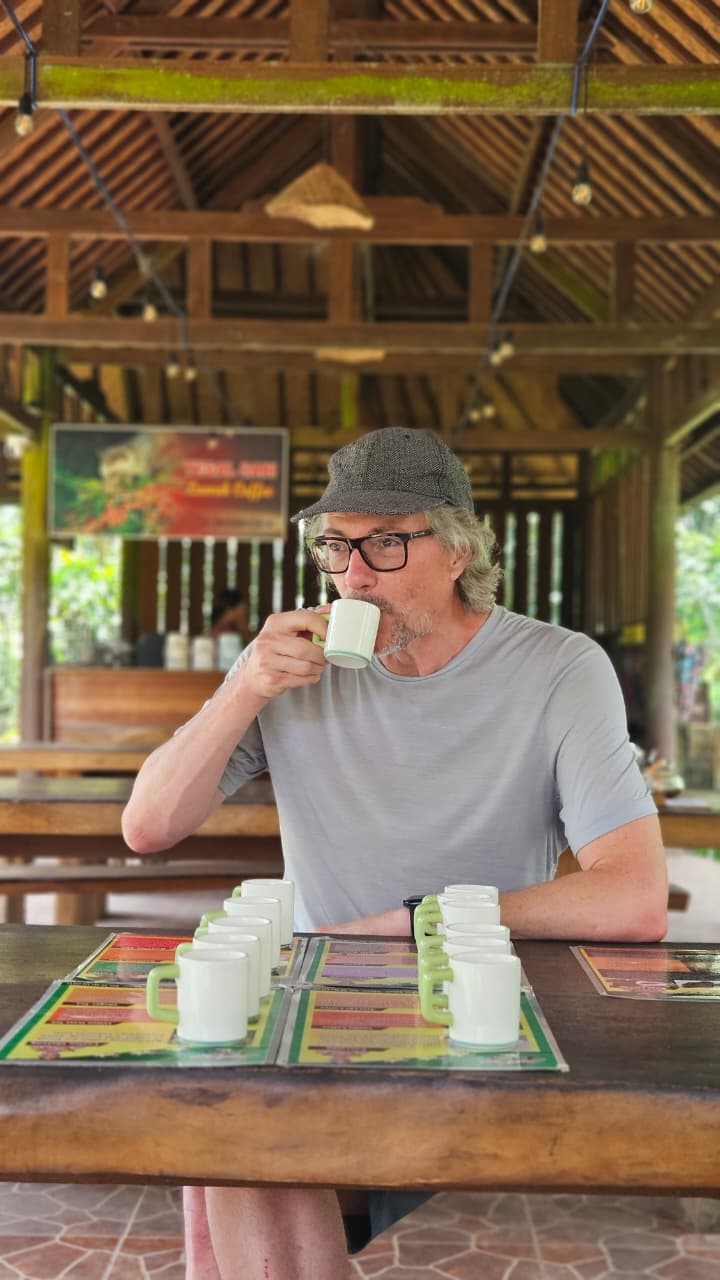
One highlight was a stop at a coffee plantation for a tea and coffee tasting. It was interesting to try the different varieties, but the stars of the show were the animals responsible for the prized beans. Luwaks are nocturnal (and quite adorable) mammals that typically are locked up in cages to sleep during the day because they have been known to eat animals as large as chickens when they can’t satisfy their hunger with their preferred vegetarian diet. They are let out at night to climb around coffee trees eating the berries. The luwaks swallow the berries whole, where the little fruits undergo a fermentation process in the stomach before being excreted whole. The berries are then collected, cleaned off, opened to reveal the beans inside and roasted like a normal coffee bean. Because they have been pre-fermented, they supposedly have less acid than regular coffee beans. I will admit to having been more than a little skeptical the first time someone asked if I’d had the “poop coffee” yet.


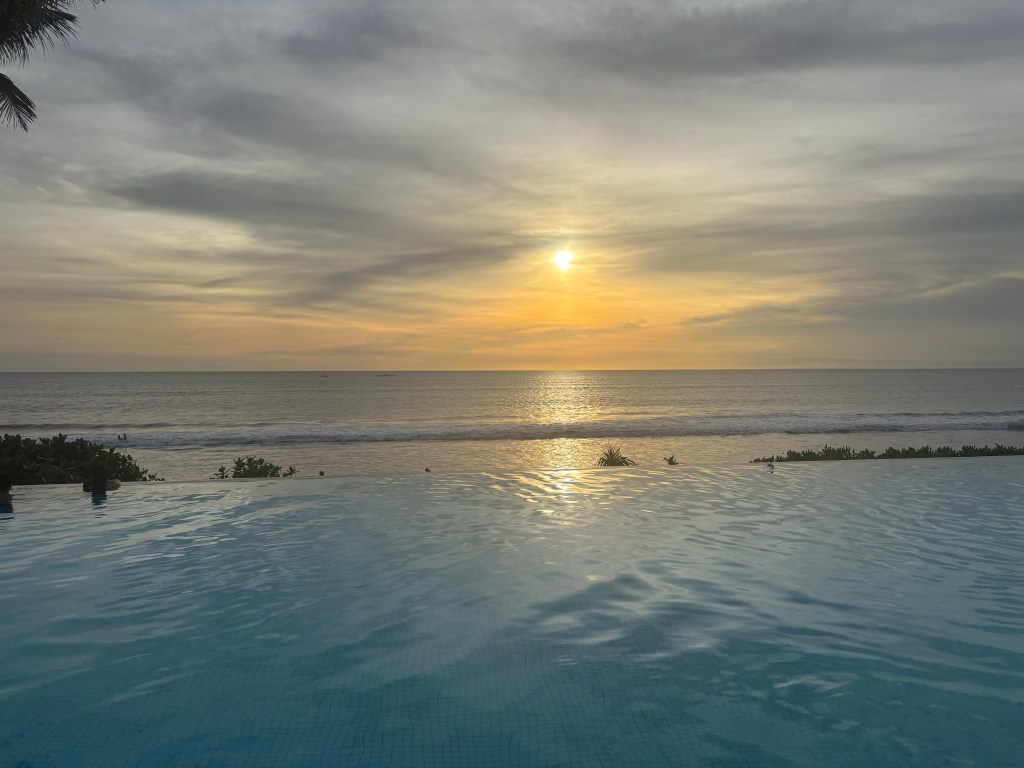
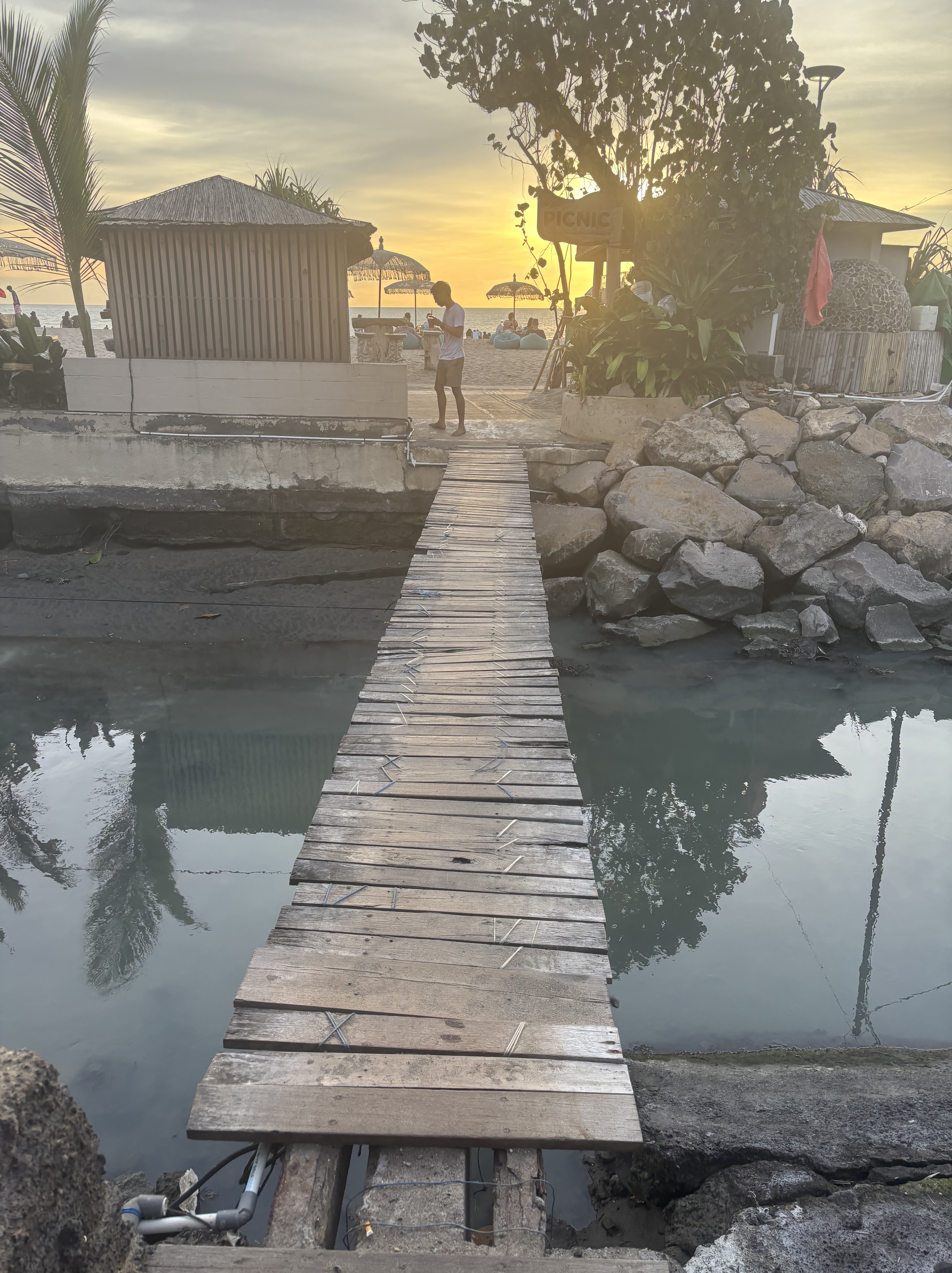
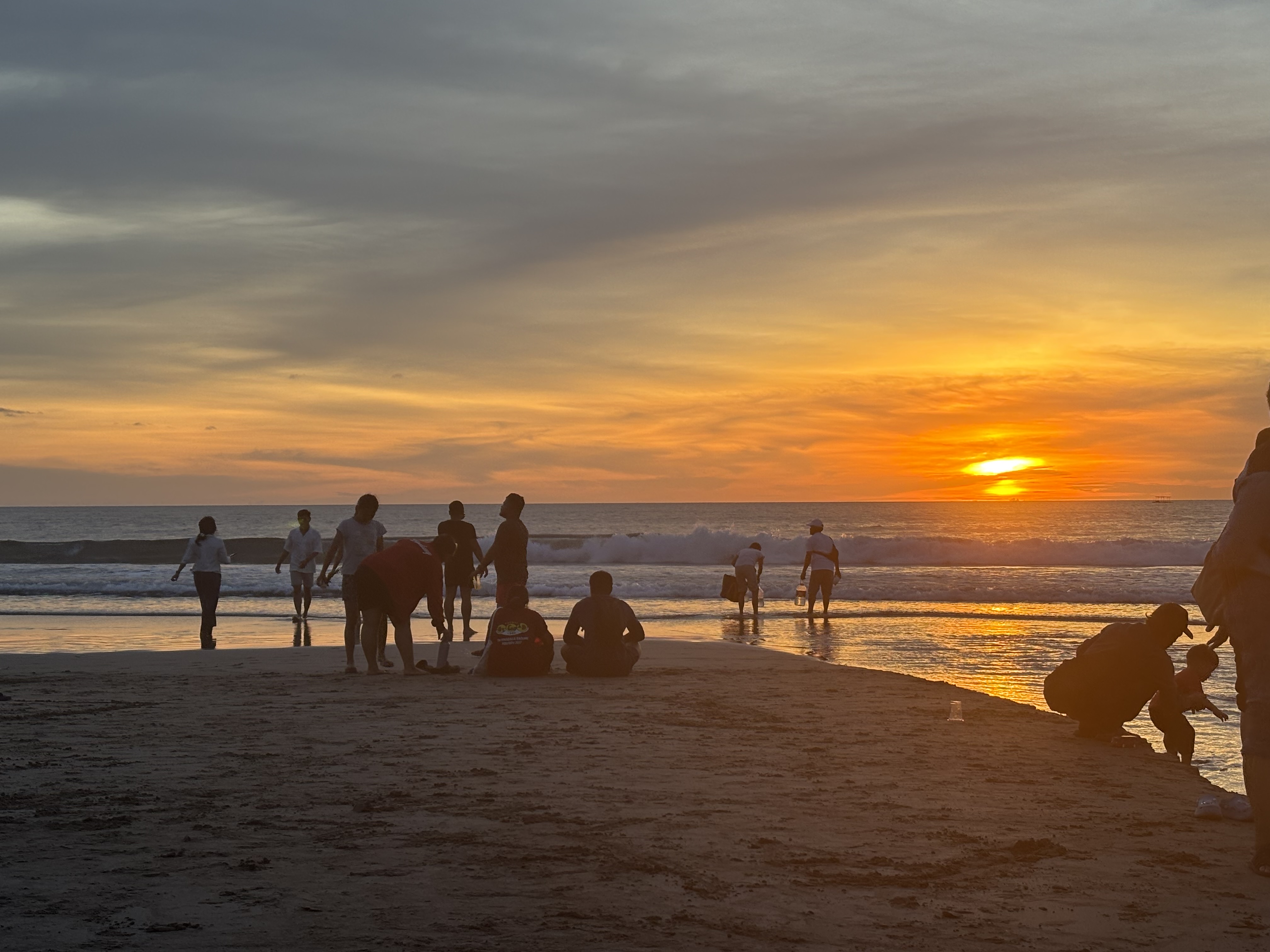
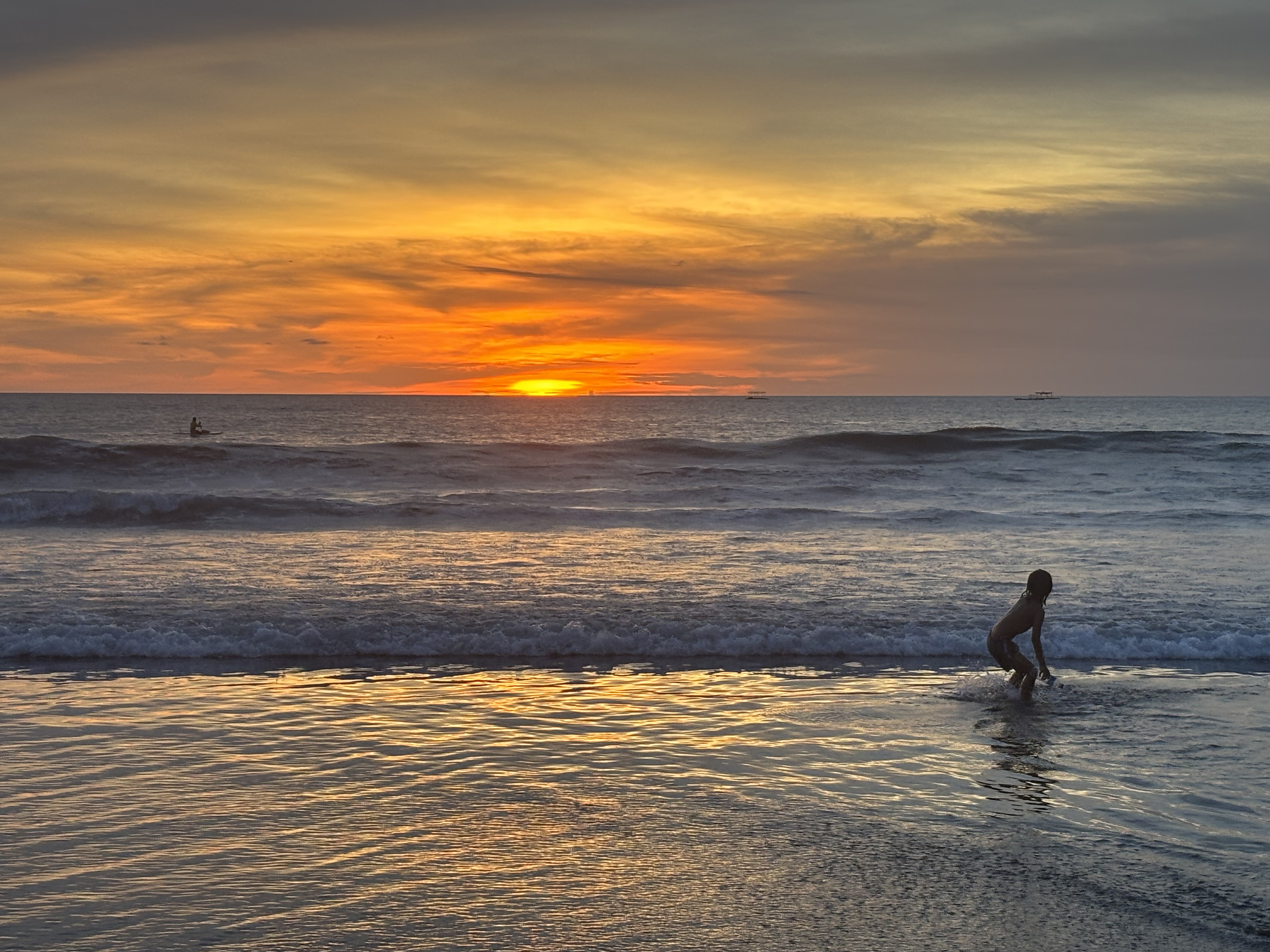
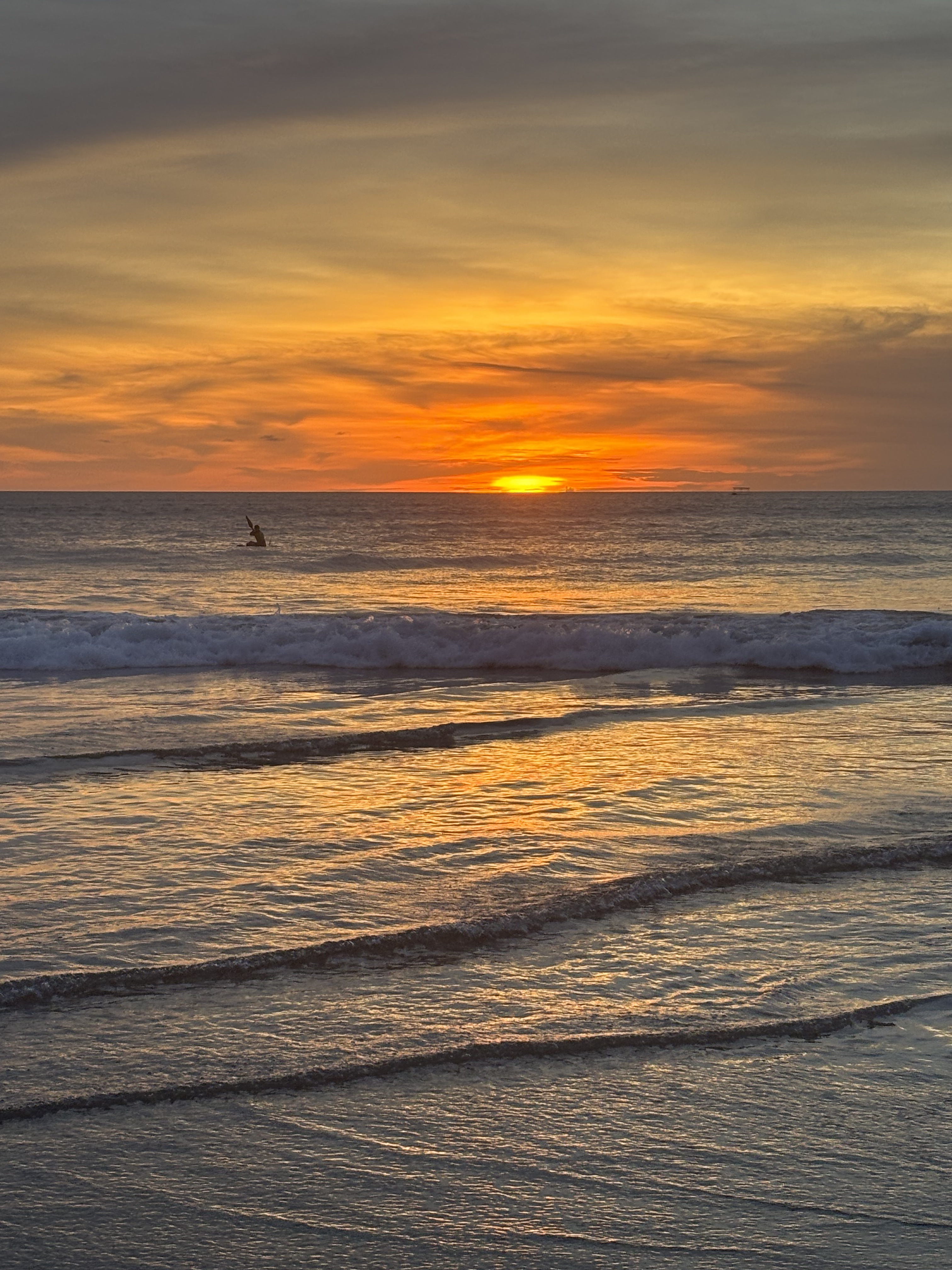
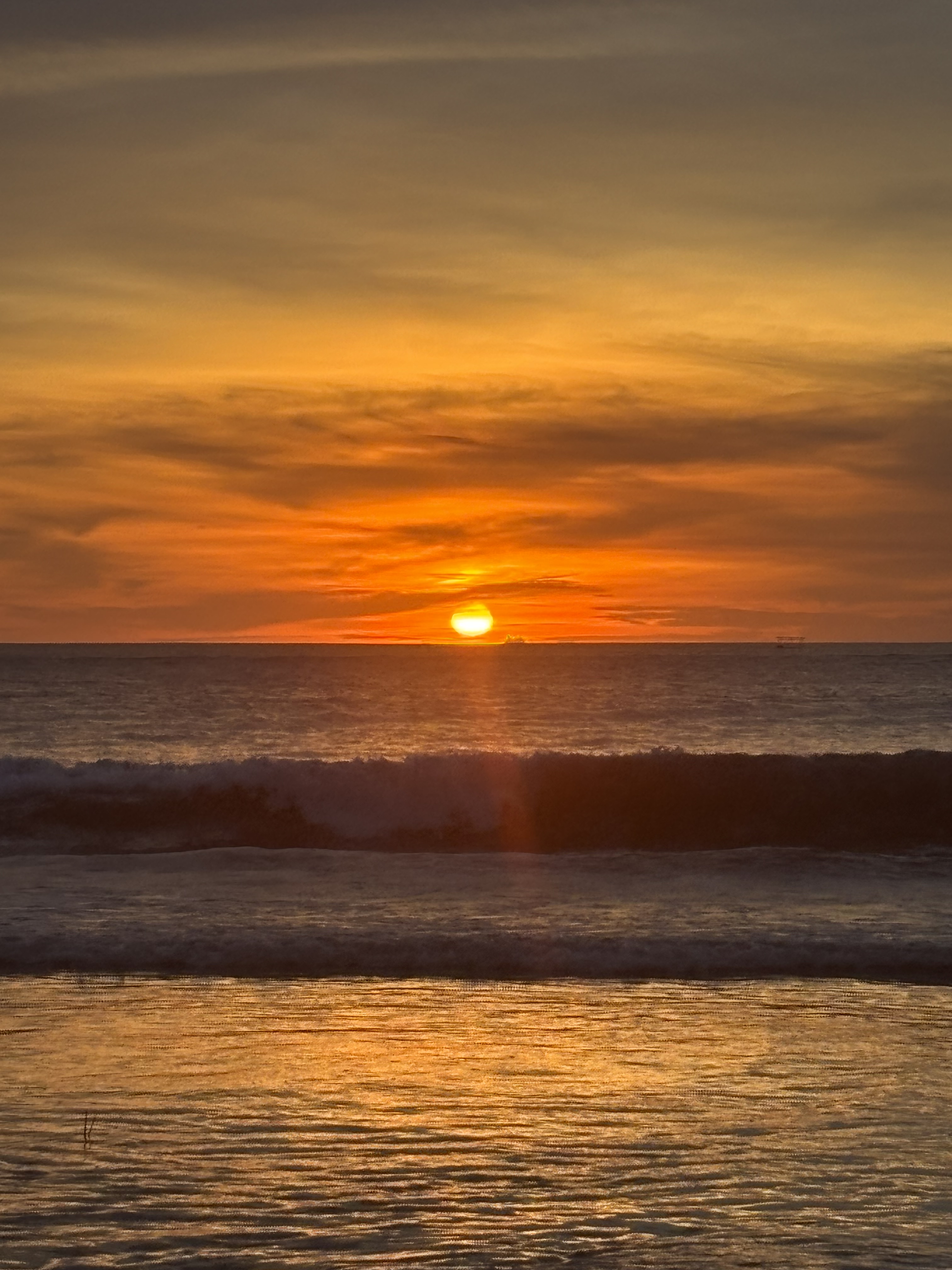
If you are contemplating a trip to Bali, keep in mind that the island lies merely 8 degrees south of the equator, so you can expect temperatures in the mid-to-high-eighties any time of year. Fortunately, cool breezes off the Indian Ocean make it quite tolerable on the western side of the island anytime you are near the beach. The rainy season supposedly runs from November through March, but my own rainy season experience was that it would pour down for a few minutes each afternoon and clear off quickly. I was lucky to have scheduled my stay over the Galungan holiday week, when schools and government offices were all closed, making it one of the least busy times of the year. It also meant that beachgoers were a roughly equal mix of locals and tourists. It made me smile to see local kids laughing and having fun on the beach with their new tourist friends as the waves crashed behind them. The sunsets were epic too.
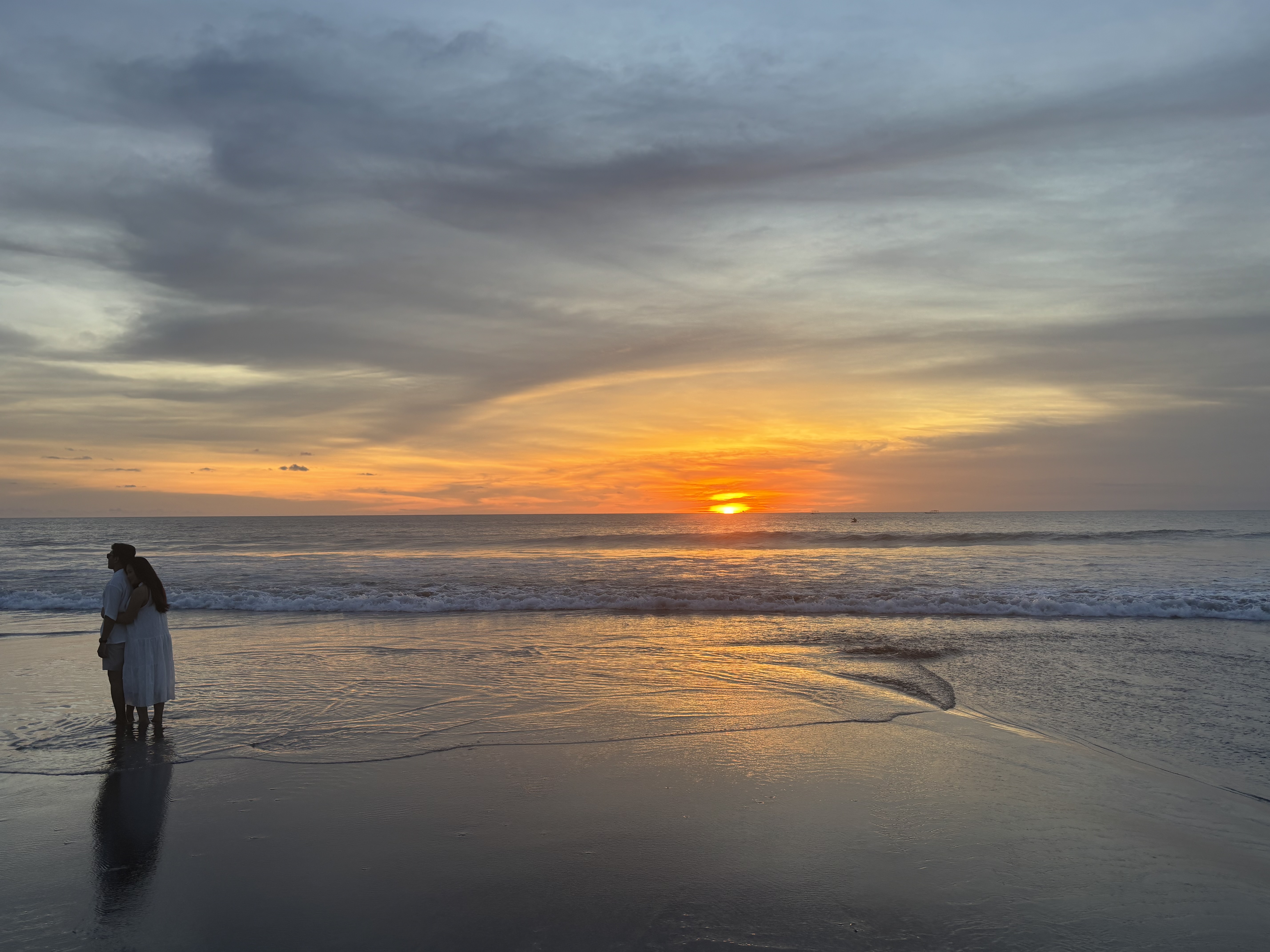
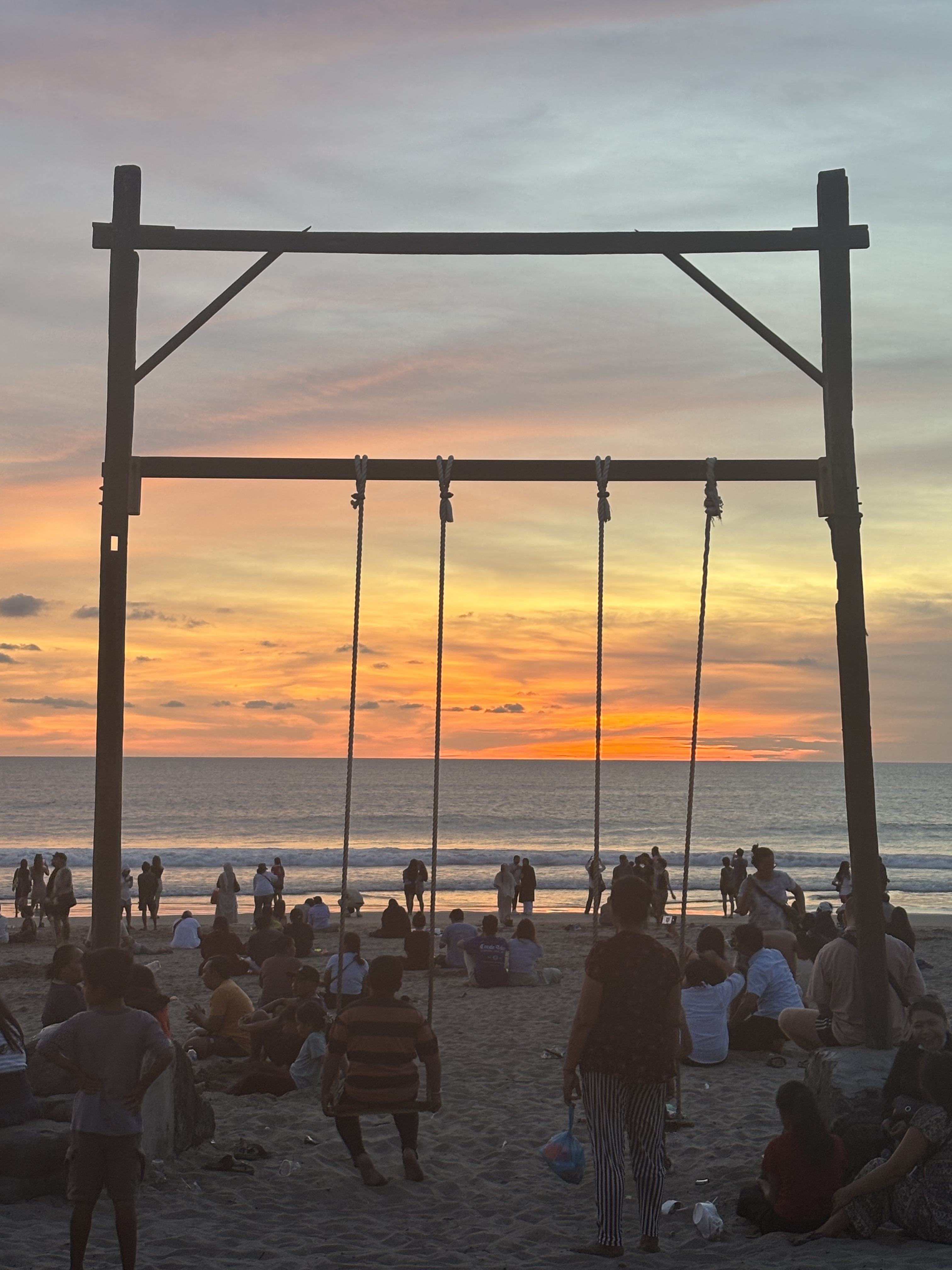
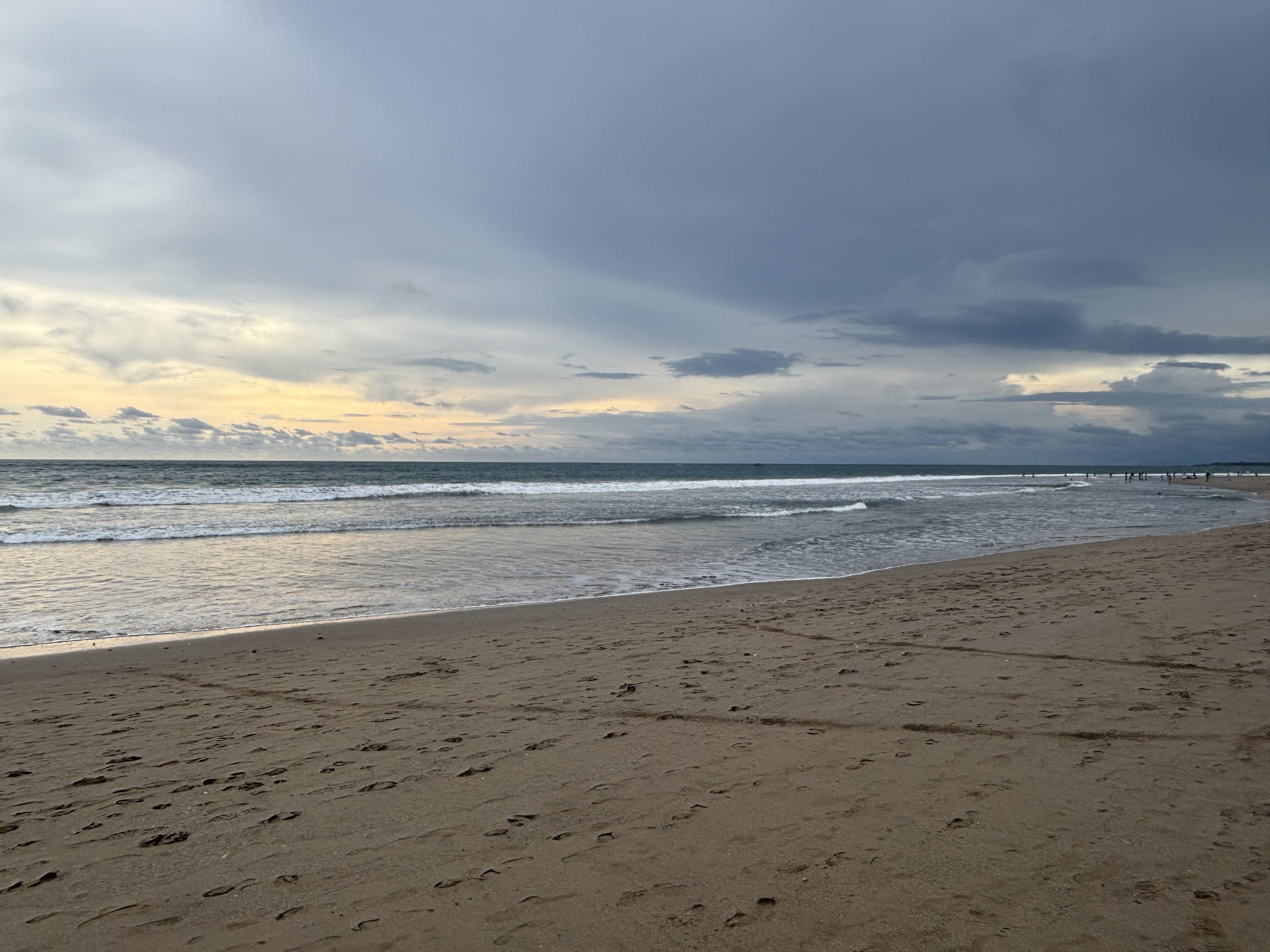
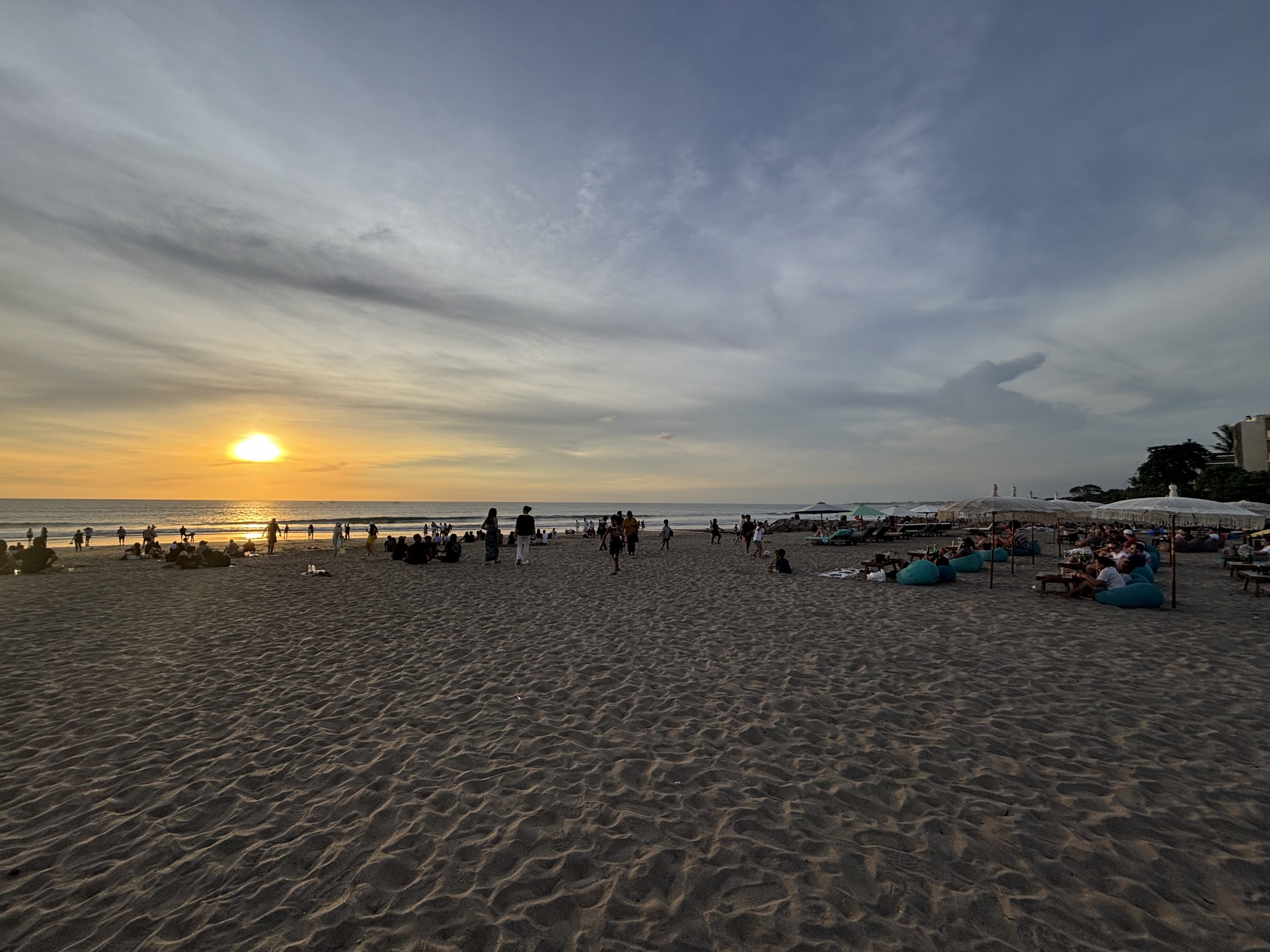
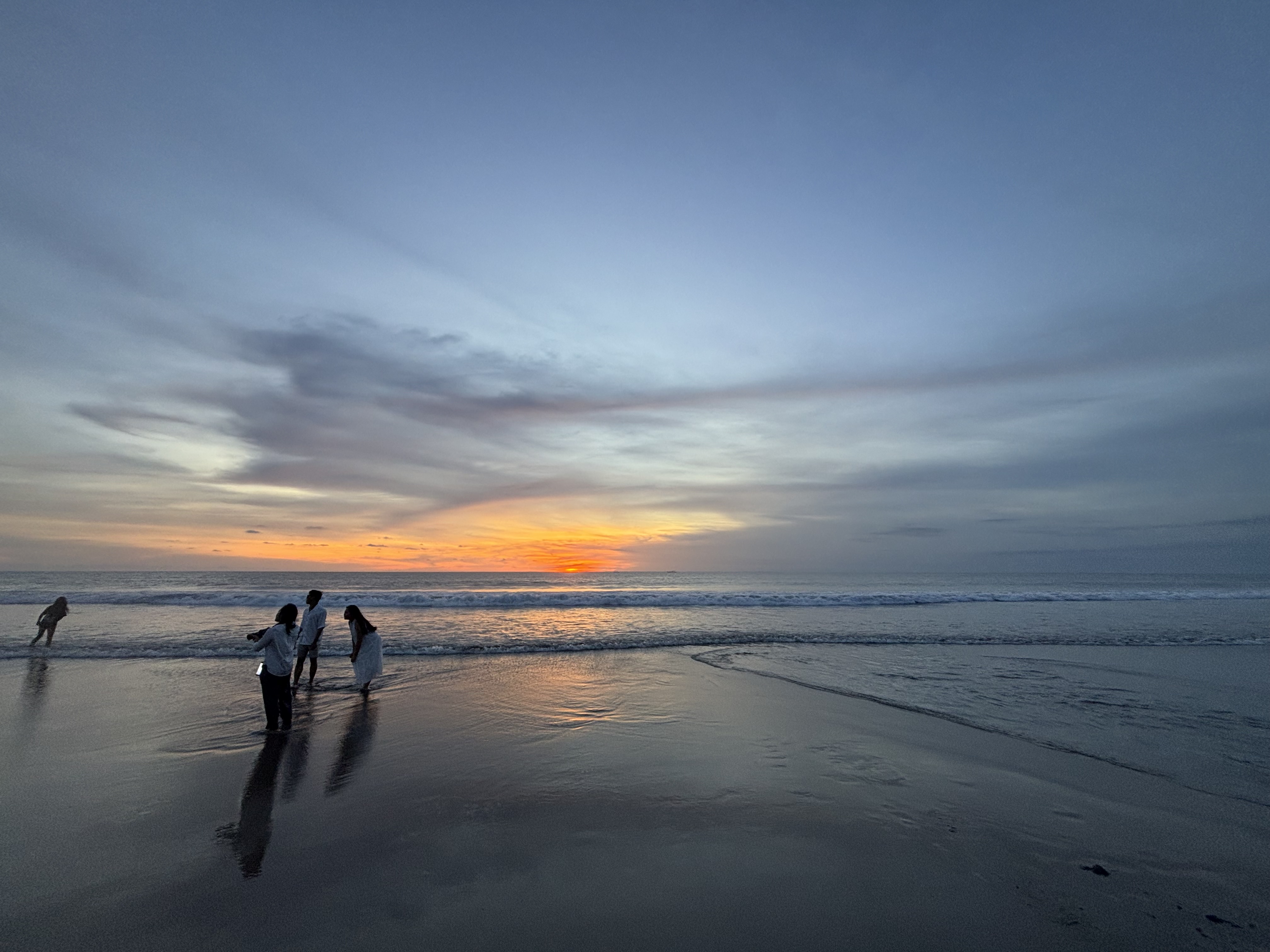
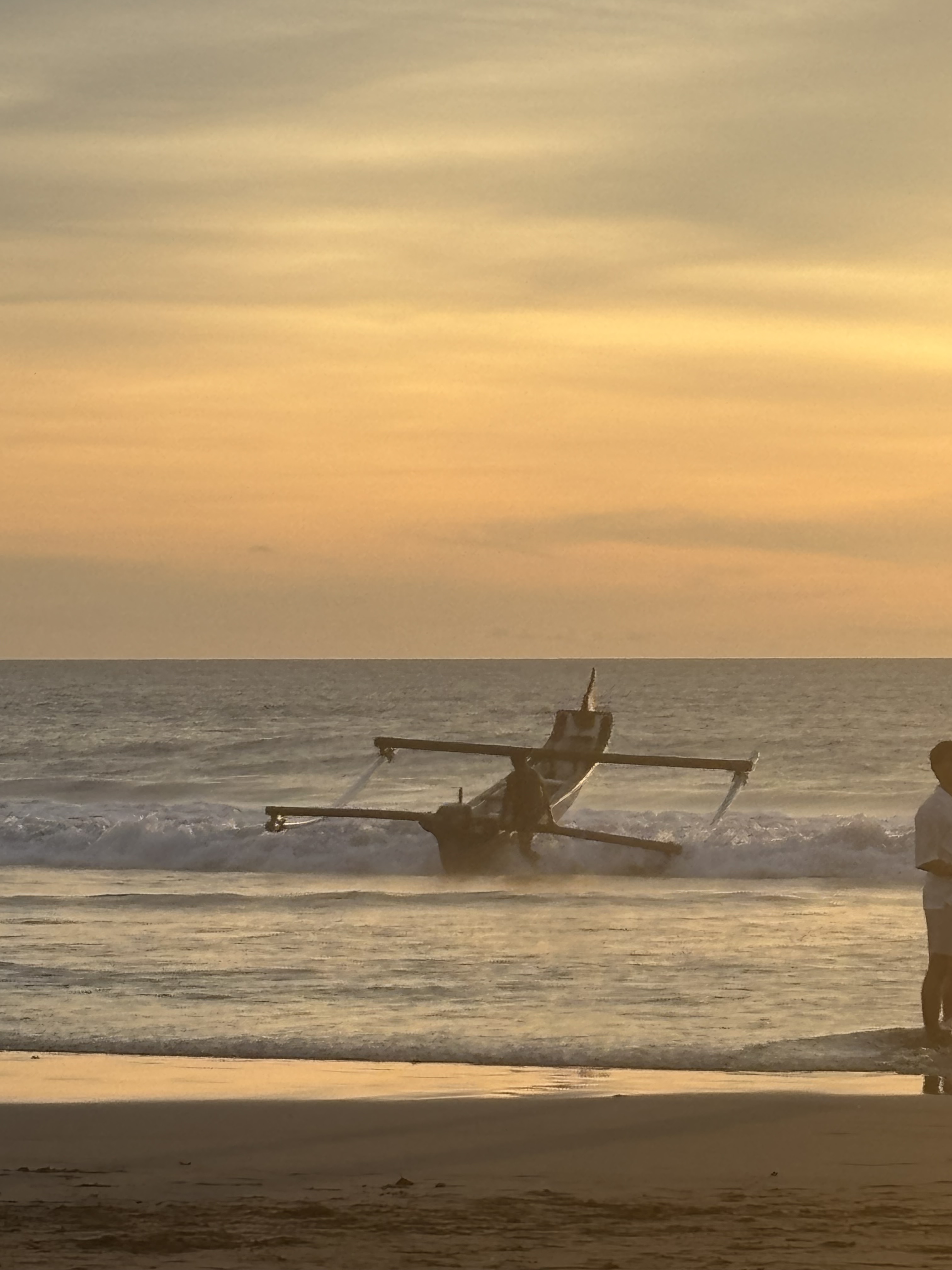
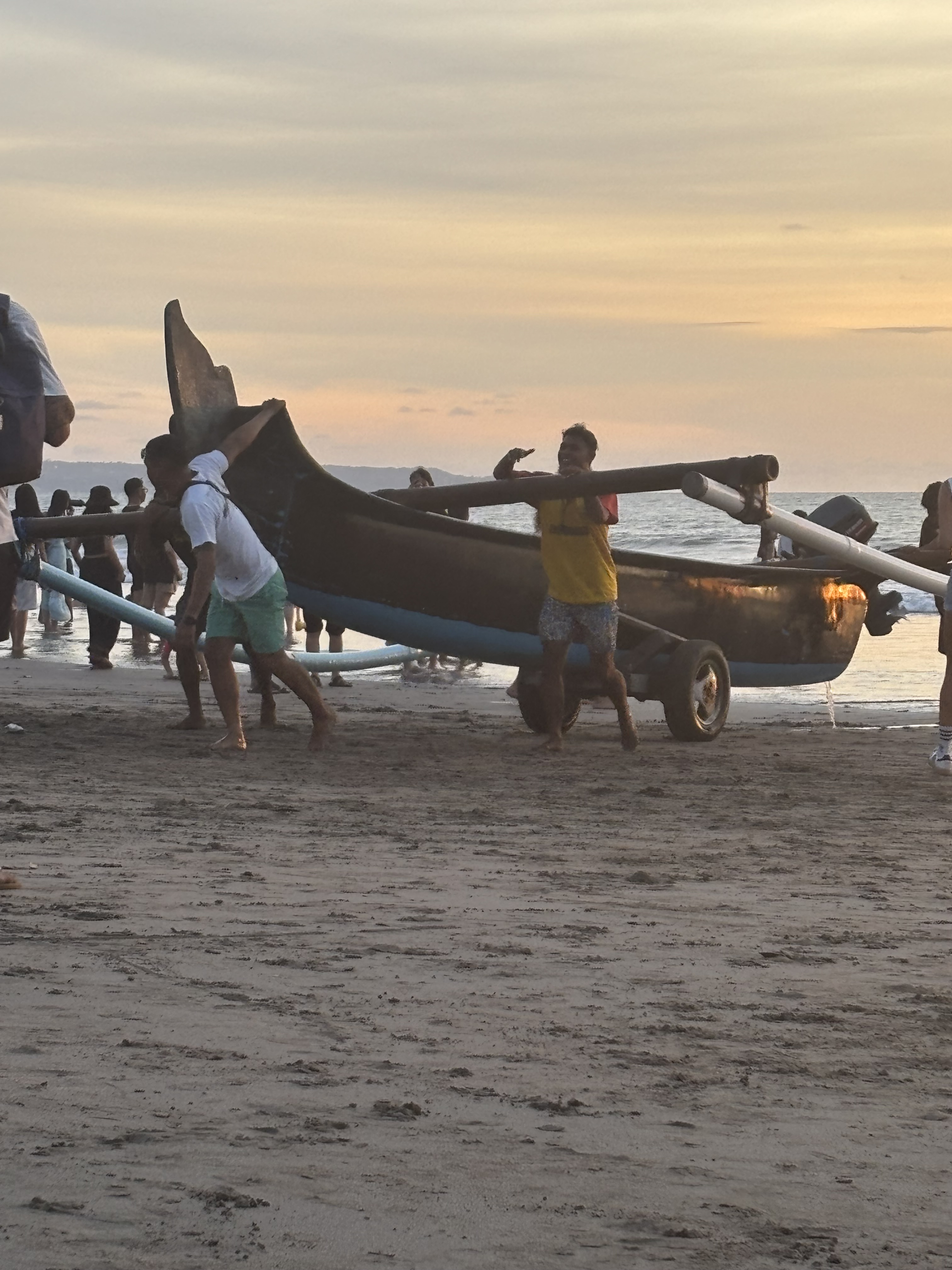
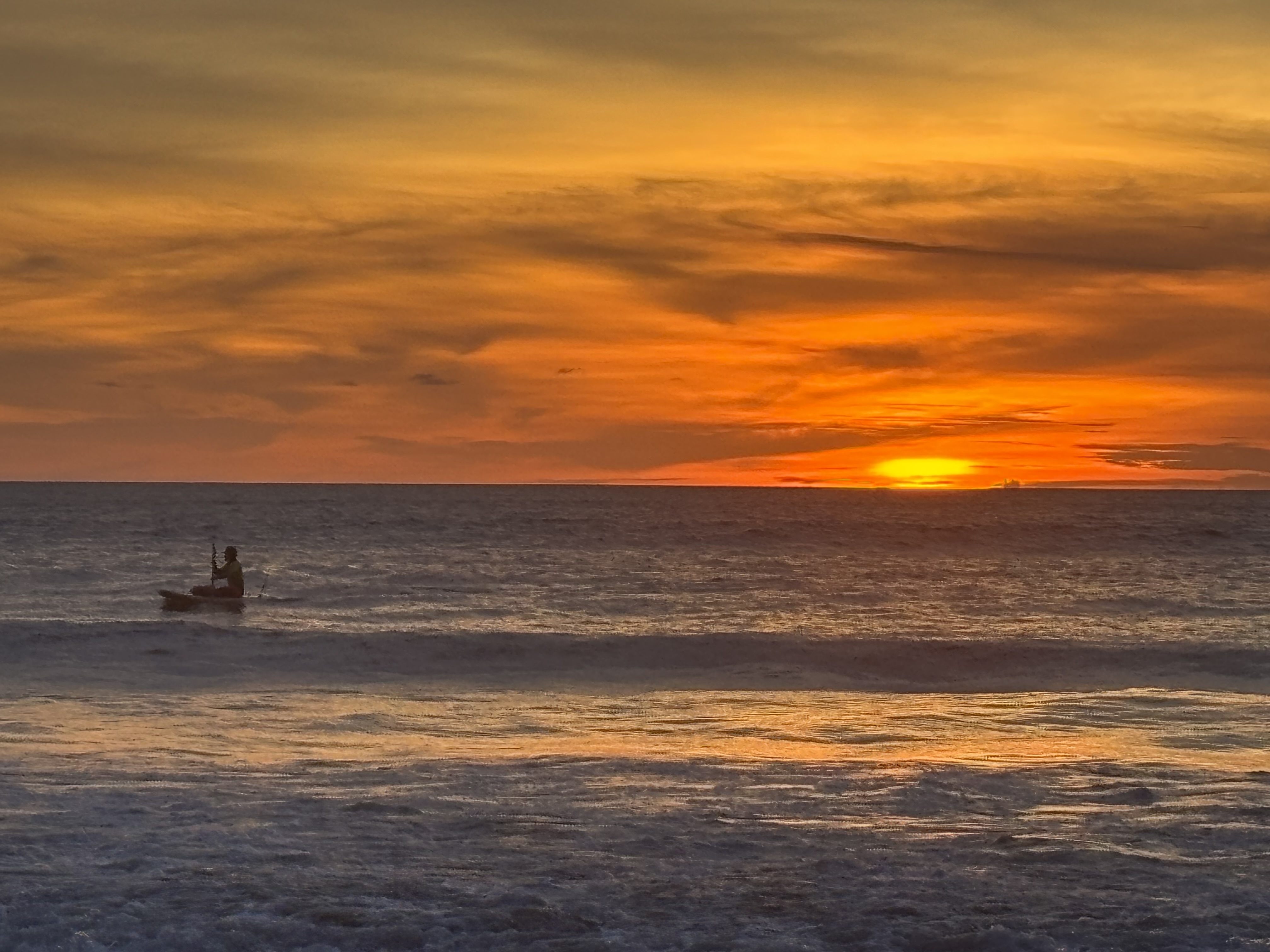
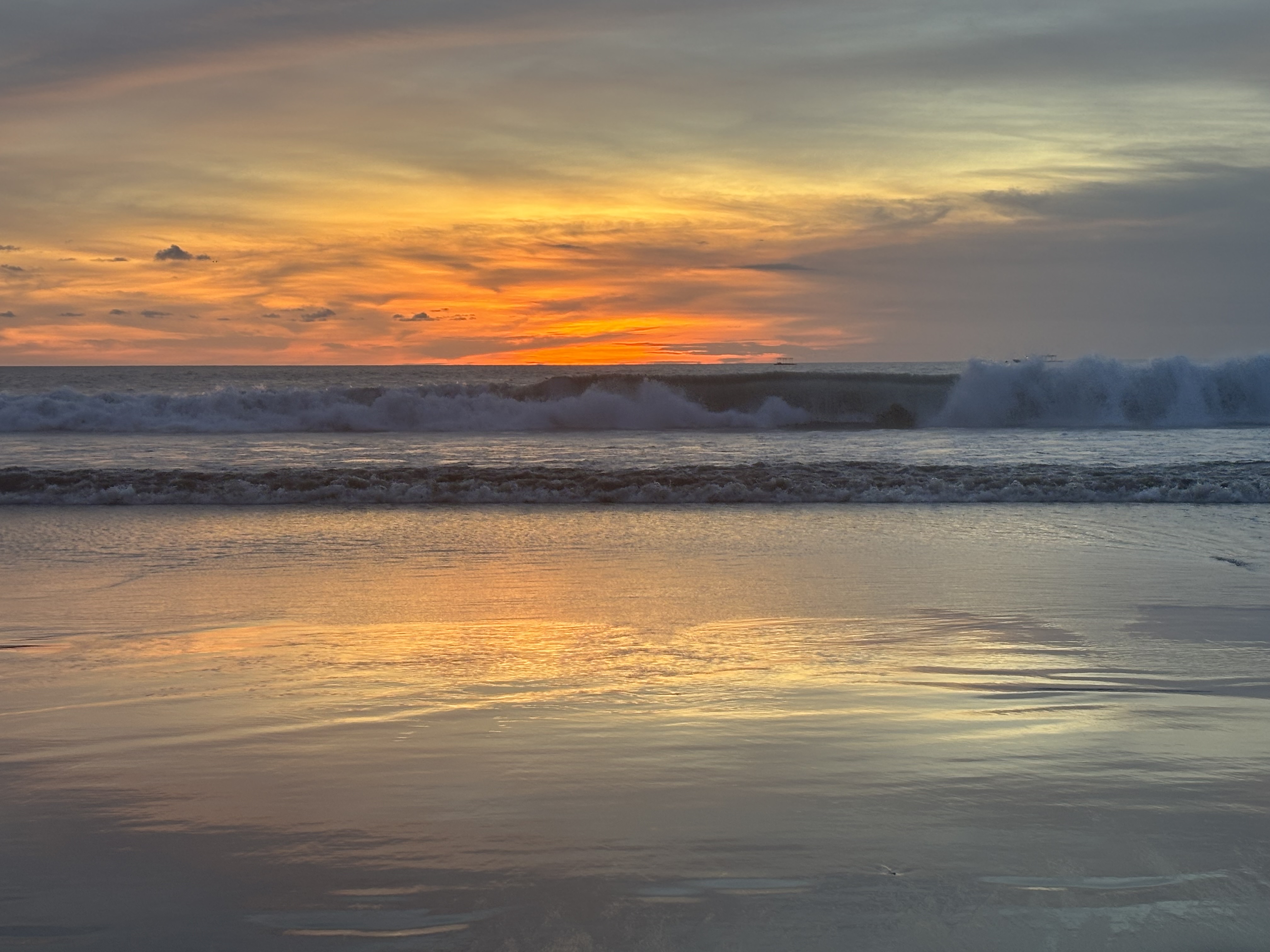
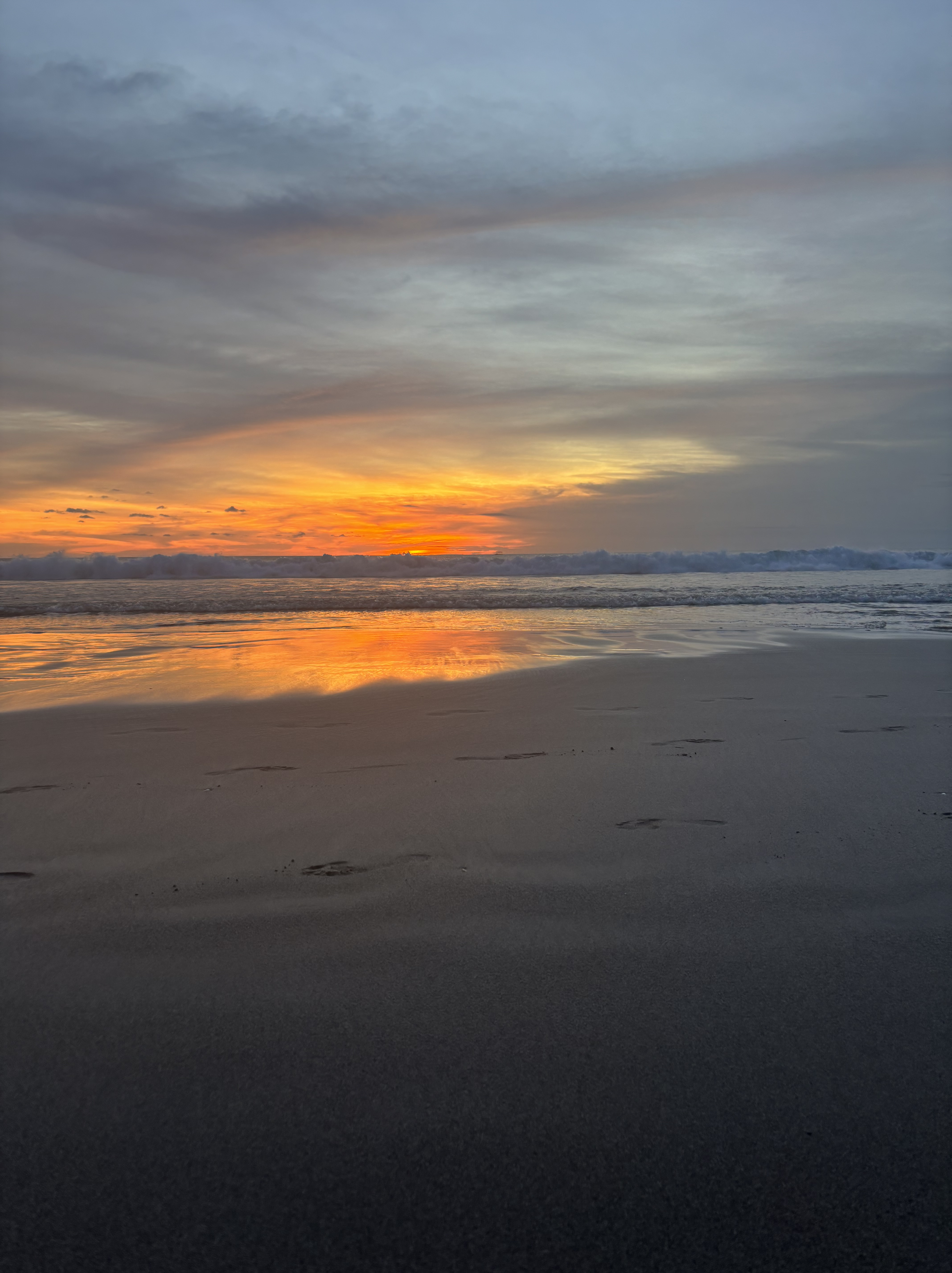
I recognize that a relatively uncrowded stay in Bali is becoming a rarity, but there is still a little magic left in this tropical island paradise. I dream of returning.

 The Global Slowmad
Leave a comment