
Athens International Airport is nowhere near the city center. That’s a problem. A taxi costs between $45 and $60 and takes 45 minutes or more, with no guarantee of air conditioning or safe driving. Uber in Athens is just a slightly more convenient way to access the taxi network. In theory, the M3 metro line will transport you to the city center for $10 in 40 minutes. So it seems like a no-brainer to take the train.
Not so fast, my friends. Perhaps in a nod to the Odyssey, completing that journey requires you to decipher secret messages, demonstrate great patience, endure personal sacrifice and overcome a sequence of tests involving many strange and unfriendly creatures. I wrote a little poem of my own during my last ride:
I do not like that airport train
It really is a royal pain;
The turnstile won’t take my Apple Pay
And the signage does not show me the way;
The schedule is a total joke
To get on board, you must push and poke;
Why does this train just run twice an hour
And why did I bother taking a shower;
An airport train should have room for bags
The moist seat raises more red flags;
The crowds and heat are making me ill
And I’m really tired of standing still;
I know Athens traffic is a mess
But can it be much worse than this?
Alas, even if you survive the journey to the city center, your adventure is not over. Infrastructure is not exactly a strength of this destination. For a society that built its reputation on beautiful architecture and sophisticated culture, you would think they could build a sidewalk or a functioning crosswalk. You would think wrong. Perhaps this is what happens when you operate for decades without actually collecting income taxes (I spent a lot of time reflecting on the Michael Lewis book, Boomerang, during this stay.) One guide instructed us that, despite our natural human instincts, we should never look at the traffic before crossing and should never offer a standard American courtesy wave because an outstretched hand with the palm facing out is the Greek equivalent of cursing them for five generations. Who knew. Another suggested we walk in the street instead of the sidewalk for safety, which turned out to be very good advice.
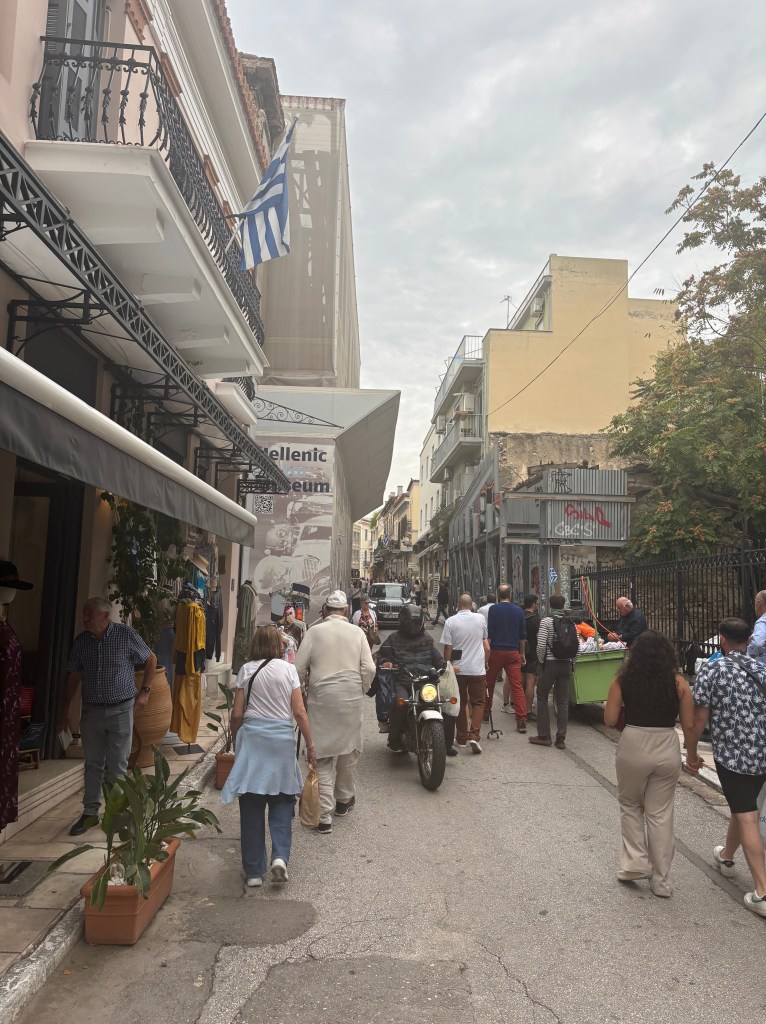
It’s not uncommon to see pedestrians in the roadway or motorcycles on the sidewalk.
And I can’t imagine a scenario where it would make any sense to get behind the wheel of an automobile in Athens. Traffic is congested, and the drivers seemingly have no regard for the safety of other motorists or pedestrians. At one intersection where six roads converged, I watched cars driving three wide down a street with no stripes whatsoever. To my amazement, the car in the right lane decided it needed to turn left and cut in front of the other two. Then the car in the left lane decided it needed to turn right and did the exact same thing, pausing only briefly for the first car to pass by. Even more alarming, no one honked or acted like this was in any way inappropriate driving behavior. In the meantime, their actions finally afforded me an opportunity to cross the wide and busy thoroughfare on foot . . . because there naturally were no crosswalks as far as I could see in either direction (not that anyone respects the zebra lines anyway).
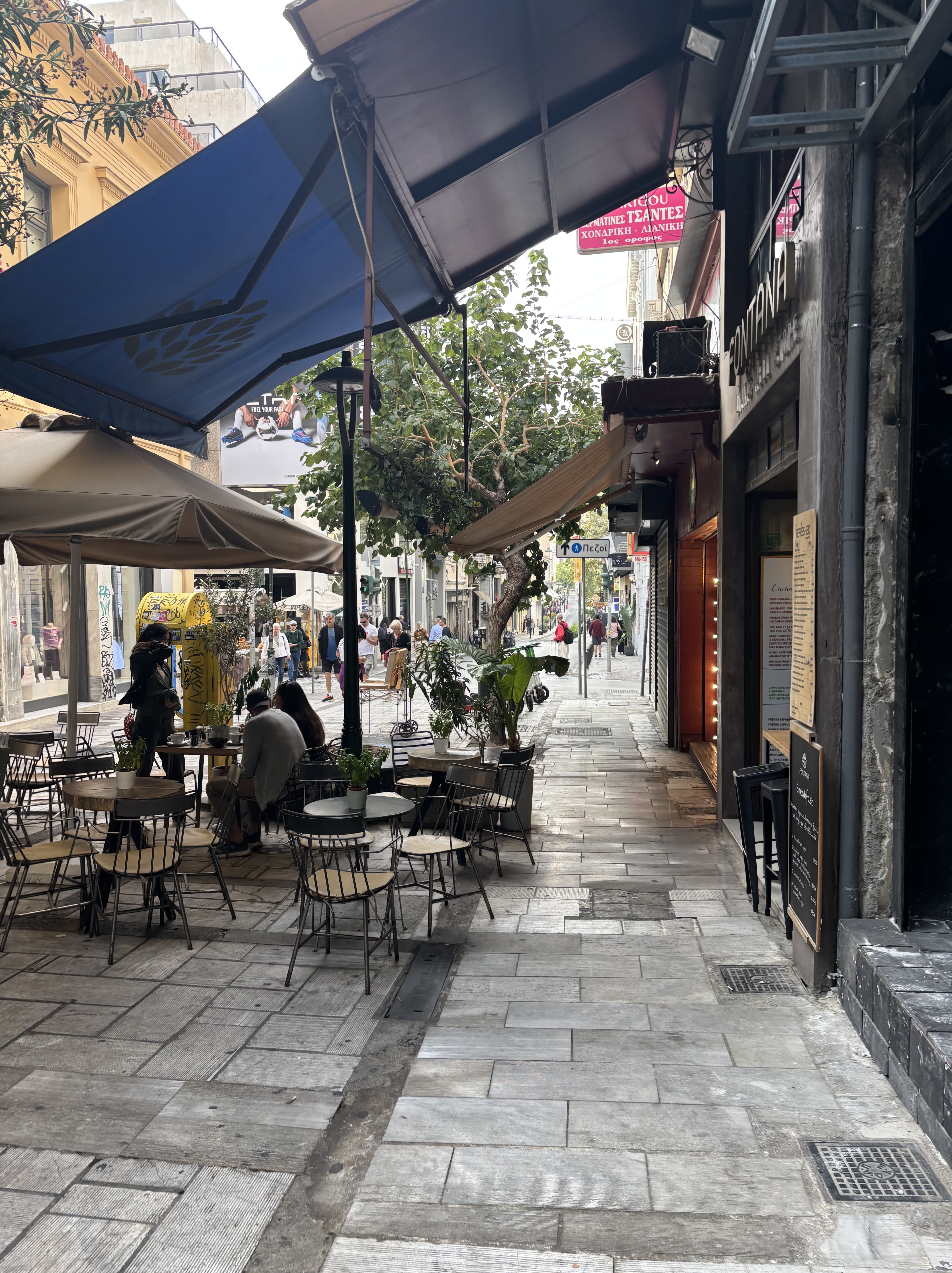
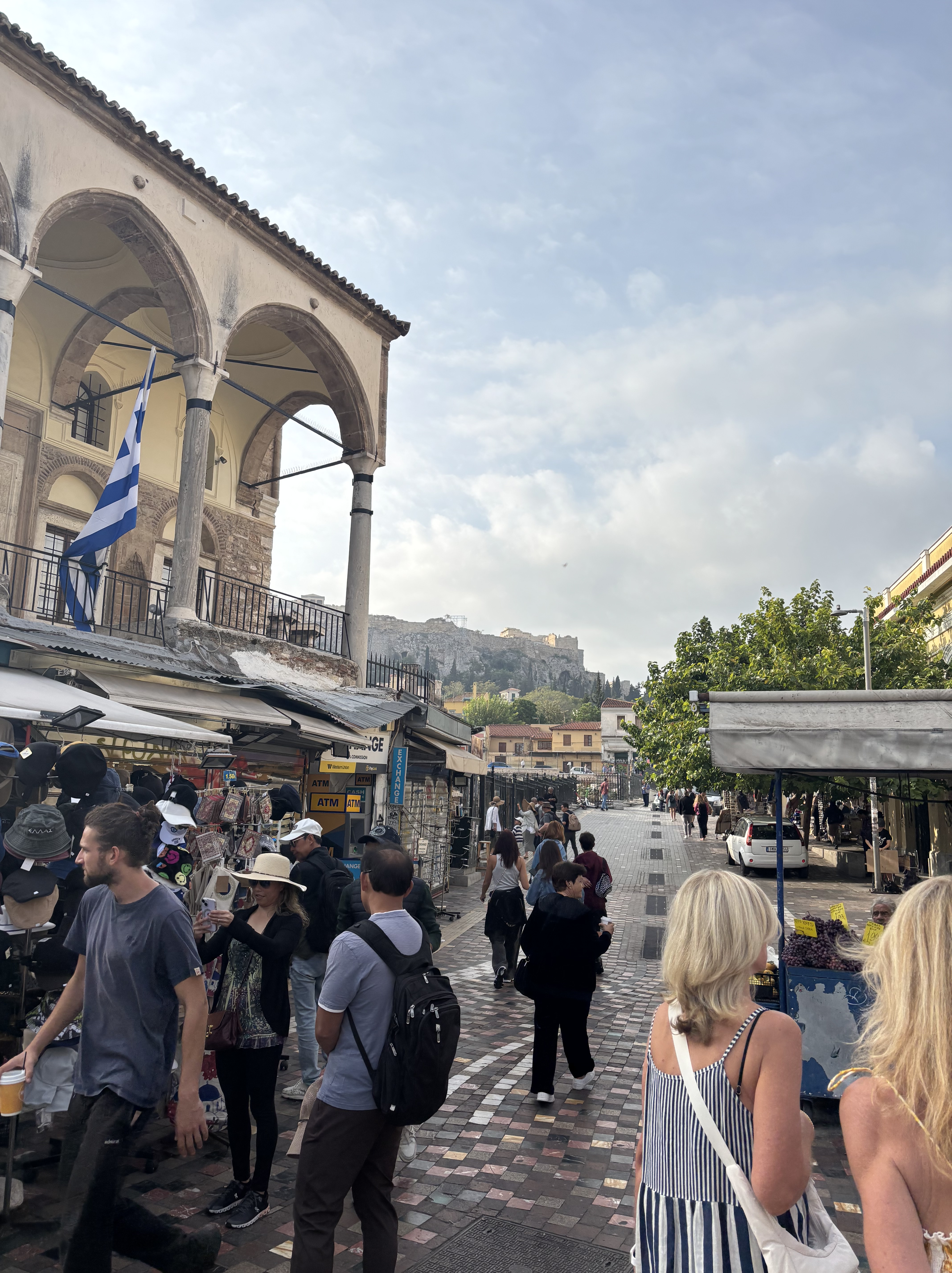
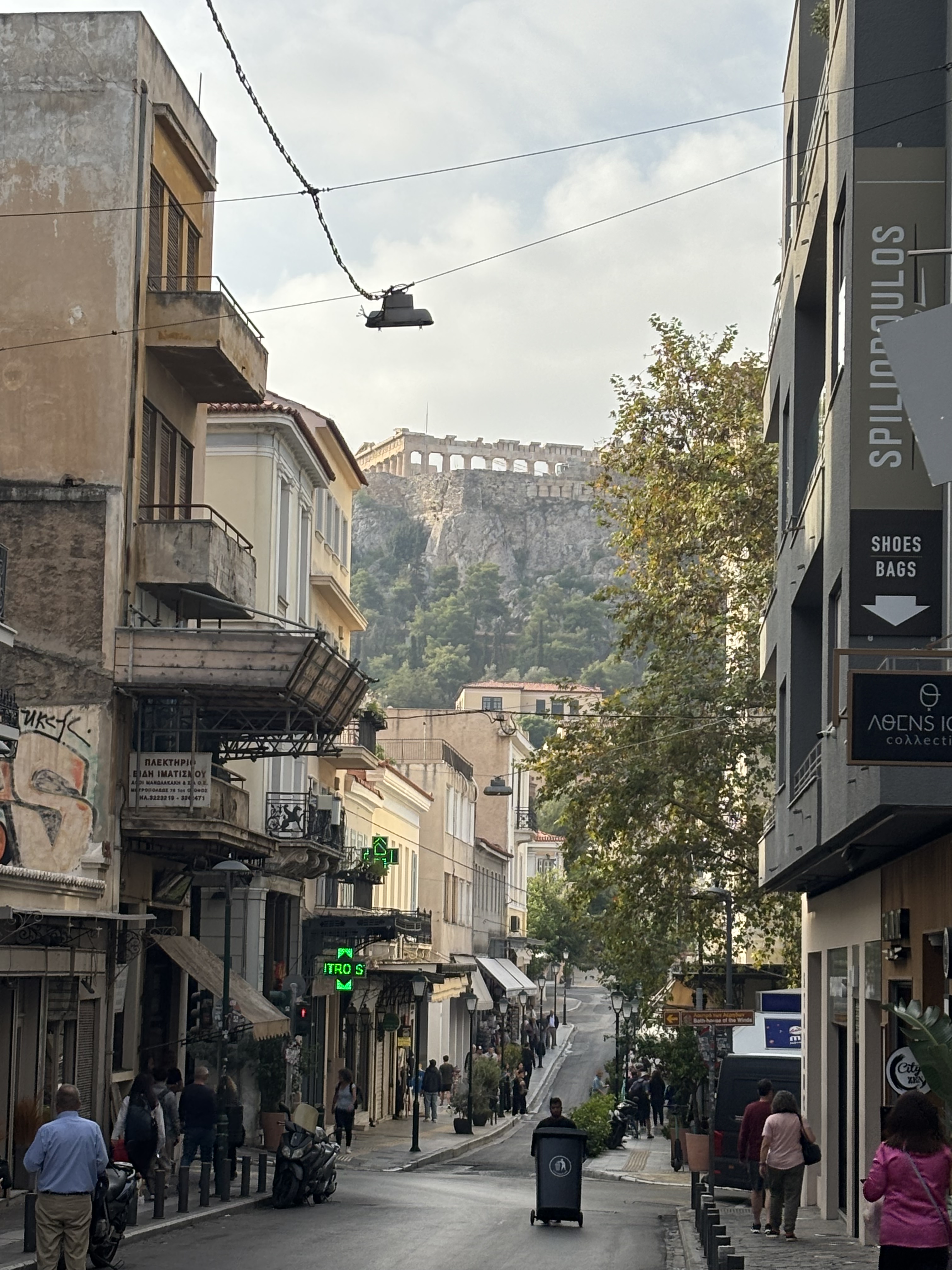
I guess my terrible transportation tirade is a long way of saying I had strong but somewhat complicated feelings about my time in Athens. Let’s start with the positives. I absolutely loved the Psyri and Monastiraki neighborhoods. They are clean, vibrant and interesting, with lots of outdoor cafes, bustling squares, unique shops and surprise Acropolis views.

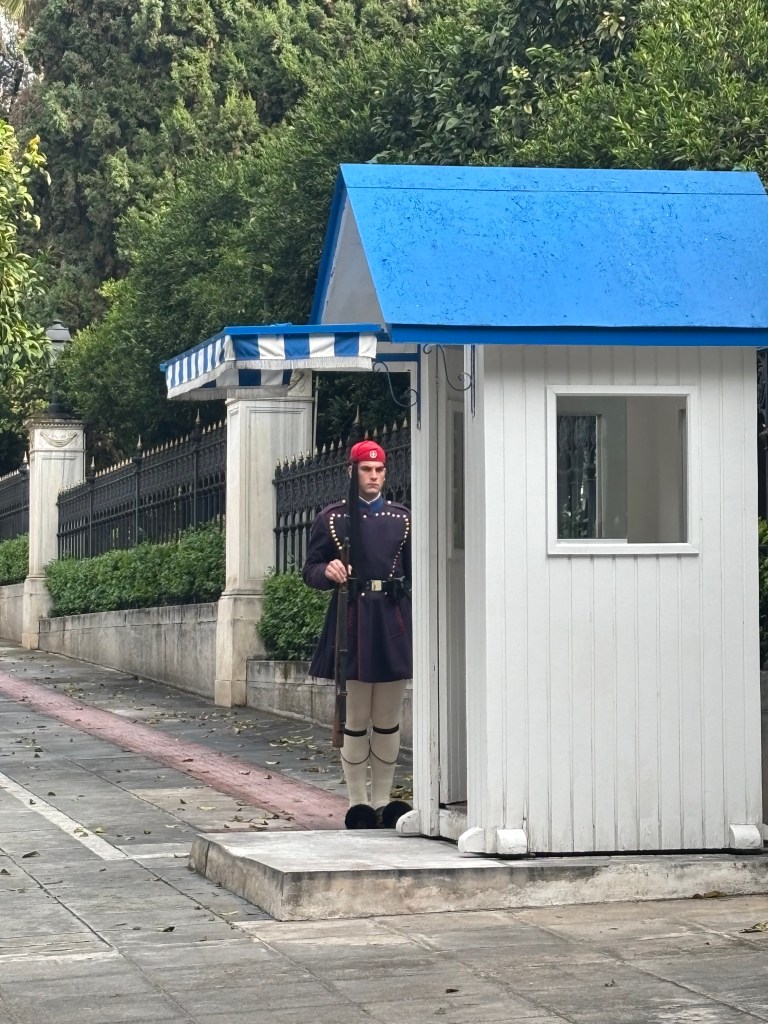
The changing of the palace guard is, frankly, much more interesting and accessible than its British counterpart (these guards don’t speak either, but they don’t mind having their picture taken with you and aren’t stationed 100 yards behind a fence), and there is a lovely park across the street if you need a break from the heat. Special kudos to Stephan from Athens Free Tour for providing such a helpful explanation of the history of the efzone, the process for becoming one and what their complicated ceremony means.

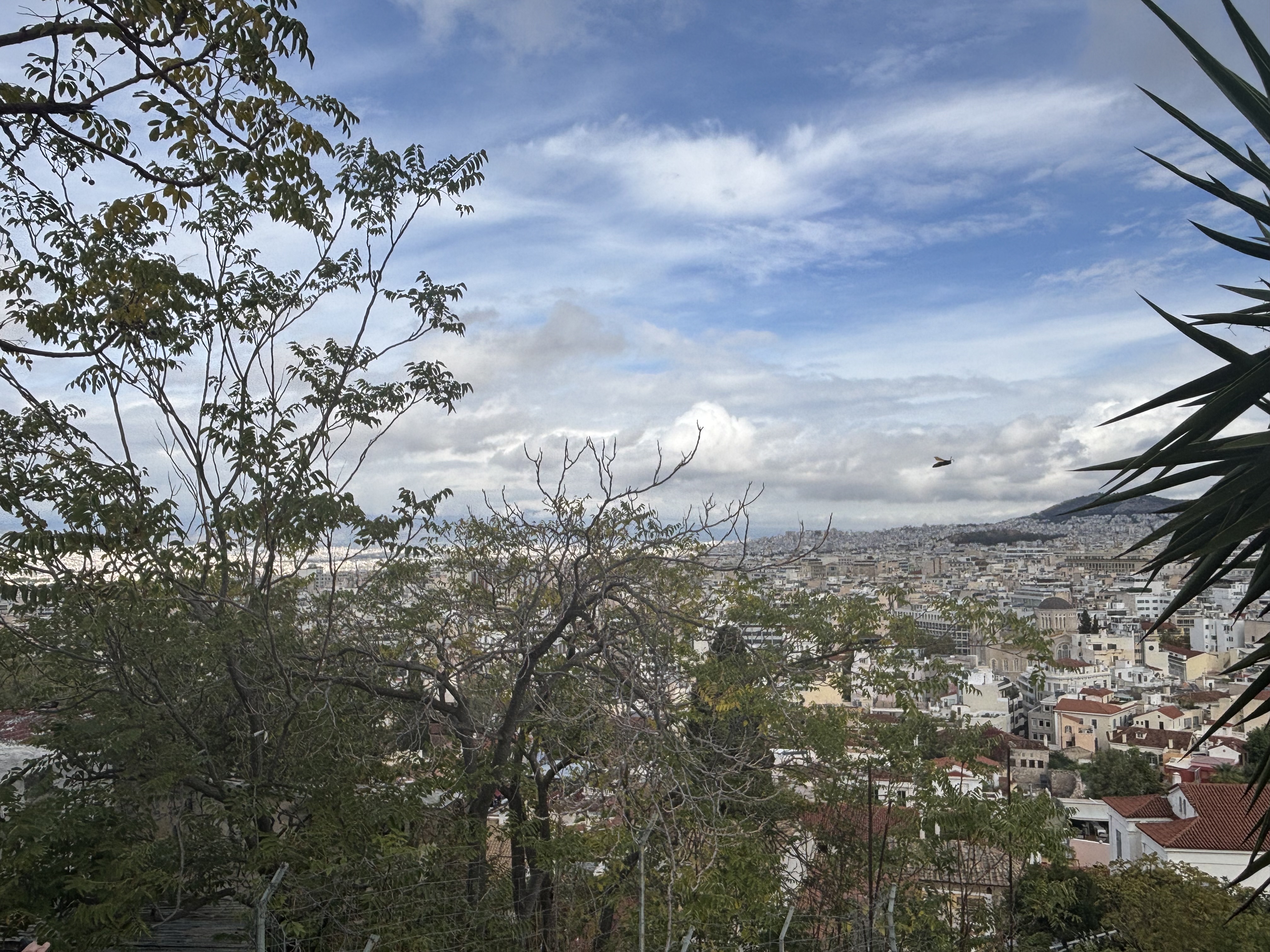
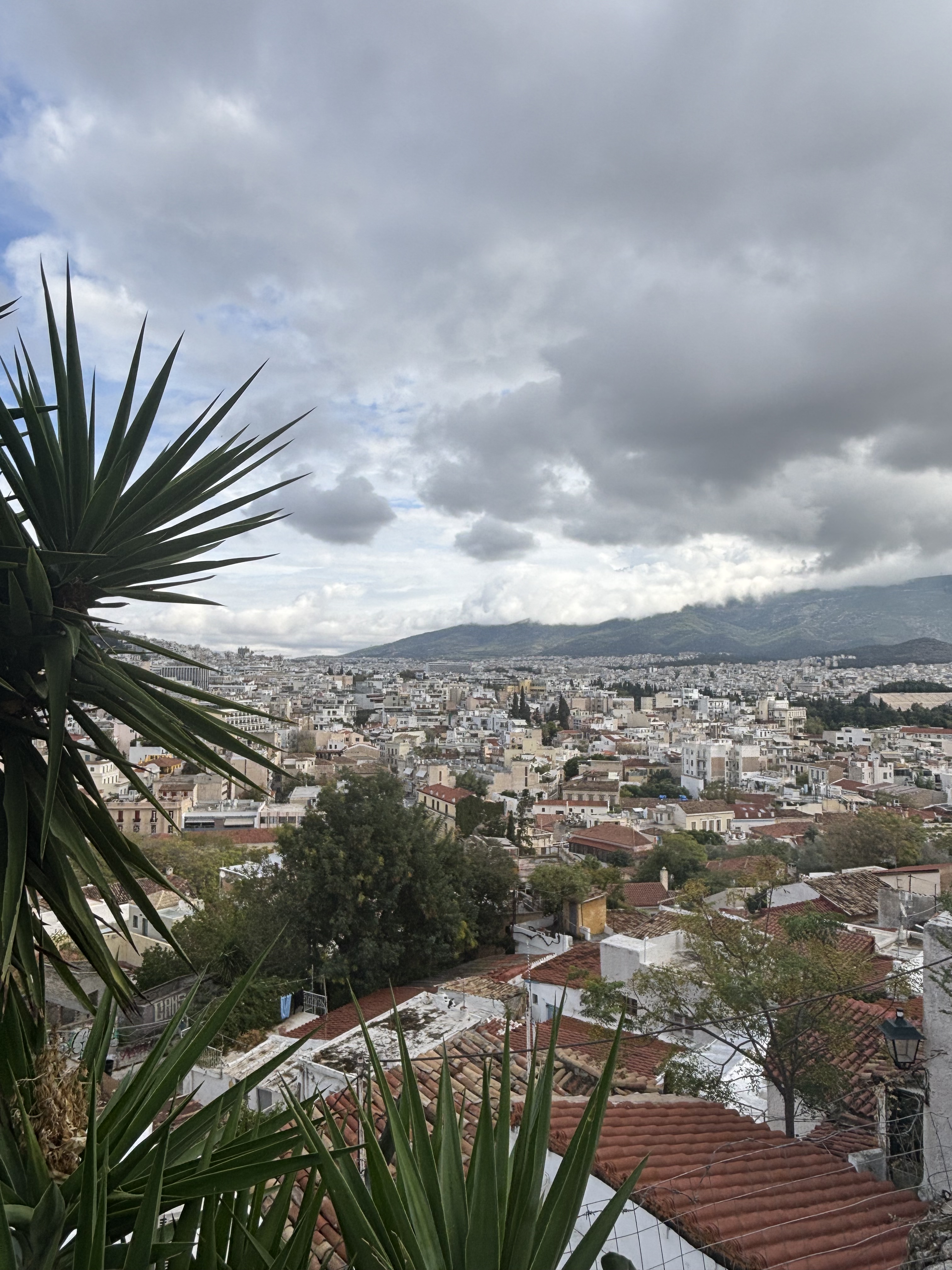
Anafiotika, accessible only via a narrow and winding series of paths and staircases up the side of a hill, was a really neat place to visit. It is a quiet (but apparently too expensive for locals to move there anymore) respite established by islanders just below the Acropolis, with a unique building style and unmatched views.


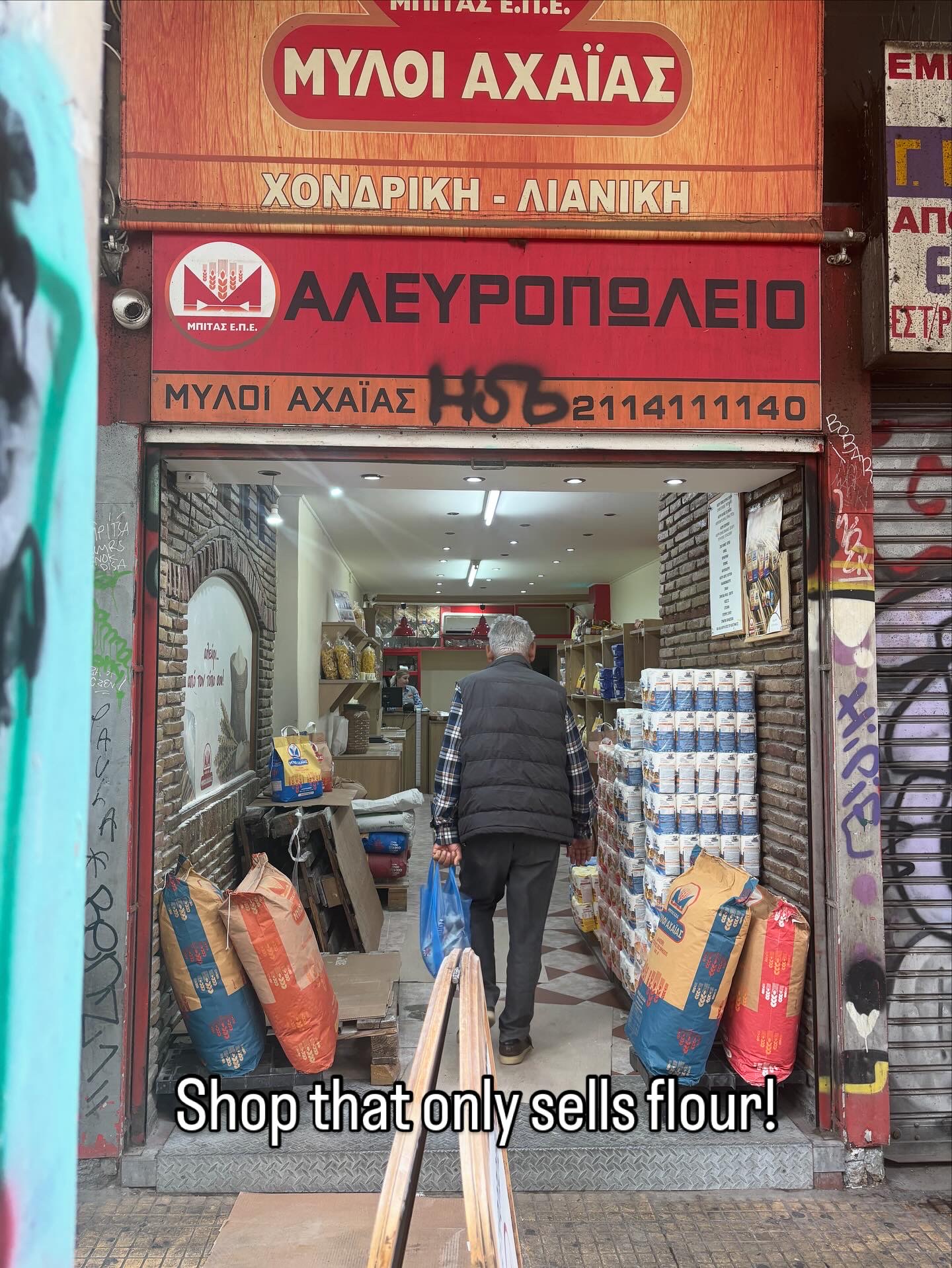
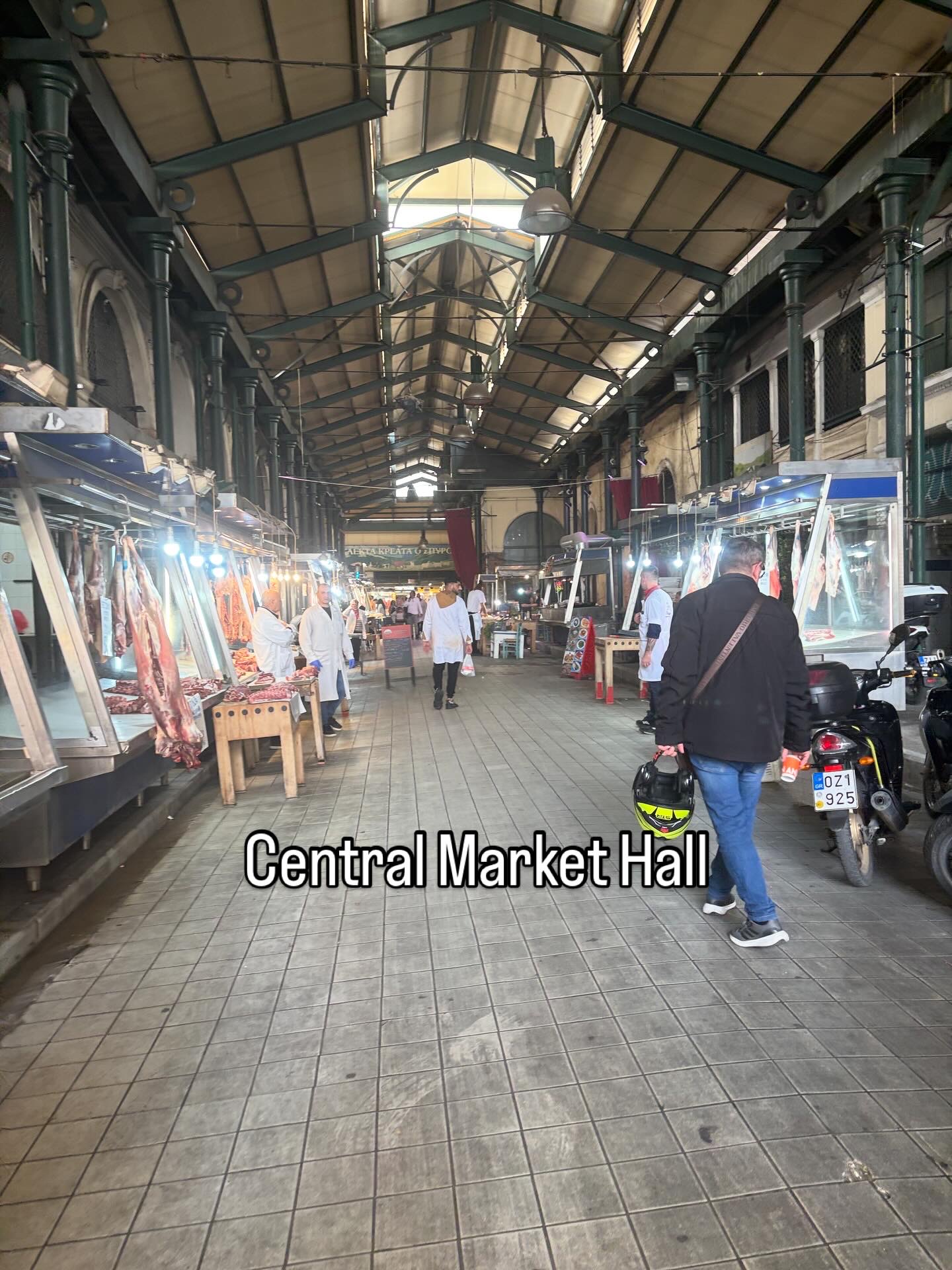
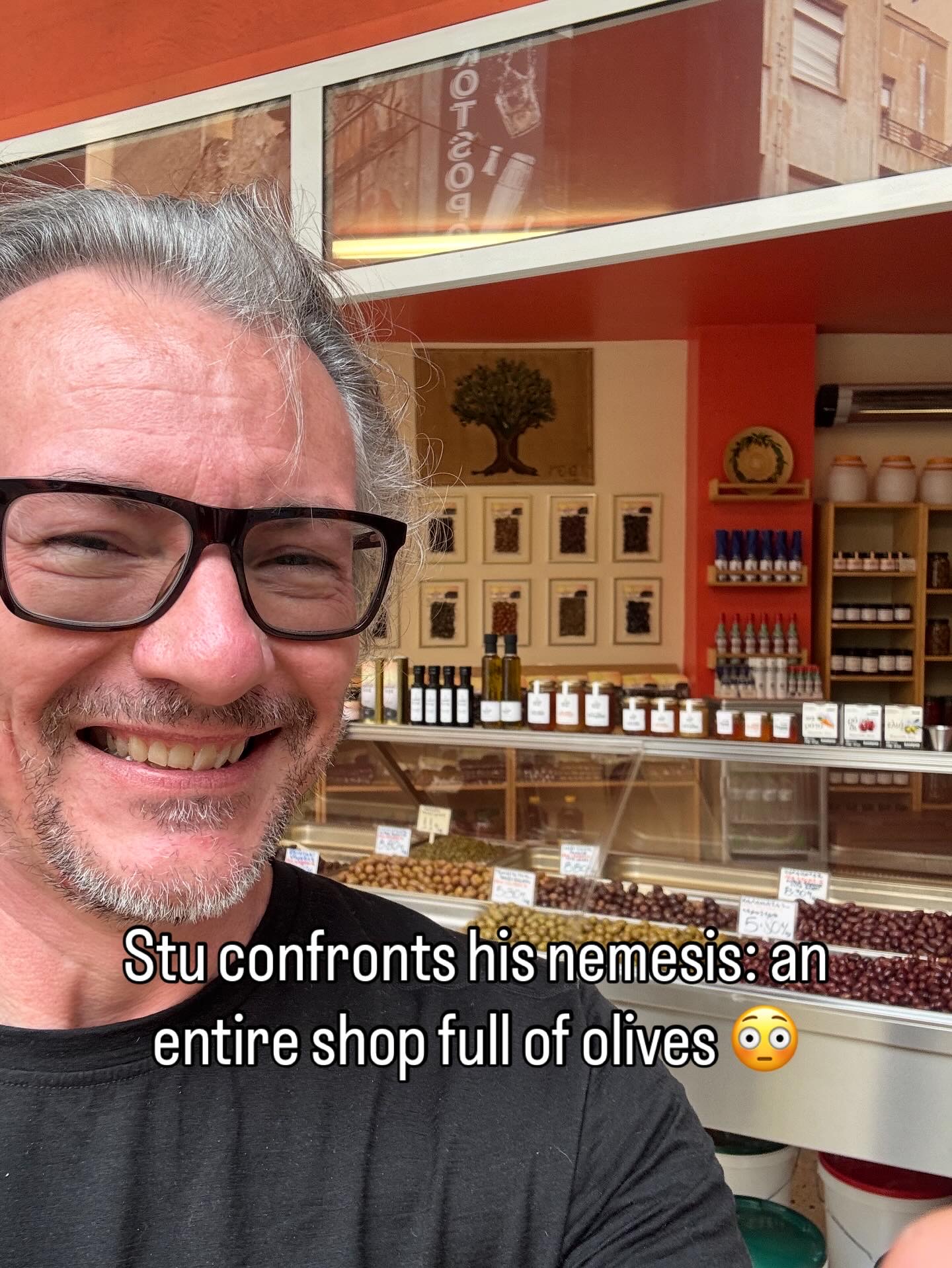
I also really enjoyed the Central Market and surrounding streets, which I visited on a great food tour (shout out to Voula at Food Around Athens and my new Alaskan friends, Maria and John!). We sampled 20+ different foods over the course of about 3 hours and learned quite a bit about Greece in the process.


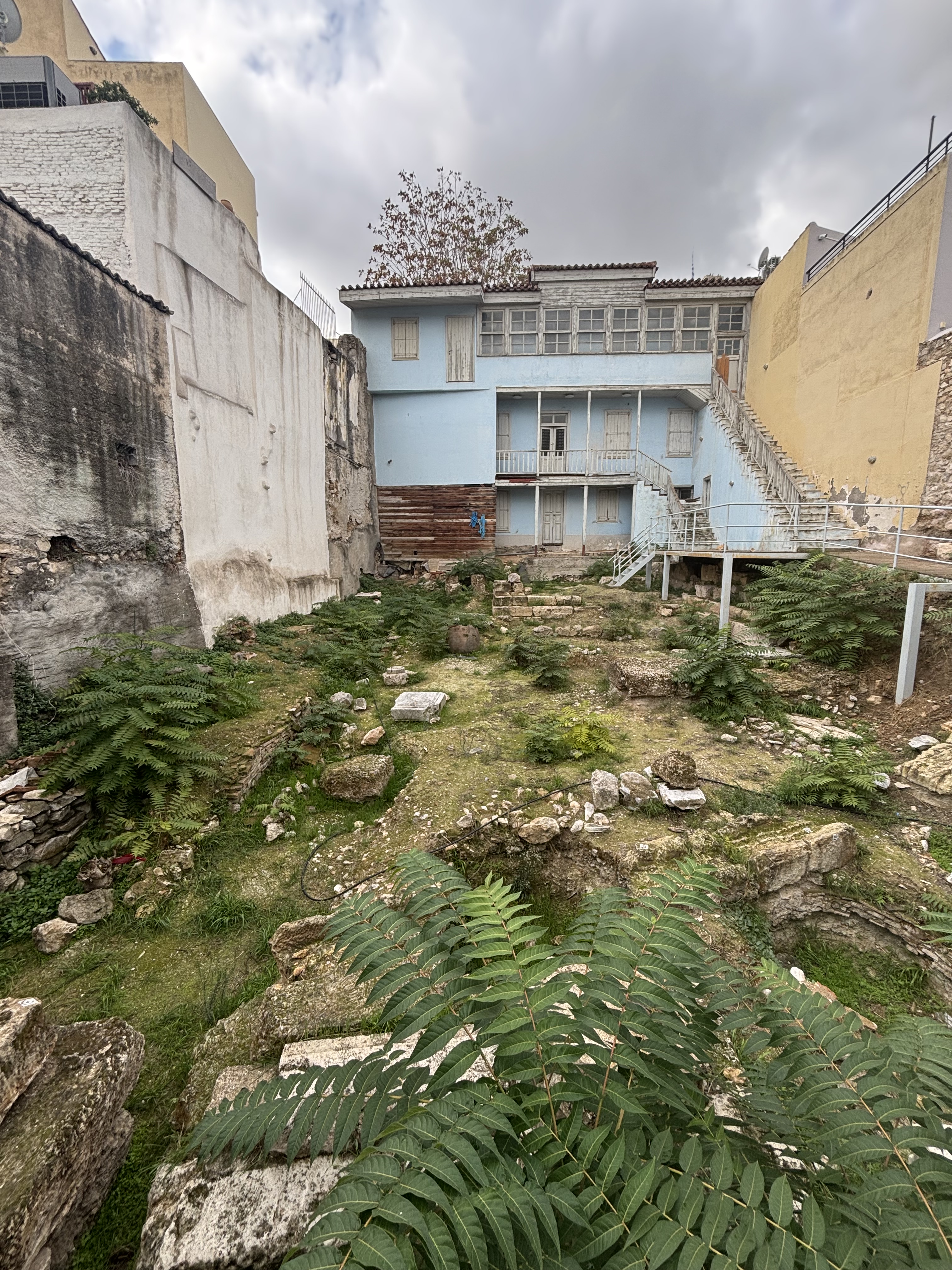
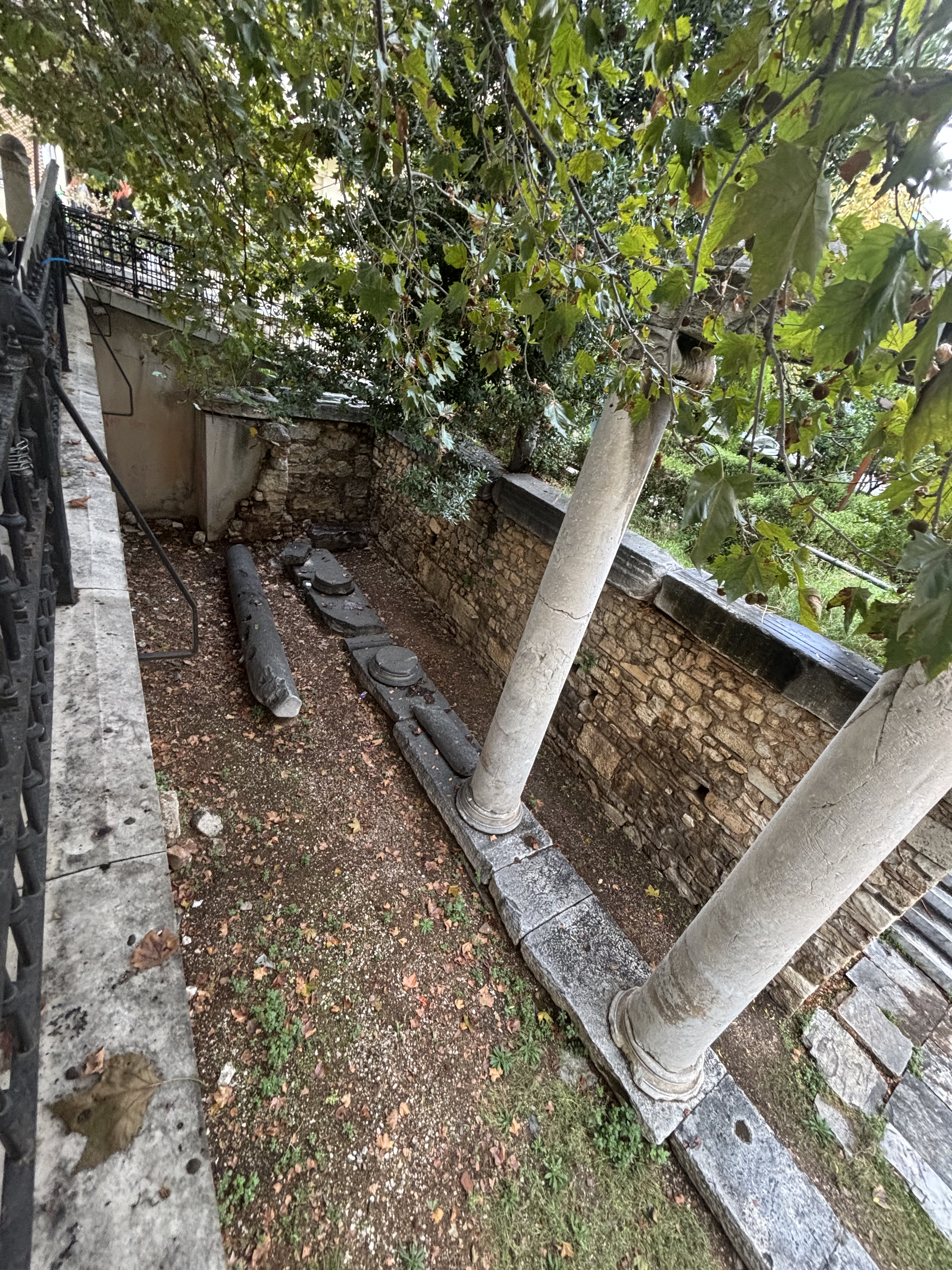
It also was cool to see the archaeological sites around the city. The place really does have an amazing history. Even the Romans respected its historical significance and attempted to honor and preserve many buildings when they conquered Athens. You frequently will be walking down a random side street and come across an empty lot that turns out to contain the unearthed remains of a 2,500-year-old building. I found it particularly peaceful to walk around the Roman Agora and the Ancient Greek Agora, having nearly the entire path to myself. The whole complex is surrounded by an iron fence with pretty wide gaps and there are no signs inside to explain what you are looking at, so there was no reason I could see to pay the $20 entry fee.
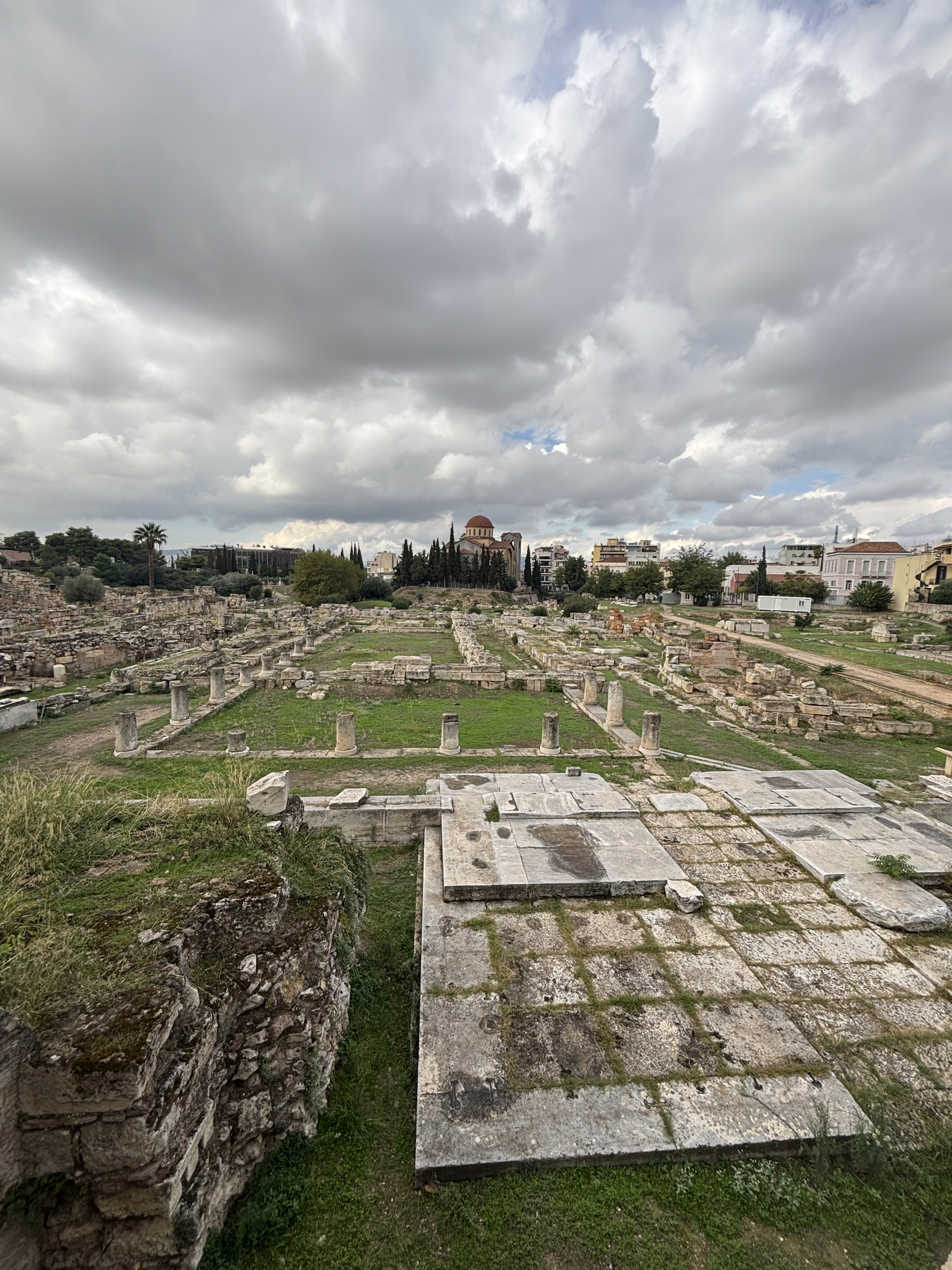
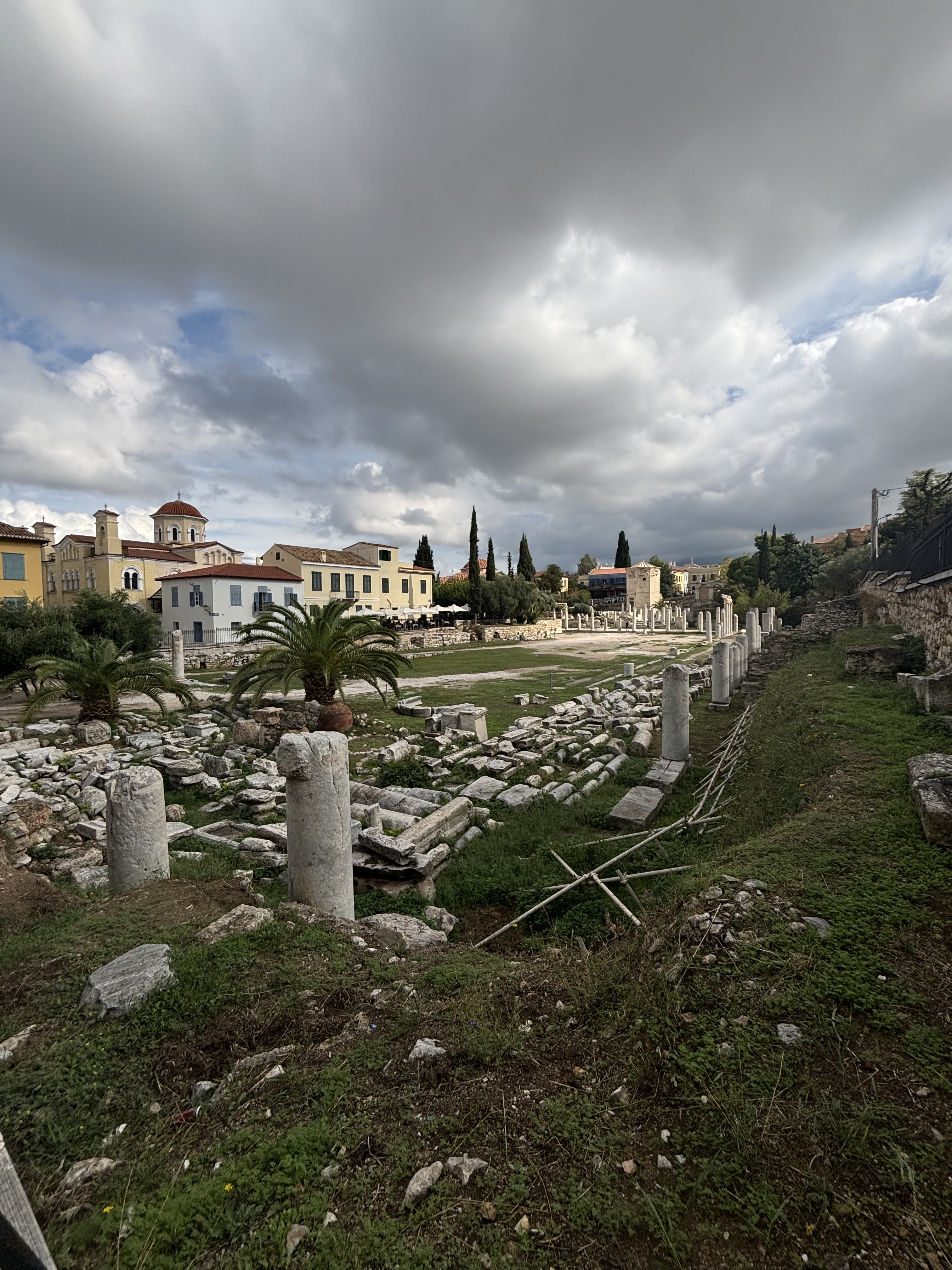
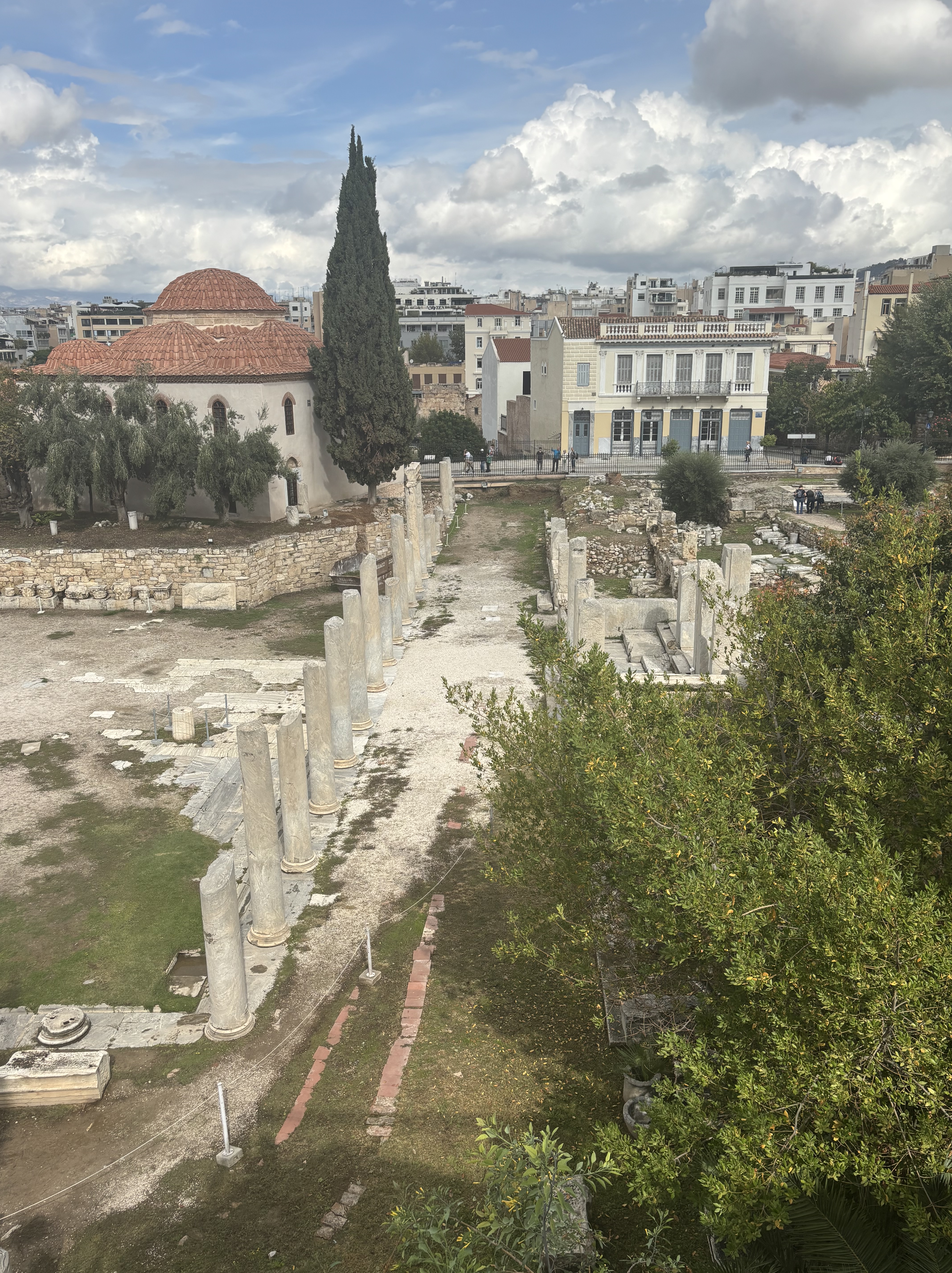
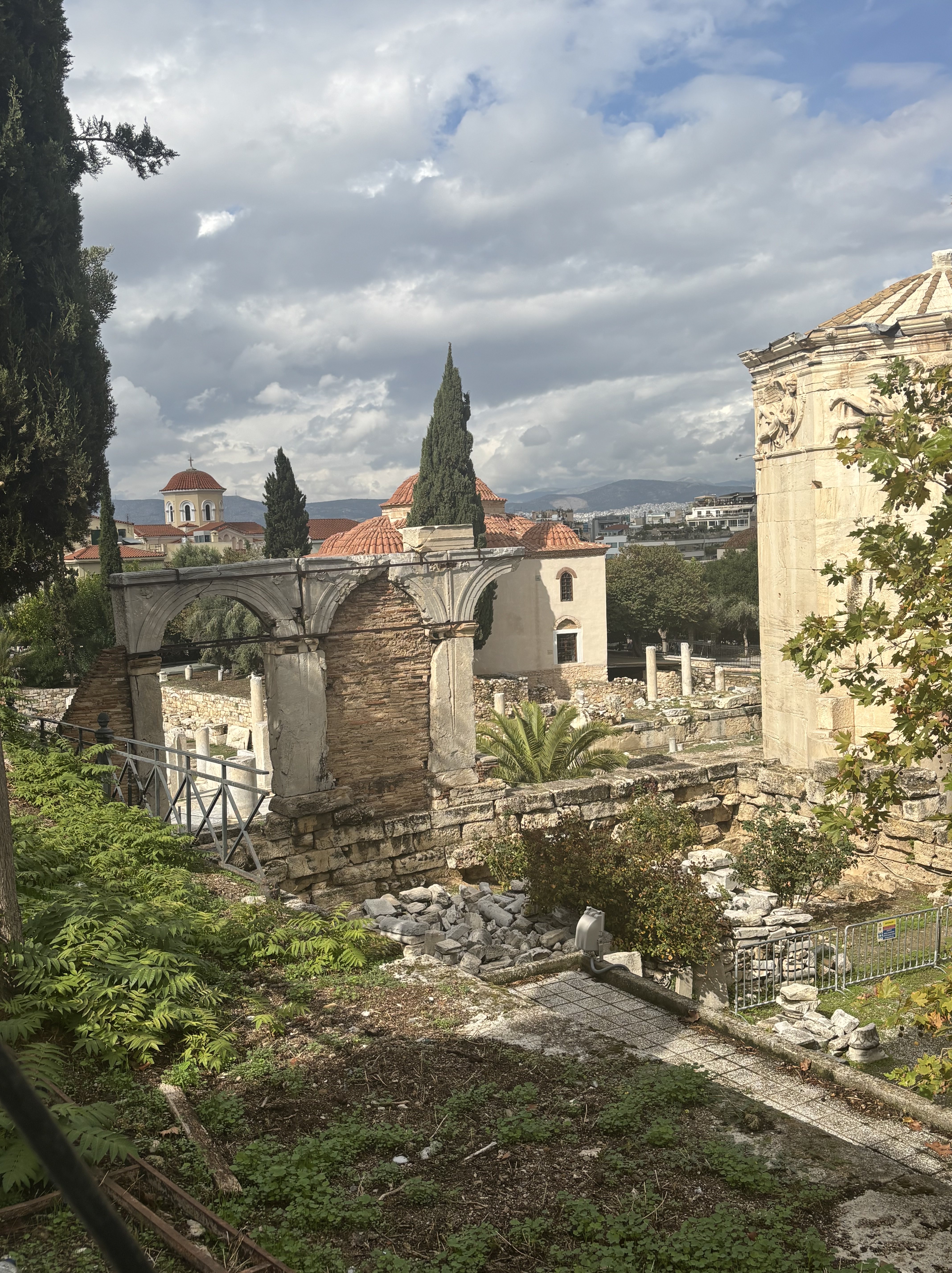


If you are into old and culturally significant artifacts, the National Archaeological Museum and the Acropolis Museum are hard to beat. It honestly got a little old for me looking at room after room after room of ancient jewelry, pottery, sculptures and drawings, so I found myself moving pretty quickly. That said, Darla and I just saw the “Elgin Marbles” at the British Museum last month, so it was fun to see their original context (and lots of not-so-subtle references to how the structure was looted by Lord Elgin in the early 1800’s). My personal opinion is that the Elgin Marbles should be returned to their original home in Athens, but it does undercut the credibility of Greece’s argument somewhat that so much of the National Archaeological Museum consists of artifacts from Hellenic conquests of foreign lands during its own heyday.
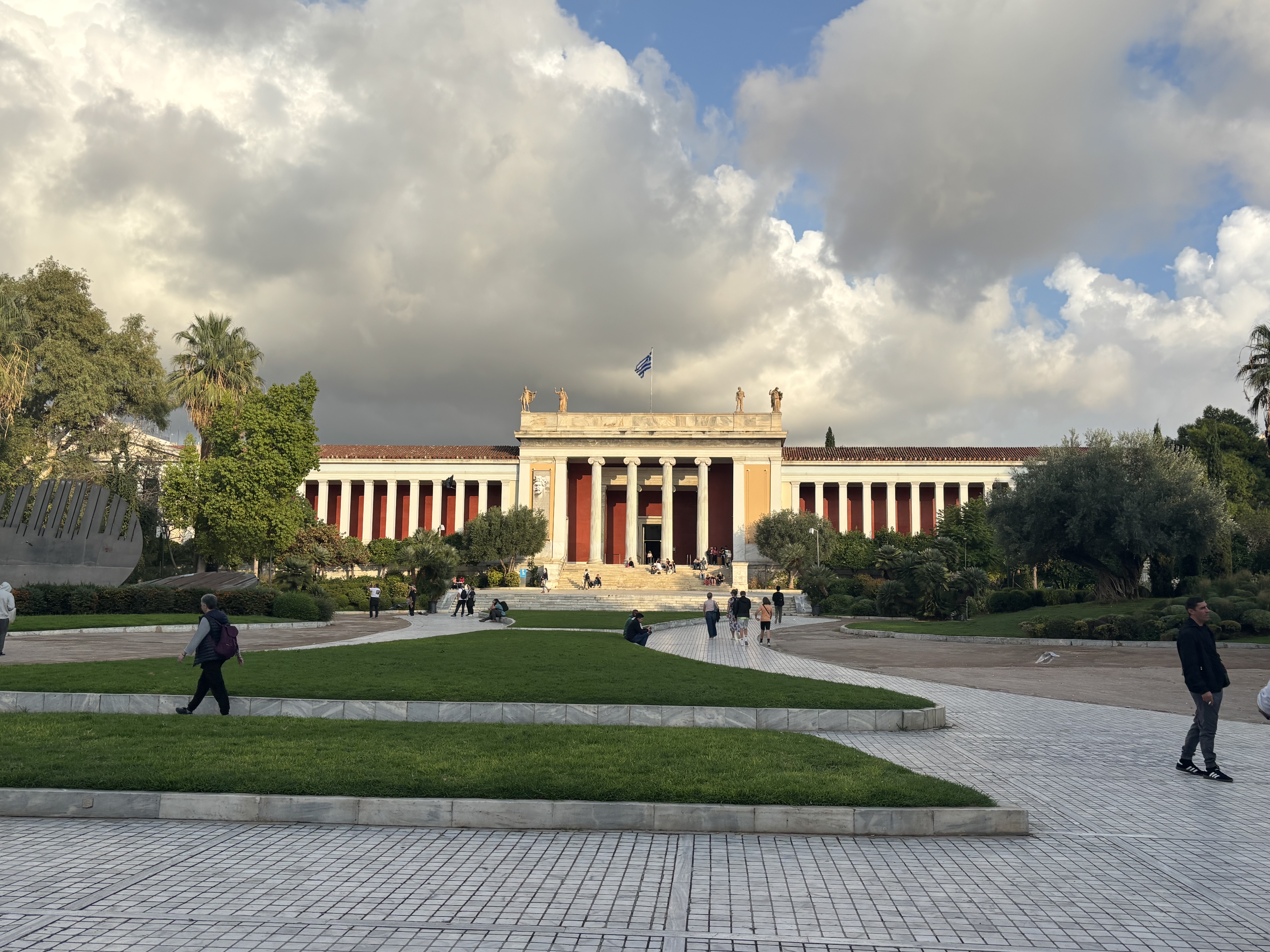


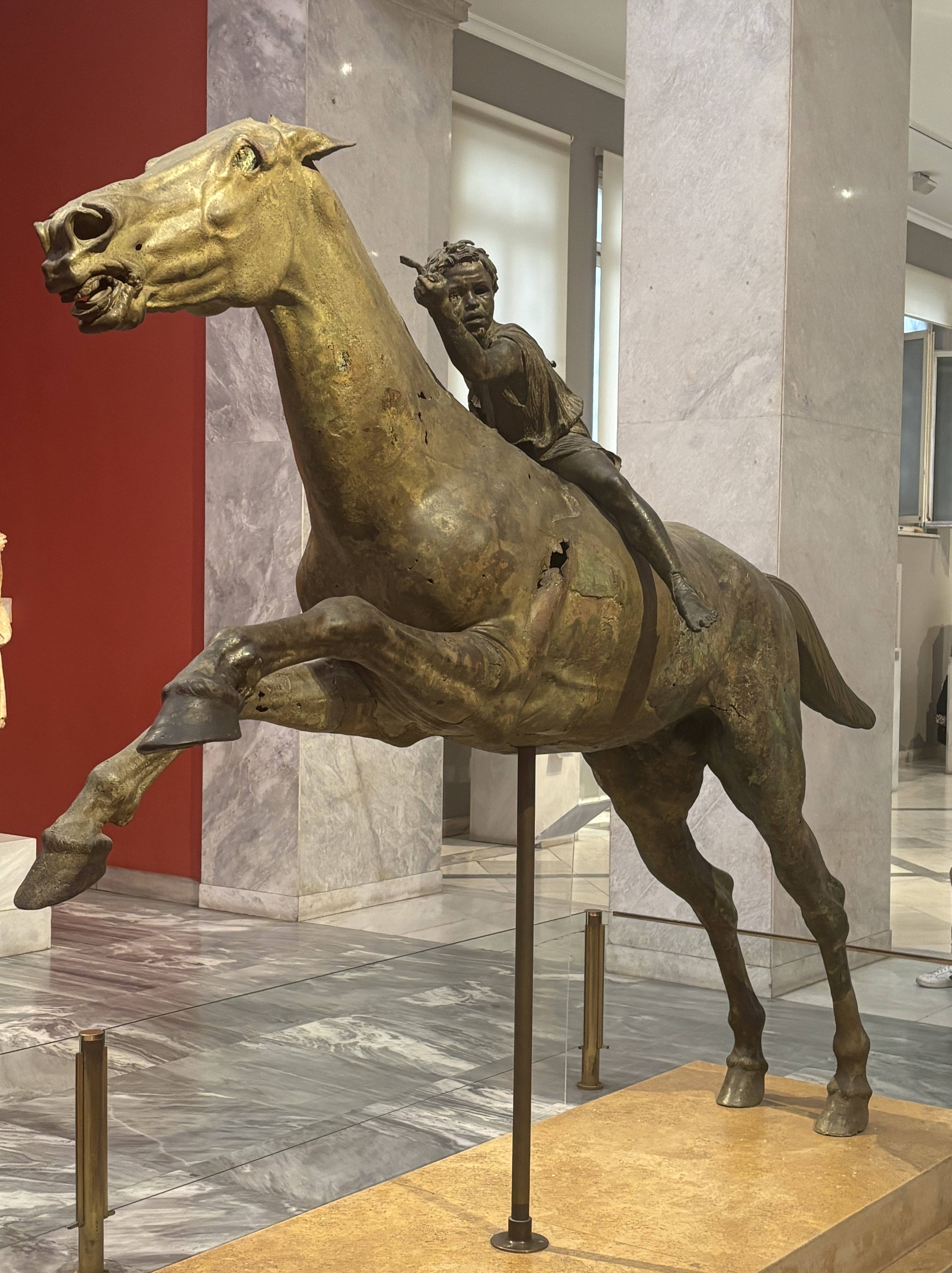


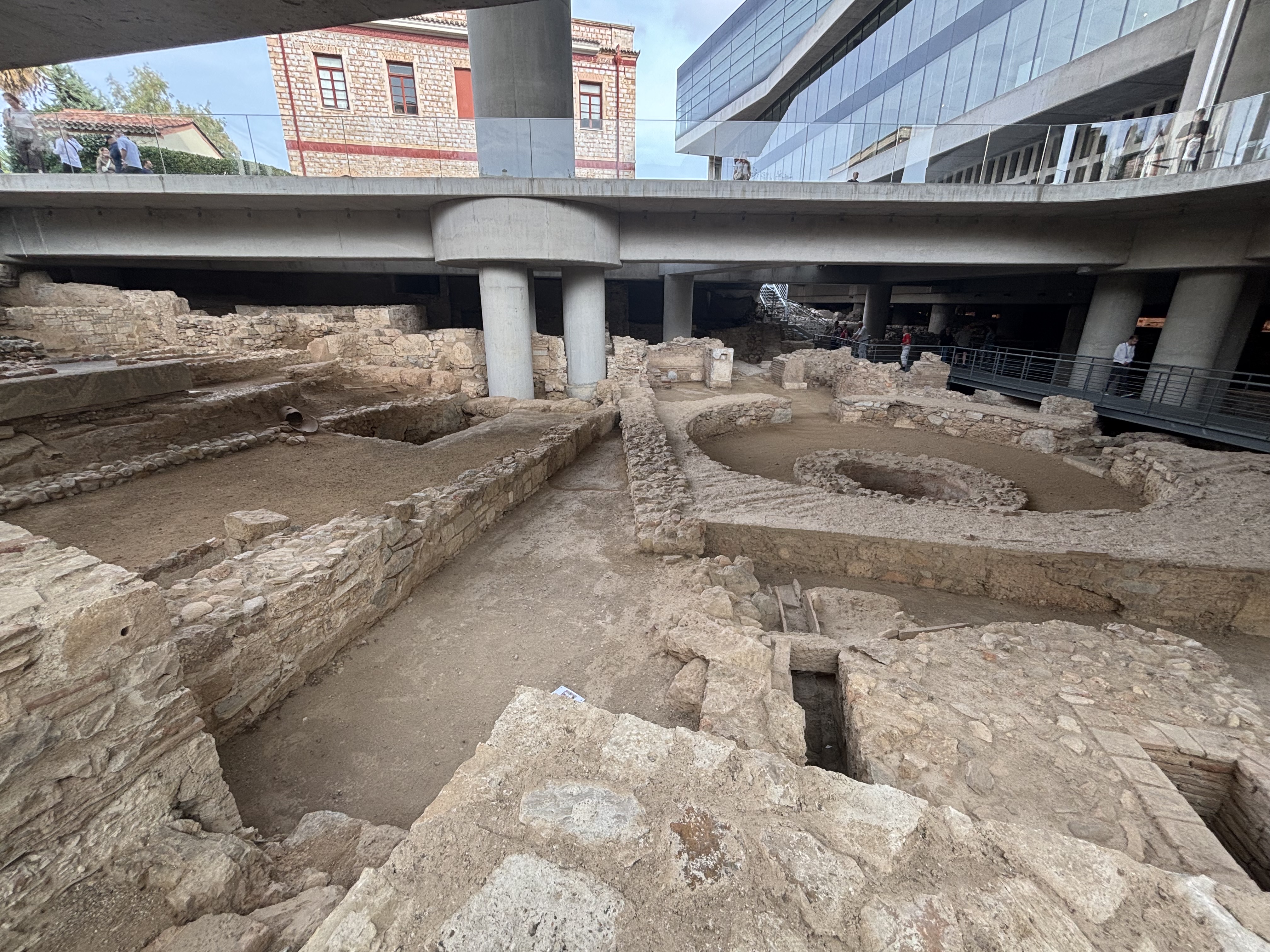

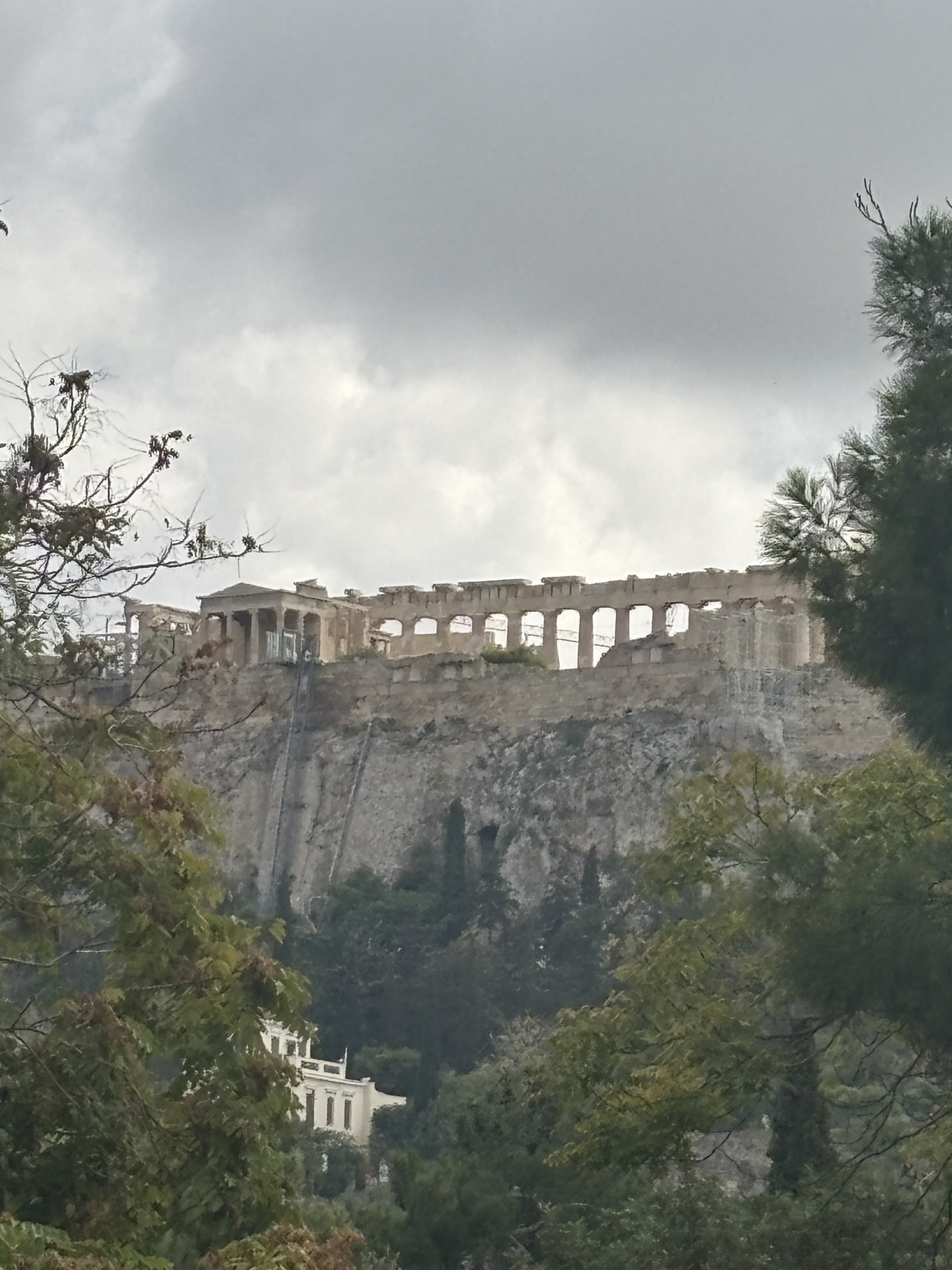
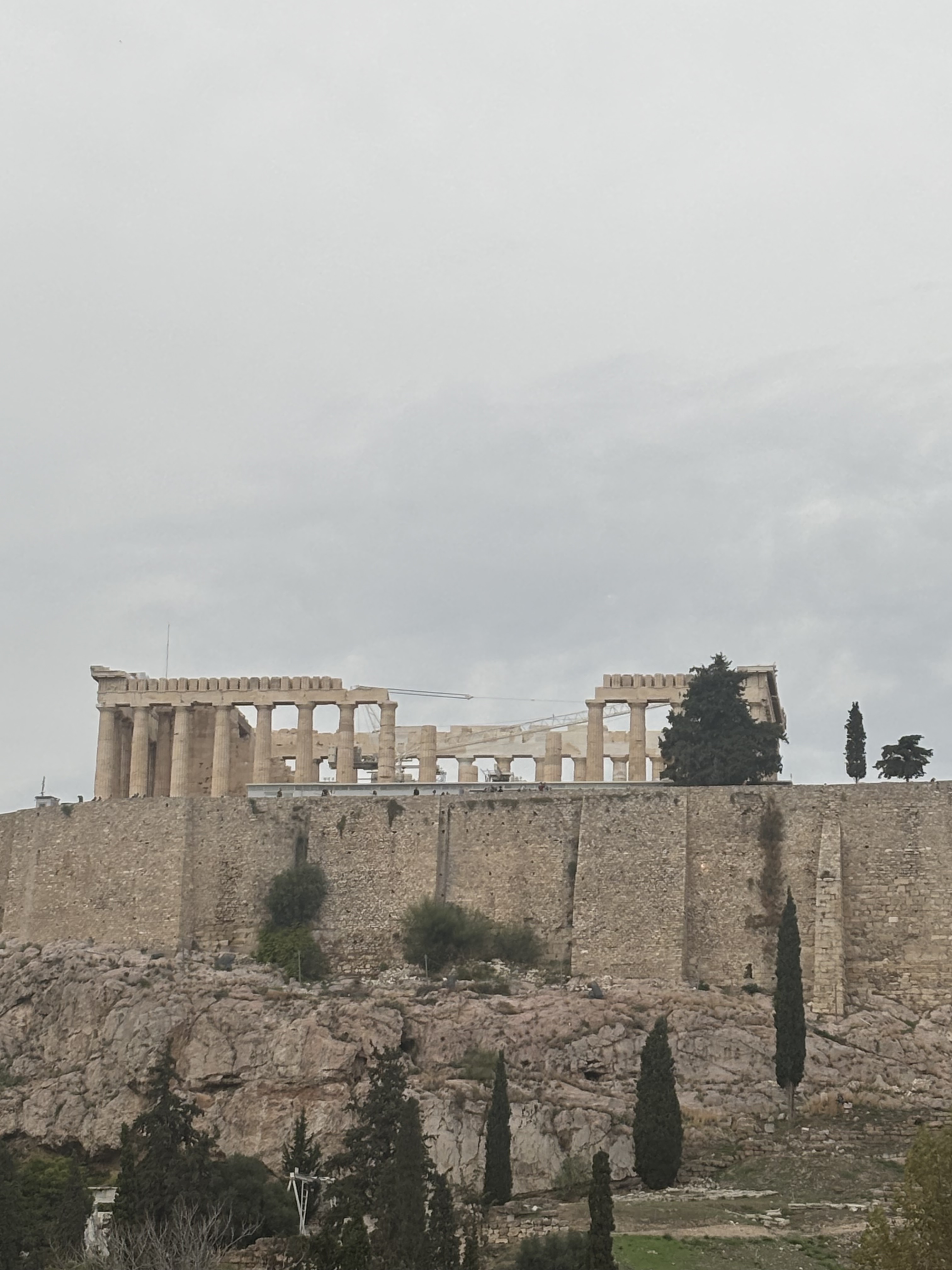
As fortune would have it, all scaffolding was removed from the Parthenon for the first time in more than 20 years the week before I arrived, resulting in unobstructed views of all sides of the structure for the first time in approximately 200 years. Of course, the scaffolding will be going back up in a few weeks for cleaning and could be there for quite some time if history is any indicator. And I will note that removal of scaffolding apparently does not include removal of all ladders and heavy equipment scattered around the complex. But seeing the Parthenon standing on its own was pretty cool, and I’m pleased to have marked that one off my bucket list.


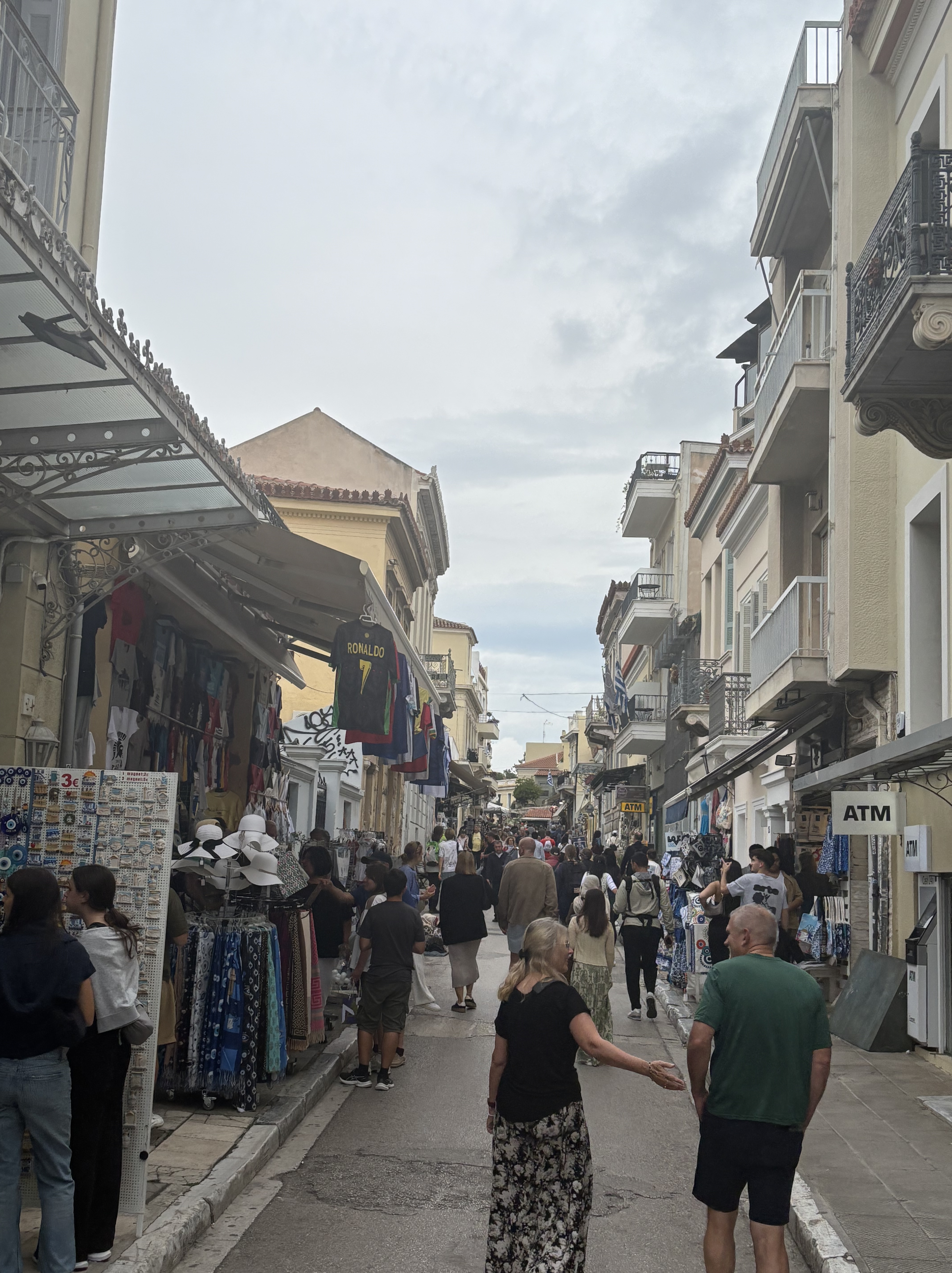
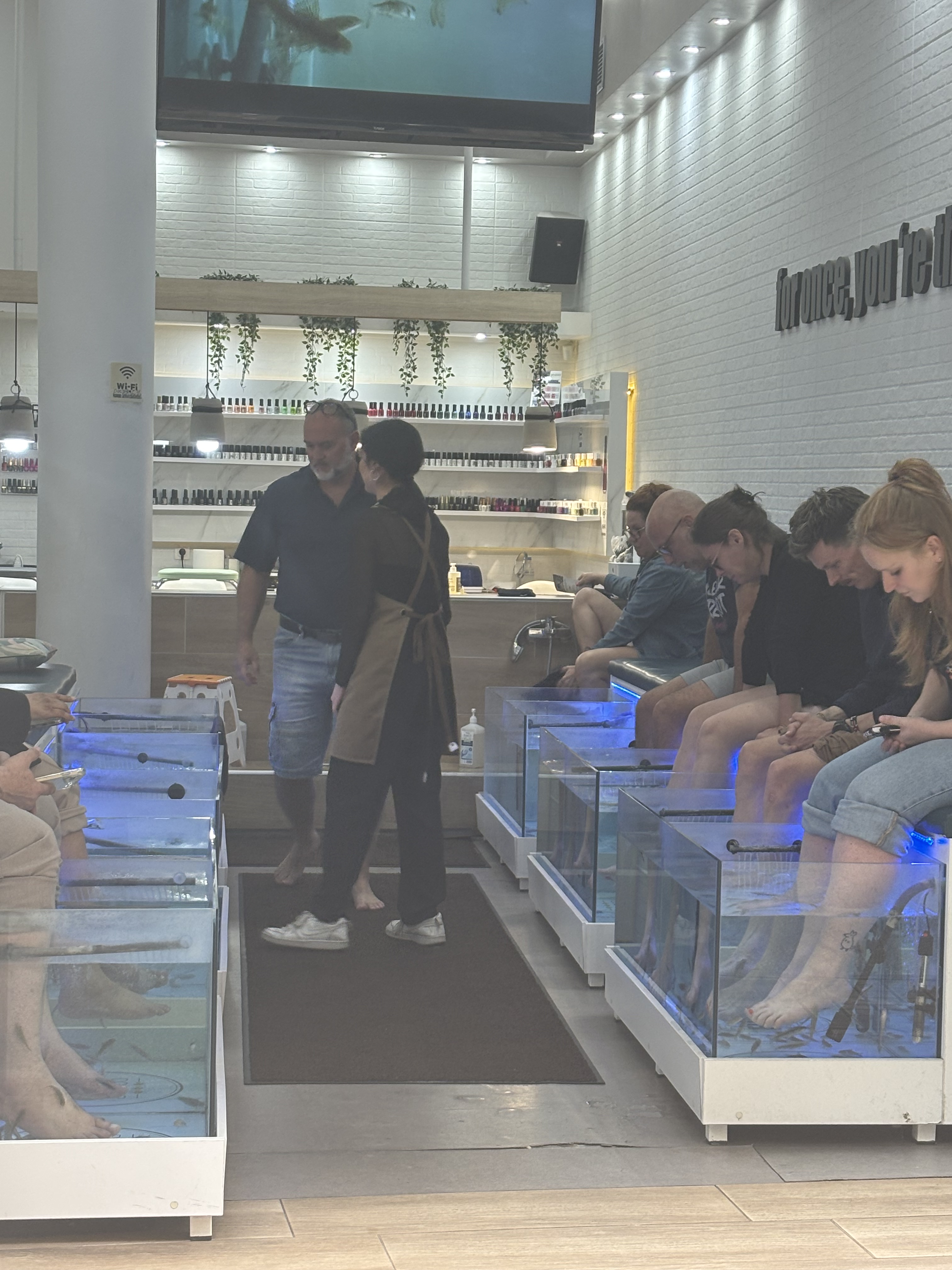
That said, much of the city is either in a tragic state of decay or such a Disneyfied experience as to be completely unenjoyable. Regarding the latter, several blocks on the south end of Plaka appear to have been purpose-built to funnel the uninformed and overserved past overpriced souvenir shops and terrible restaurants. It is full of loud, slow-moving masses being harangued by shopkeepers and street performers who are happy to provide them an “authentic” Athens experience — or at least stick their feet in a tank of dirty water so fish can chew on them. Yum. I recommend avoiding Makrigrianni and Vyronos streets.
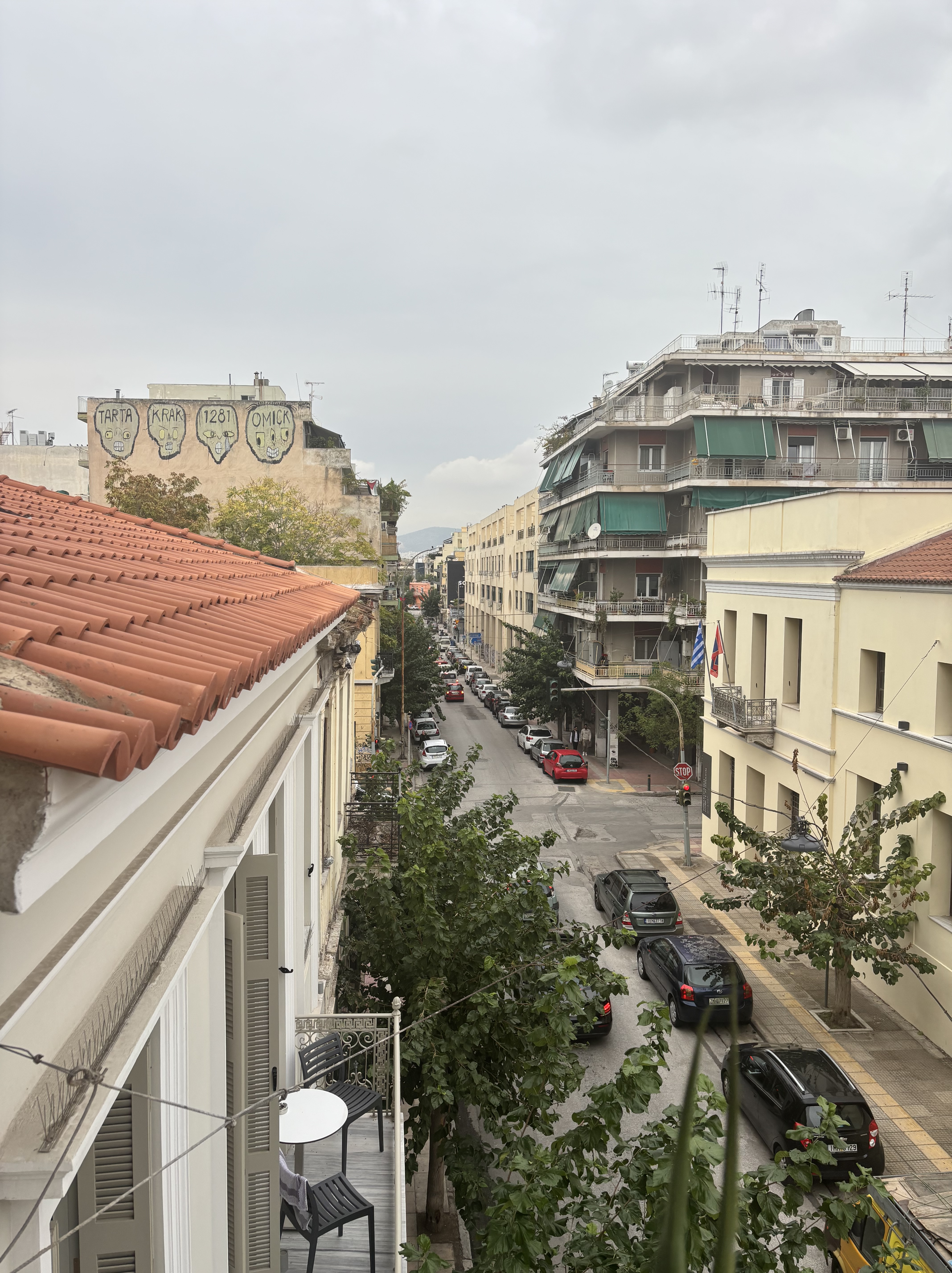
But it gets even less desirable outside the city center. My AirBNB was located about halfway between the Kerameikos and Omonia metro stops, on a relatively boring block (see view from terrace below) surrounded by a rather depressing stretch of dilapidated buildings, crumbling sidewalks and automobile exhaust. I wandered much of the area north of Panagi Tsaldari (Pieros street) and around the corner into Exarchia because I had read this was a trendy neighborhood and home to a lot of high-quality street art, but I did not get the appeal. Aside from the archaeology museum and the occasional bit of graffiti worth a second glance, it’s not an attractive neighborhood and doesn’t always feel safe. It is dirty, overcrowded and seems to be a residence of last resort. I walked past a makeshift tent city where some residents were consoling others who were in clear distress; on the next block, I saw five police cars, so clearly something had just gone down. I took no pictures, but it is these images of Athens that will stay with me.
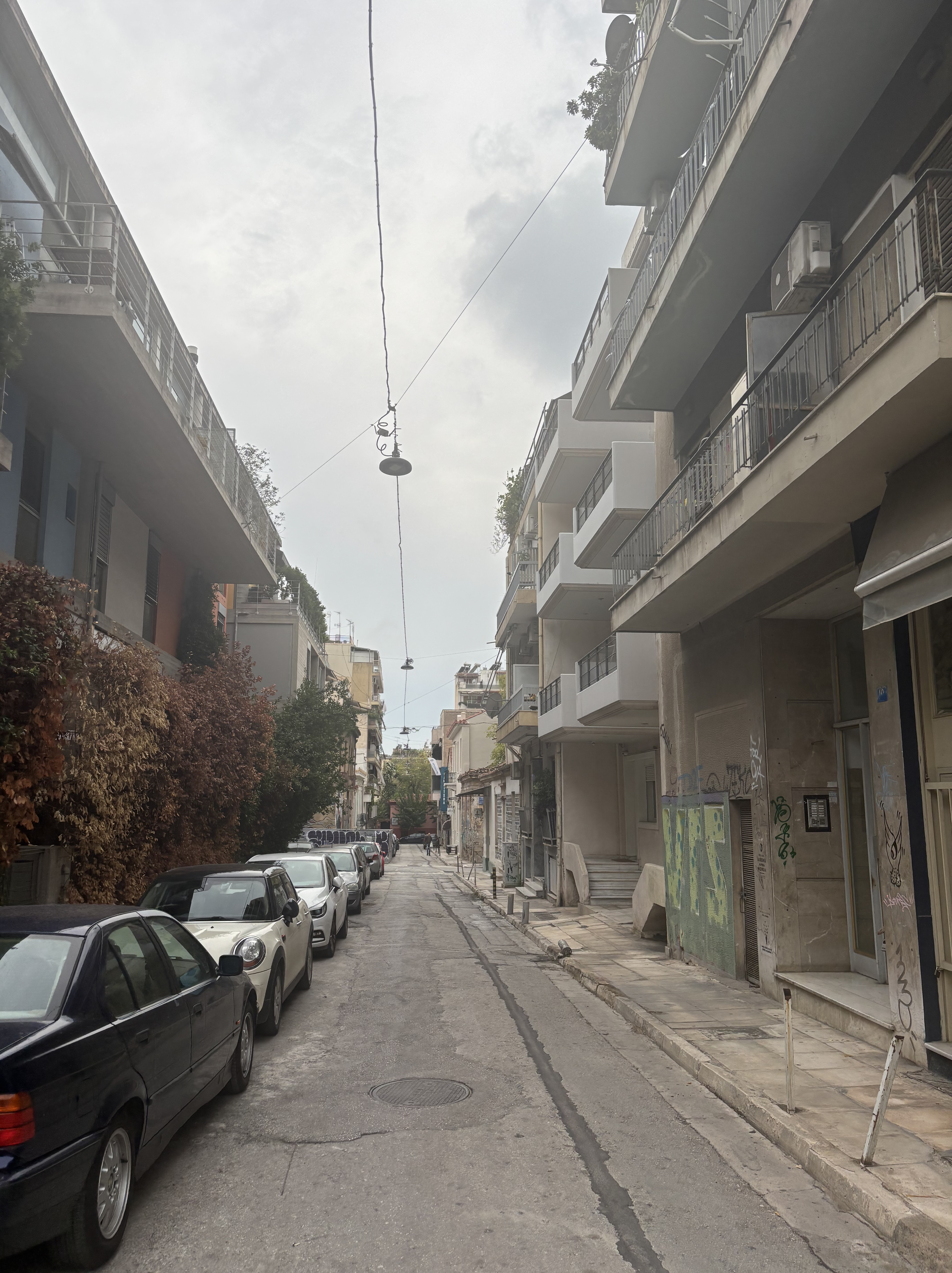
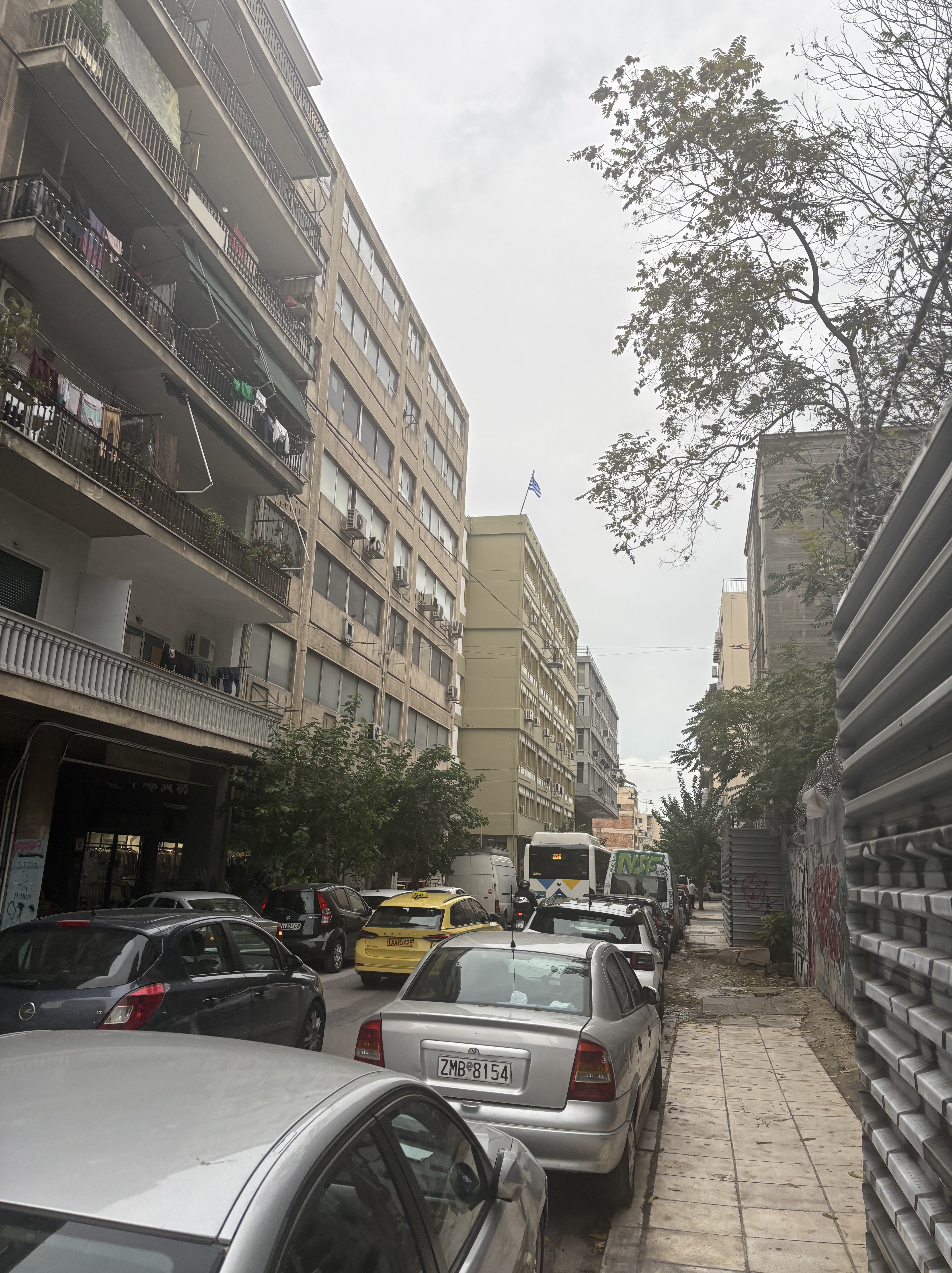
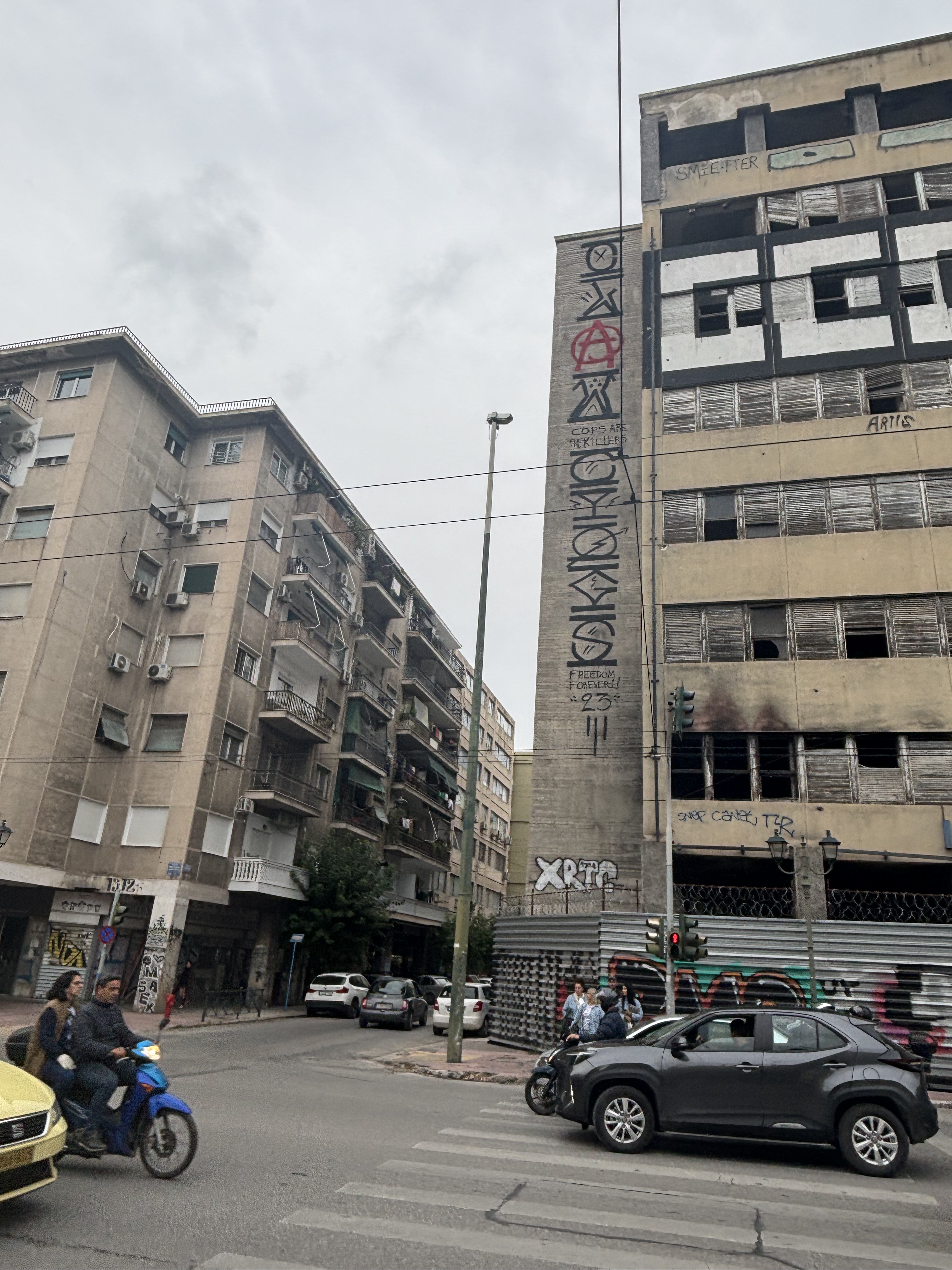

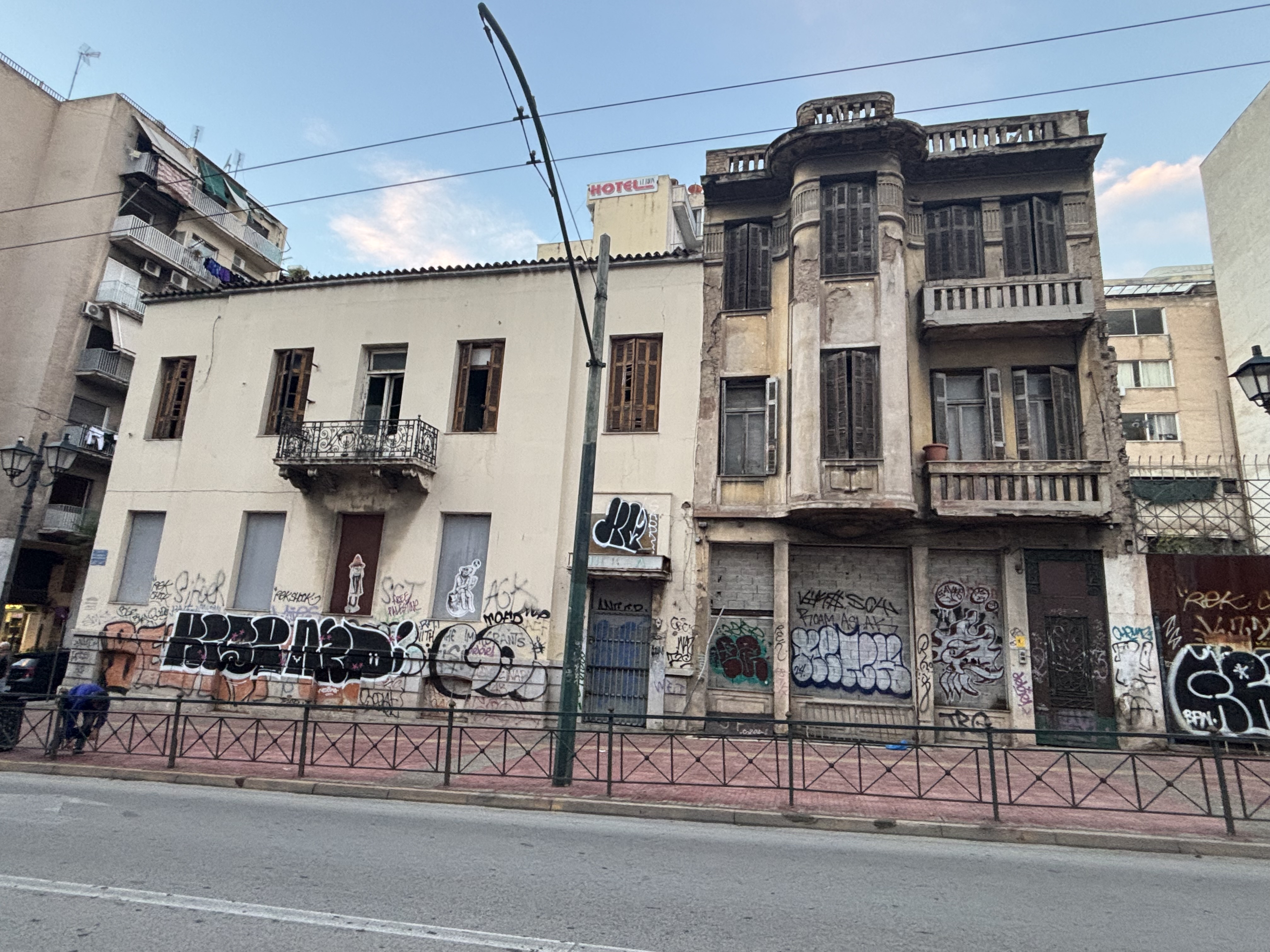
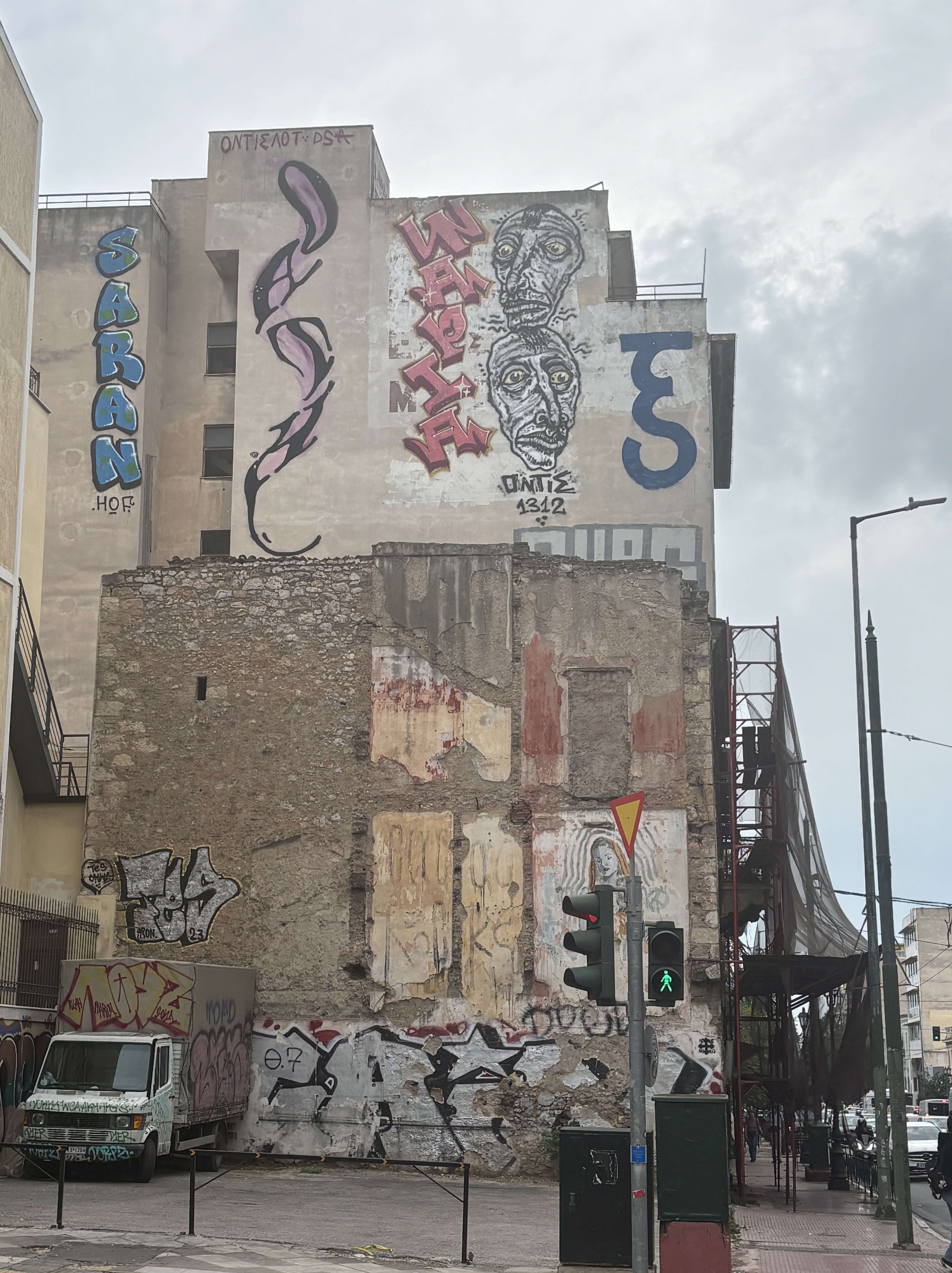
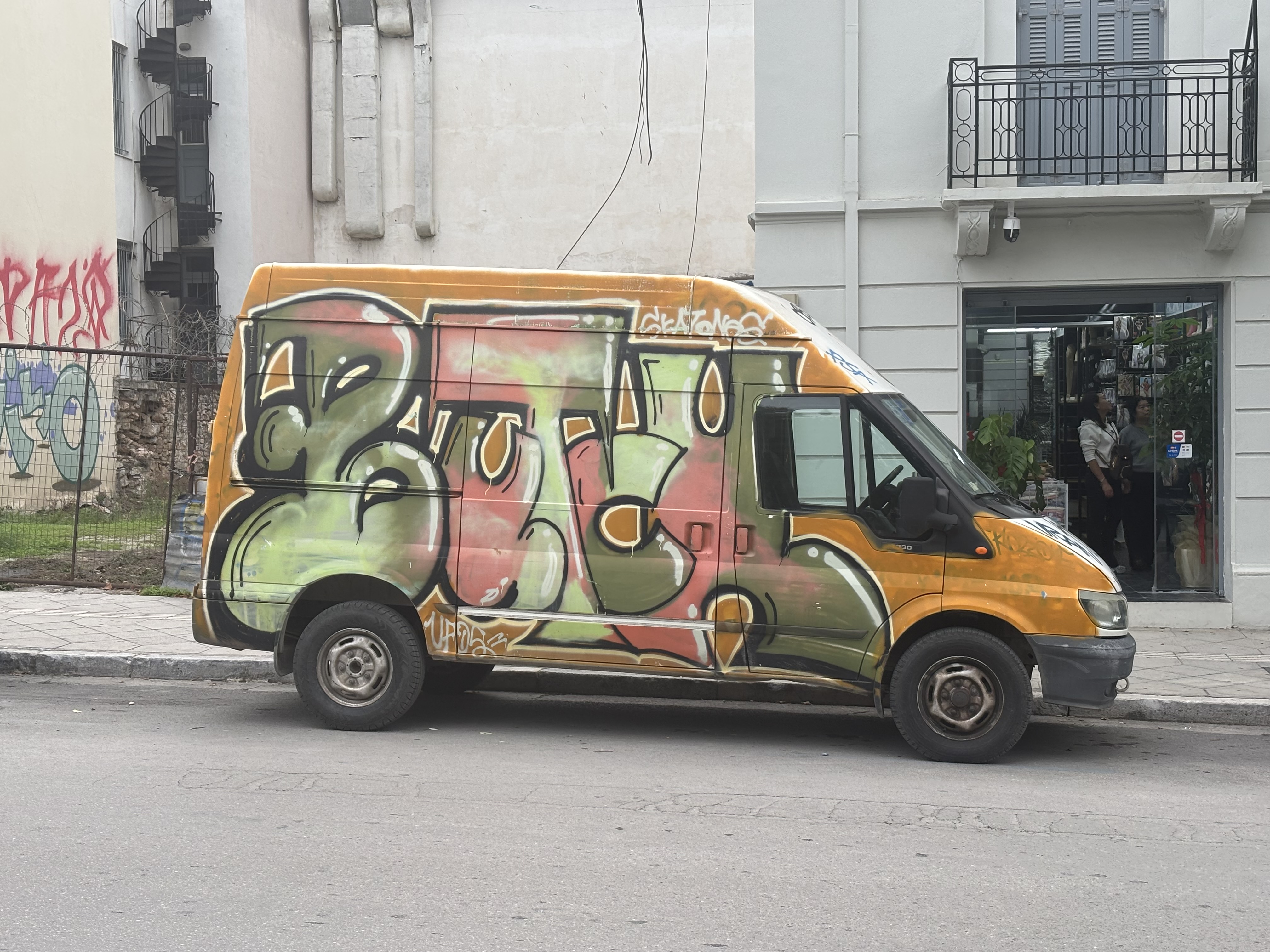
In the end, I’m glad I experienced Athens but likely will bypass it if I ever visit Greece again (which I’d very much like to do). There are plenty of places elsewhere on the mainland or on the country’s 227 inhabited islands with an interesting history, scenic views and kind people living a relaxed pace of life. My visit to Athens was a reality check that Greece continues to experience a lot of economic difficulty. It’s also a reminder that there is always a lot going on beneath the shiny surface of any destination. One of my tour guides speculated that the piles of money now being collected from tourists must be going either to the military or to the politicians themselves. (It also could be going to the cats – there are a LOT of them.) In any case, the birthplace of democracy seems to have forgotten about its own people.

 The Global Slowmad
Leave a comment