“Misery acquaints a man with strange bedfellows.” — William Shakespeare
Never fear – I wasn’t miserable at all in Budapest. In fact, I was quite fascinated with the city and can’t wait to return. The architecture is truly stunning. The food is outstanding and affordable. The tourist crowds are manageable. It is a notoriously diverse city.
But I was confused by Budapest. Appearance-wise, it shares many characteristics with Lisbon: scenic trams, hills (at least on the Buda side), cobbled streets and grand-but-peeling and sometimes grimy buildings tagged with graffiti. Culturally, it bears striking similarities to many of its neighbors – Austria, Slovenia, Croatia, Serbia, Romania, Ukraine and Slovakia – most of which were part of Hungary at some point in their history. But many aspects of its culture – like its language, obsession with thermal baths and traditional foods (you won’t go “hungary” here!) – reminded me very much of the “one of these things is not like the others” song from Sesame Street. As a heavily inked young woman at a wine bar explained to me, “Budapest is Vienna’s dirty little brother.” After a few days, her comment finally began to make sense.
Despite its lengthy and colorful history, Hungary in its present form is a very young country. Locals are quick to point out that Hungary was under the influence of, if not overtly controlled by, foreign powers for most of its existence. A lot of its more controversial public policies and political alliances over the years originated as little more than attempts to avoid being wiped out. Consequently, the few elements of true Hungarian culture that have survived are held on to quite fiercely.
The general area that is now Budapest was settled by Celtic tribes a few thousand years ago (you can see artifacts at the excellent Hungarian National Museum) and ultimately became part of the Roman empire in the 1st Century (who prized the location for its natural hot springs) before being invaded by the Huns in the 4th Century. The Magyars (which means Hungarian in Hungarian) were another nomadic tribe that arrived sometime in the 9th Century. Some of the Magyars moved on to settle in modern-day Estonia and Finland, which is why Finnish is the only other European language remotely related to Hungarian. But most of the Magyars stayed in what is now Hungary. It is worth noting that the area already had a sizable Jewish population, but the two groups apparently got along well in the early days and developed a highly symbiotic relationship.
The Magyars had always been pagans, but their last tribal prince and self-appointed first King of Hungary, Istvan (a/k/a Saint Stephen), decided the smart thing would be to officially adopt Catholicism since they were surrounded by Christian powers. The pope recognized the new kingdom (the mummified “holy right hand” of Saint Stephen is on display in his namesake basilica to this day), and the nation enjoyed a period of relative autonomy, acquiring land and building the original Buda Castle, the royal palace and other prominent landmarks, until it was invaded and became part of the Ottoman Empire in the 16th Century. The golden age of Hungary was over.
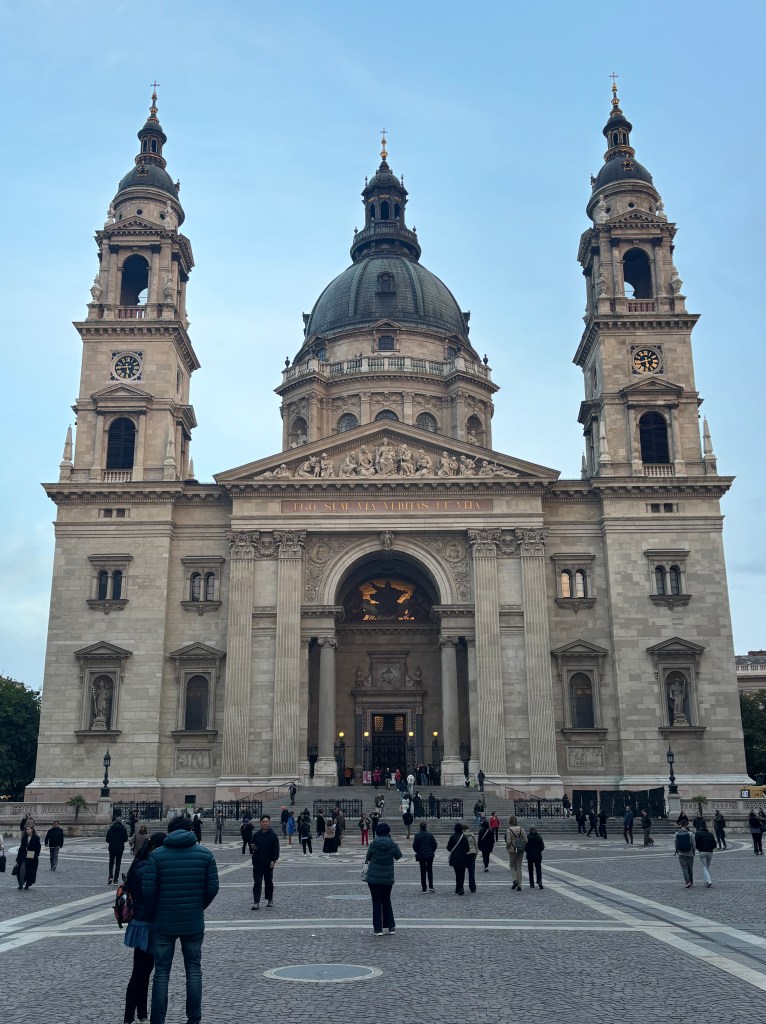
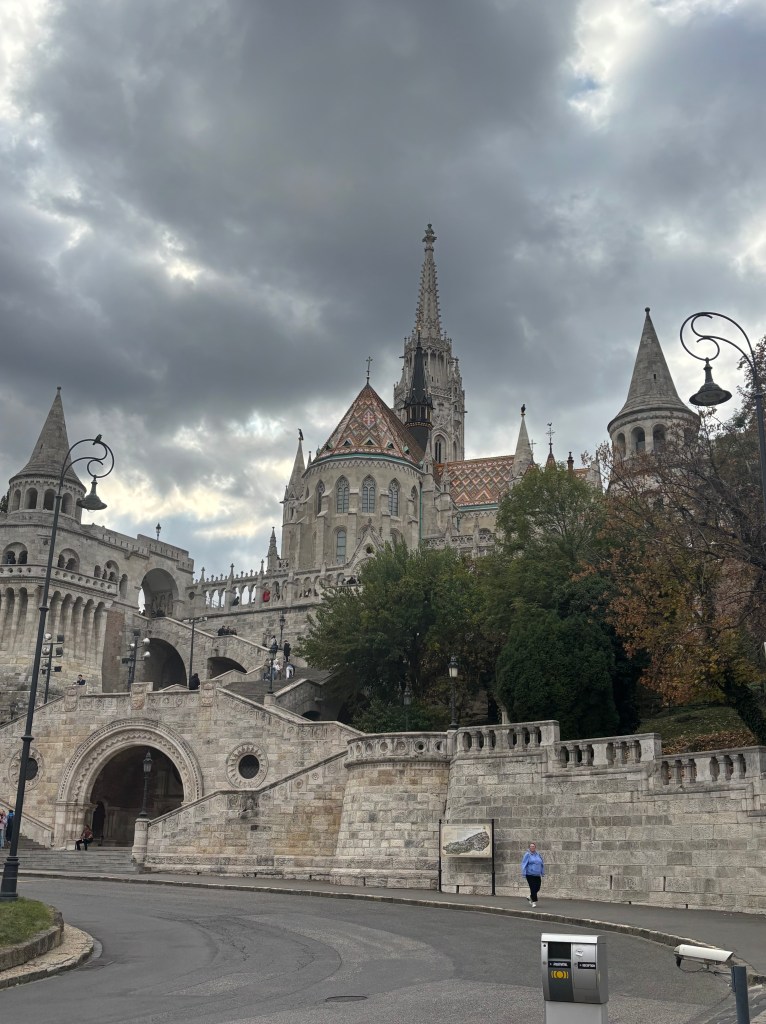
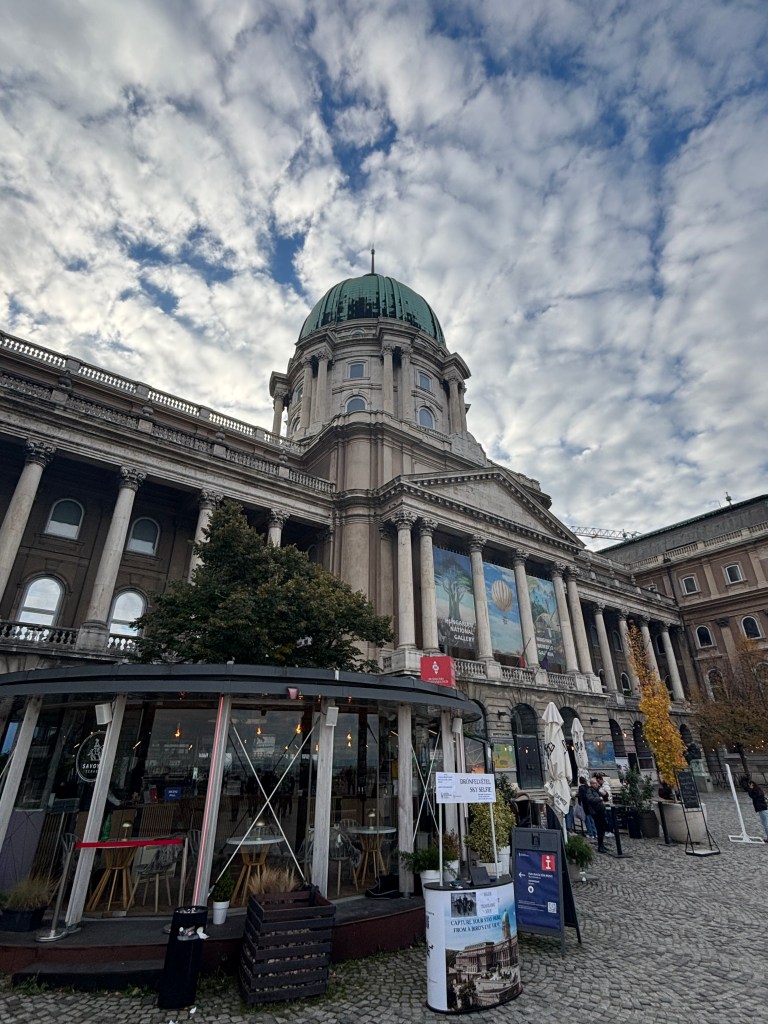
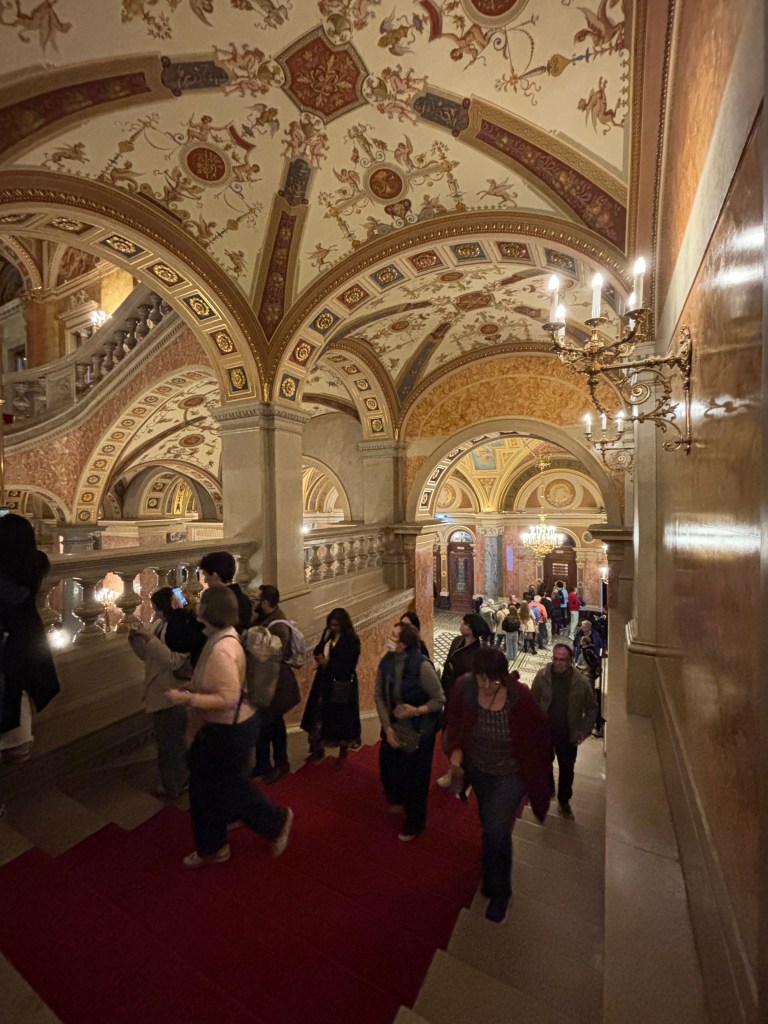
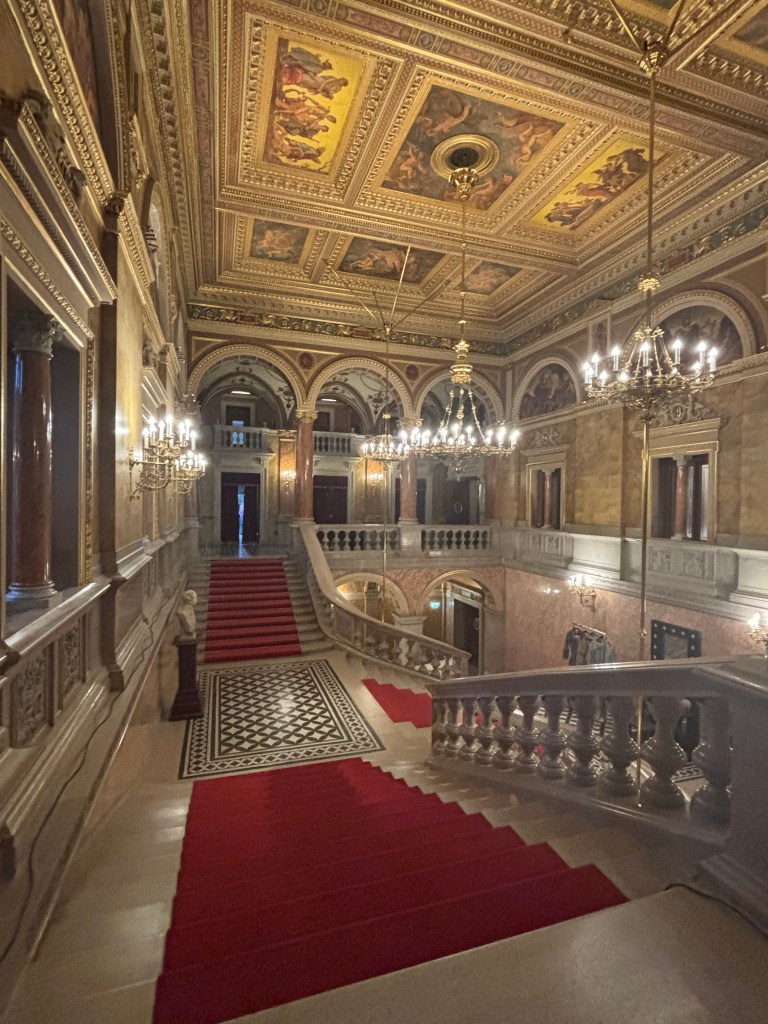
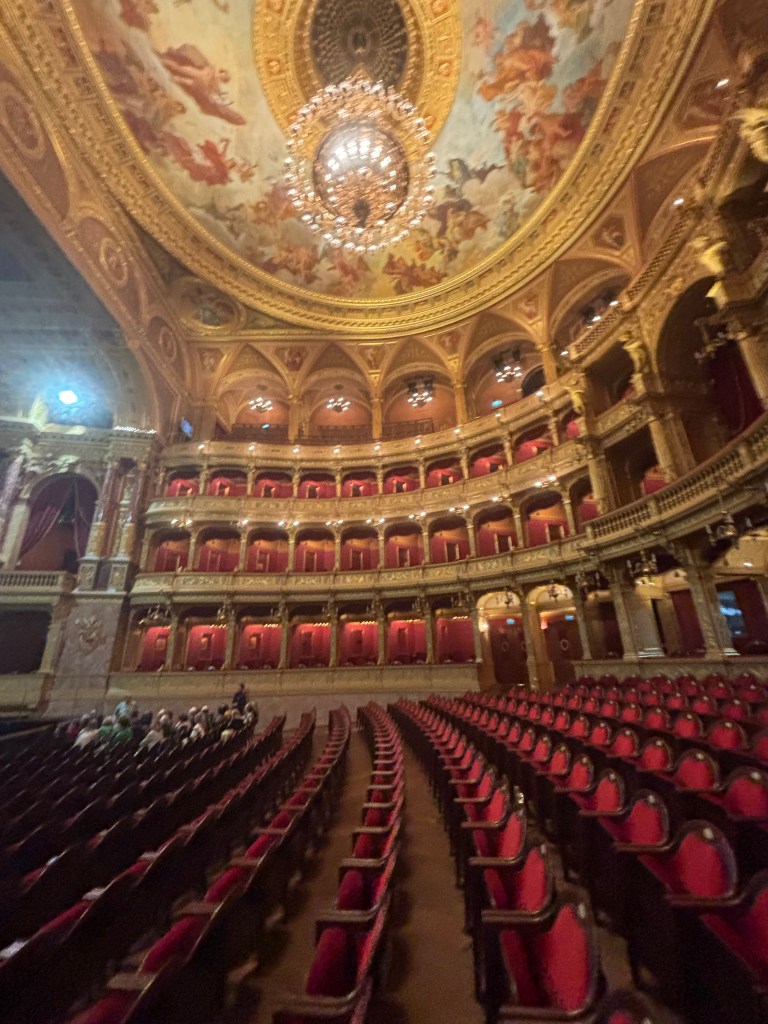
Approximately 150 years later, the Magyars decided the smart thing to do this time around would be to align with Austria so they could defeat the Ottomans and regain their autonomy, but this resulted in the near-total destruction of Budapest and the few remaining citizens becoming subjects of the Hapsburg Empire. Hungary became more prosperous over time thanks to the importance of the Danube for international trade, eventually rising to nominally co-equal status with Austria and establishment of its own royal family. (Locals are quick to point out that this status was illusory, as all important decisions still had to be approved by Vienna. A case in point: the Austrian emperor reportedly became quite perturbed when the Hungarians followed the letter but not the spirit of his decree that an opera house could be built in Budapest so long as it was smaller than the one in Vienna; the Hungarians built an over-the-top opera palace clad in gold and marble because he had said nothing about it being more beautiful.)
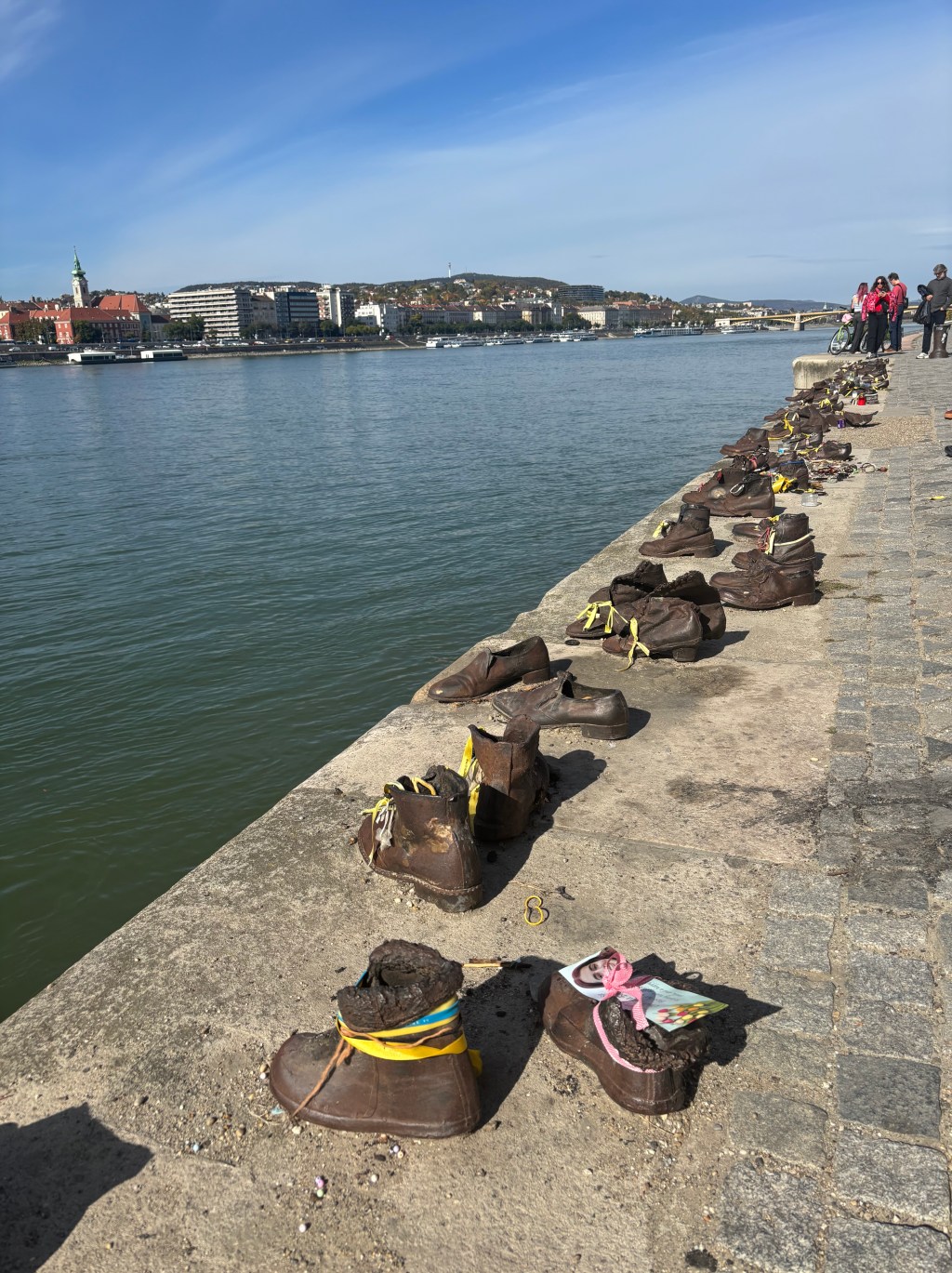
The unfortunate alliance with Austria resulted in Hungary becoming a reluctant participant in World War I after the assassination of Franz Ferdinand. Ultimately, more than 70% of Hungary’s territory was taken away. Budapest briefly became capital of the Hungarian Soviet Republic until the communist leaders were driven out by the Romanians. This also was a period of growing nationalism and anti-Semitism in Hungary. Alas, when Adolf Hitler promised the Hungarians that they would get their land back if Hungary aligned with the Nazis in World War II, they once again decided that would be the smart thing to do. After all, it initially appeared that Germany would prevail, and it certainly was the most imminent threat to Hungary should they resist. When things began to turn against Germany and it became more evident that they eventually would lose, Hungary decided to try to switch sides yet again. Unfortunately for them, Hitler heard about their intentions and chose to occupy Budapest instead so as not to lose his last major ally. A direct train to Auschwitz was established. The ethnic cleansing that took place in Budapest – long a haven to the Jewish people – is truly appalling. Even as Russian soldiers surrounded the city, local officials continued to force Jewish citizens to stand along the Danube and remove their shoes (because those were quite valuable in wartime), where they were shot into the river below. There is a moving tribute to this tragedy on the Pest side near Parliament.
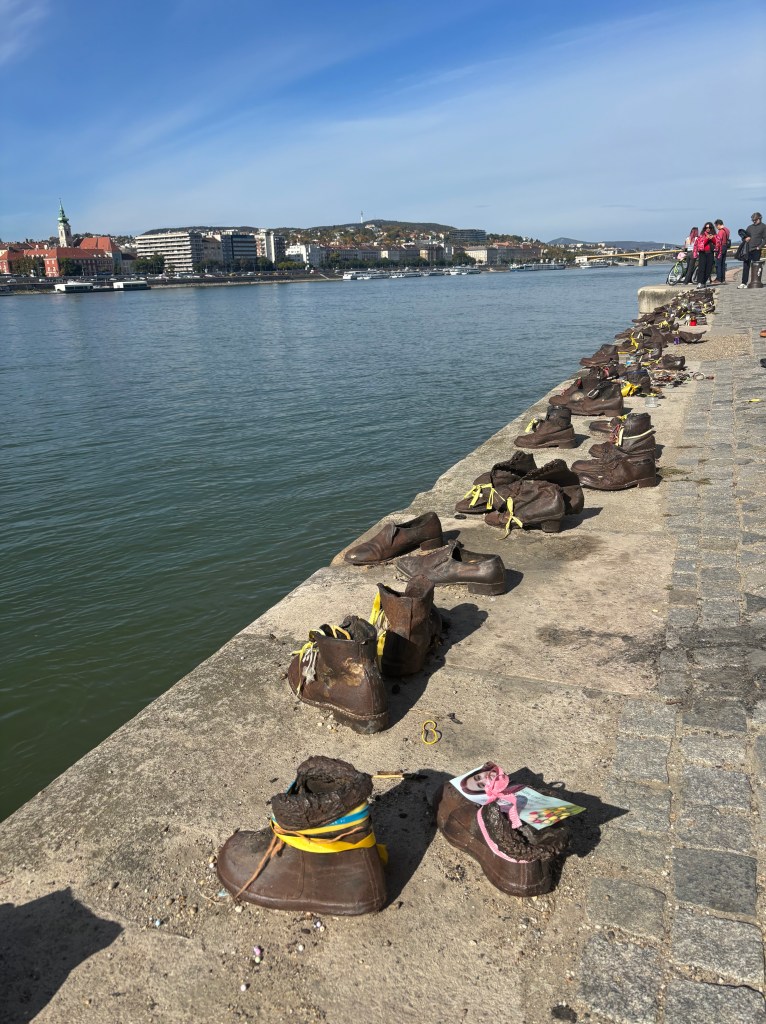
You know it’s going to be a sad story even before you hear it.
As the war ended and the dust (literally) settled, so began the Soviet occupation and resulting communist era in Hungary. Much of the city had been destroyed in the conflict between Russia and Germany, and the Jewish population had been hit particularly hard. Unlike many cities in eastern Europe in the post-war era, the buildings in Budapest were mostly rebuilt in their original style. Scholars might refer to it as neo-baroque, but I think it is best described as spectacular.

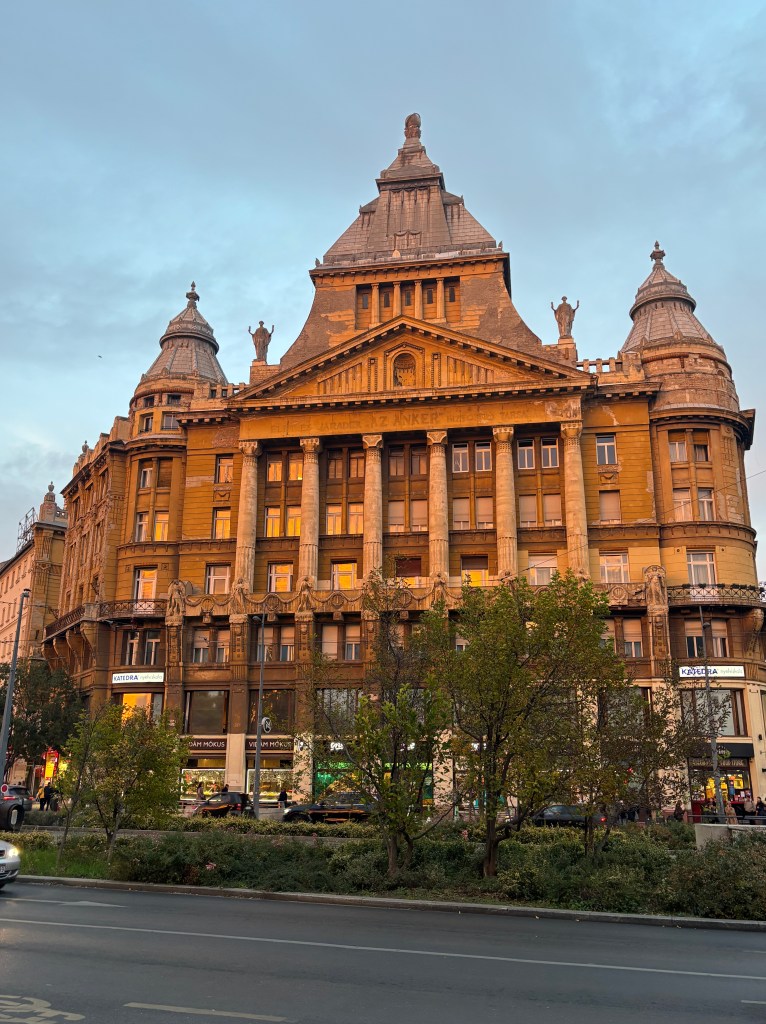

The Hungarians wanted independence more than communism – as evidenced by a revolution in 1956 that resulted in it temporarily becoming an independent democracy for all of 2 days and enabled many citizens to flee to neighboring countries before Soviet forces violently retook the city – but their acquiescence to the demands of Moscow once again seemed like the only way to survive the Cold War.
When the Iron Curtain fell, Hungary seized the opportunity to finally reclaim its independence. But even that was relatively short-lived, as Viktor Orban and the conservative Fidesz party seized power in 2010 after a series of public scandals and an extended period of economic difficulty and quickly began dismantling democratic institutions and using the guise of restoring Christian values to curb immigration, restrict access to abortion, restrict LGBTQ+ rights and infuse schools with religious teaching. Elections are generally considered “free but not fair” due to widespread gerrymandering, state control of the media, an ongoing overhaul of the judiciary and a series of constitutional amendments to limit voting rights, all of which make it virtually impossible for an opposition party to prevail. Fidesz instituted a flat tax that primarily benefits elites, and the government routinely awards preferential contracts to political donors. Some have noted that Orbanomics is being used as a game plan for similar political movements happening elsewhere in the world. Budapest locals (perceptions may differ in rural areas) recognize that their “democracy” operates more like an autocracy these days; most are not thrilled about what is happening, but they are understandably reluctant to talk about the situation much less initiate any kind of revolution. For now, they will accept the lesser evil of a dictator as their latest strange bedfellow if it preserves their cultural autonomy.
It’s hard to predict what the future holds for Budapest, and for Hungary as a whole. From the perspective of a tourist in Budapest, none of what is happening beneath the surface is that noticeable. People appear to be going about their lives and generally enjoying themselves. Wandering the streets as a tourist, you will see people of all races, ethnicities, religions and nationalities, and there does not seem to be any stigma about being openly gay or trans in public. On the other hand, it’s also the first place I’ve been recently with no overtly political street art.
At the end of the day, Budapest is a safe, beautiful and fun place to visit. But, much like the hot water that persistently bubbles up at the thermal baths around the city, history suggests that the independent spirit of the Magyar people eventually will surface again to seek out greater individual freedoms. In the meantime, if there is one thing they seem to have learned, it is to make the best of a difficult situation.
That’s it for my take on the current political situation in Hungary. In a strange way, it was somewhat reassuring as a preview of our own worst-case scenario. And if you read this post by mistake and were really hoping to learn about the joys of visiting Budapest, my apologies. Maybe check out my Budapest Travel Tips instead.

 The Global Slowmad
Leave a comment