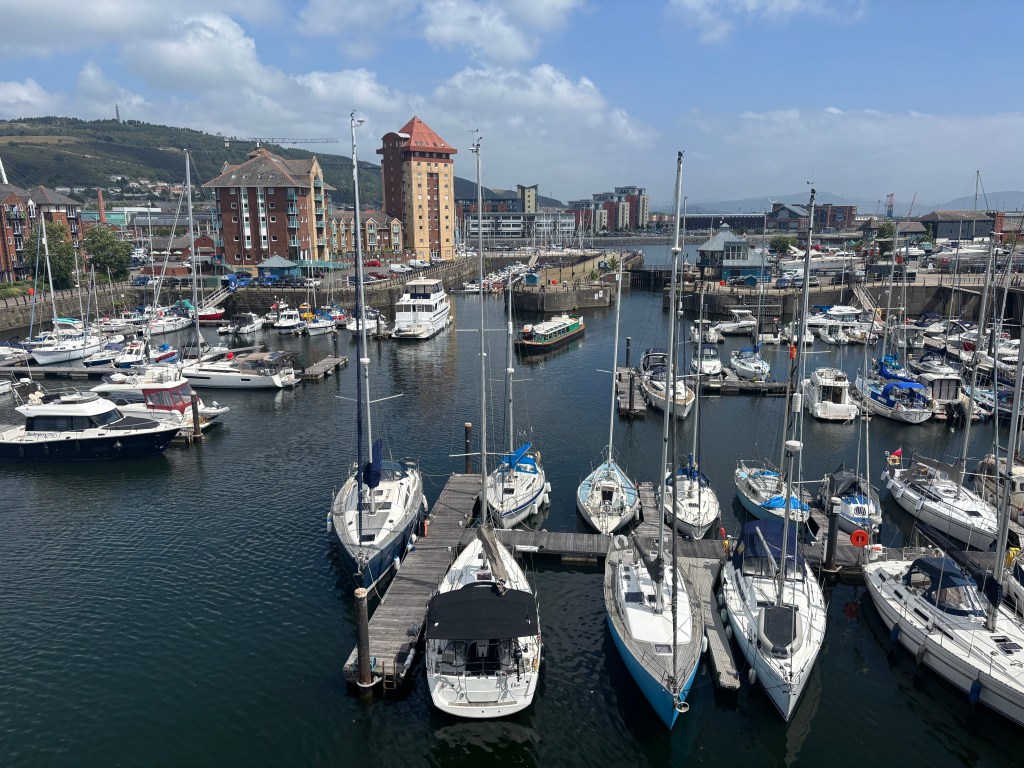
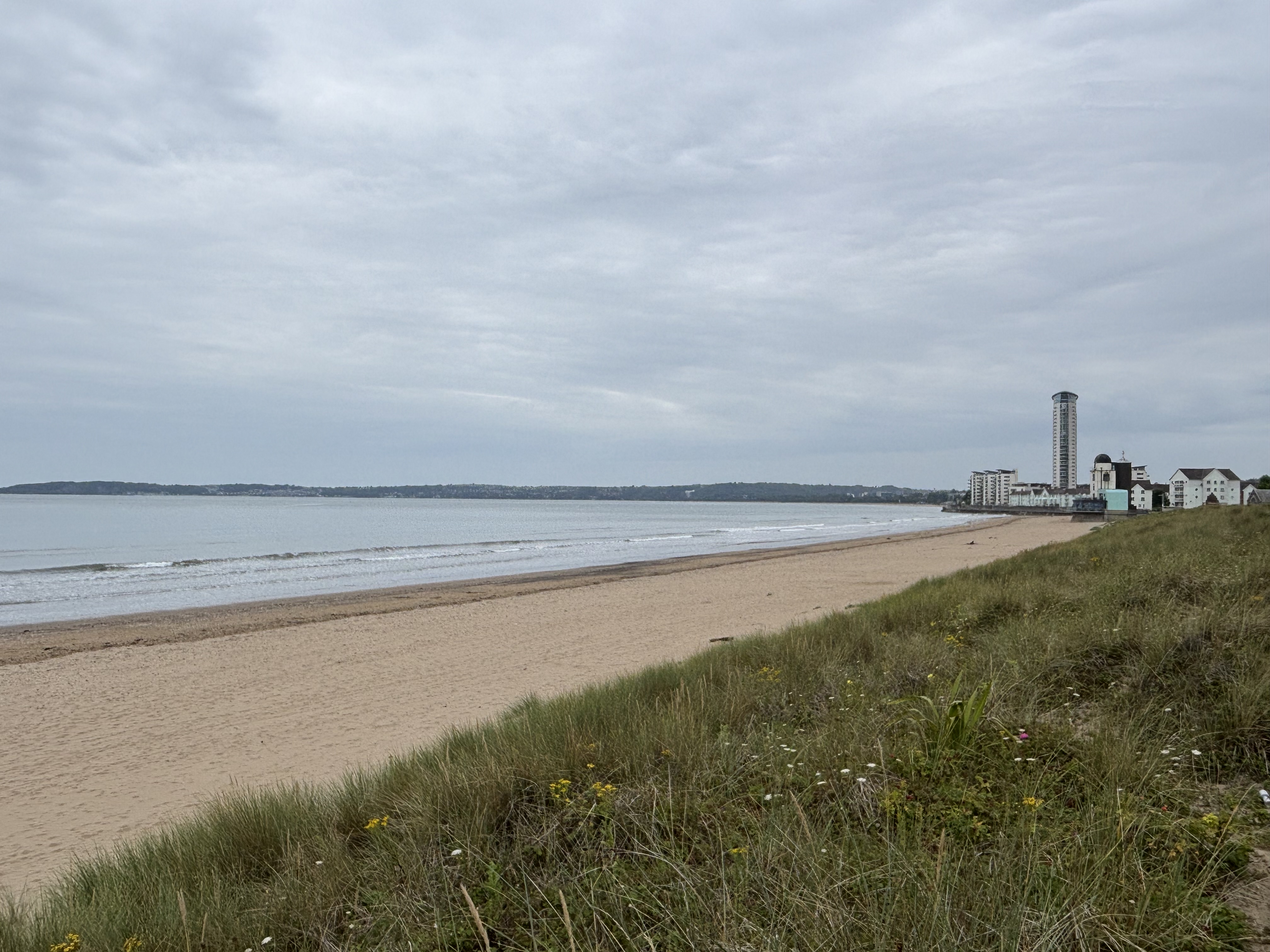
The Twilight Zone? The Land That Time Forgot? It was difficult to choose a title for this post. Perhaps the most fitting option would be a famous quotation by its most prominent former resident, the poet Dylan Thomas: “An ugly, lovely town … crawling, sprawling … by the side of a long and splendid curving shore.”
Of course, Thomas wrote this in 1937 – a few years before the town was the target of an early German bombing campaign during World War II. The Victorian houses he would have known as a child are mostly gone now, replaced by rather soulless brick and concrete structures. But the shoreline is still curving and rather splendid. And the town does have some serious sprawl to it. However, the most conspicuous feature of this coastal city of (allegedly) 250,000 people is its utter quietness.
Hence the title. “Nothing Ever Happens” is a 40-year-old song by Stuart’s all-time-favorite band, Del Amitri. It tells the story of an anonymous city somewhere in the UK where everyone sleepily goes about their daily routine, but the underlying message is an expression of frustration with generalized apathy toward solving the problems of modern society. There is a fine line between apathy and untapped potential. It feels like Swansea is straddling that line.
The city downplays its past, for better or worse. It has a storied history as a maritime center and was relatively prosperous in the 19th Century. In fact, Swansea processed something like 80% of the world’s copper in the mid-1800’s and was nicknamed “Copperopolis” before the U.S. and other countries came up with even cheaper ways to produce the important metal. The copper factories all shut down decades ago, but the leftover slag rock from the smelting process can still be found all over town, as it was frequently repurposed as building material. Likewise, the vibe of the town is still distinctly blue collar. The Labour party dominates local (and Welsh national) politics but does not seem to be particularly popular (or active). Fortunately, Swansea is also a college town, which provides a much-needed infusion of youth that is (slowly) helping nudge the city into the modern era.
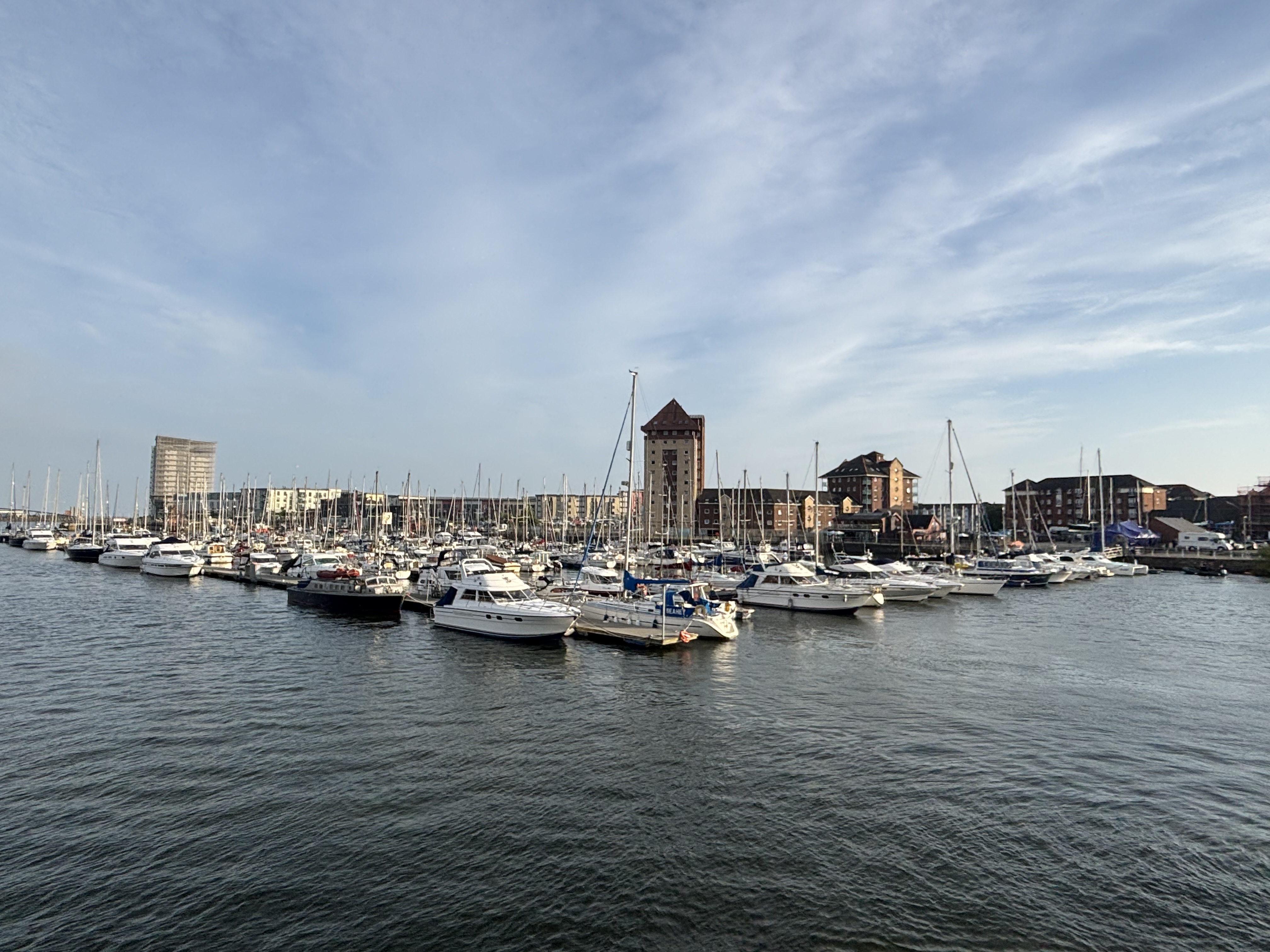
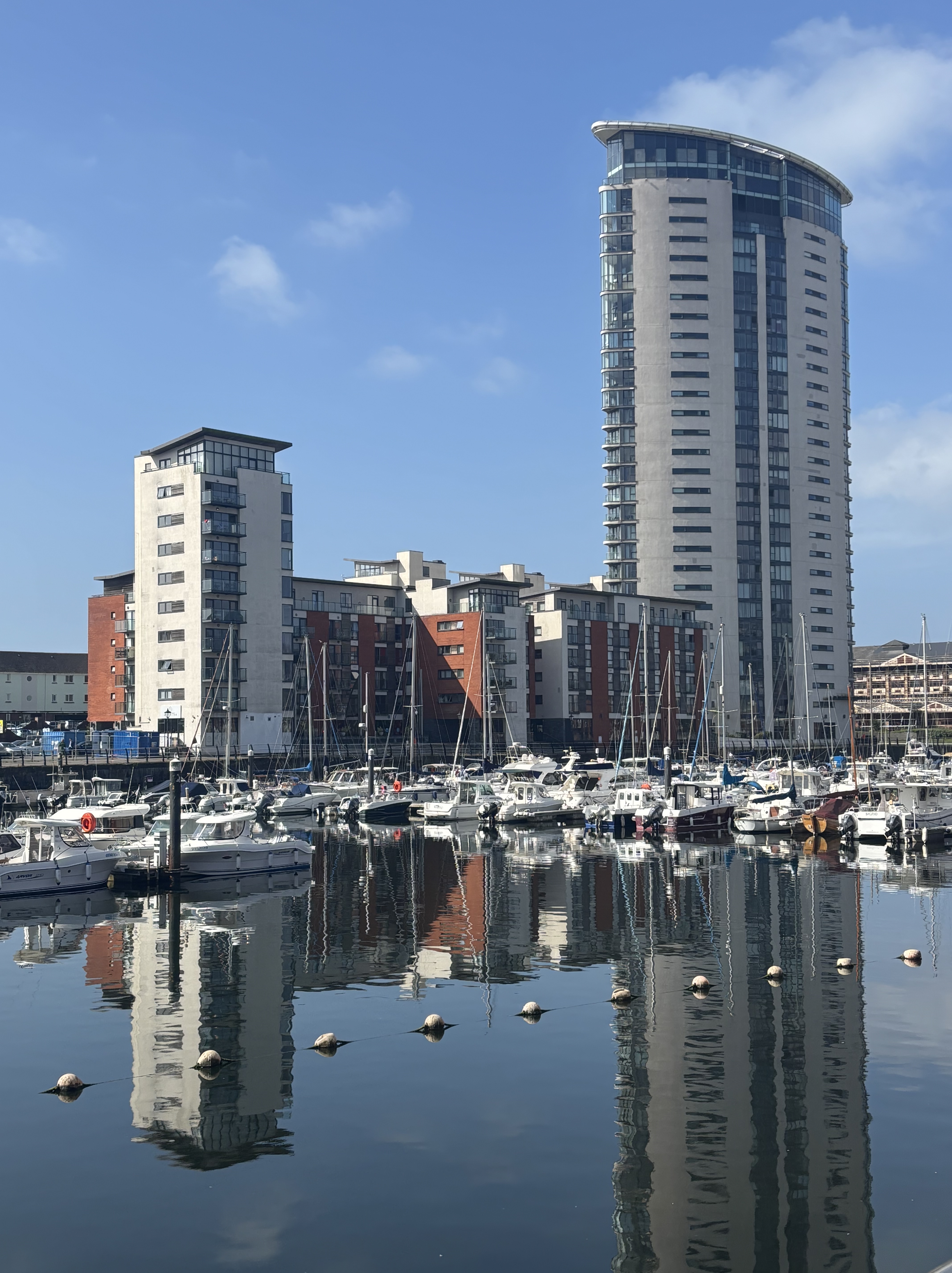
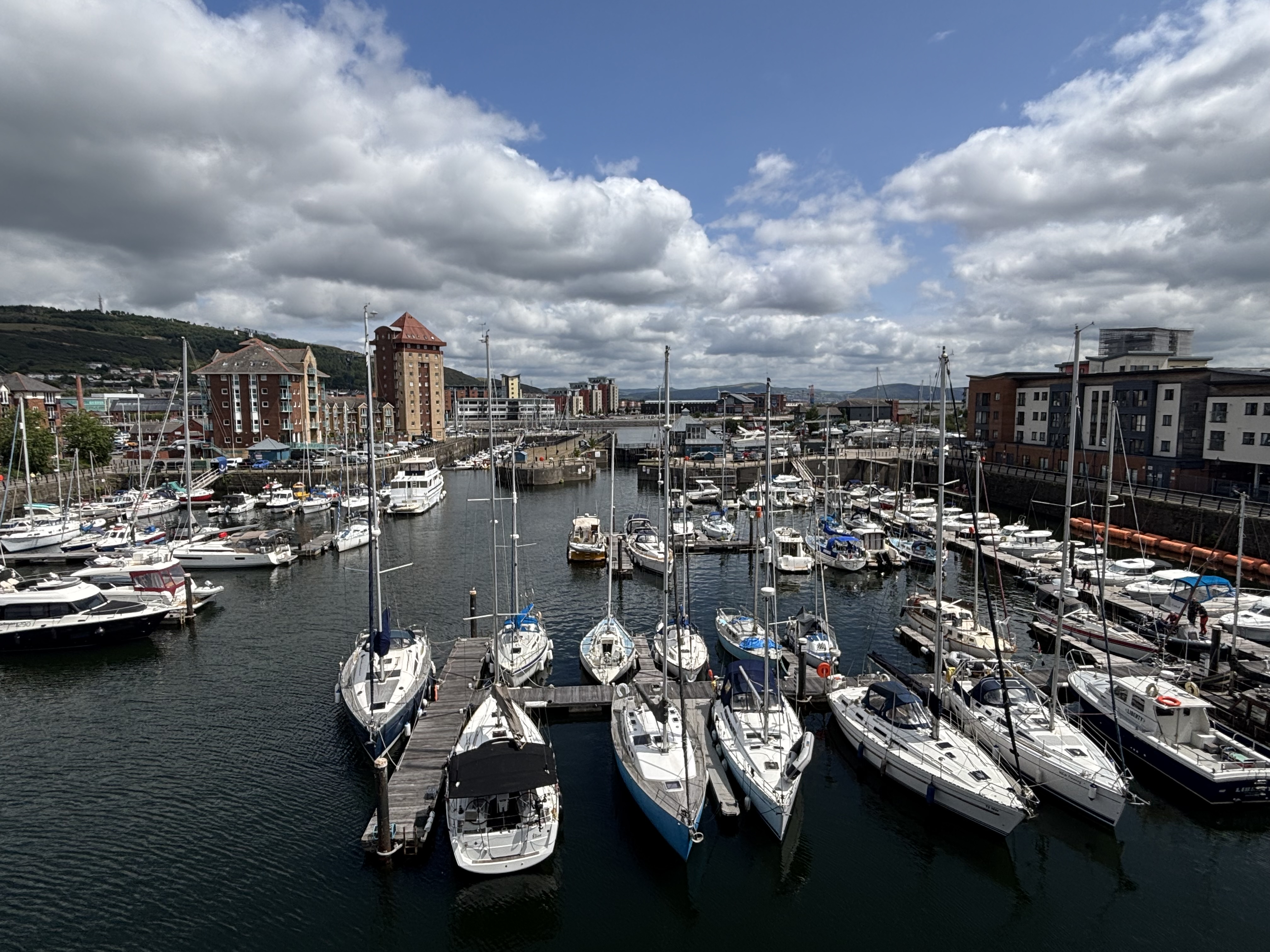
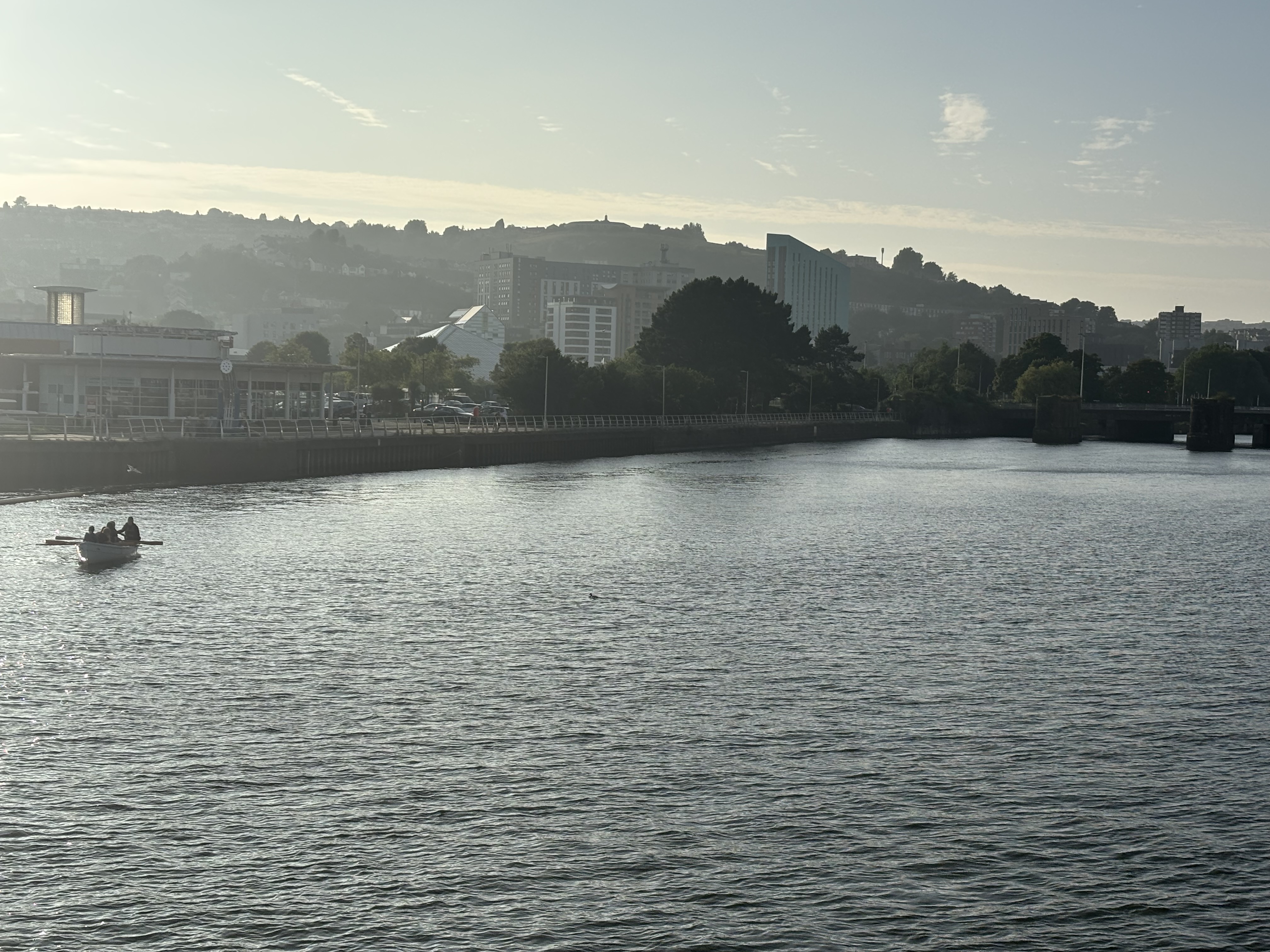
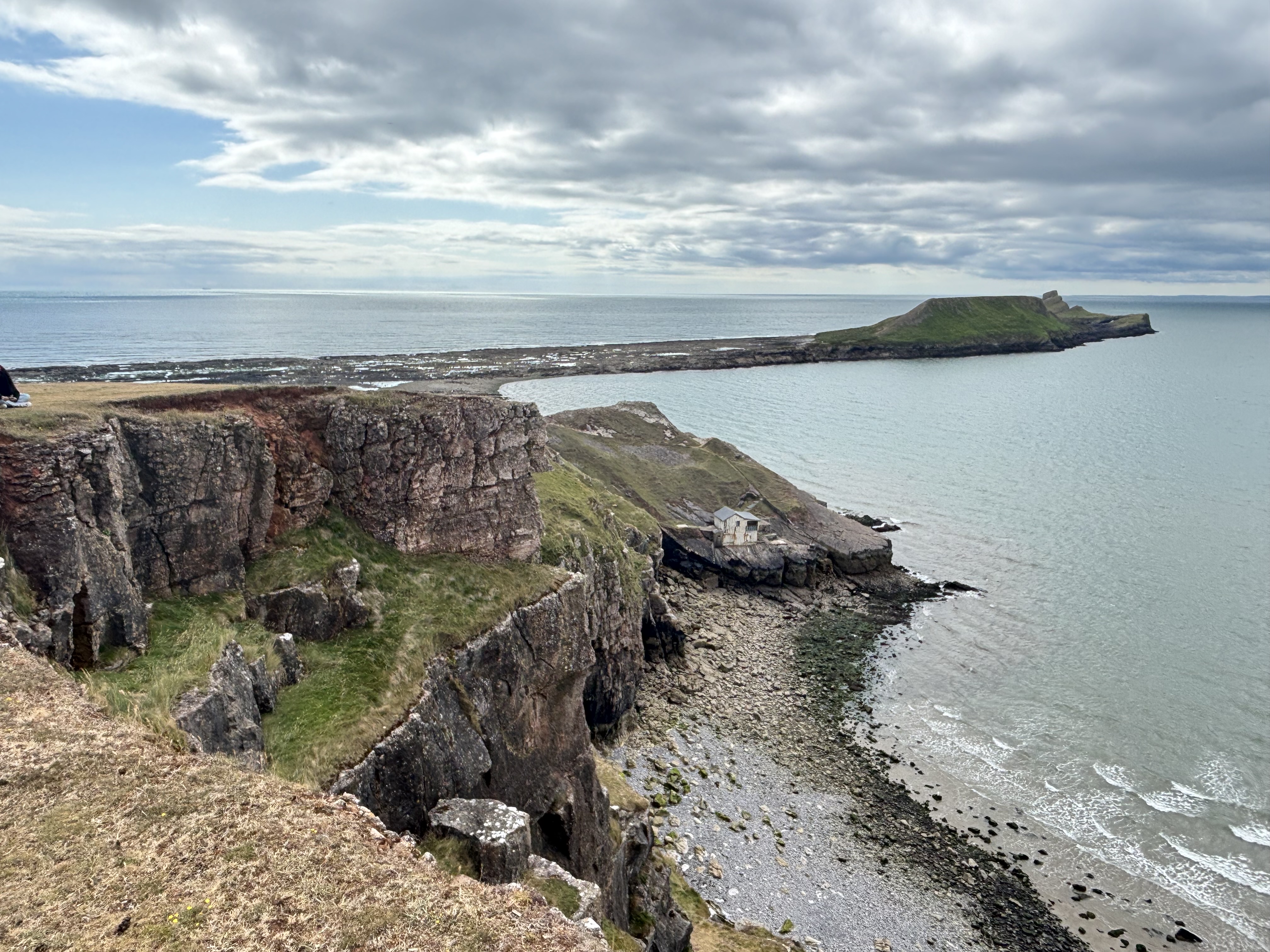
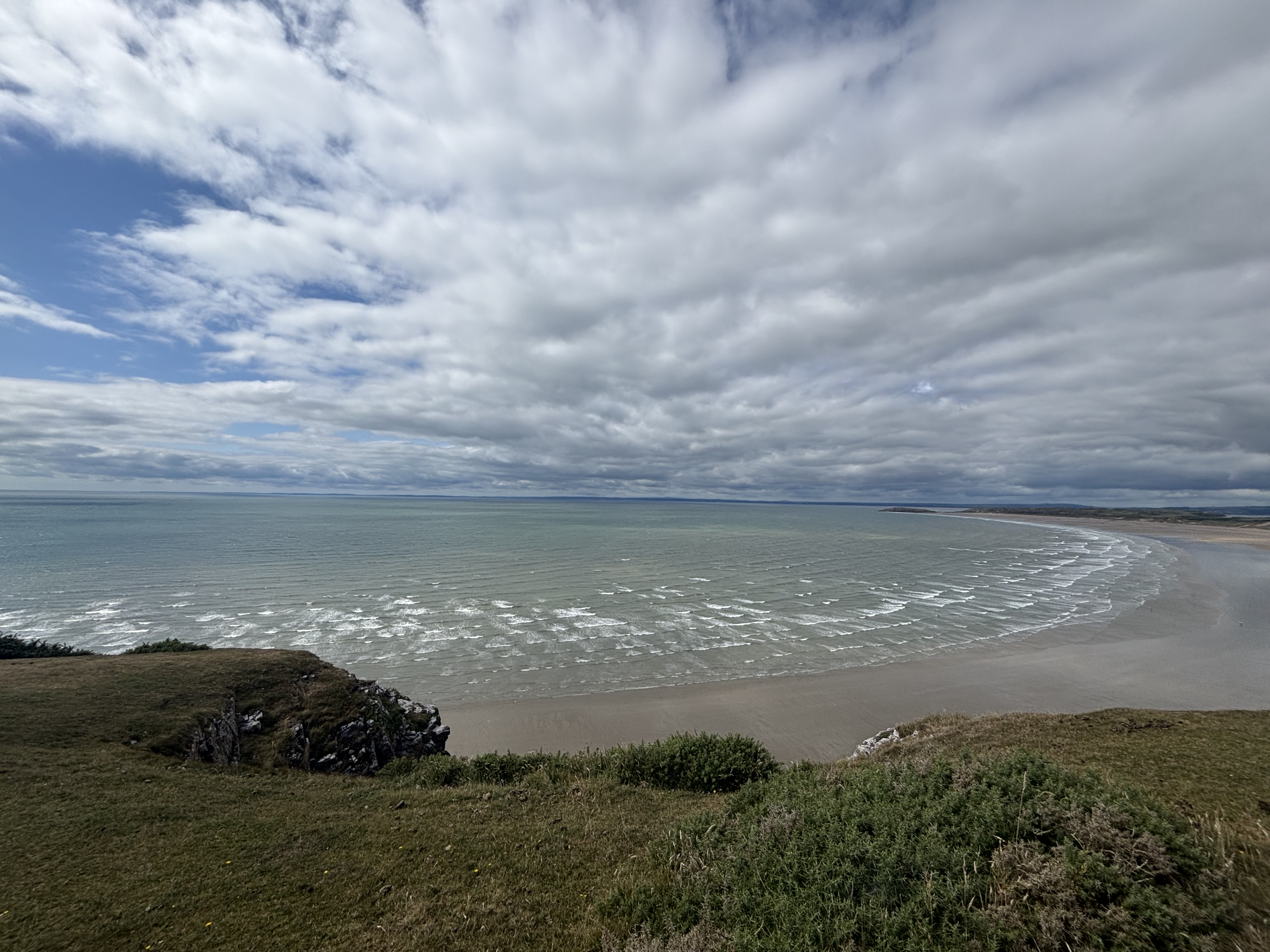
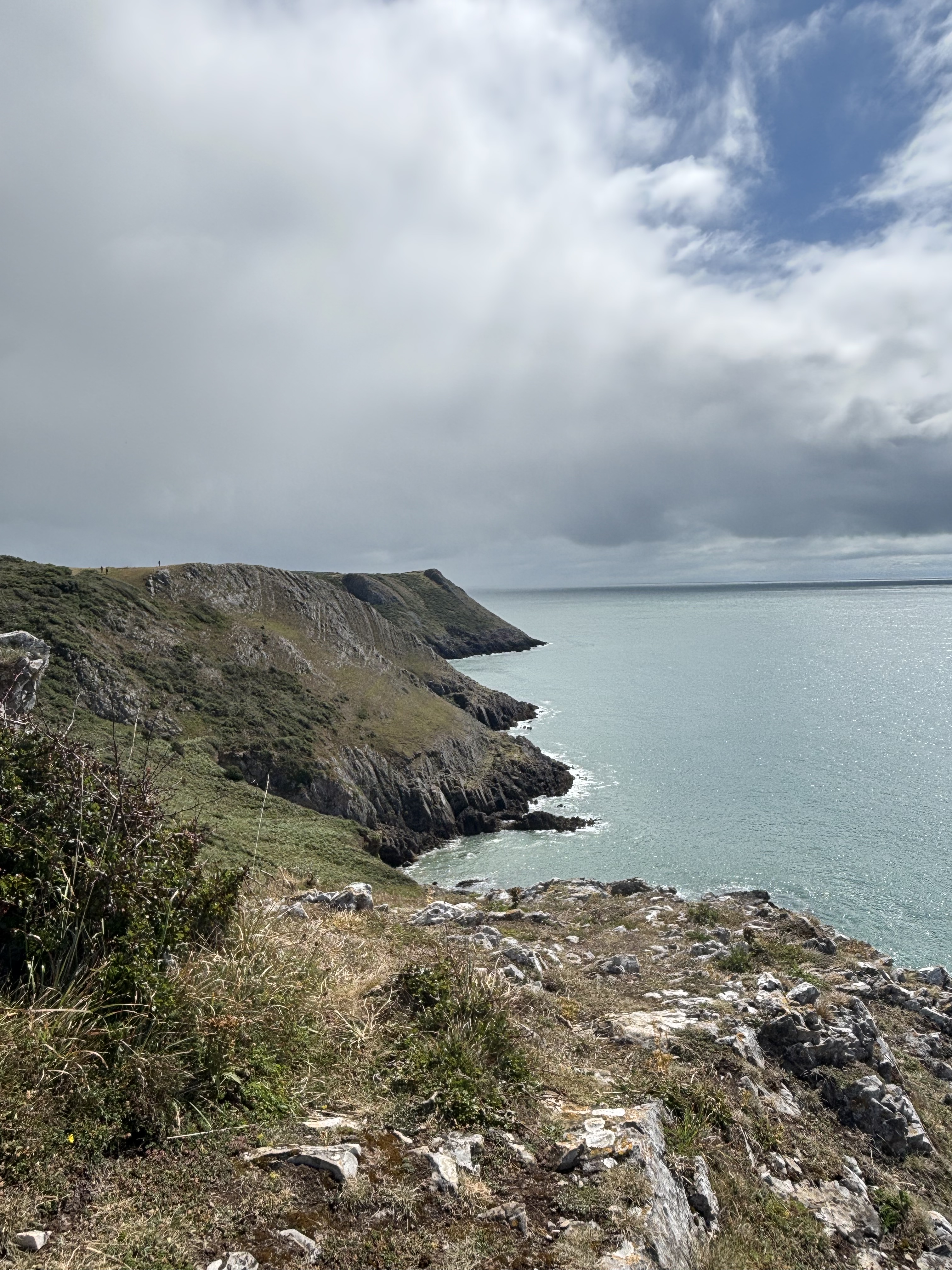
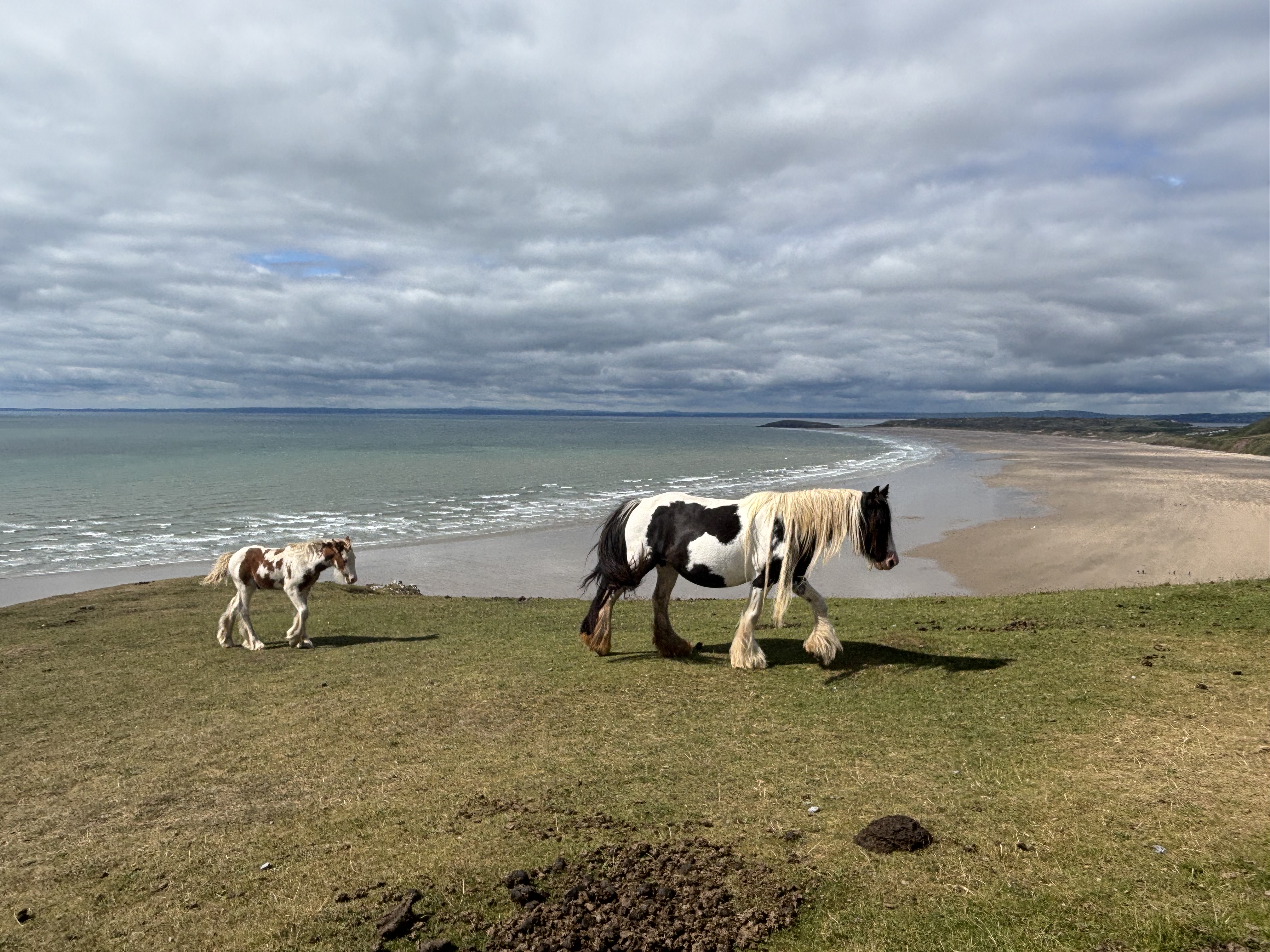
The city sits along a relatively flat strip of land that follows the gently curving coastline of Swansea Bay for several miles, bordered on the inland side by a series of rolling hills. An attractive marina sits a couple of blocks from the ocean behind a series of locks and canals. All of this results in a very attractive natural setting. In fact, the wildlife-friendly Gower Peninsula that extends westward from Swansea was designated as Great Britain’s first area of outstanding natural beauty in 1956 and is routinely ranked as one of the prettiest locations in Europe. Rhossili Bay Beach, on the far western edge of the peninsula, has cracked the Tripadvisor list of the world’s top 10 beaches on multiple occasions. We’ve toured the Gower and can attest to its beauty. See if you can spot the sheep enjoying the ocean view in one of the pictures below.
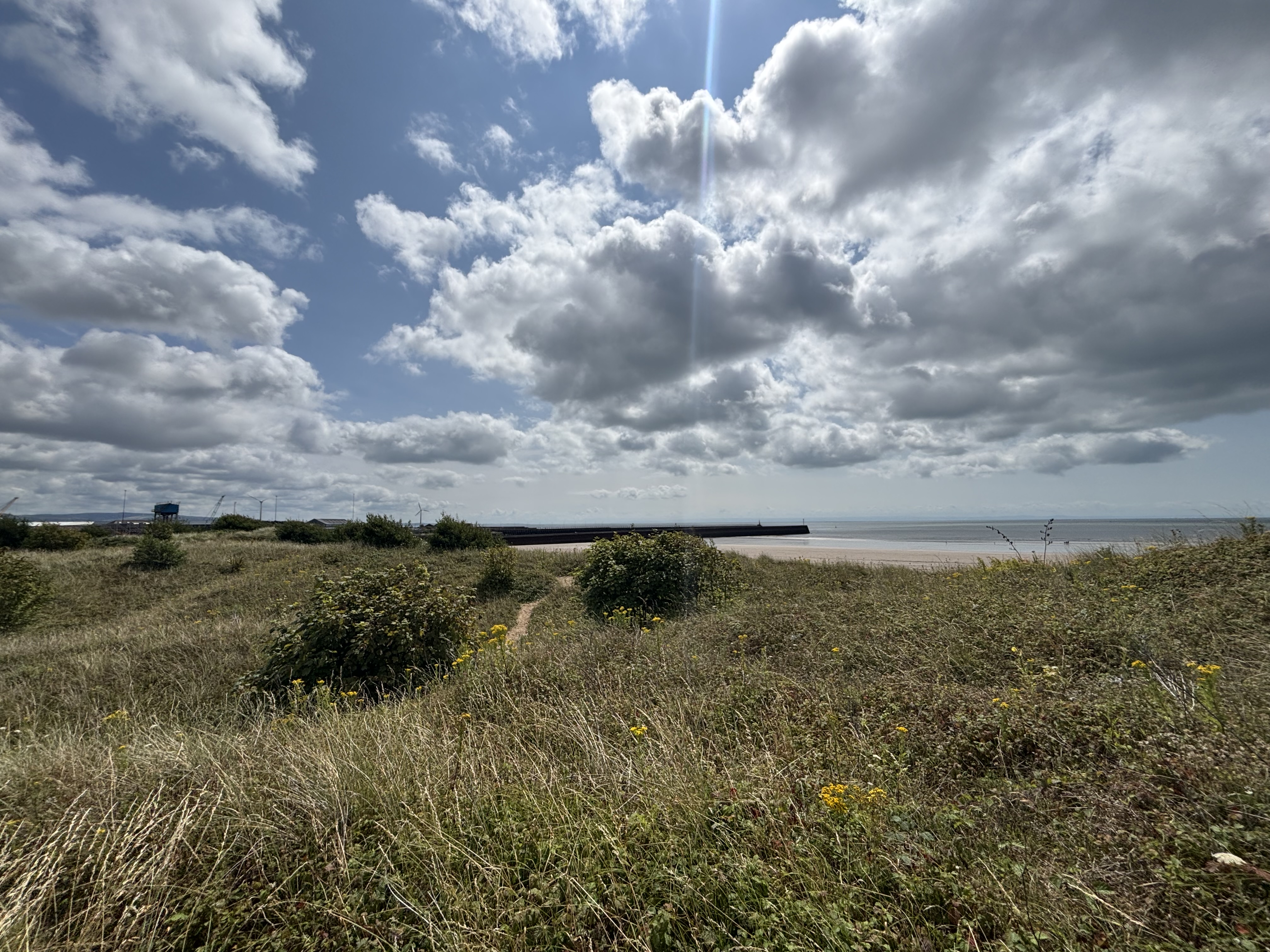
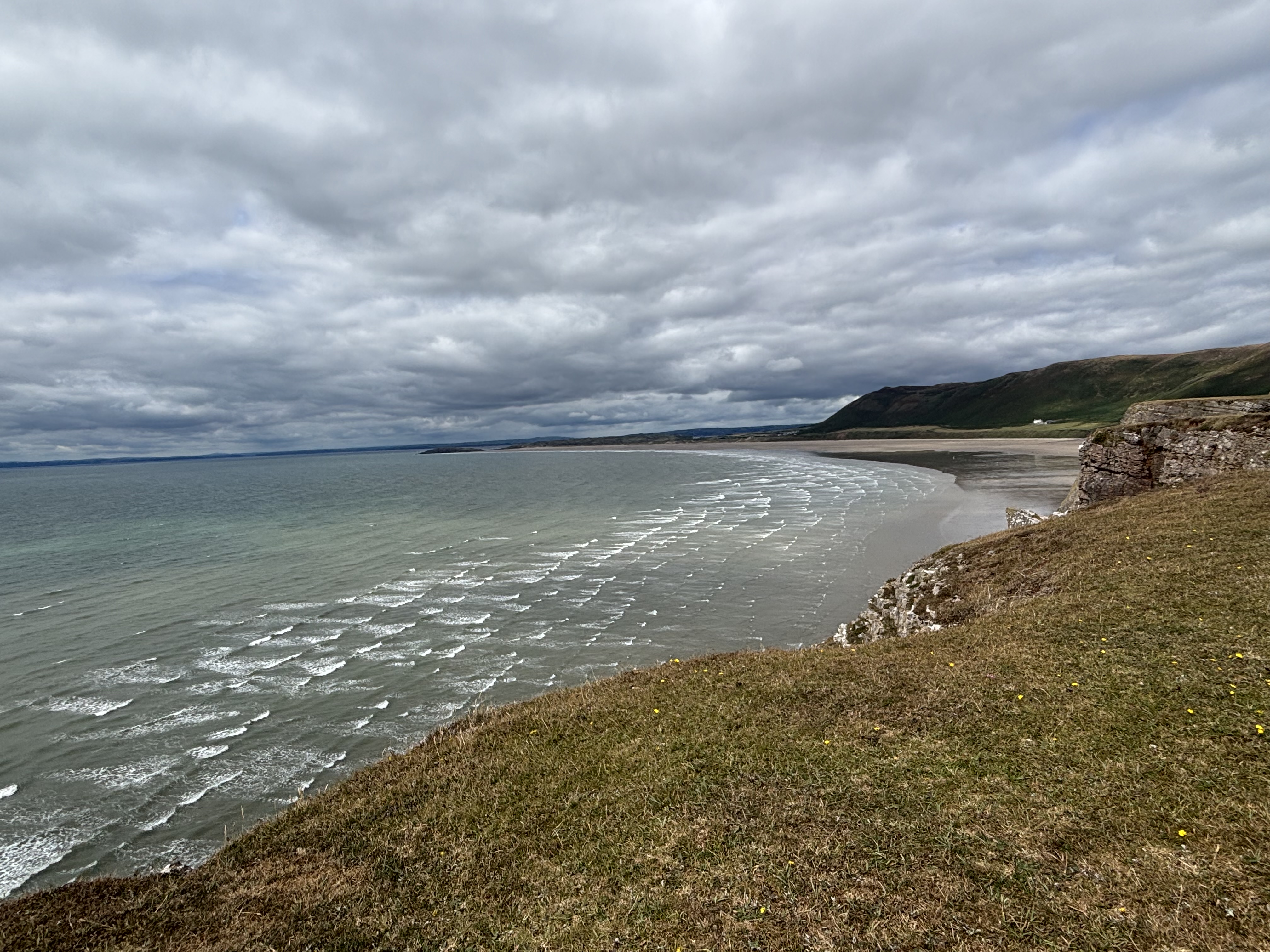
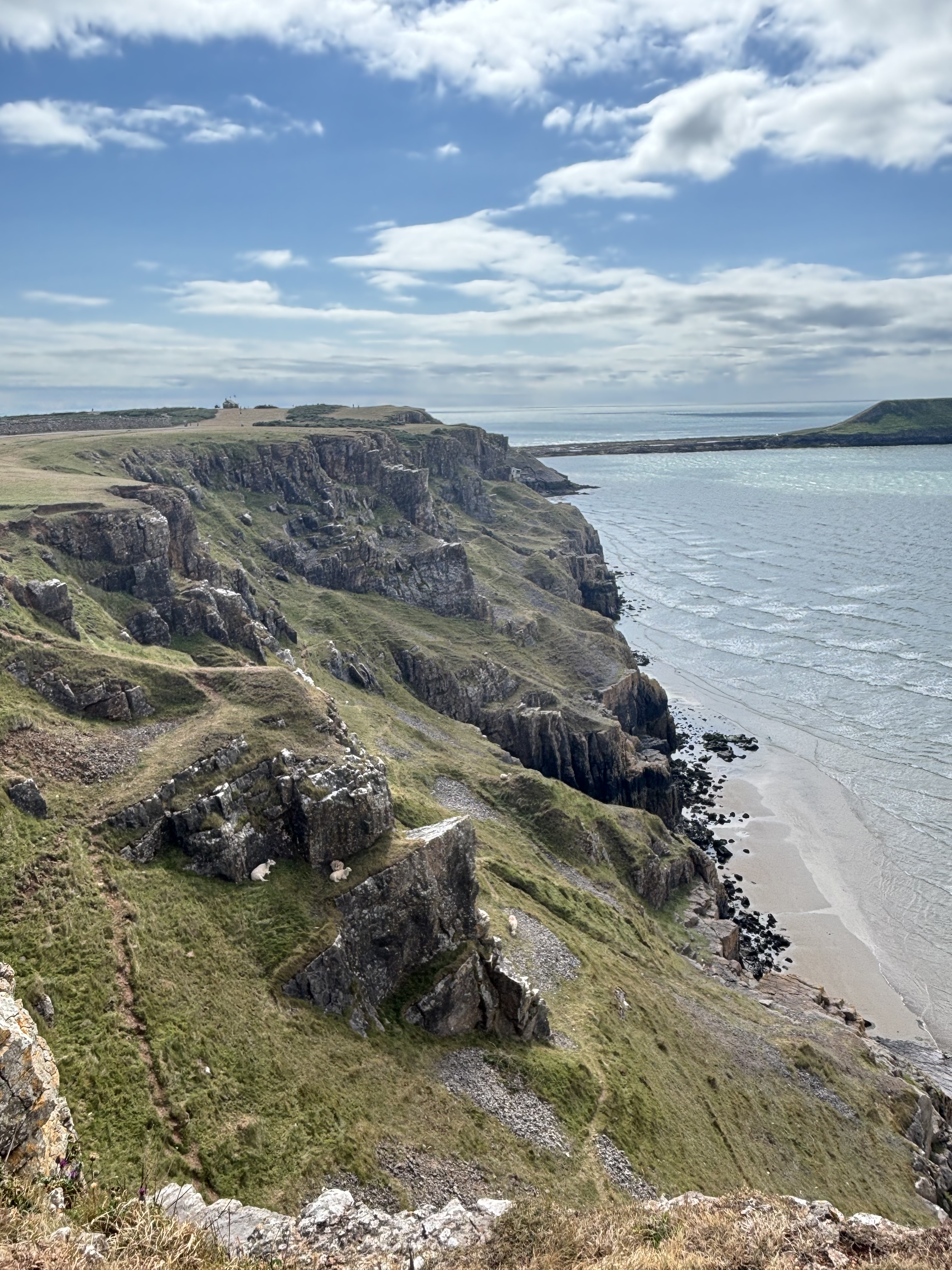
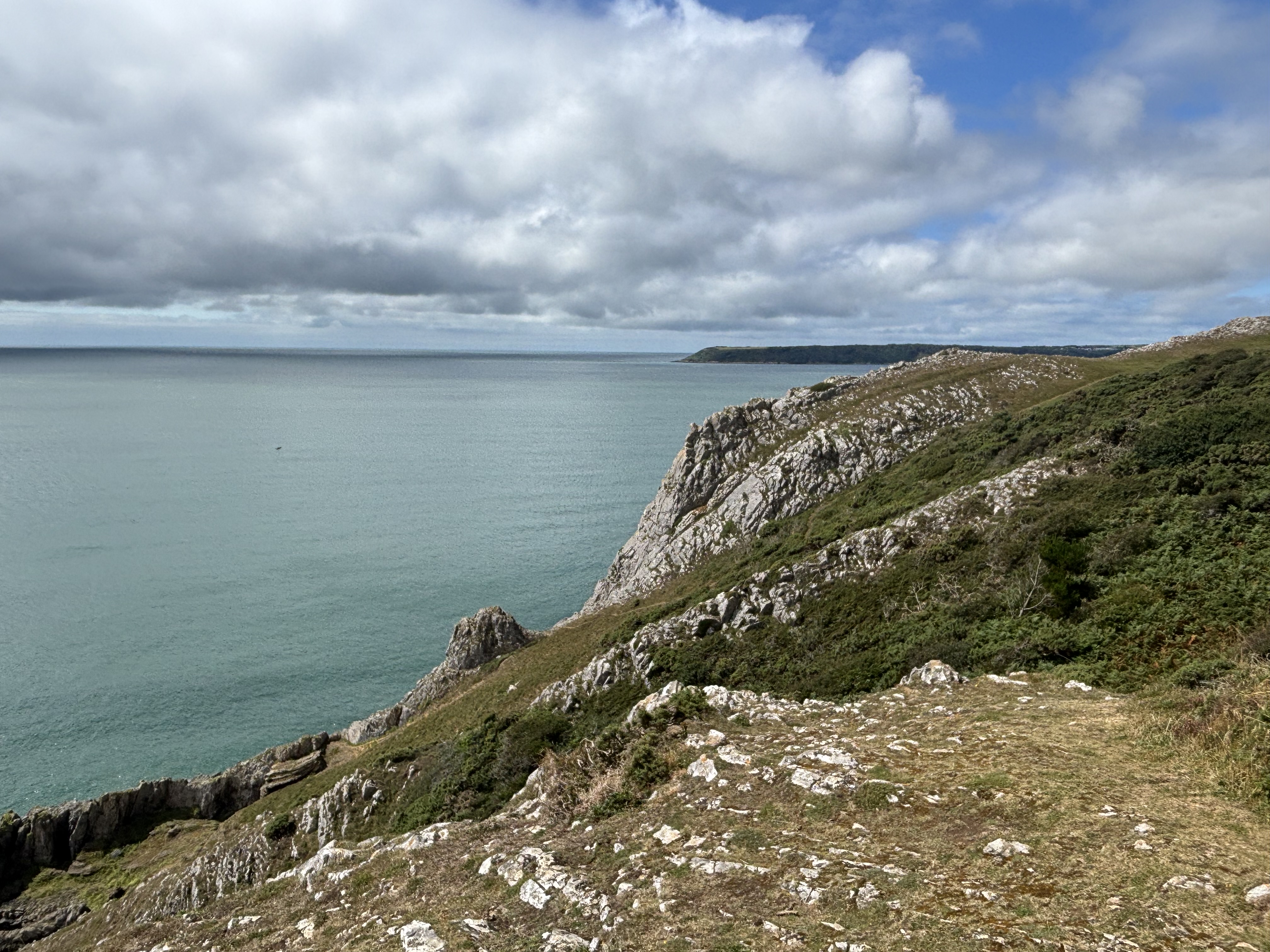
This brings us to the subject of weather. Darla contends that places like Swansea will be in much greater demand in the coming years as climate change results in more traditional European beach destinations becoming simply too hot to tolerate during summer. She makes a compelling argument. The high temperature has been between 65 and 75 degrees Fahrenheit every single day since we arrived and as far as we can forecast into the future, with partial cloud cover and an ever-present (albeit rarely occurring) chance of rain. It can be a little tricky to plan your wardrobe for the day, as the mornings and evenings are more comfortable in pants and a second layer, while the afternoons deserve shorts and t-shirts. This is admittedly a first-world problem.
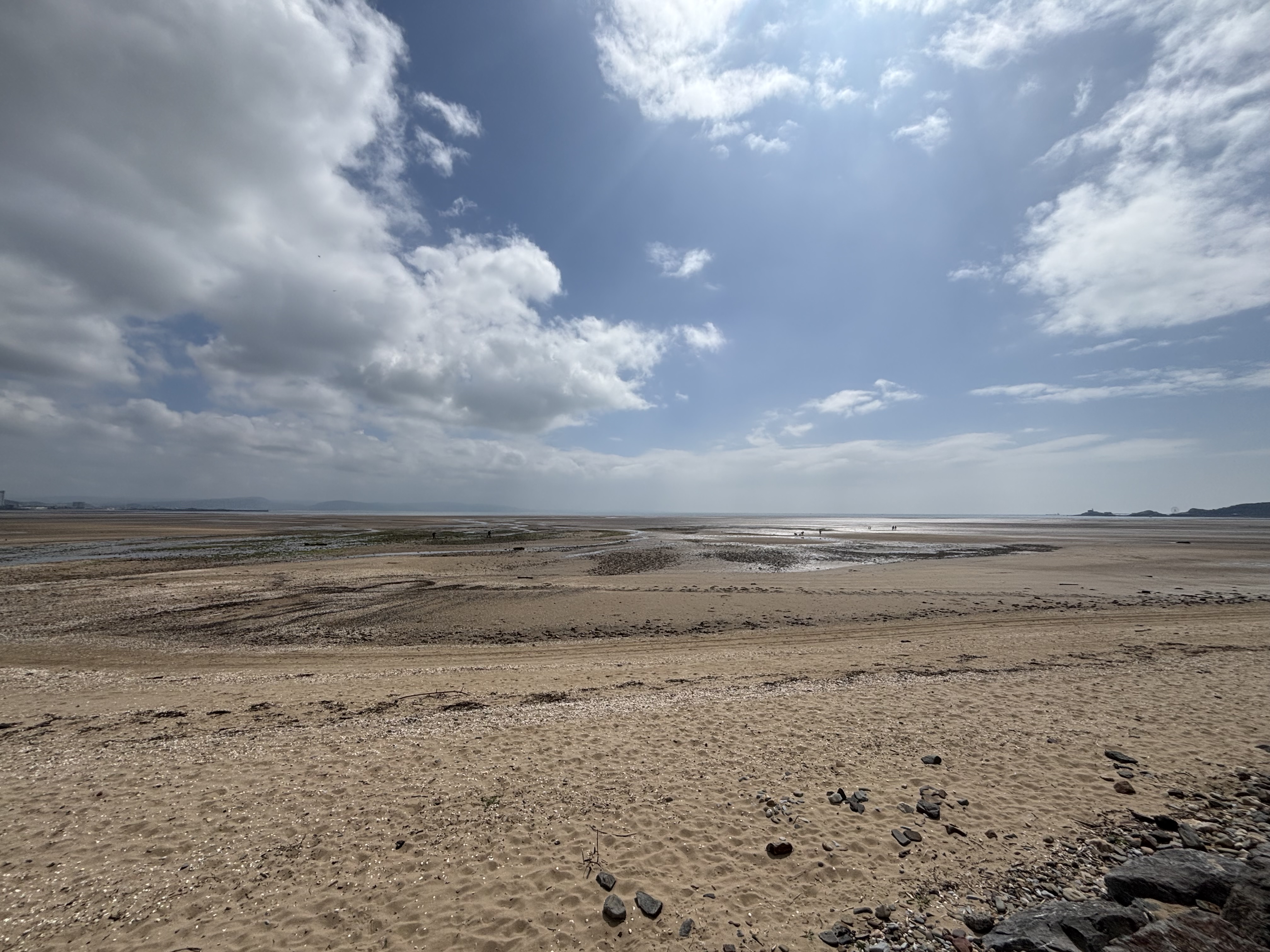
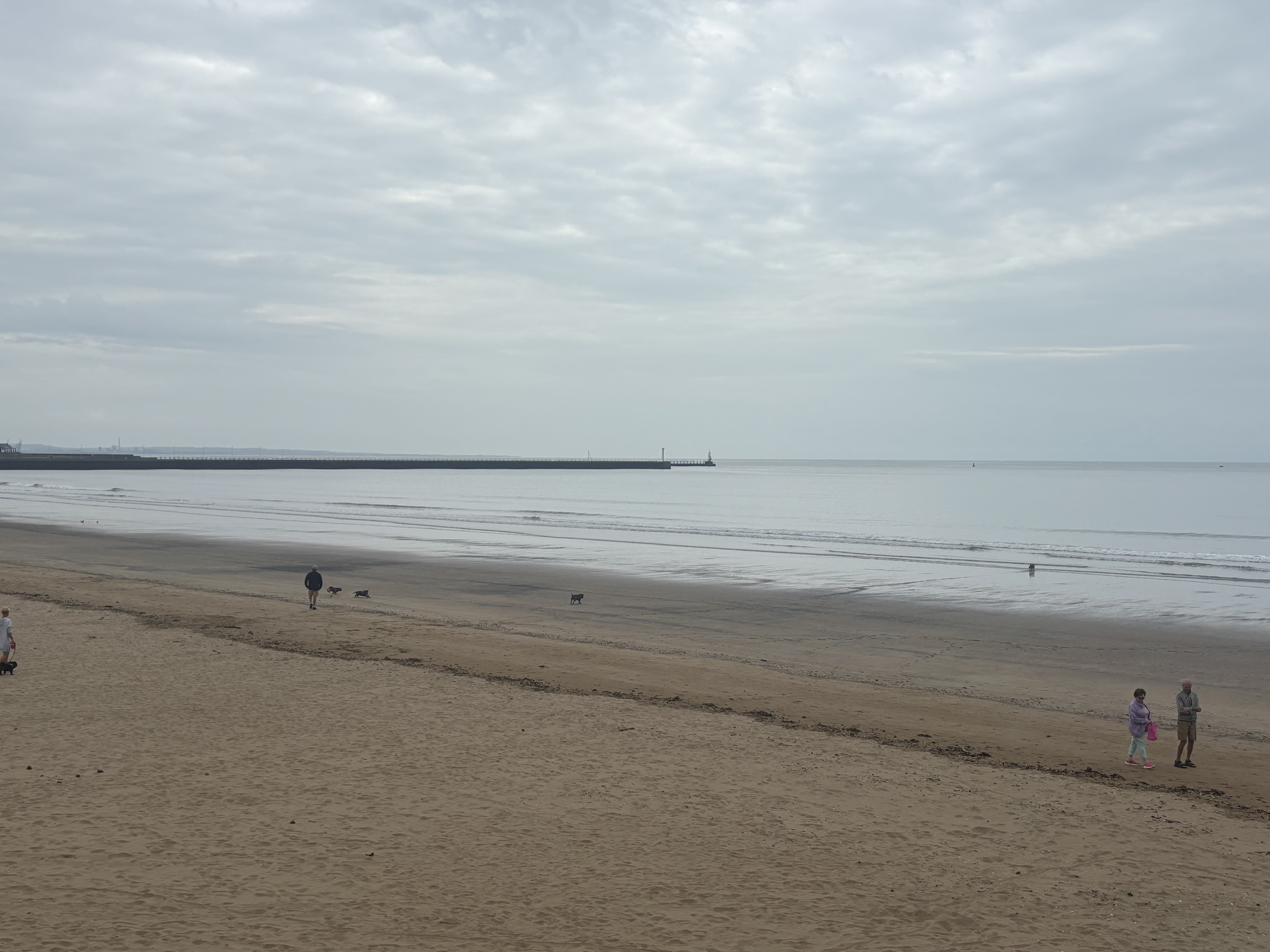
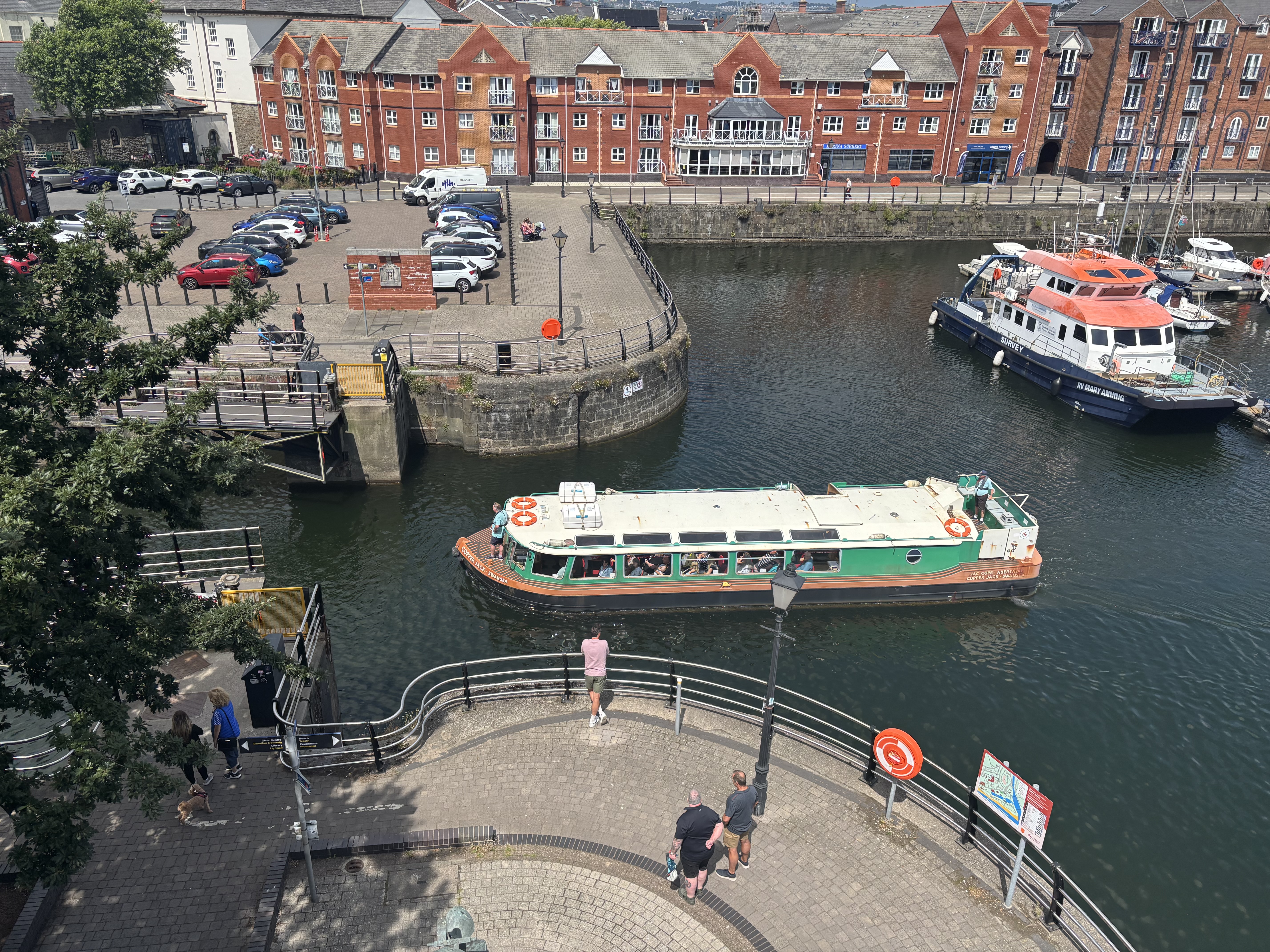
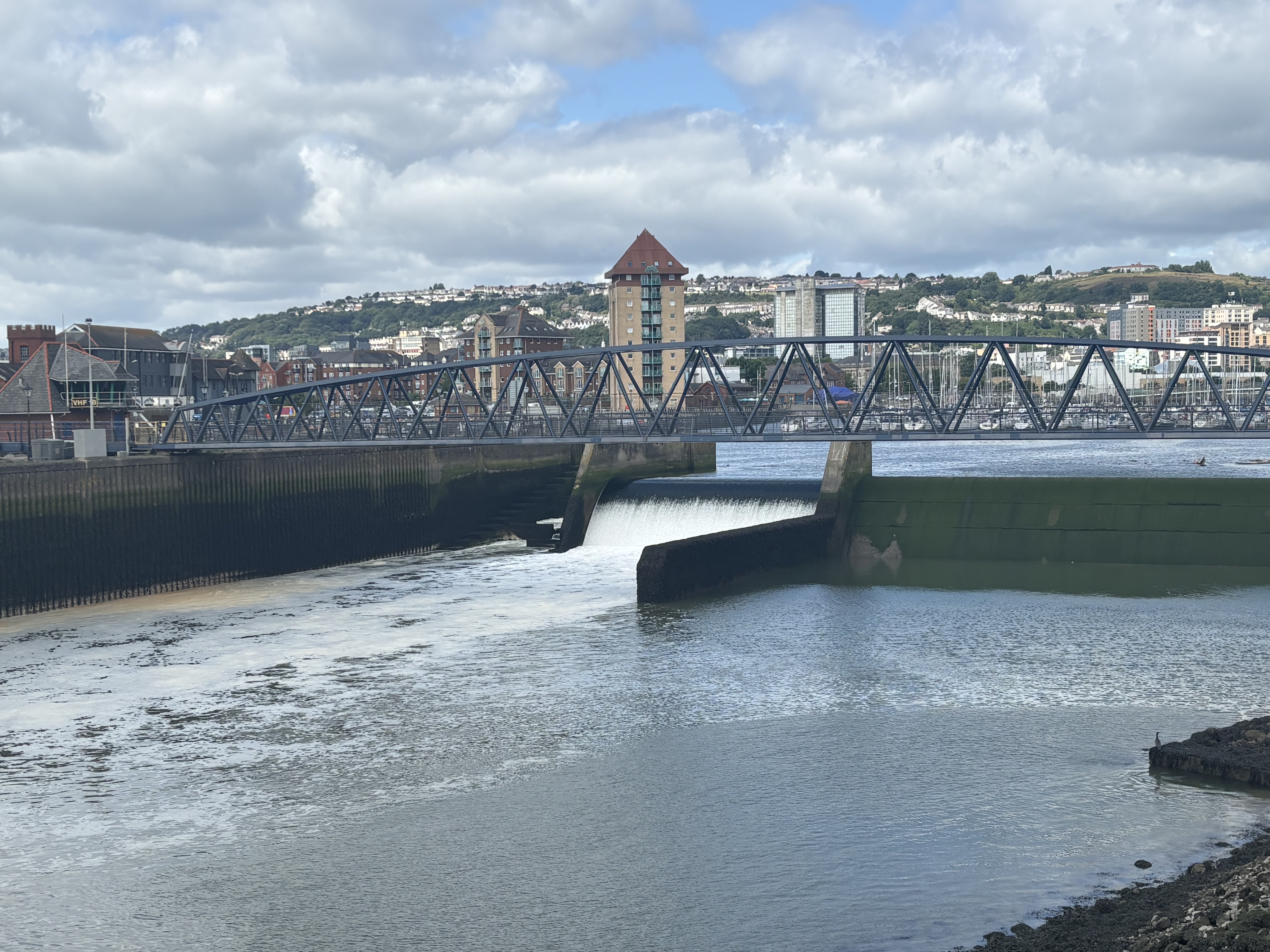
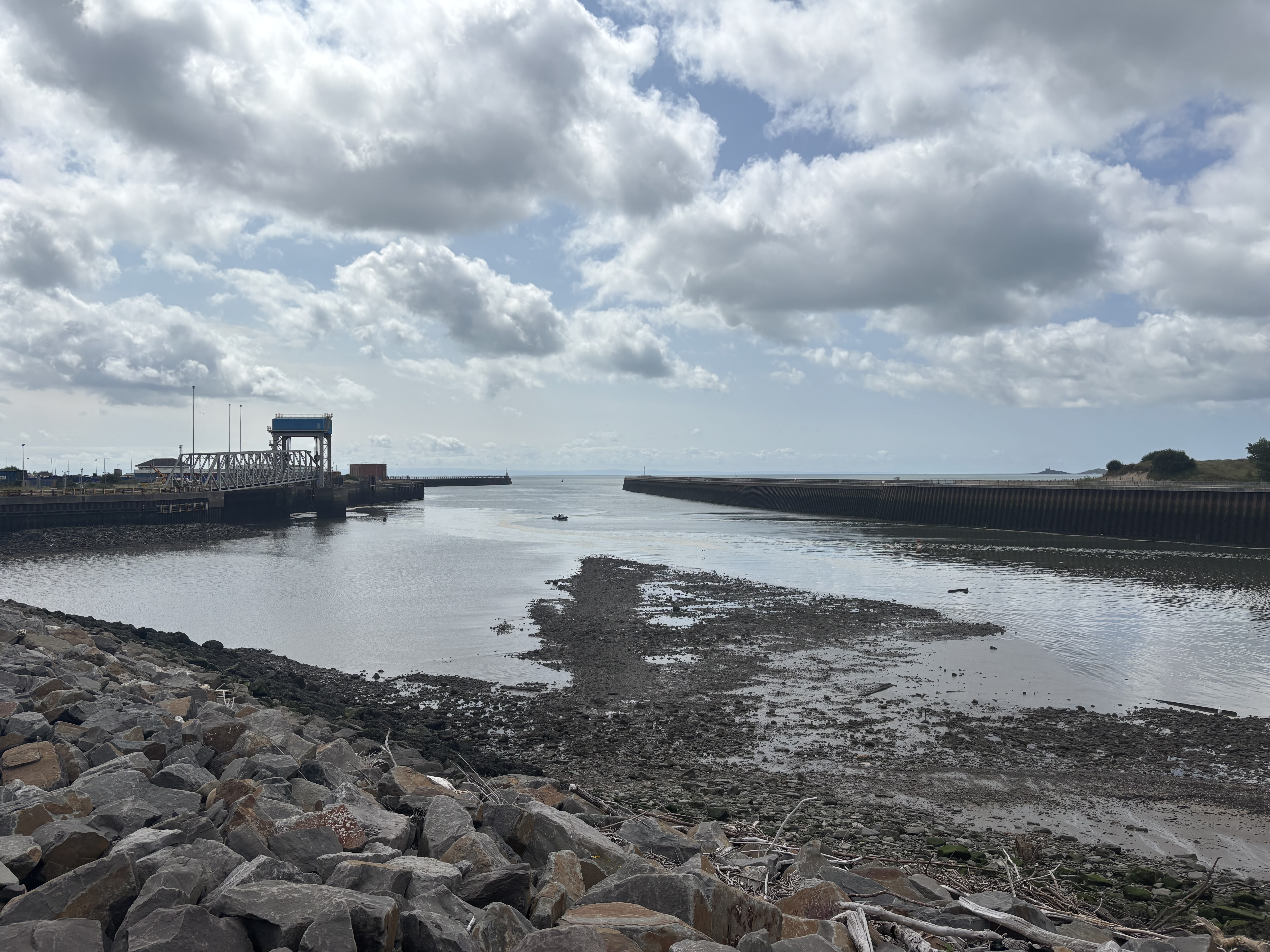
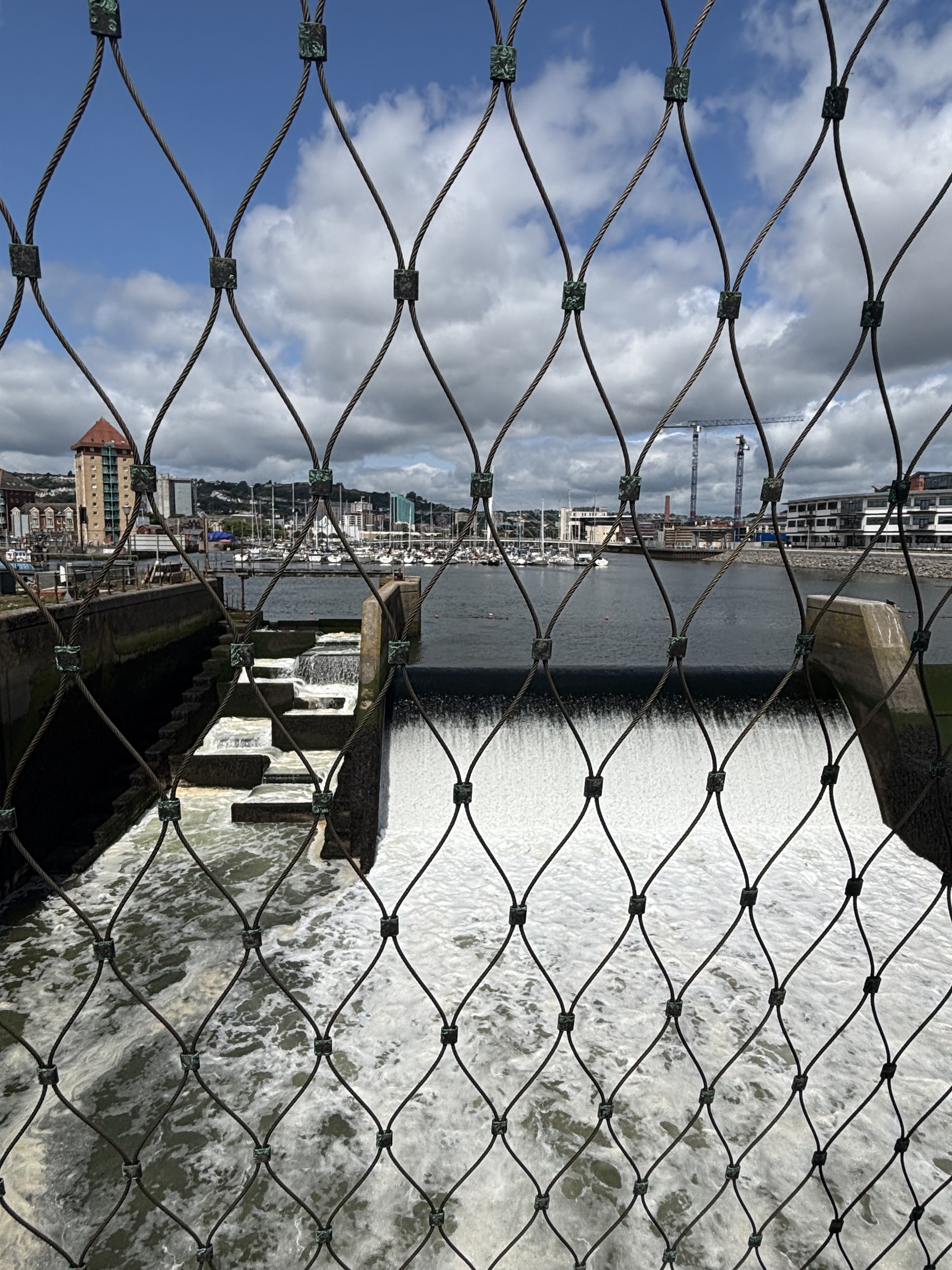
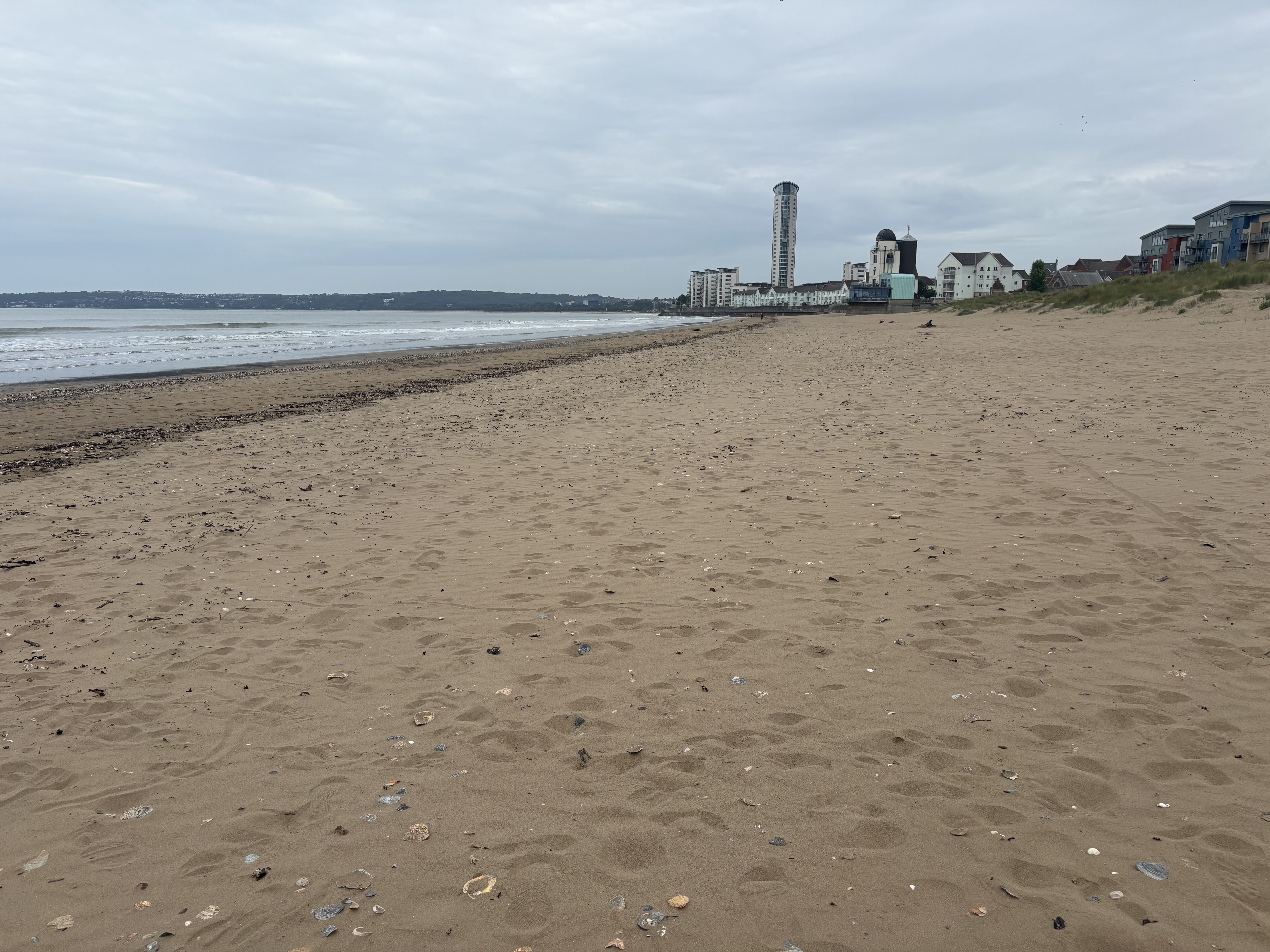
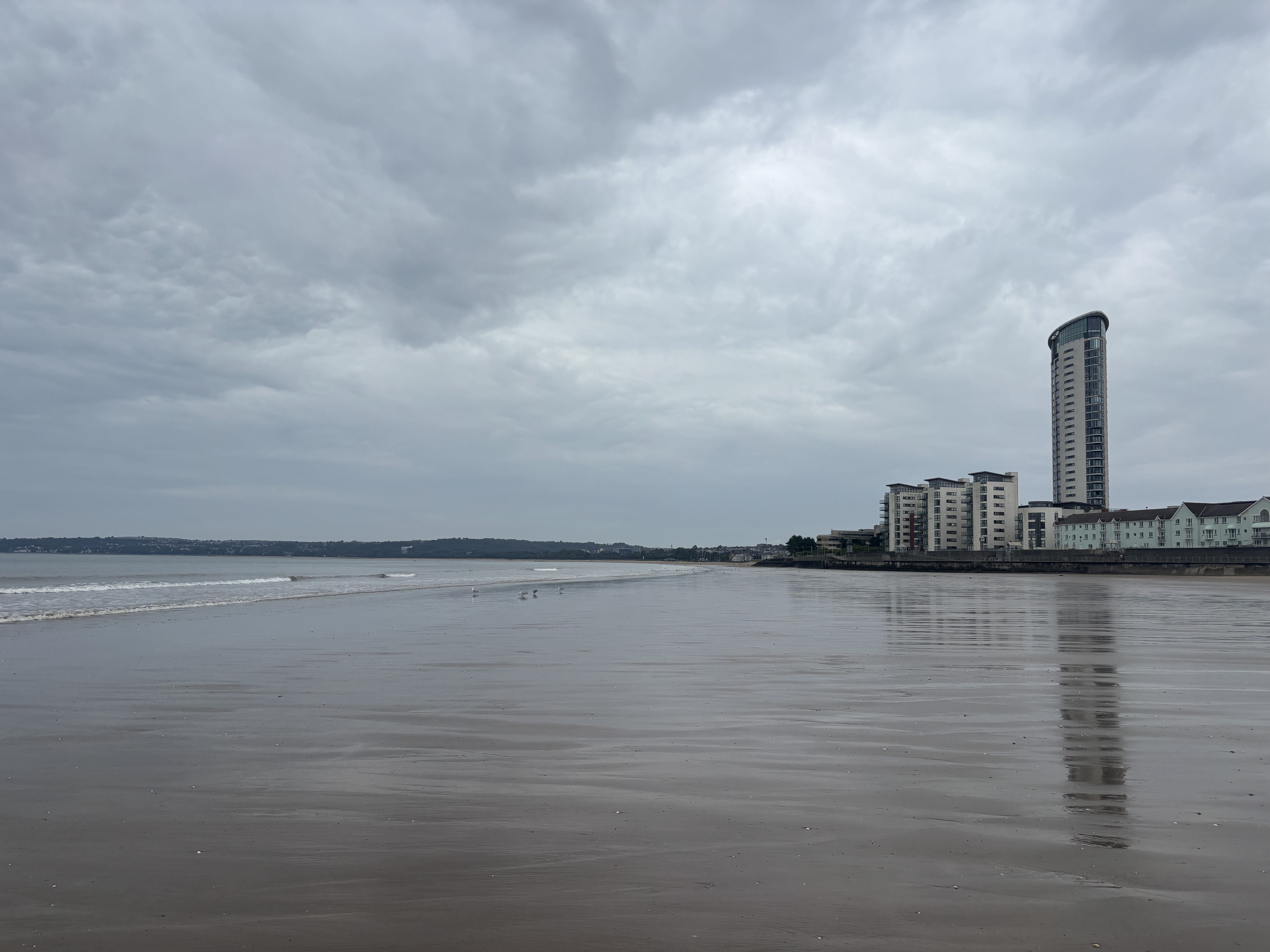
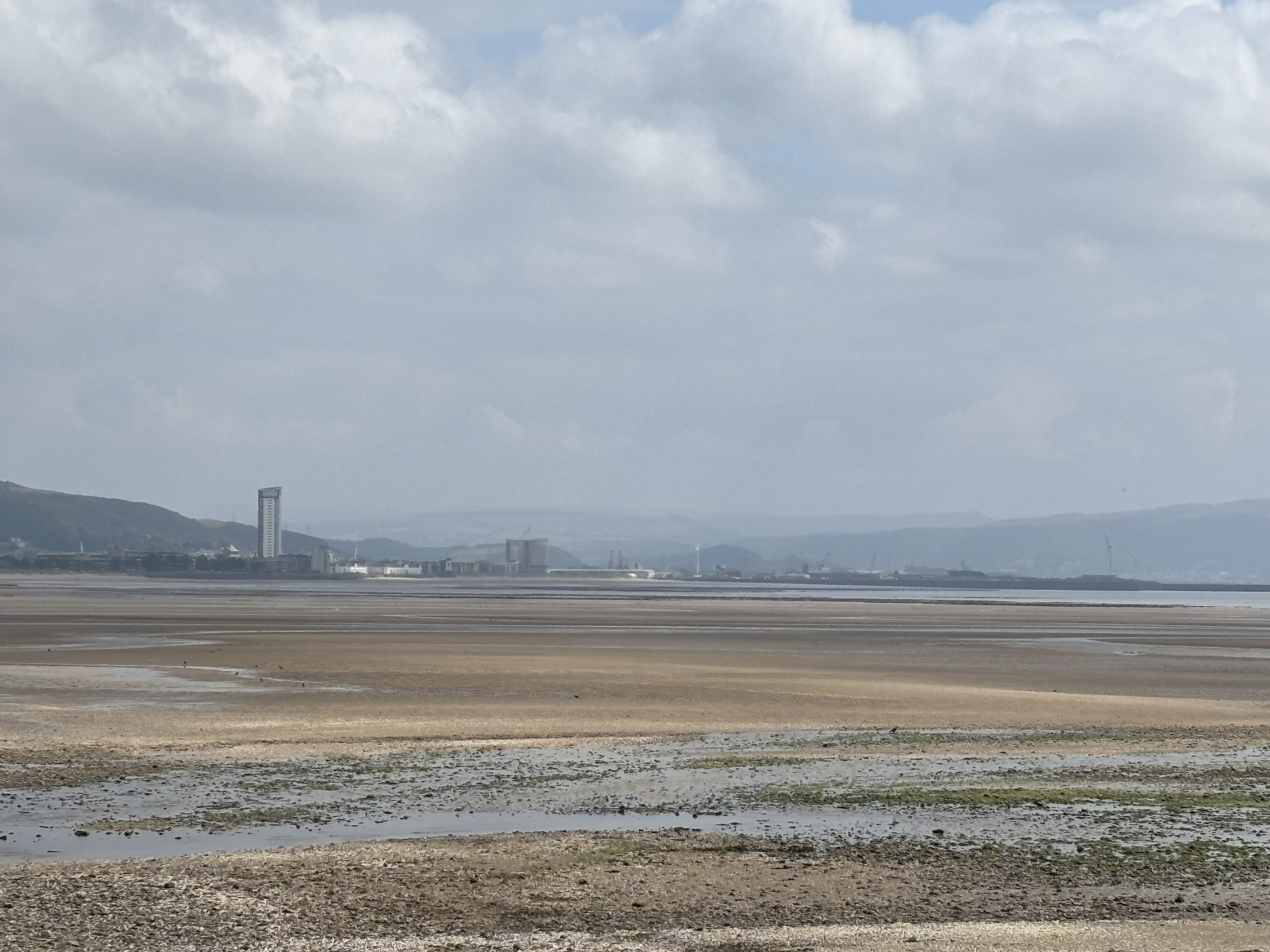
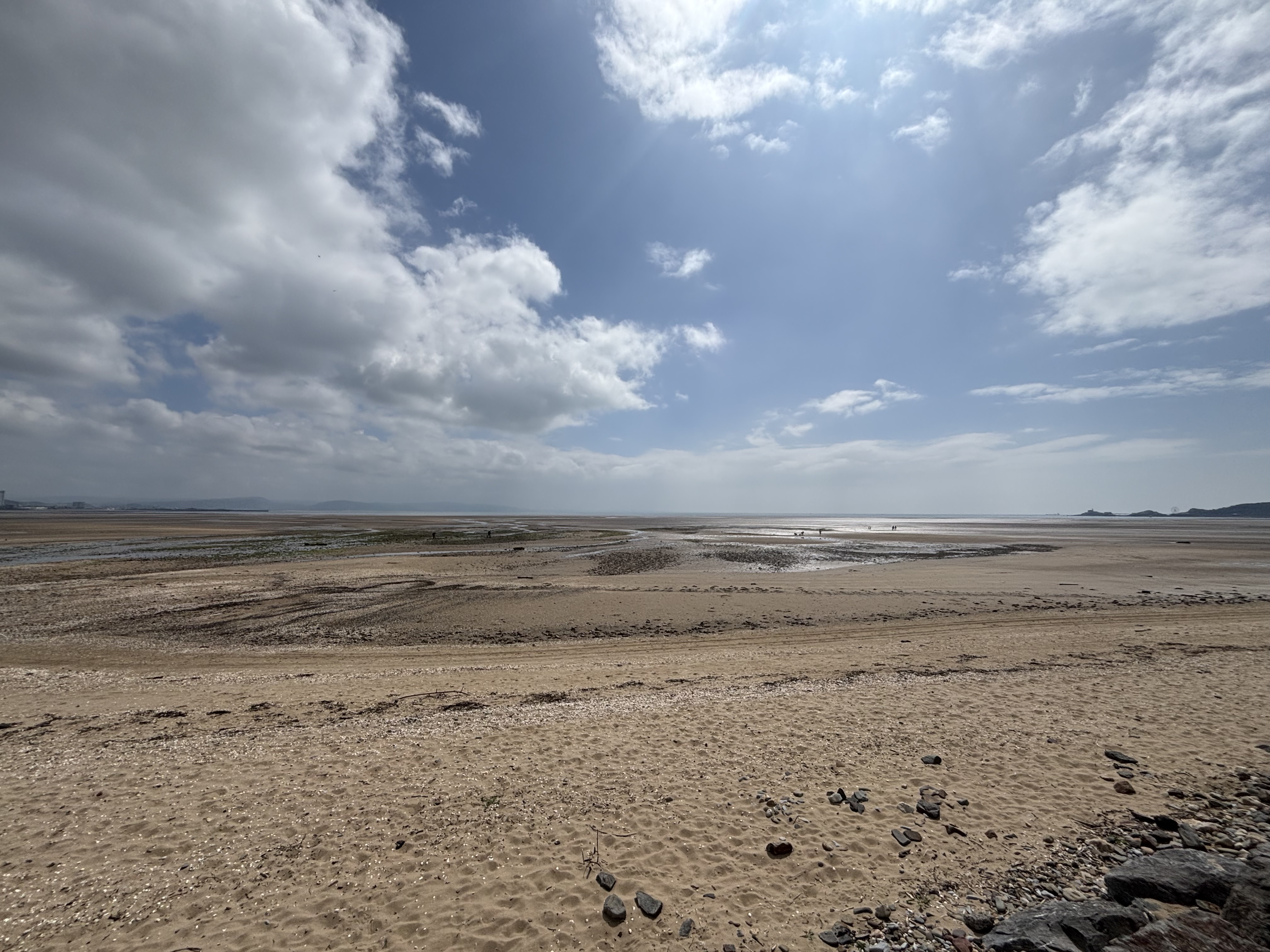
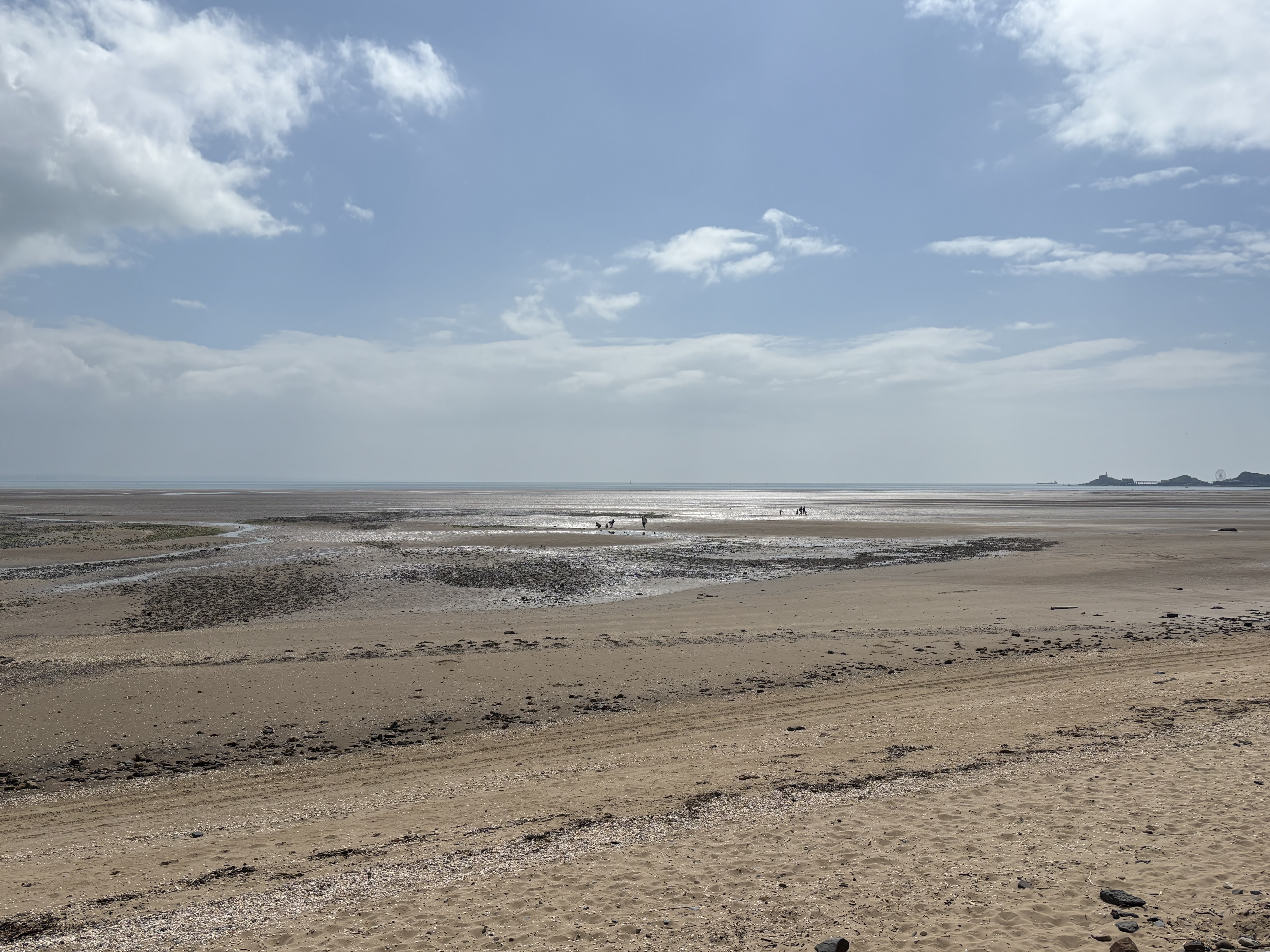
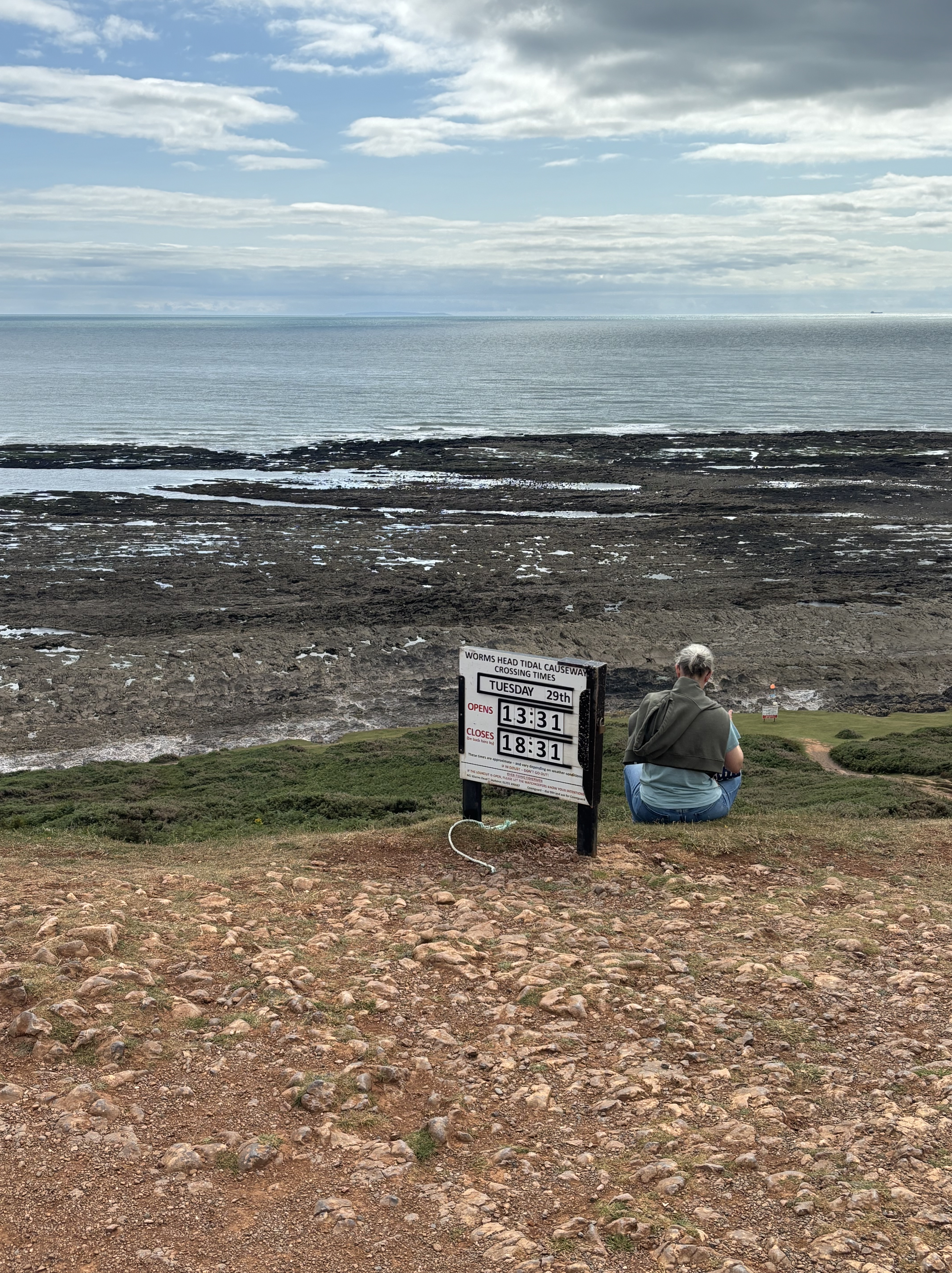
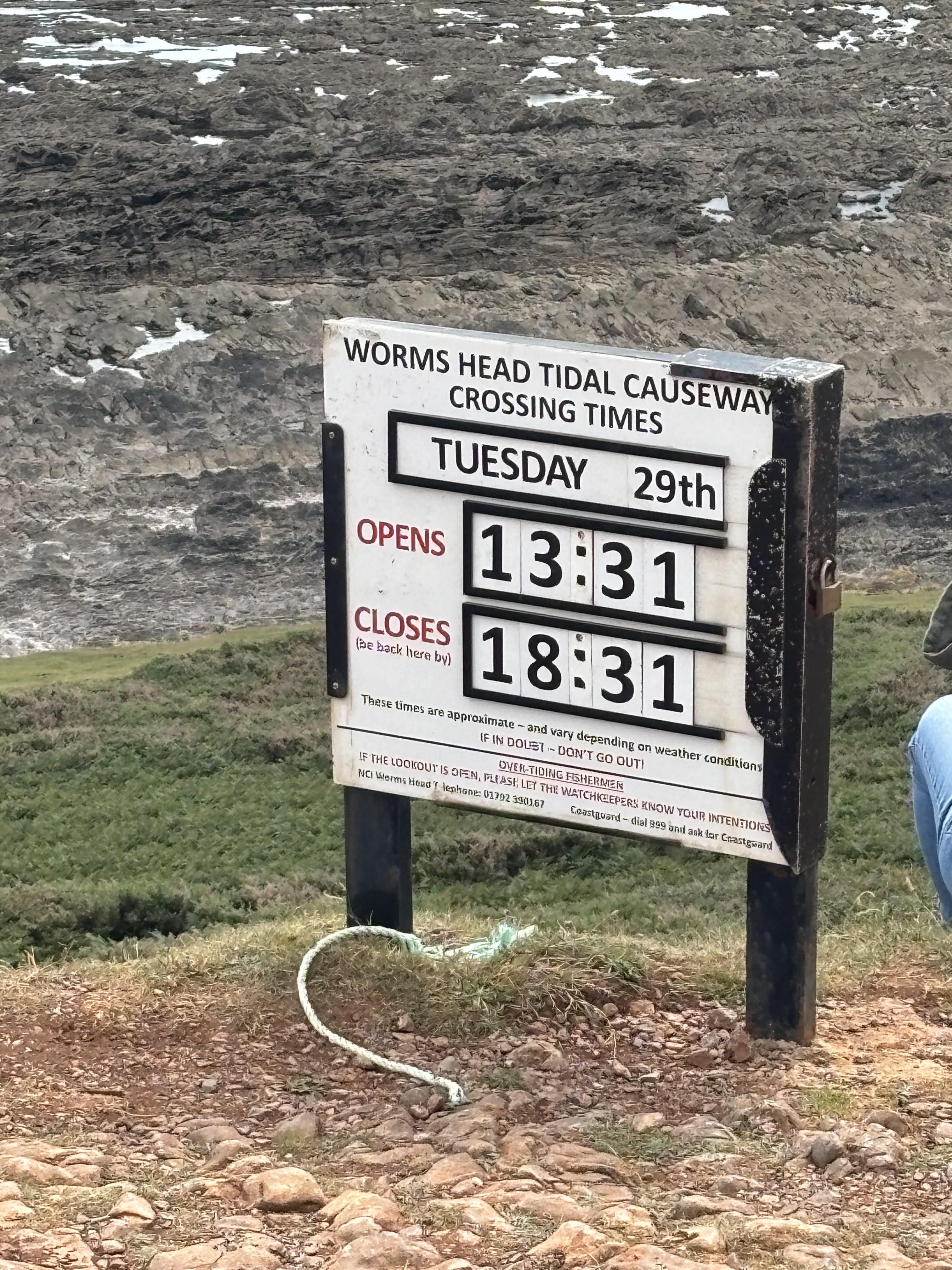
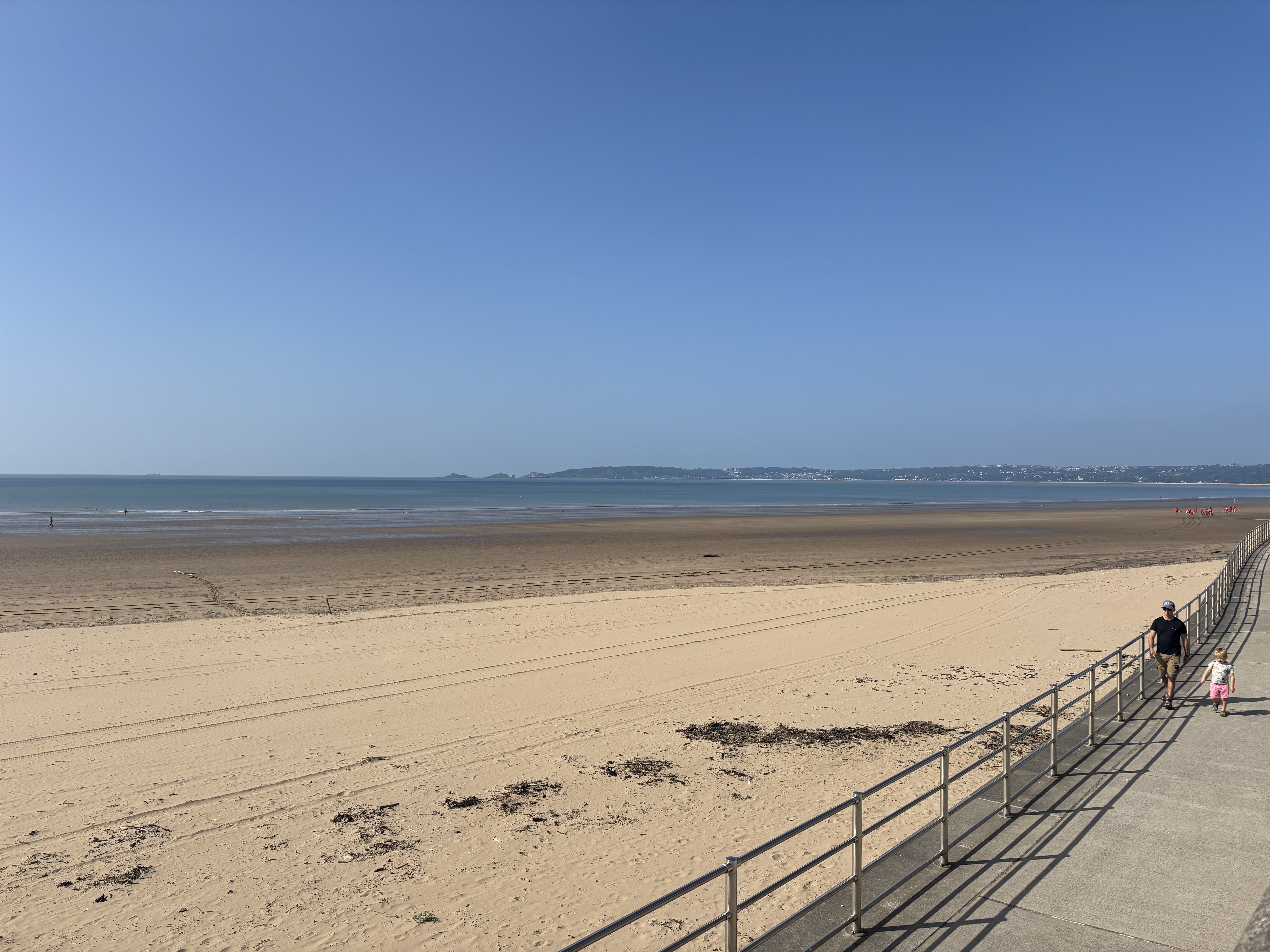
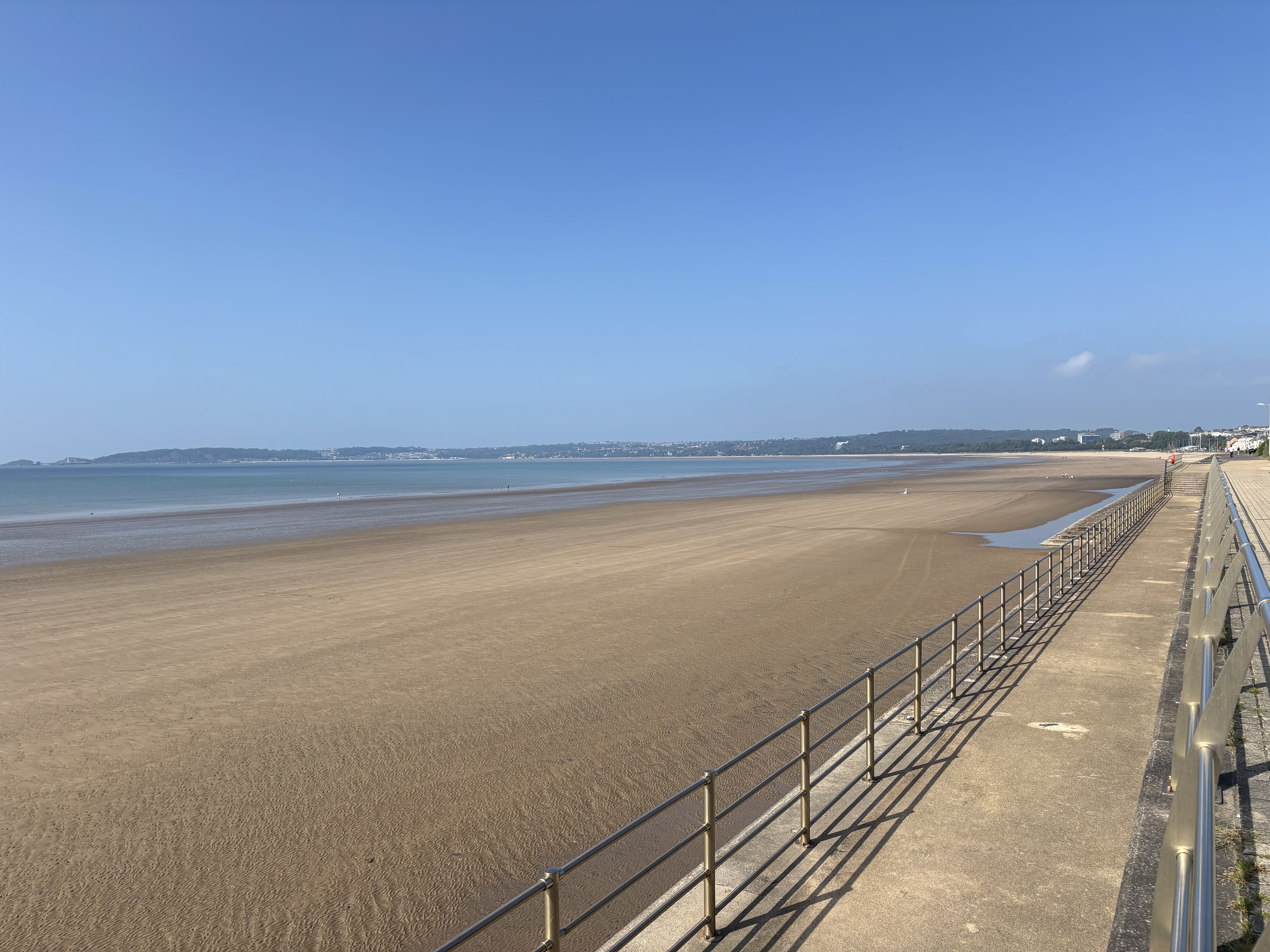
One of the most fascinating features of the area is the extreme tidal range. We’ve been told that it has the second-biggest high tide in the world (behind Nova Scotia) at roughly 40 feet above low tide. As a practical matter, this means that anyone trying to spend time on the sandy beaches will encounter an entirely different physical landscape every 6 hours as the tides go in and out. The same section of beach that may have only a few feet of shoreline at high tide (in some places, the water climbs several feet up the grassy dunes or the side of the paved concrete promenade) can stretch for almost a half-mile of uninterrupted sand during low tide. It results in a daily feast of crustaceans for the abundant shorebirds. Hikers have to be mindful of getting stranded on an island if they cross the sand bar at the wrong time of day, and the numerous sailboats that occupy the marina must carefully time their exit and re-entry to avoid having to spend hours waiting on the wrong side of the elaborate system of locks and spillways where the River Tawe flows through the heart of town and empties into the bay.
Given its location on a prime stretch of coastline, moderate weather during the peak summer vacation season and access to world-class hiking trails, it feels like the area should be swarming with tourists. But that’s not been our experience at all. There’s almost no one here.
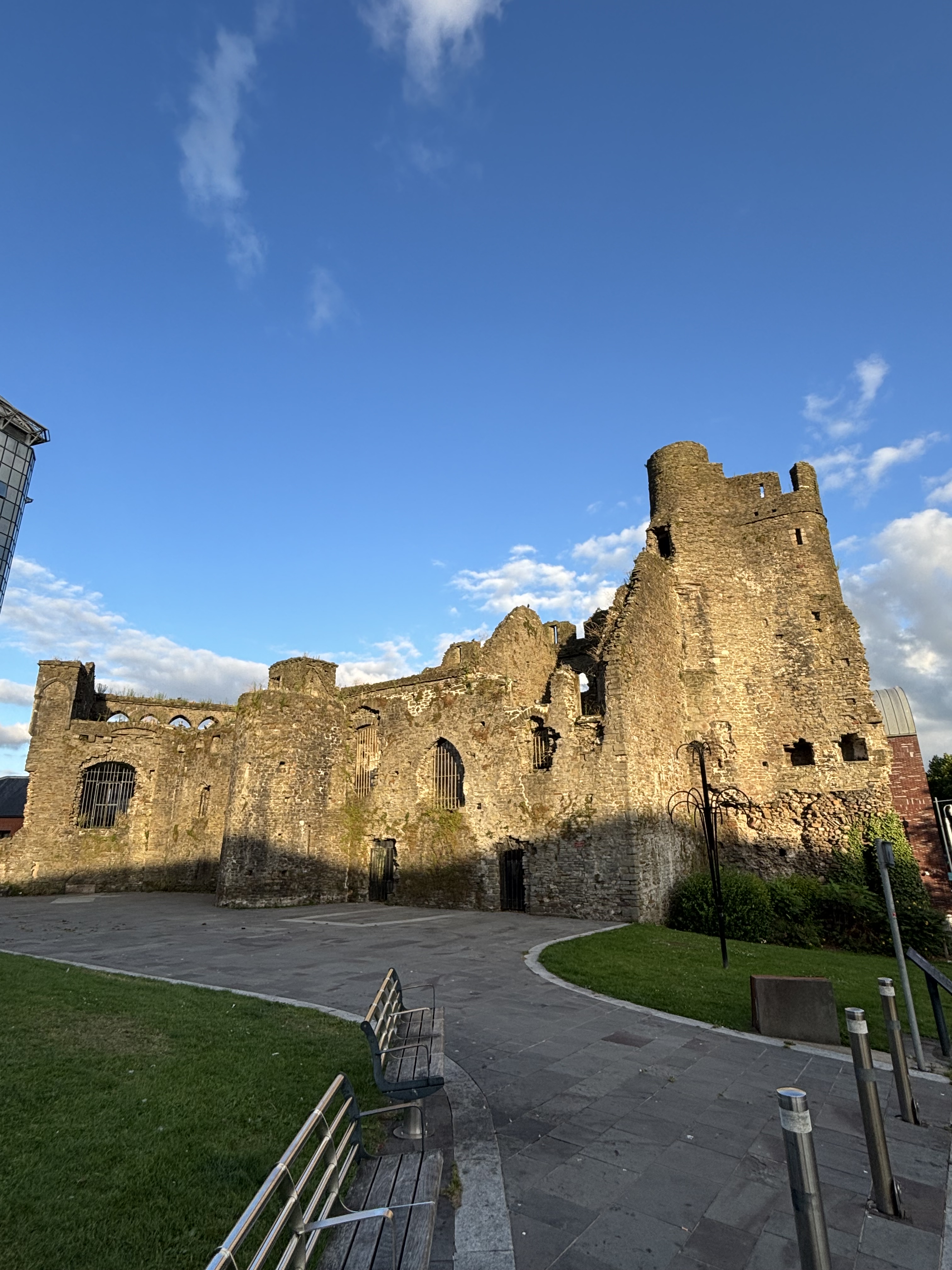
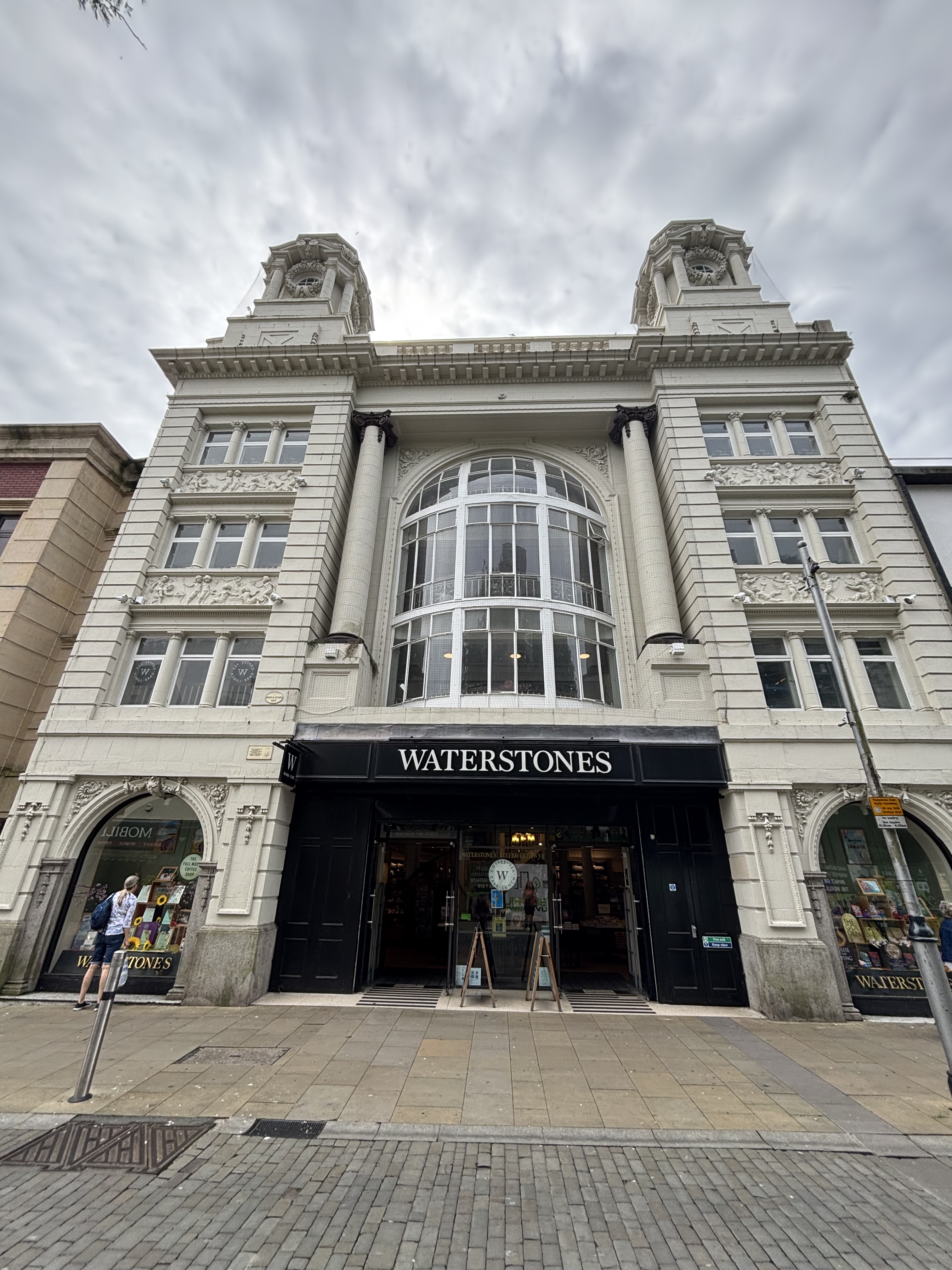
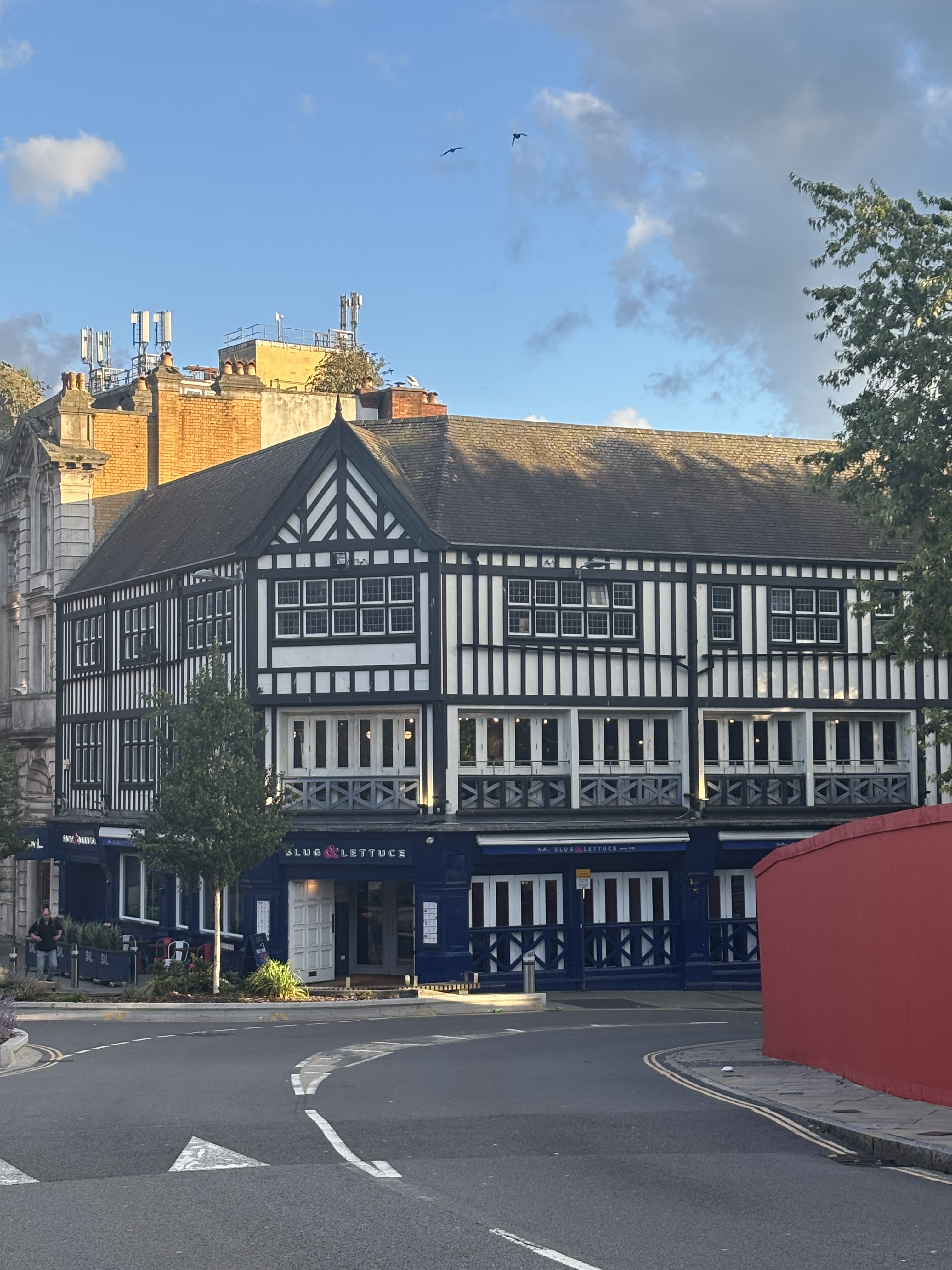
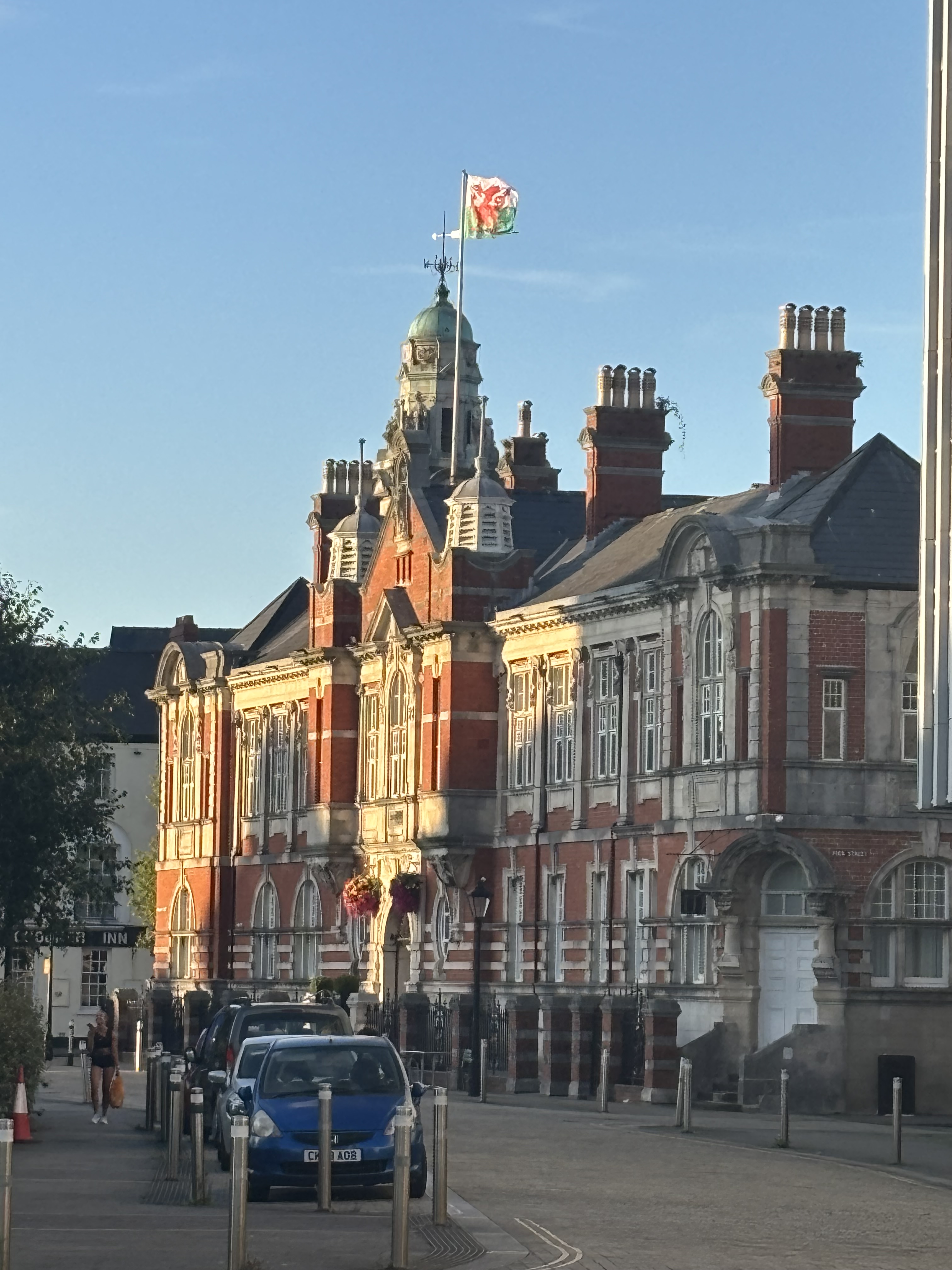
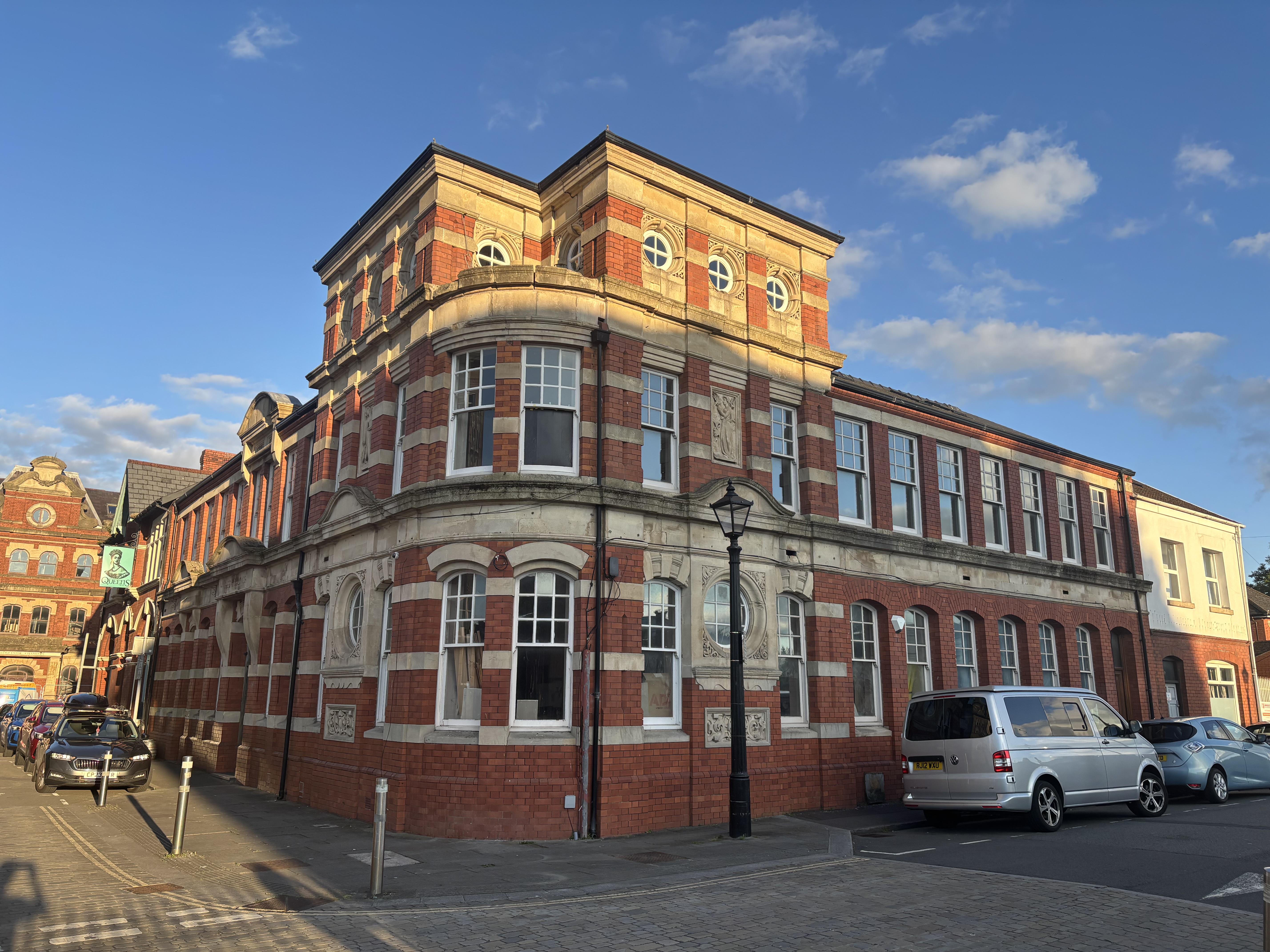
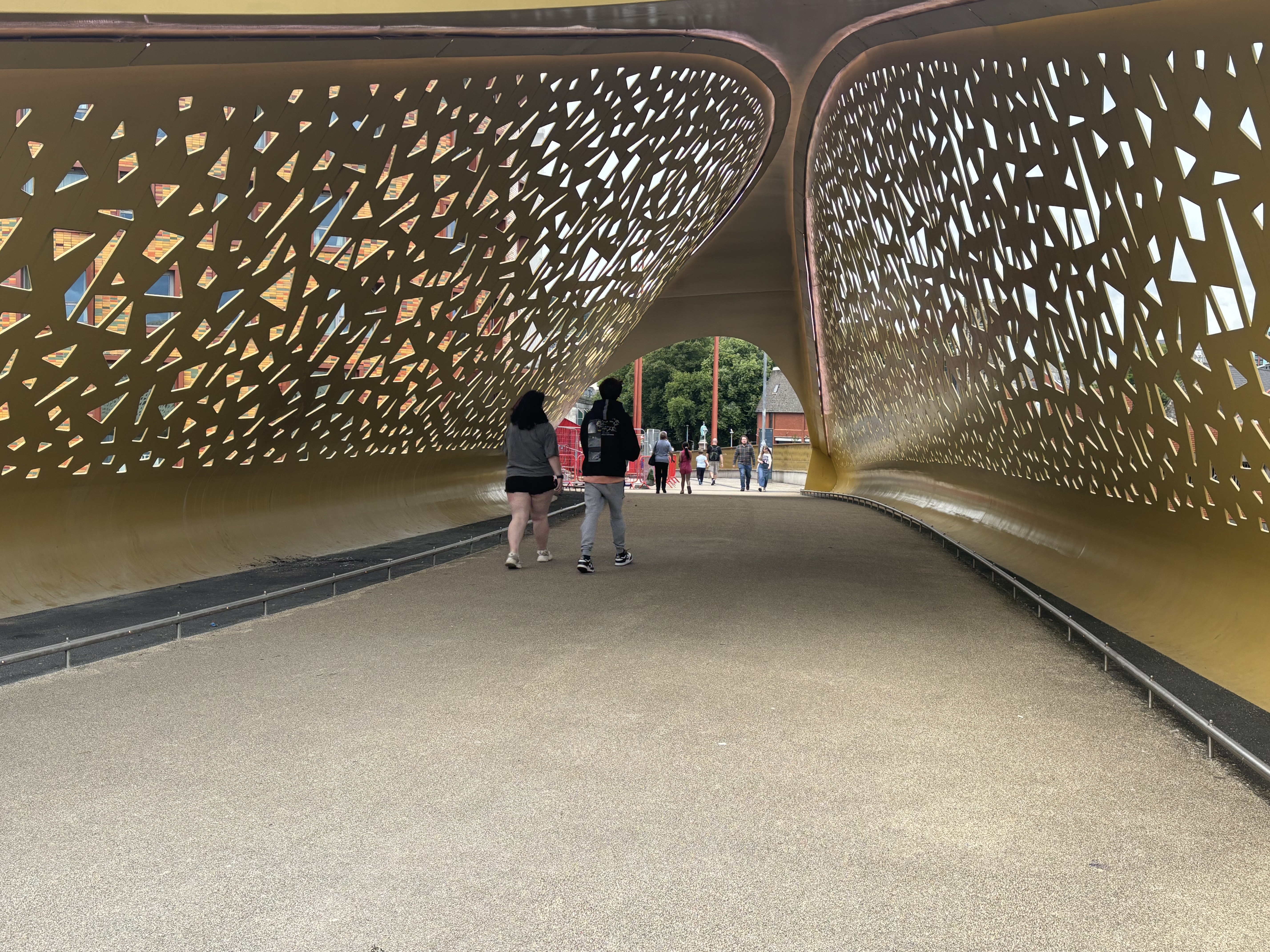
That said, it’s not clear that Swansea has any interest in becoming a premier tourist destination anyway. The historic castle, which dates back to 1107, sits largely in ruins on a major intersection, about 50 feet from a Five Guys. The city center itself is unkempt and borderline dilapidated. There are a few interesting examples of modern architecture, but many of the grand historic buildings are now occupied by bookstores, barber shops and nightclubs. The food scene is rather lackluster; there are a few shining exceptions, but many restaurants maintain very limited operating hours and seem content to offer mediocre variants of fried food despite the abundant and excellent fresh produce grown nearby. A small strip of bars clustered along Wind Street caters to the weekend hen and stag party crowd but offers little of interest to more refined tastes.

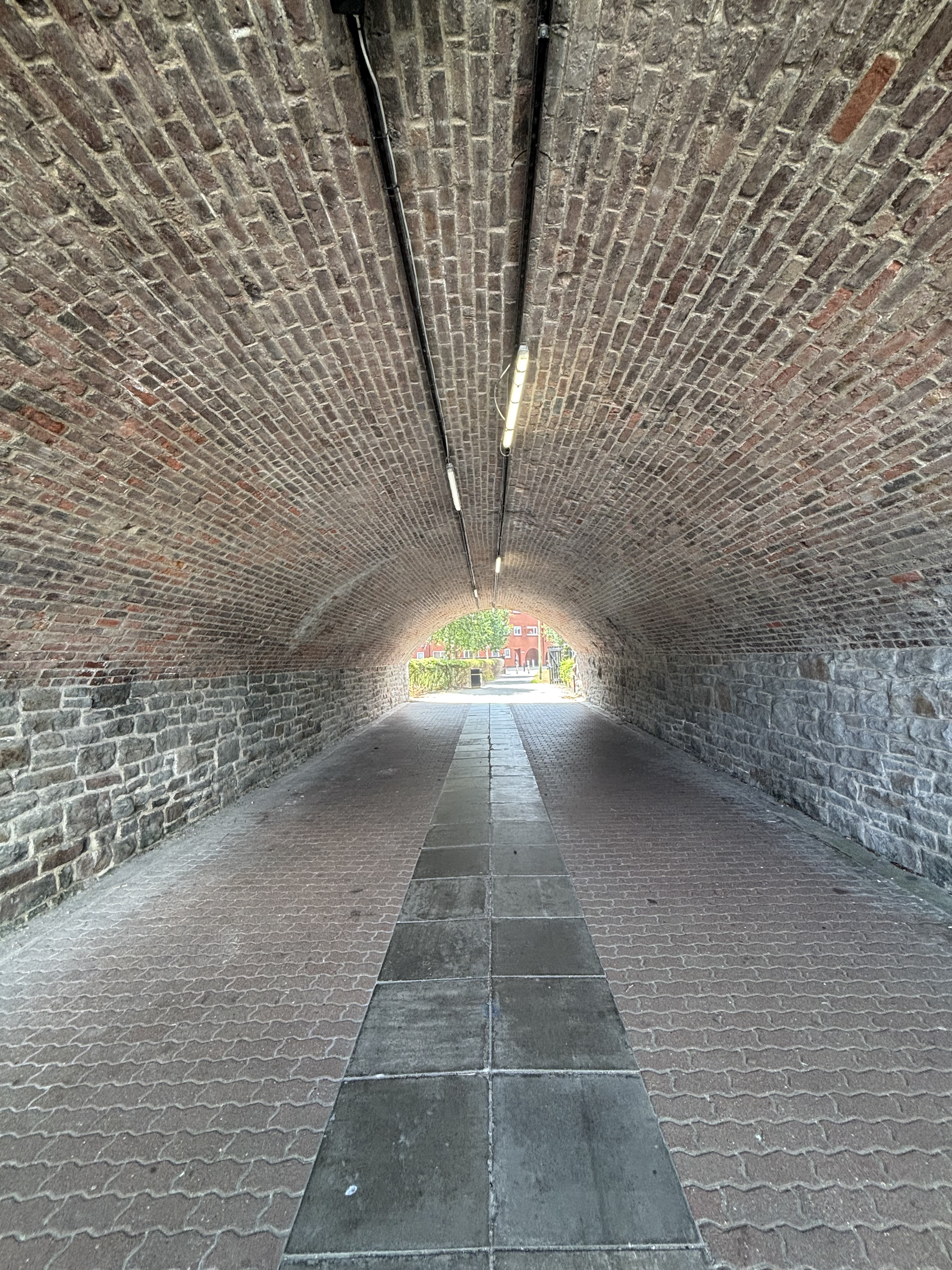
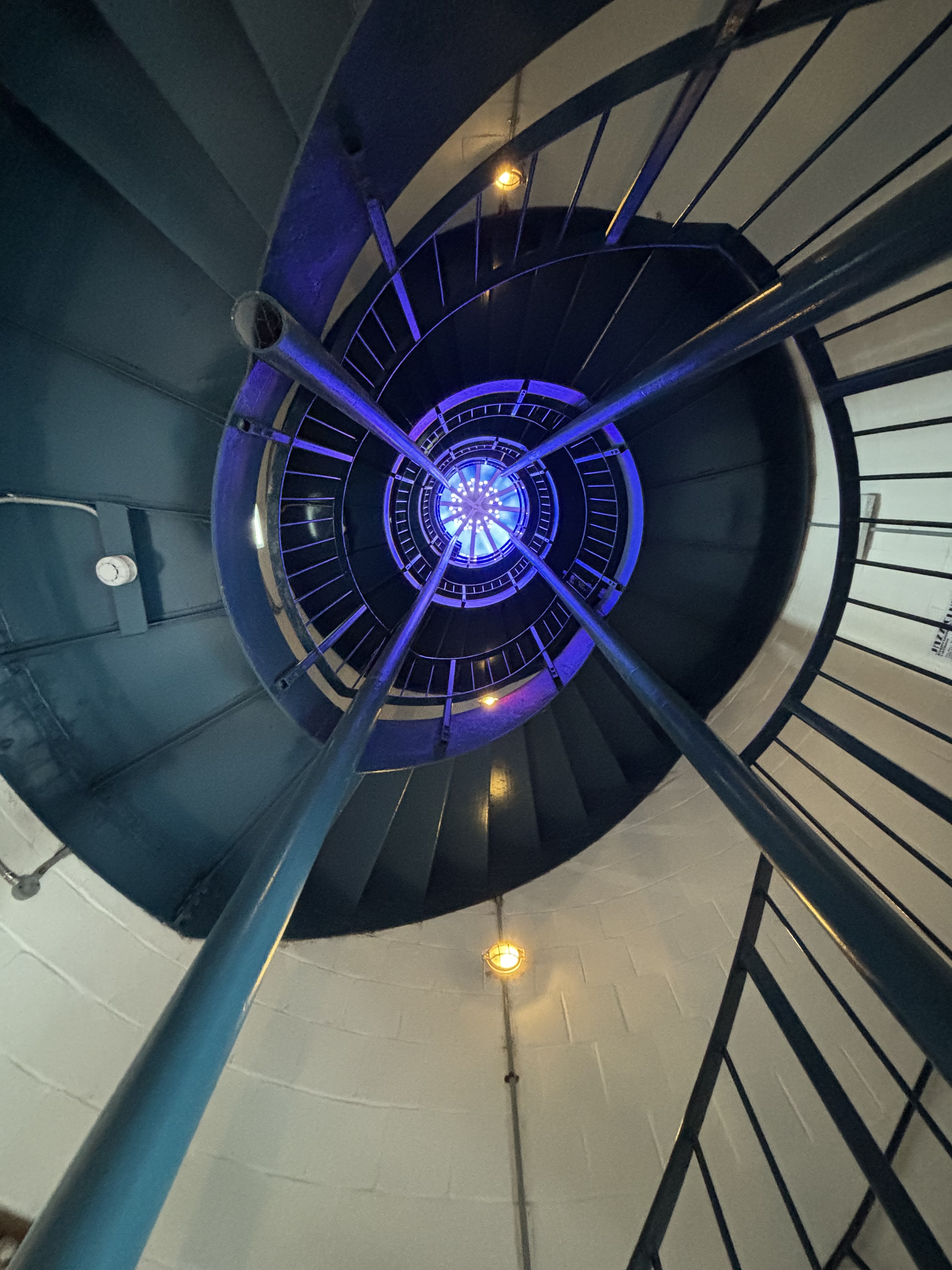
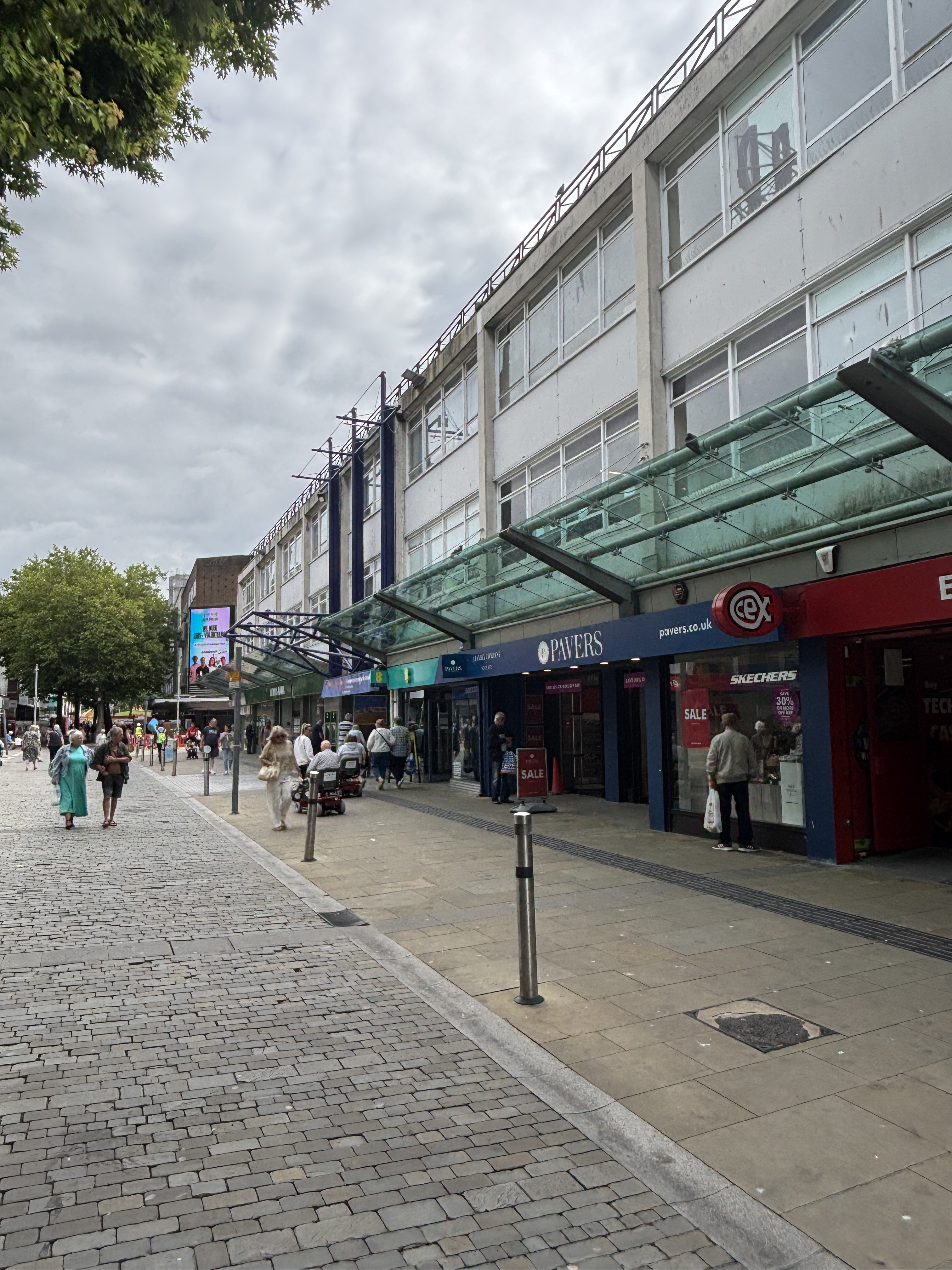
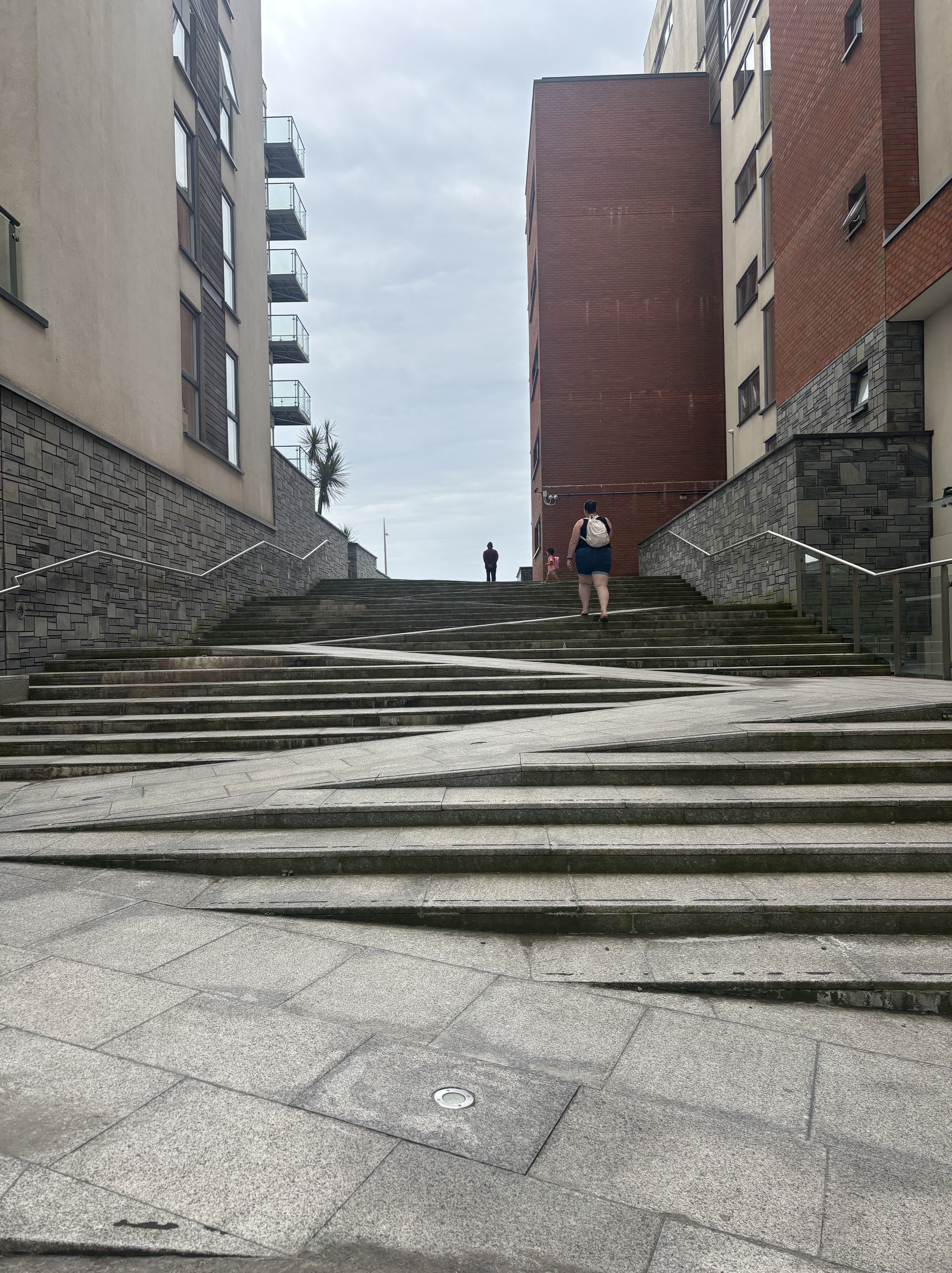
There also doesn’t seem to be any real effort to help visitors navigate the city. The promotional brochures that fill magazine racks and hotel lobbies in most cities are nonexistent here. There are no organized walking tours, free or otherwise. Even Google seems to be giving us the search result equivalent of ¯\\(ツ)/¯ when we ask it for help. We have attempted to visit several places in Swansea that Google says are “open now” but turned out to have been permanently closed for quite some time. And the roving blue dot of Google Maps is nothing more than an educated guess here. We have spent an embarrassing amount of time walking in circles looking for businesses that appear to be merely figments of the Internet’s imagination.
The oceanfront promenade and rural trails are well-maintained, but there are literally zero places nearby where a non-resident can rent a bike. In an early moment of desperation, we considered purchasing bikes and even met with an older gentleman (recommended to us by a nearby bike repair shop) who offers a large collection of used bikes for sale out of an unmarked garage on a side street in a “transitioning” neighborhood. We didn’t ask how he acquired the bikes.
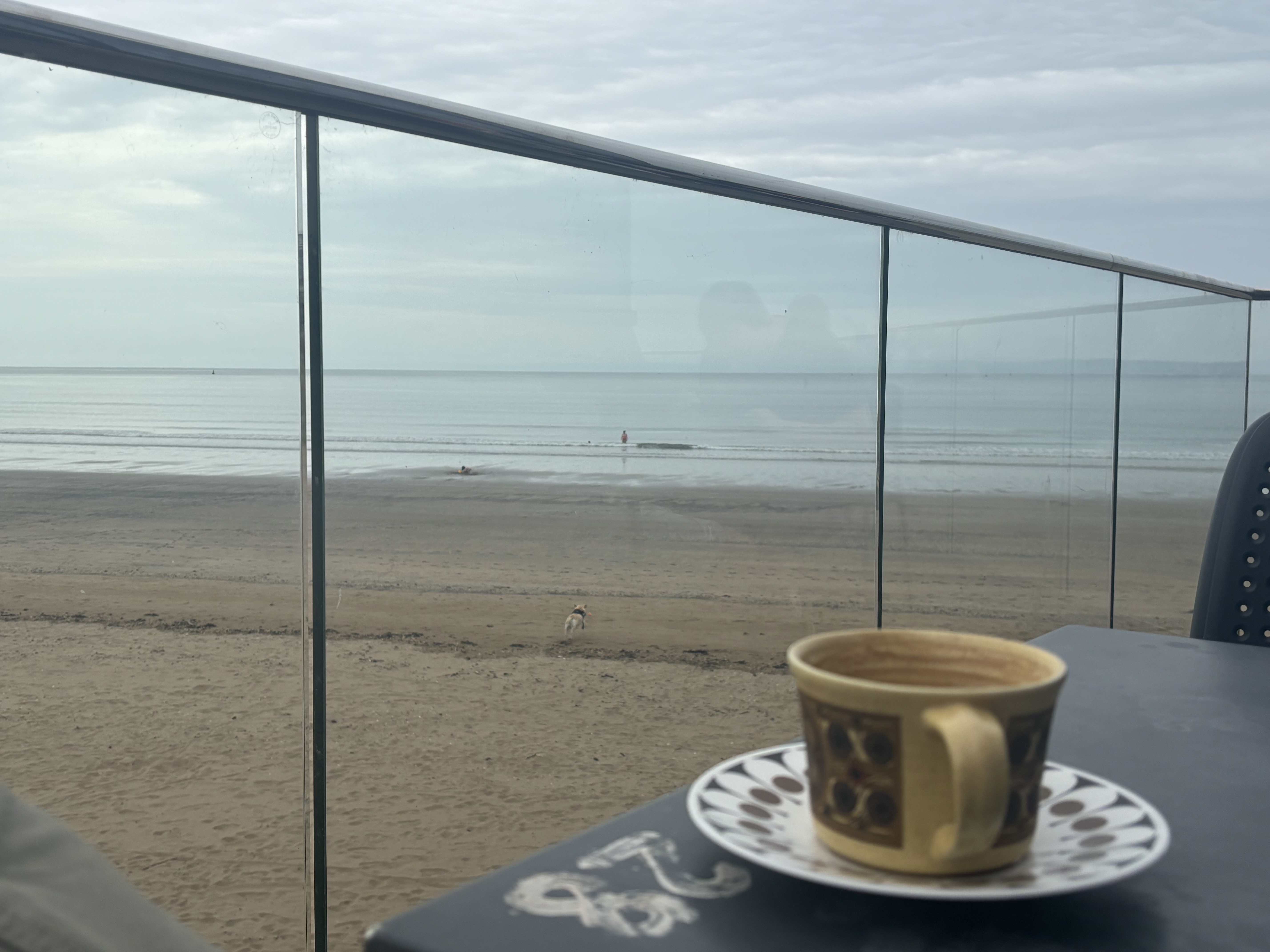
The walk along the beach (during low tide) and promenade (during high tide) is lovely, and we do have a favorite cafe on the beach, but there are only so many times on one trip that Stuart is going to be willing to get sand between his toes. Also, the last time we were there we ended up rescuing a small-spotted catshark that had become stranded in the sand after swimming a little too close to the shore when the tide was going out. Unfortunately, we did not think to get pictures of our efforts, but it involved a long stick for lifting the 2-foot-long aquatic menace onto a small piece of plywood that Stuart used to carry the creature out to deeper water. (Stuart maintains there is no such thing as a “friendly” shark, and you aren’t going to convince him otherwise.)
At the end of the day, maybe it doesn’t matter what Swanseans want for their town. Even if nothing ever happens here, it is entirely possible to enjoy yourself if you are willing to live like a local instead of a tourist. We’ve adjusted to the slow pace and have grown to really appreciate what the town has to offer. We had a great evening at a rock dive bar and another pleasant afternoon listening to a blues band at a nearby pub. We’ll probably check out Superman at the local cinema. We had fun watching university students and their proud families celebrating during graduation week. We’ve met a number of local cats and dogs and have even spoken to some of their owners – all of whom seem confused as to exactly why we are here. We’ve learned that one of life’s simple pleasures is sitting on our balcony watching people wander the walkways and boat docks around the recently revamped marina below our apartment.
Rents are quite reasonable by UK standards, which leaves some room in our budget for other activities. We rode a slow boat up the river to check out the old copper factory remnants and booked an inflatable boat trip along the coast (postponed due to “mechanical issues”) to view wildlife. We’re thinking about hiring a sailboat for a day because why not. We’re taking a quick overnight trip to Cardiff this week for a Pet Shop Boys concert. We will be checking out a football match next weekend. (Interestingly enough, Snoop Dogg became an investor in the local team only a few days before we arrived in town.) Darla is very excited to paint her face, learn some chants and discover her inner hooligan. And she will continue trying to convince Stuart that it’s safe to go back to the beach. She’s probably going to need a bigger boat.
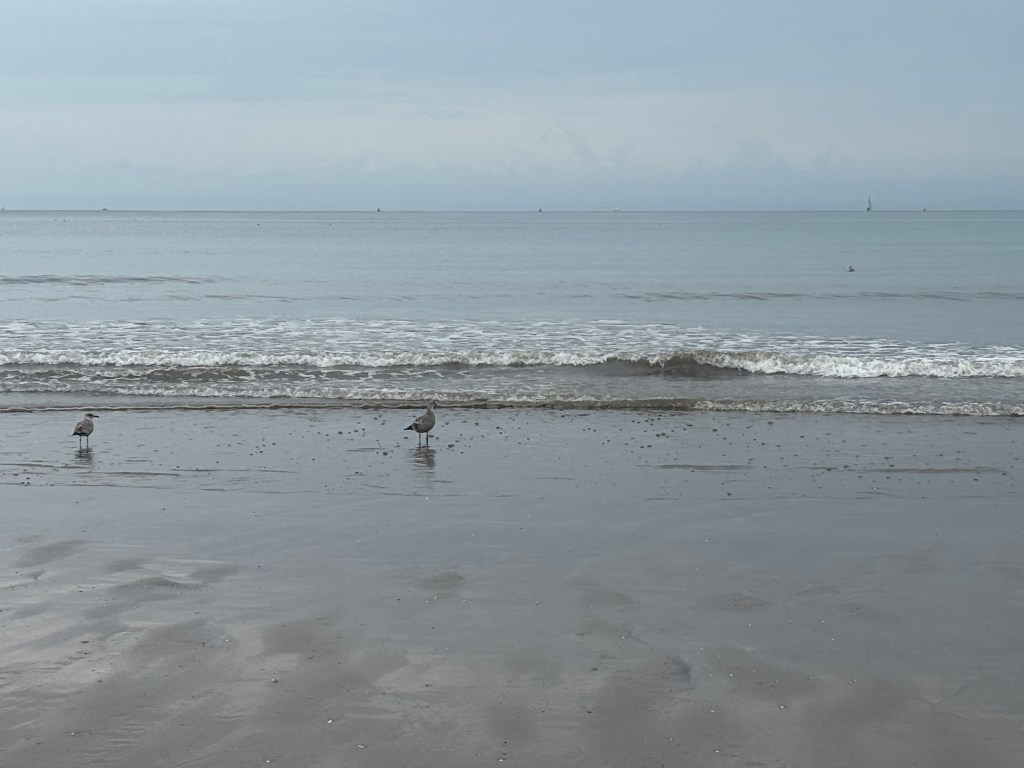
The site of the infamous Swansea Shark Invasion of 2025.

 The Global Slowmad
Leave a comment