Welcome to our Basque food blog!
Forgive us, but the next few weeks of our Instagram feed are probably going to feature a LOT of food pics – partly because the cuisine here is just that good and partly because there’s only so much hiking mountain trails and lounging at the beach a person can physically endure. We know, it’s a rough life.
It took us all of a week to hit the major tourist sites: three beaches, three mountain treks and three churches. There really was only one museum that interested us, and most of the exhibits did not come with English translations. We’ve been saving the aquarium for a rainy day, and we’ll probably take an e-bike tour of the countryside next week. But there are approximately 8 bajillion pintxo bars in this city, and we wouldn’t be responsible bloggers if we didn’t try every single one.
Donostia is the Euskarian (Basque) name for the city, and San Sebastian is the Spanish name. Eusakarian is the language historically spoken by the Basque people prior to Spanish rule and survived despite being officially outlawed during the Franco dictatorship. It is unrelated to any other language spoken on the continent and reportedly has quite ancient origins. Pretty much all signage appears both in Euskarian and Spanish. When you see a word that looks totally unfamiliar, particularly if it includes a lot of “tx,” “k” or “z” consonants, chances are it’s Euskarian. Google Translate struggles with Euskarian, and we’ve seen some pretty hilarious translations pop up on our screens.
As is our custom, we began our stay with a “free” English-language walking tour of the city. Our guide (from Go Local San Sebastian) must have spent a lot of time learning the language around British football hooligans because he dropped an f-bomb pretty much every other sentence – more frequently when talking about the French. We did not learn as much about the city’s history as on some other tours we’ve taken, but he made us laugh and did have some useful tips on things to do and places to go.
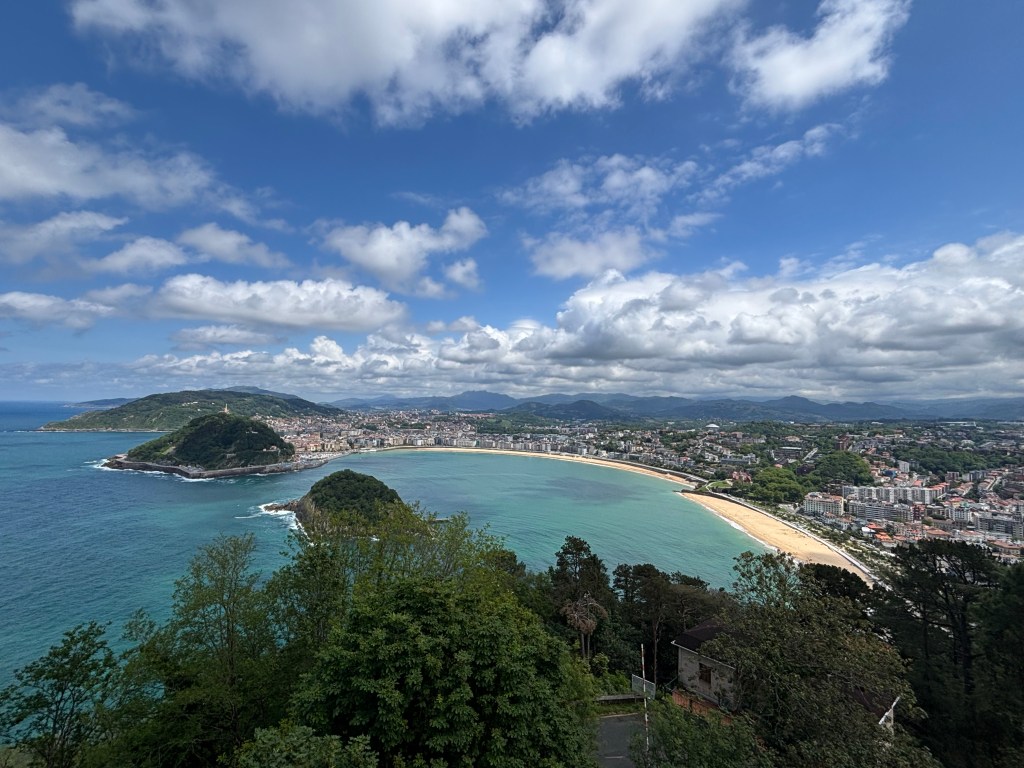
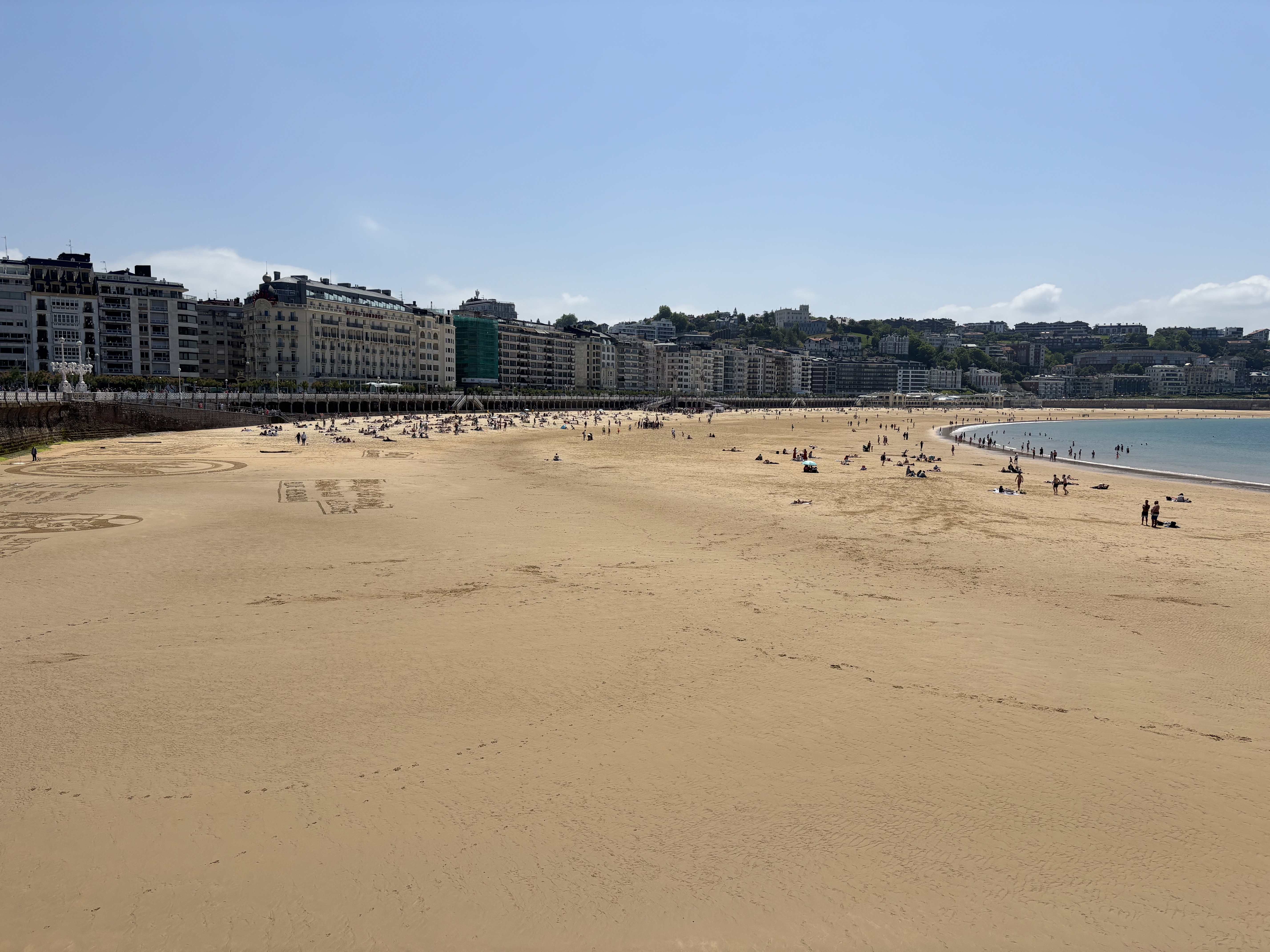
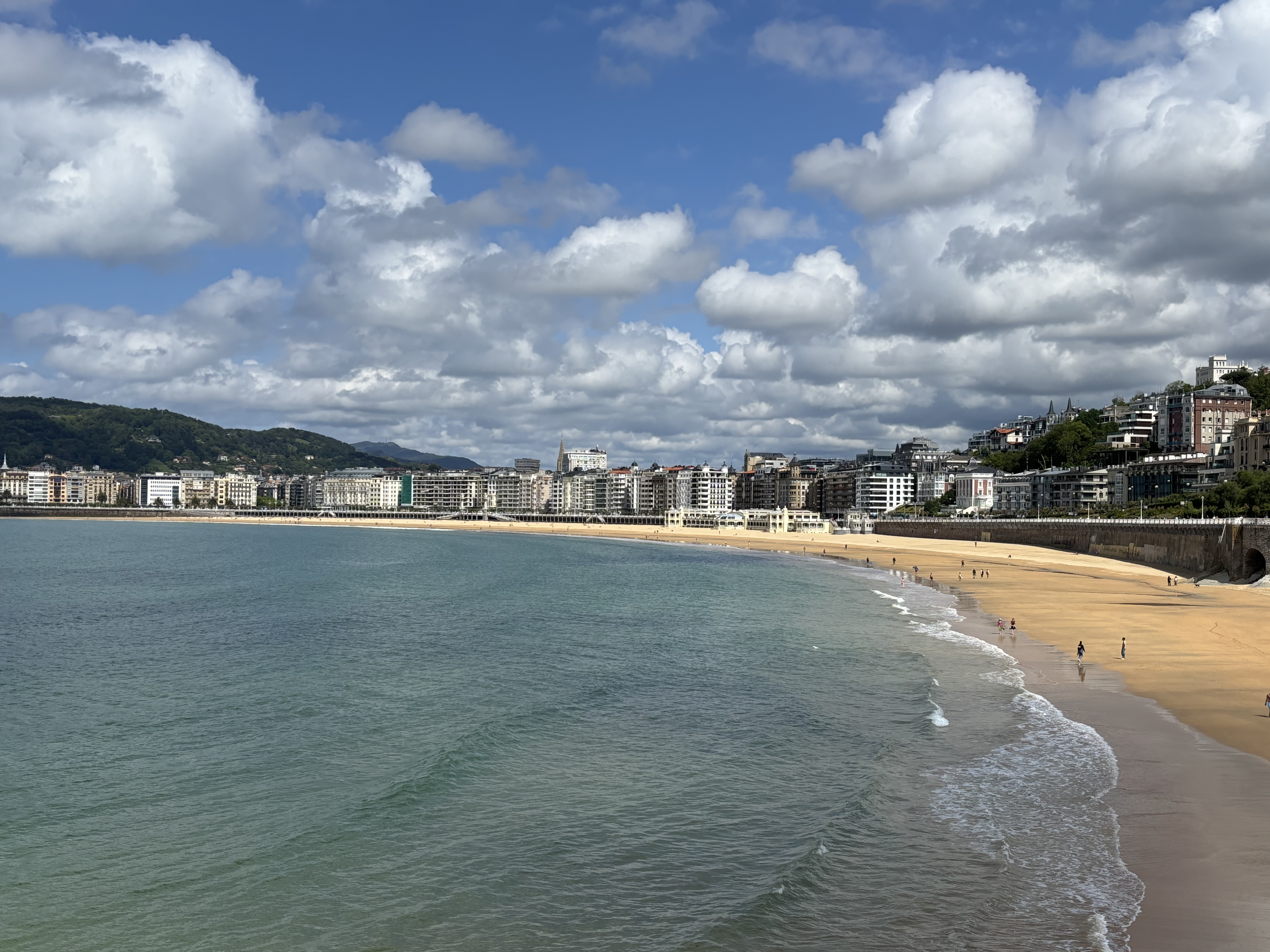
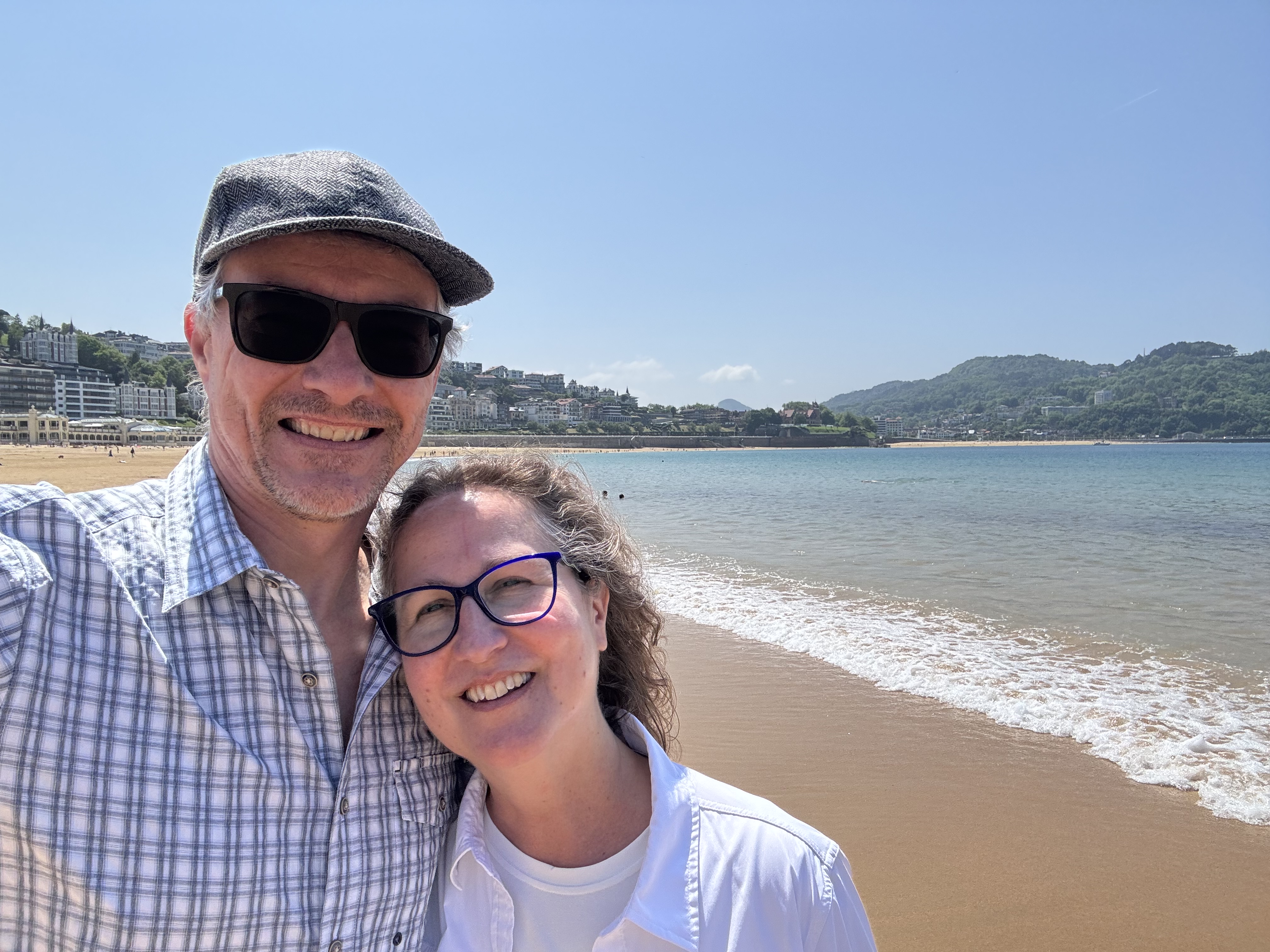
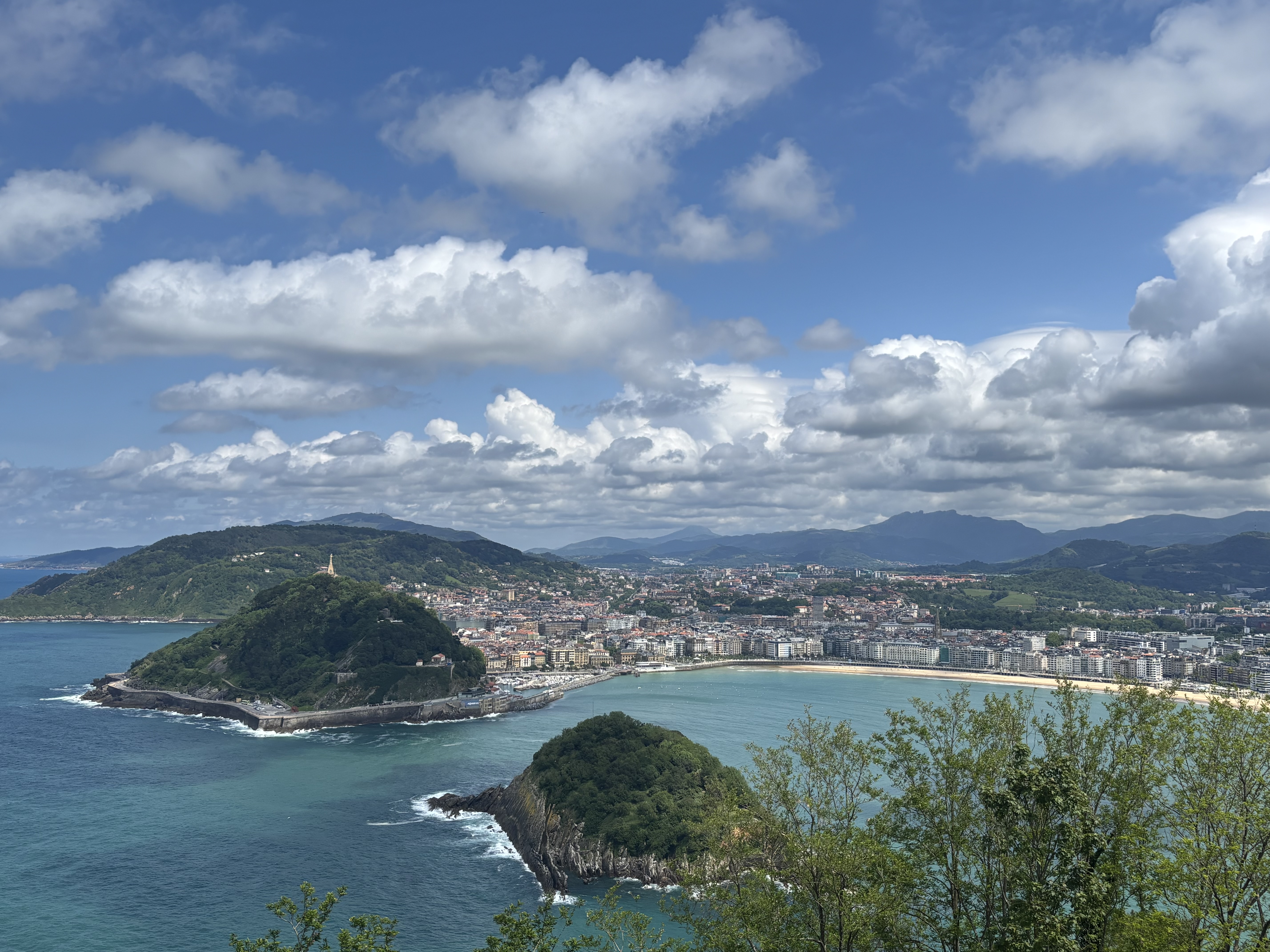
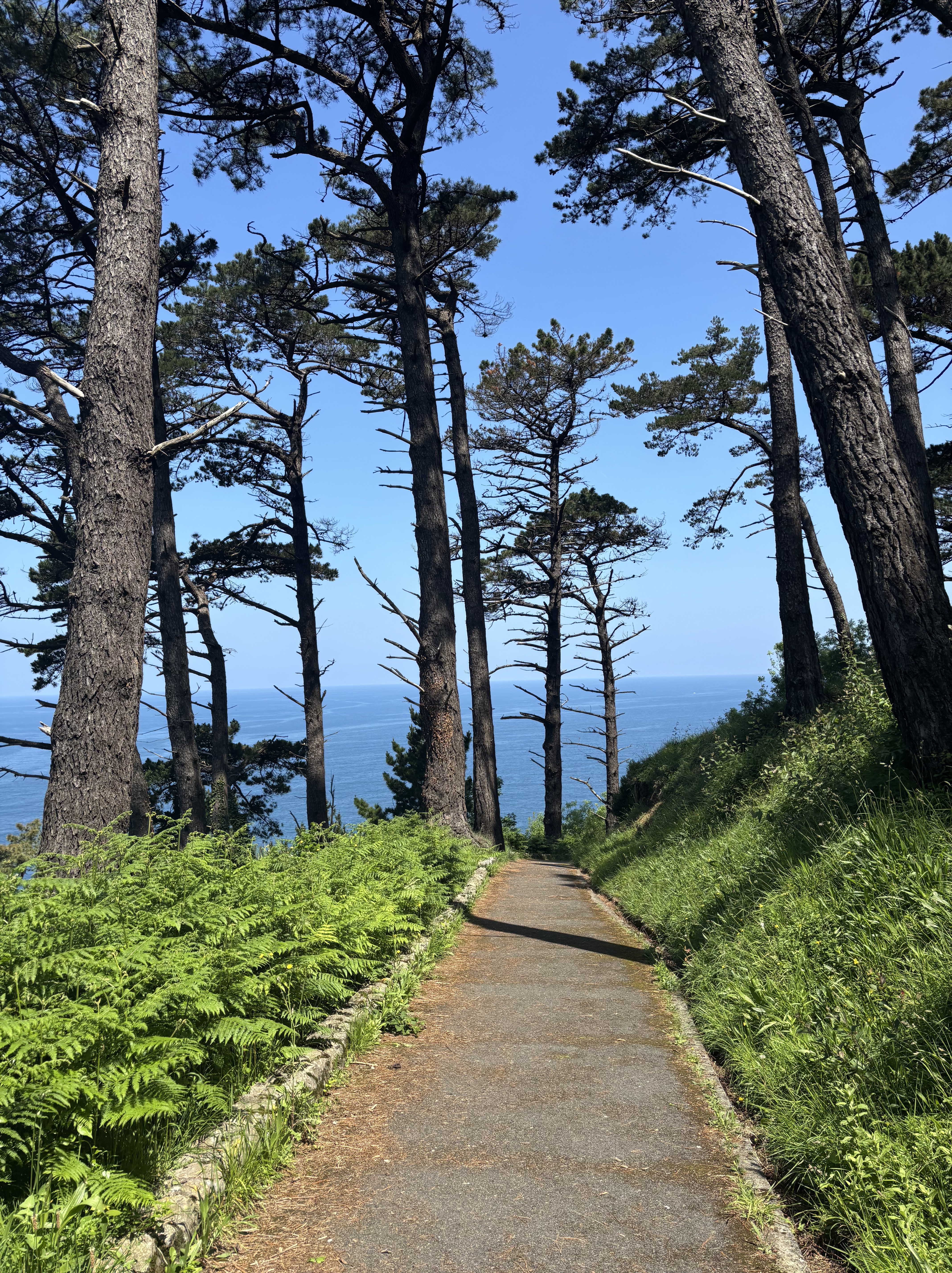
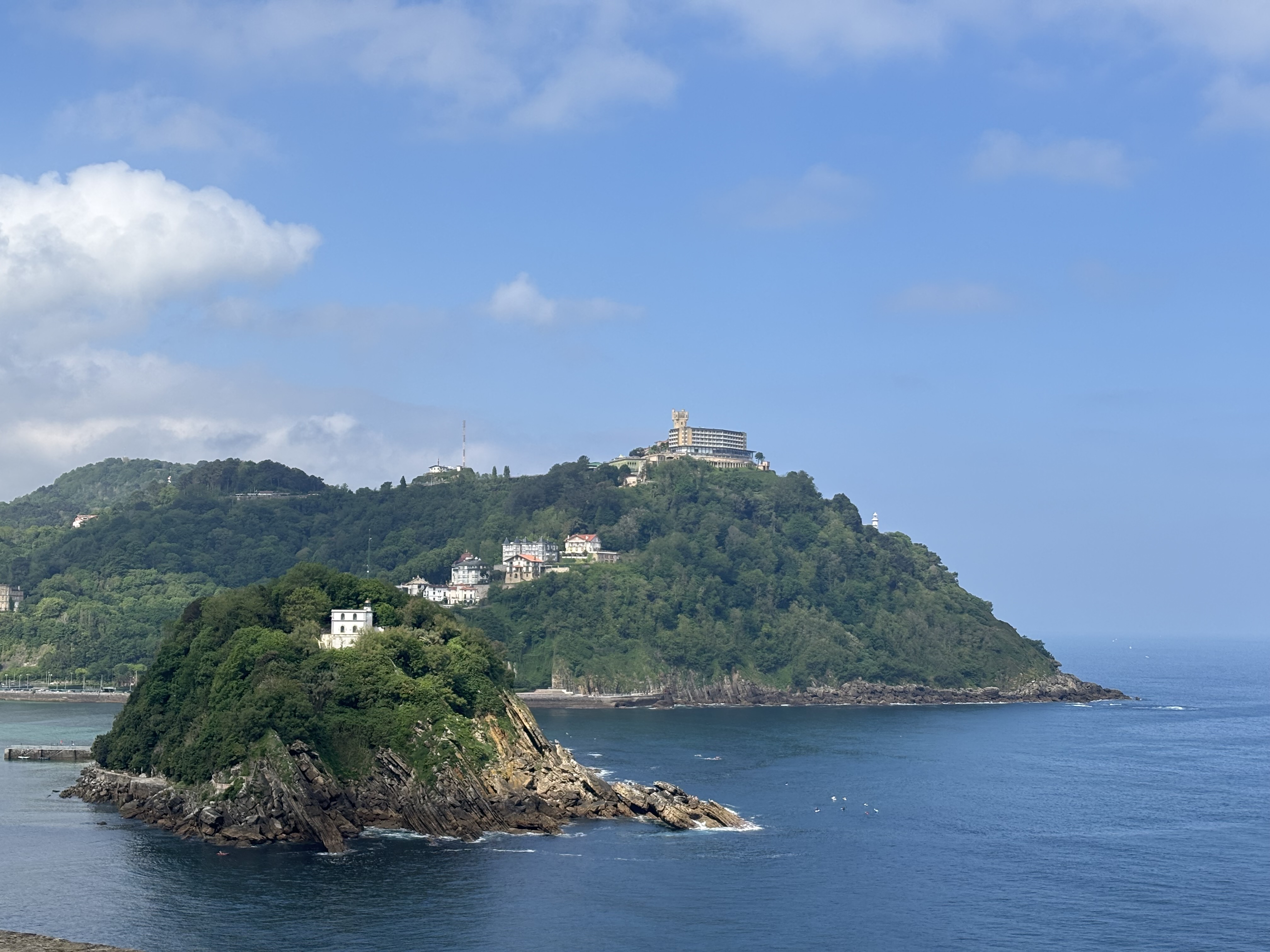
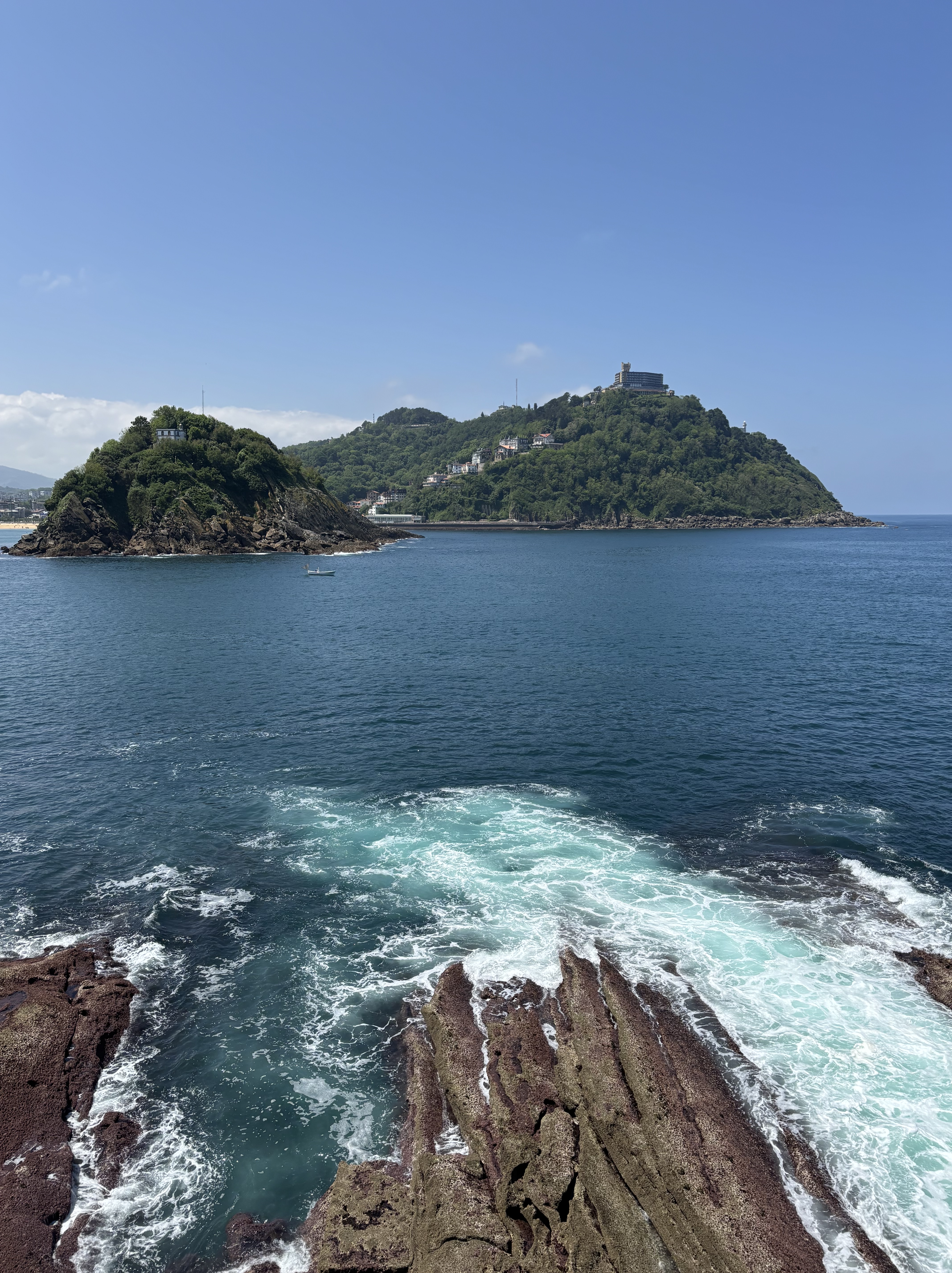
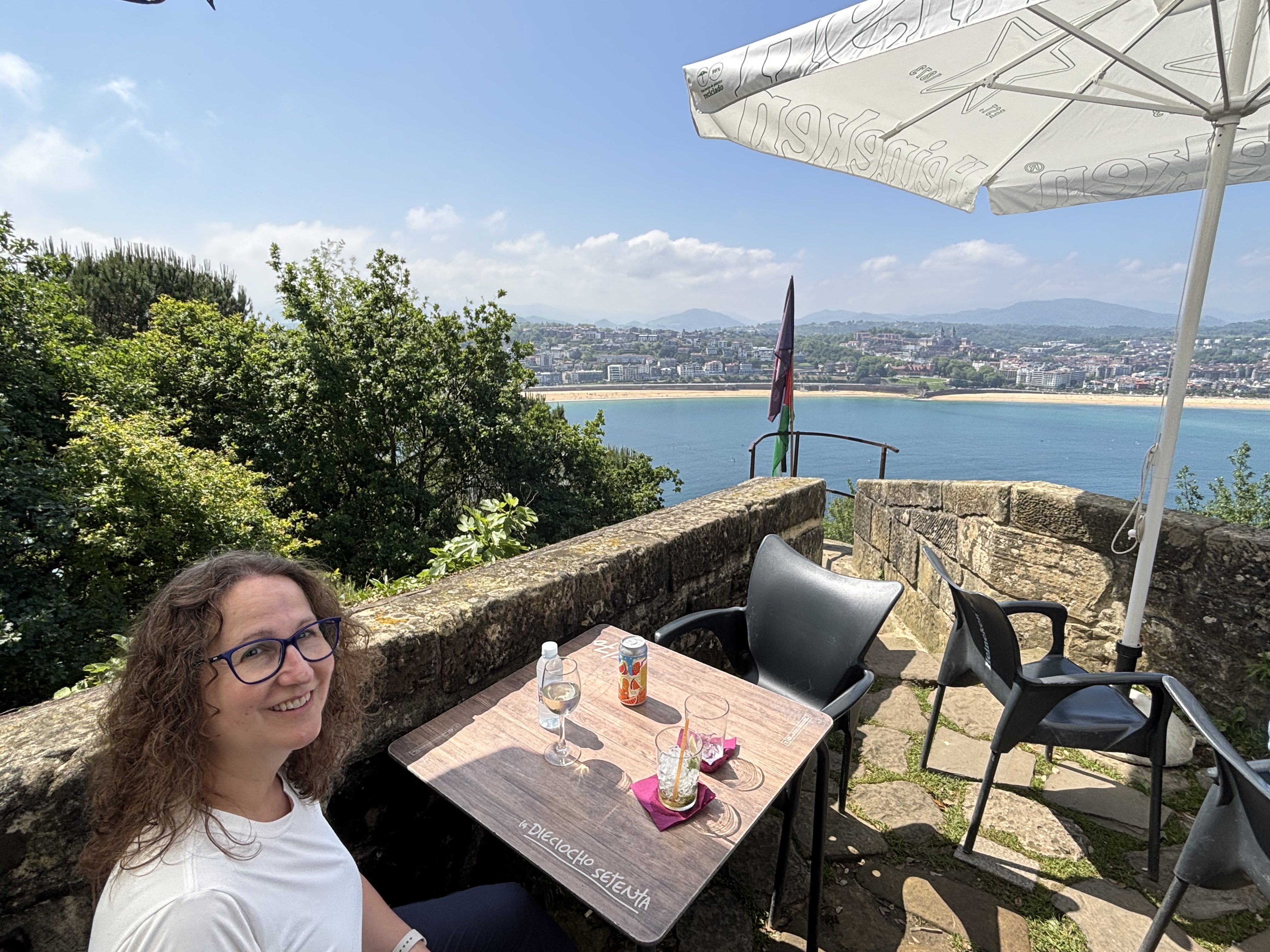
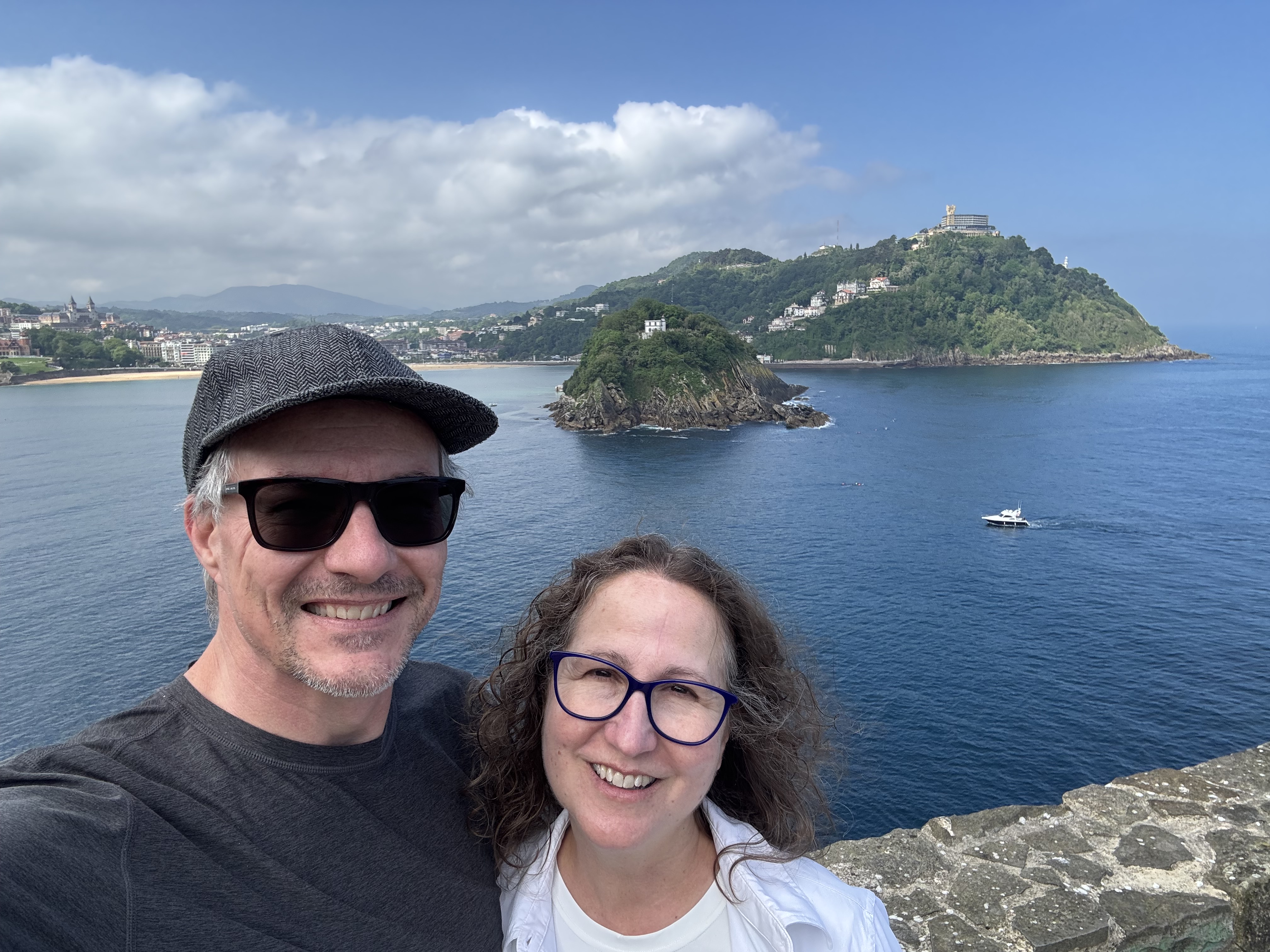
To that end, Donostia and the greater Basque region also are blessed with incredible natural beauty from the mountains, sandy beaches and ocean views. There are two separate bays, each flanked by mountains on either side with a sandy beach in the middle and pedestrian esplanades overlooking the whole affair.
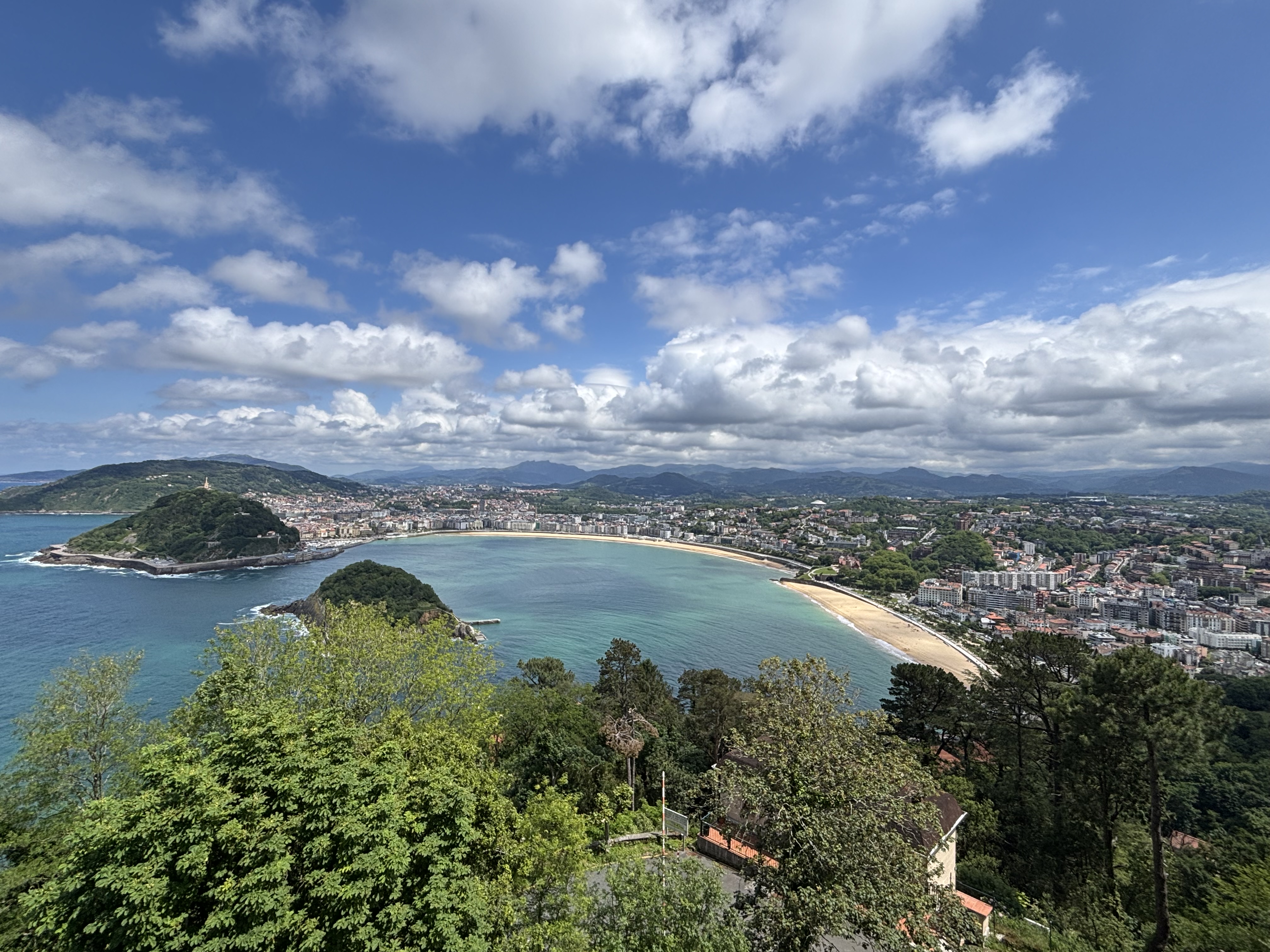
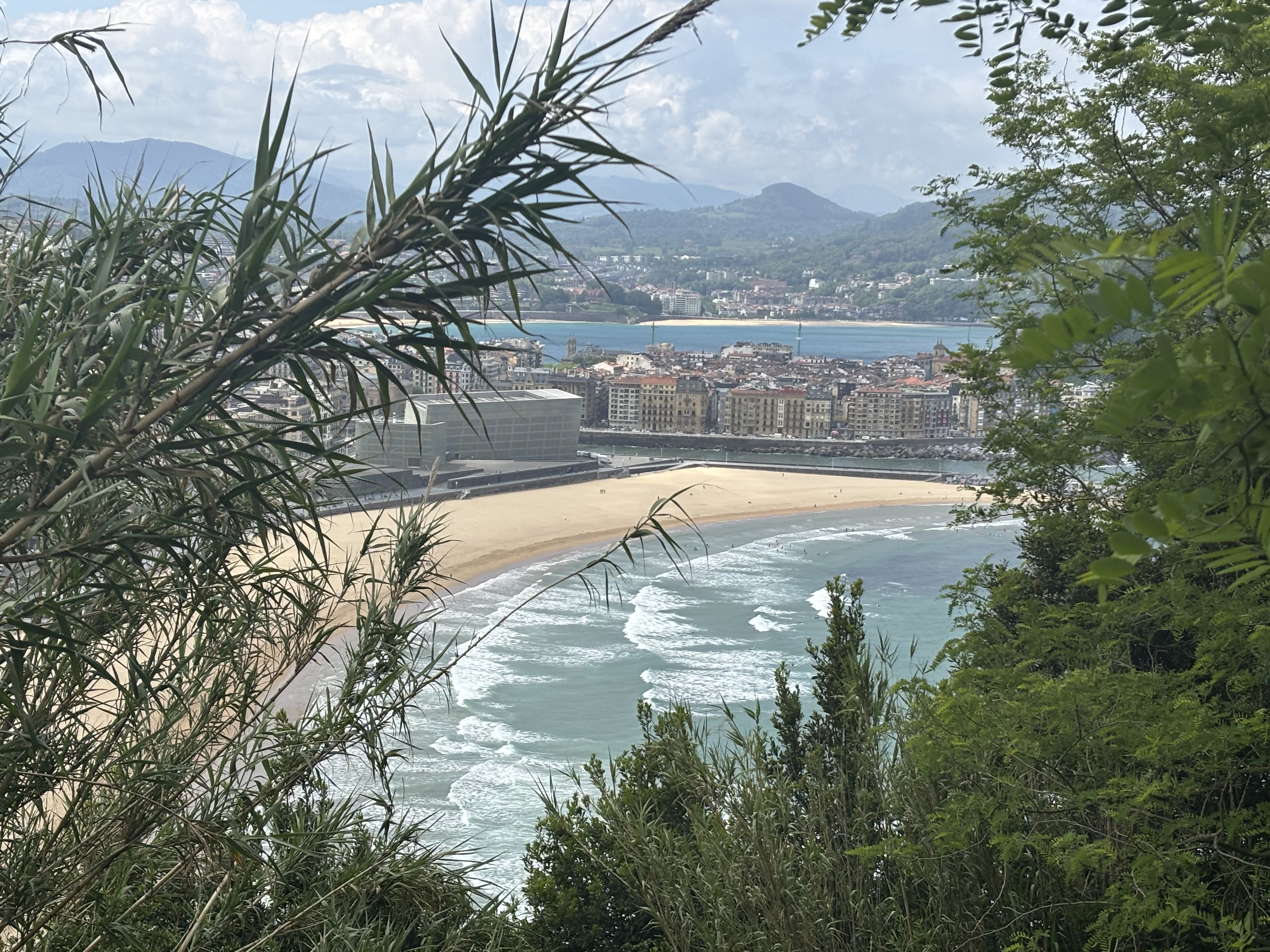
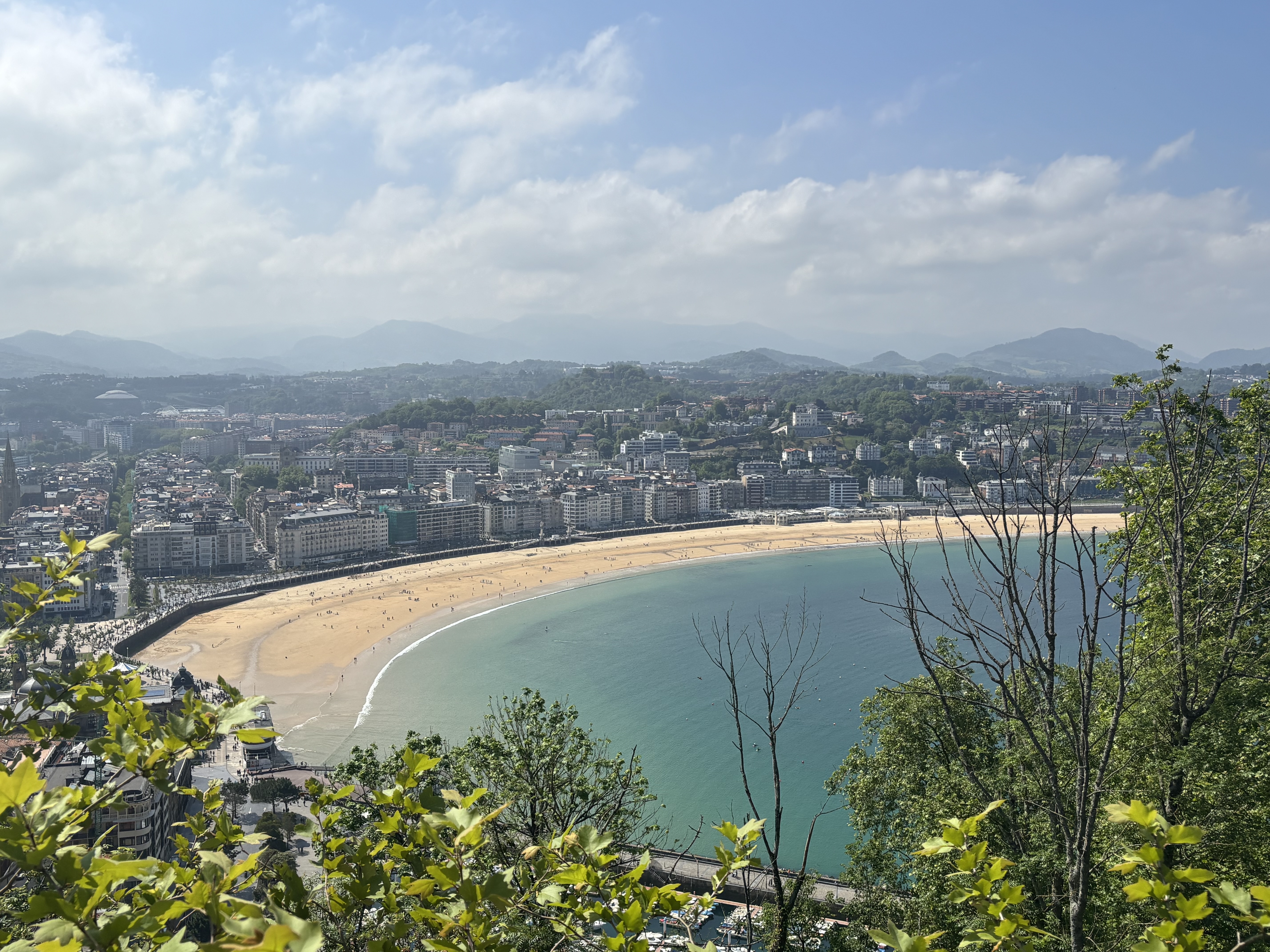
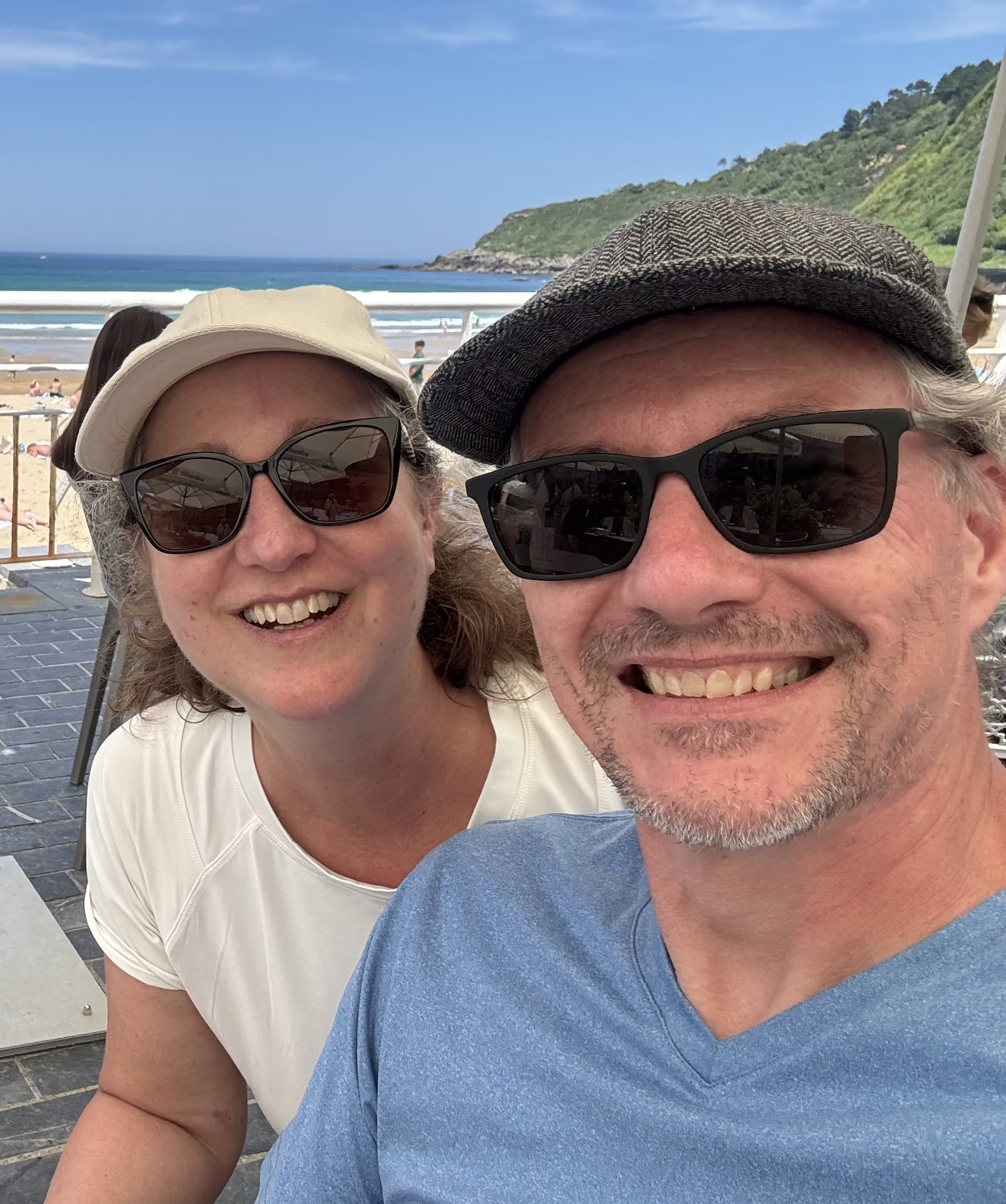
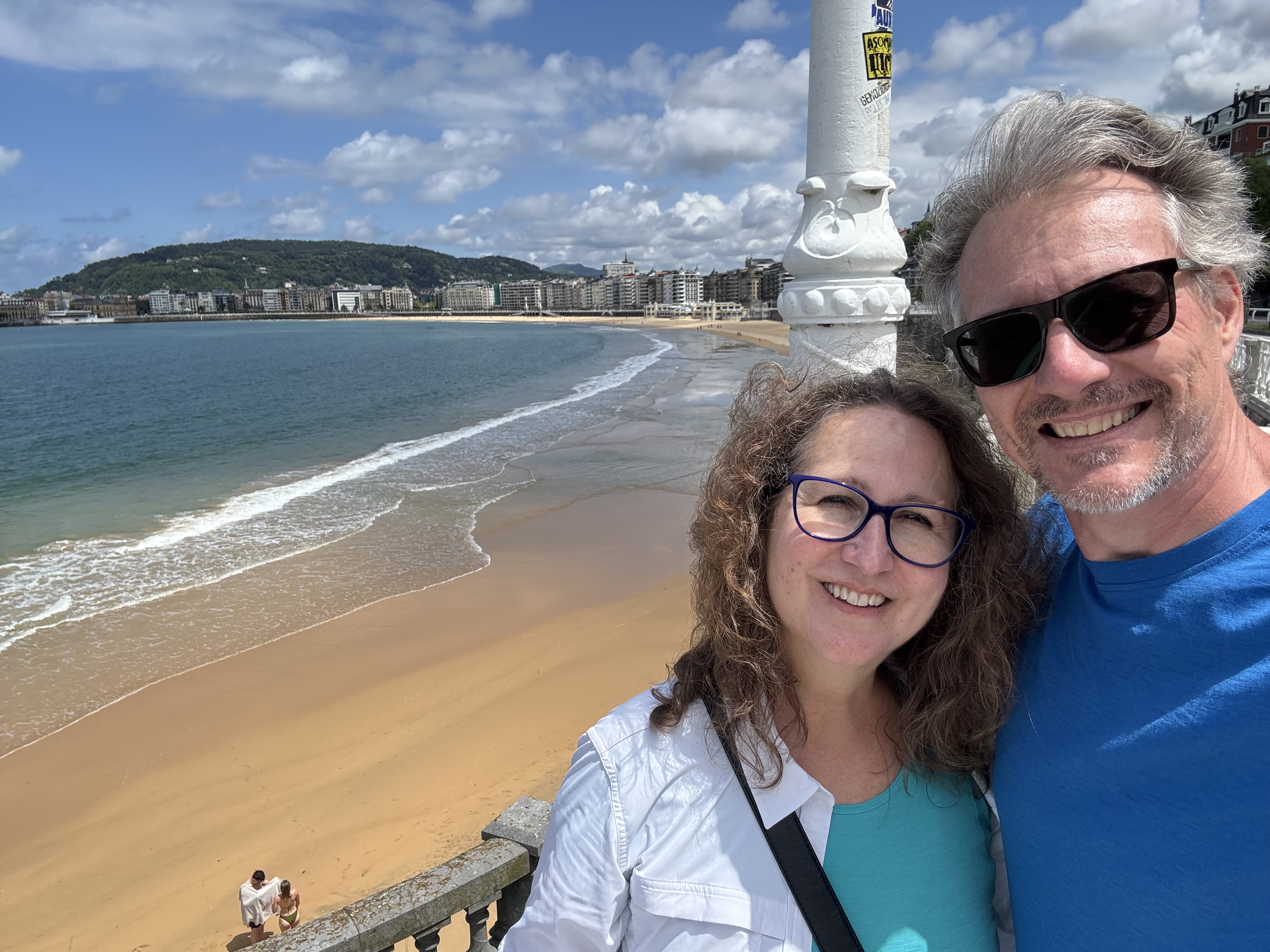
There is a beach for every taste. La Concha Bay is a protected cove with a small island in the middle, so the water is relatively shallow and remains calm like glass; La Concha Beach is a fashionable place to see and be seen. Zurriola has large waves that attract surfers, dog owners and families that want a little room to spread out. Despite the significant dog presence, the beaches have been remarkably clean. People here are responsible about picking up after their animals, and the city cleanup crews come through every night to pick up any stray trash that got left behind.
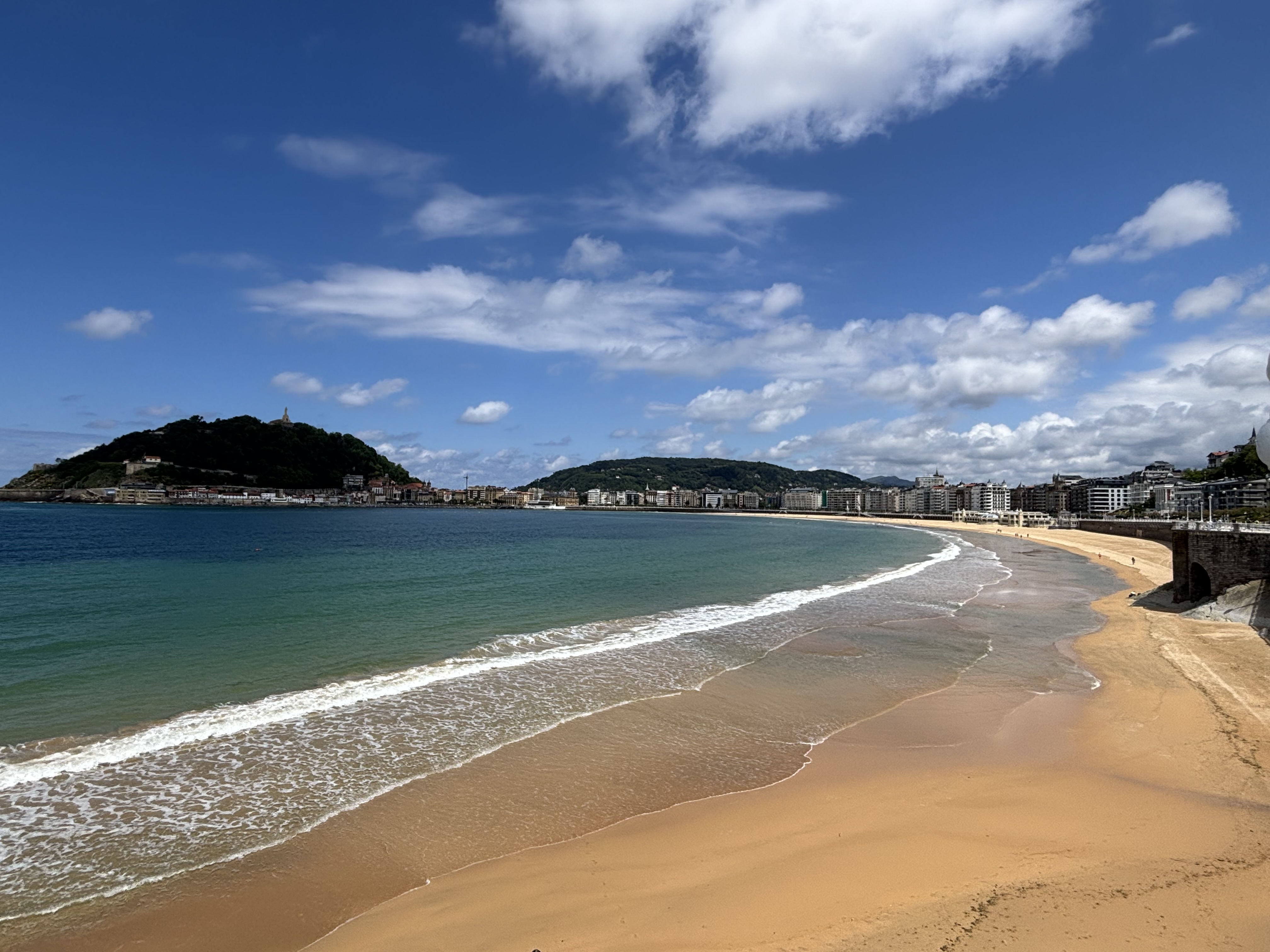
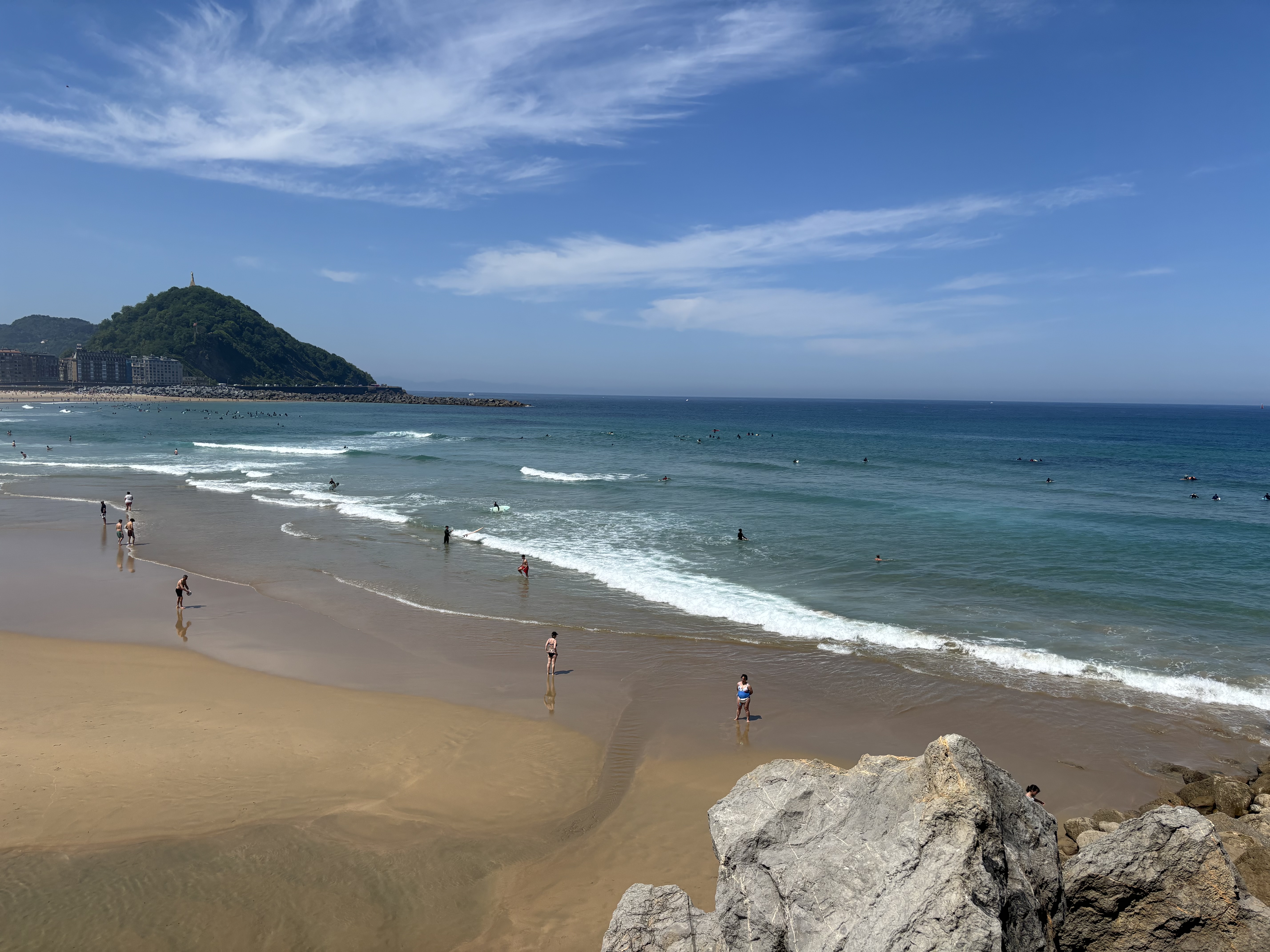

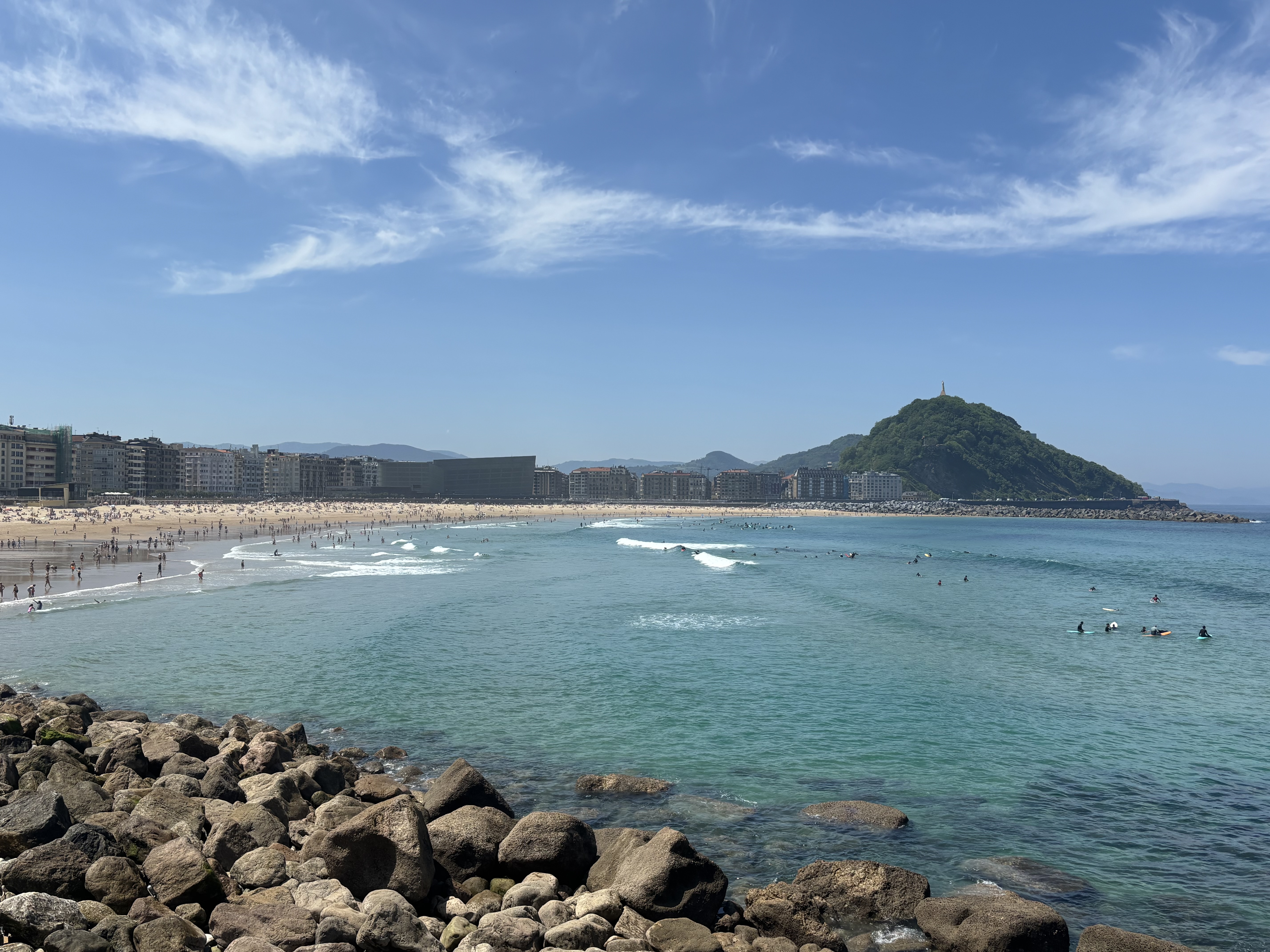
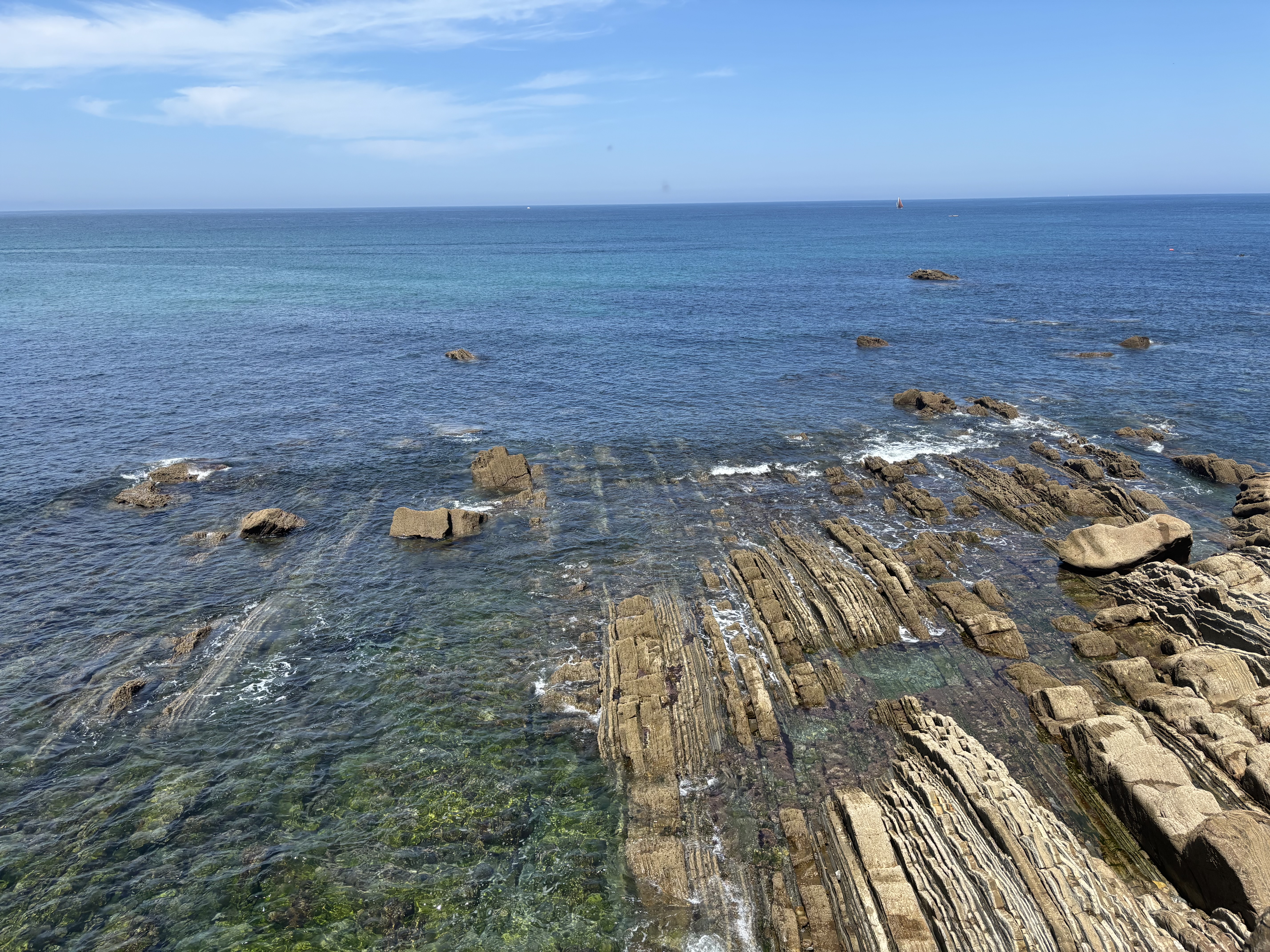
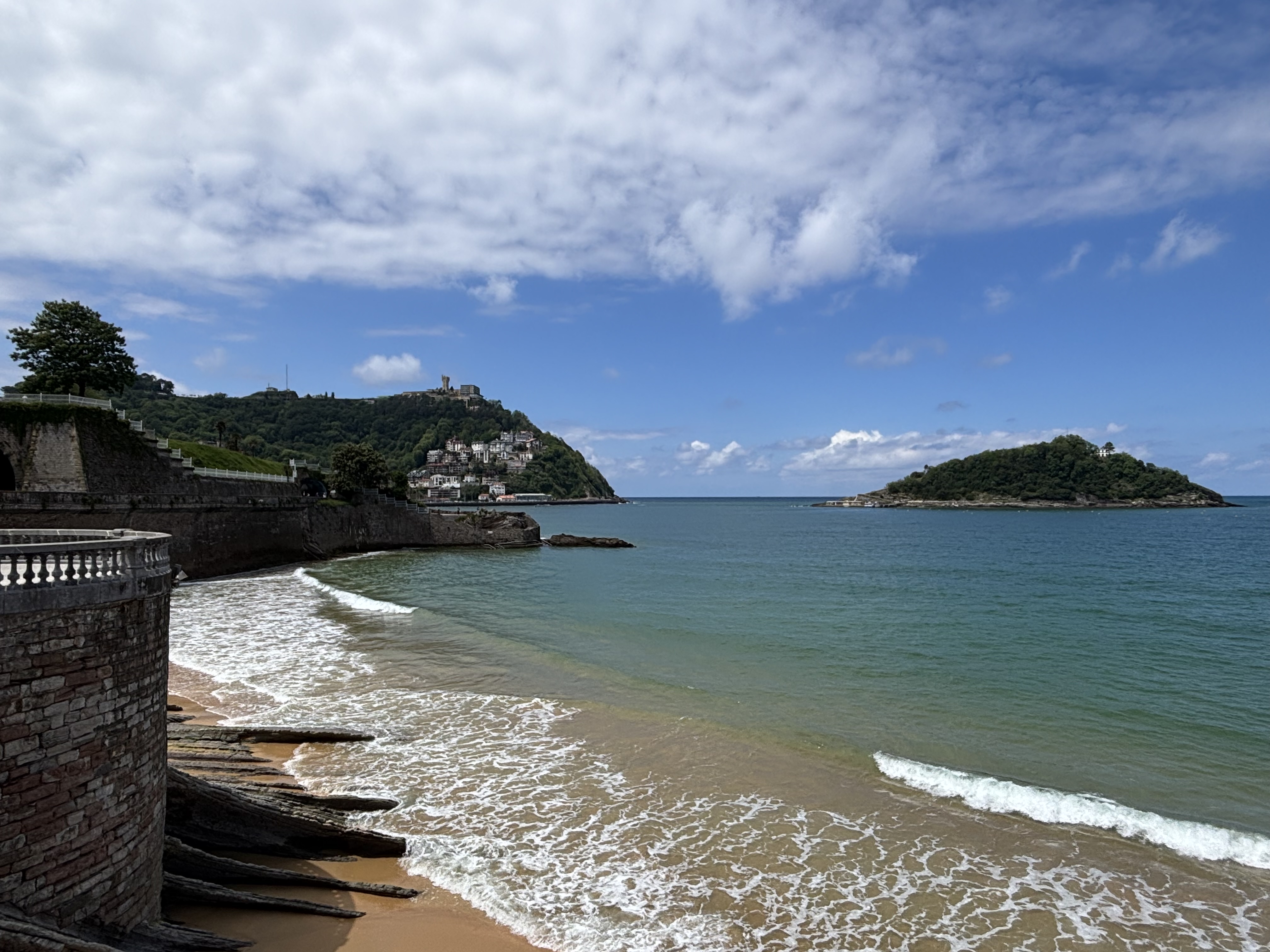
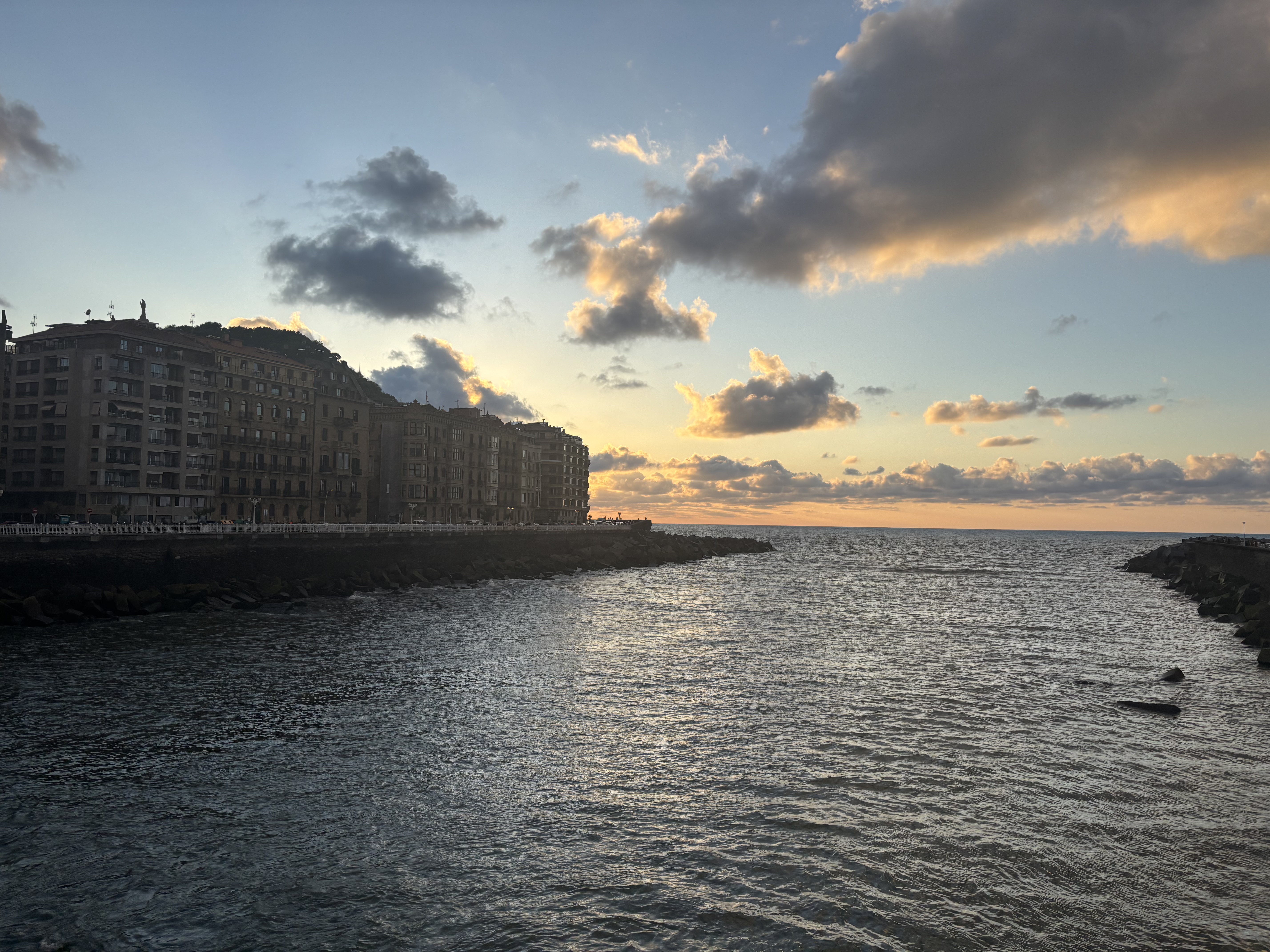
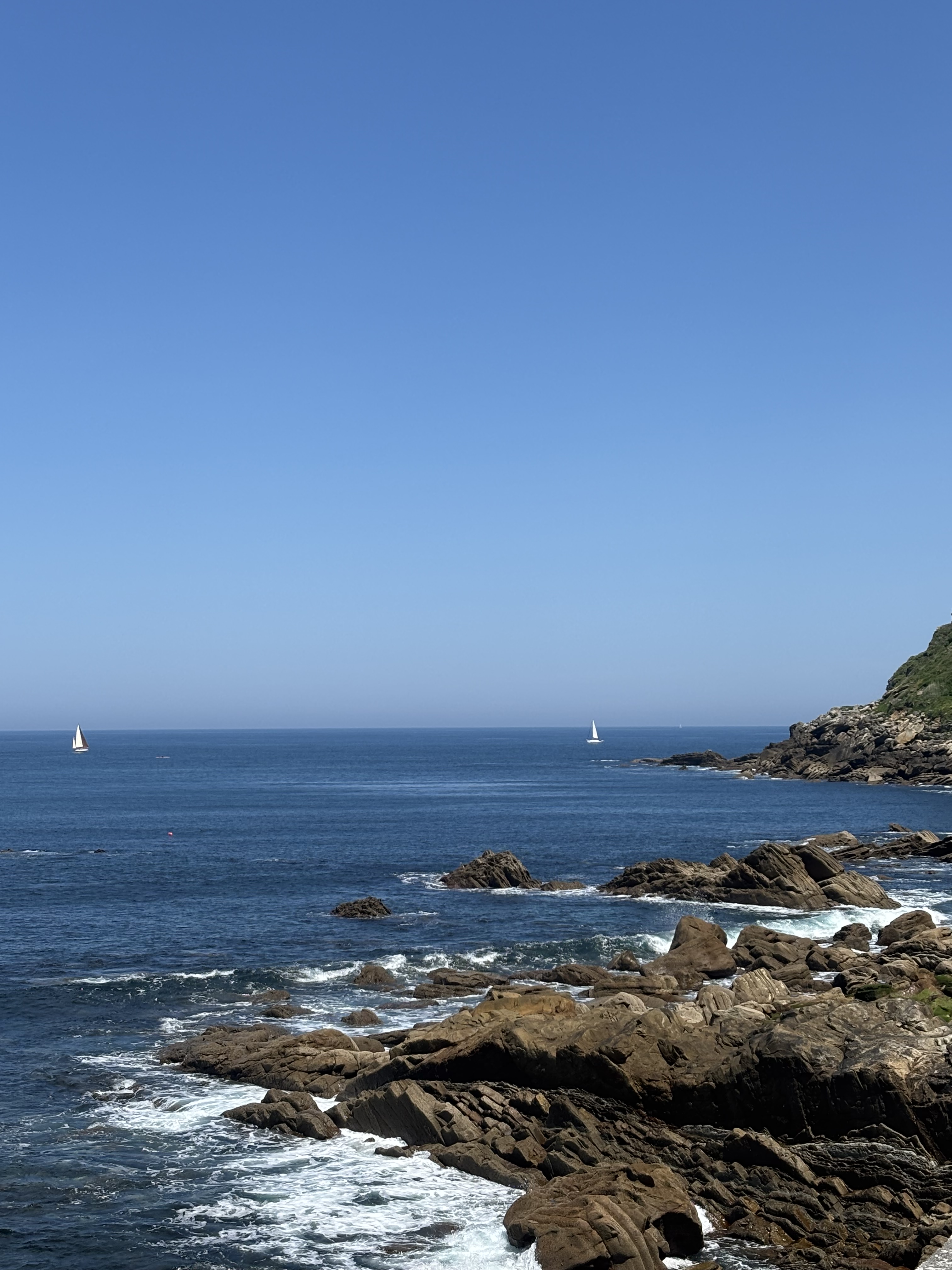
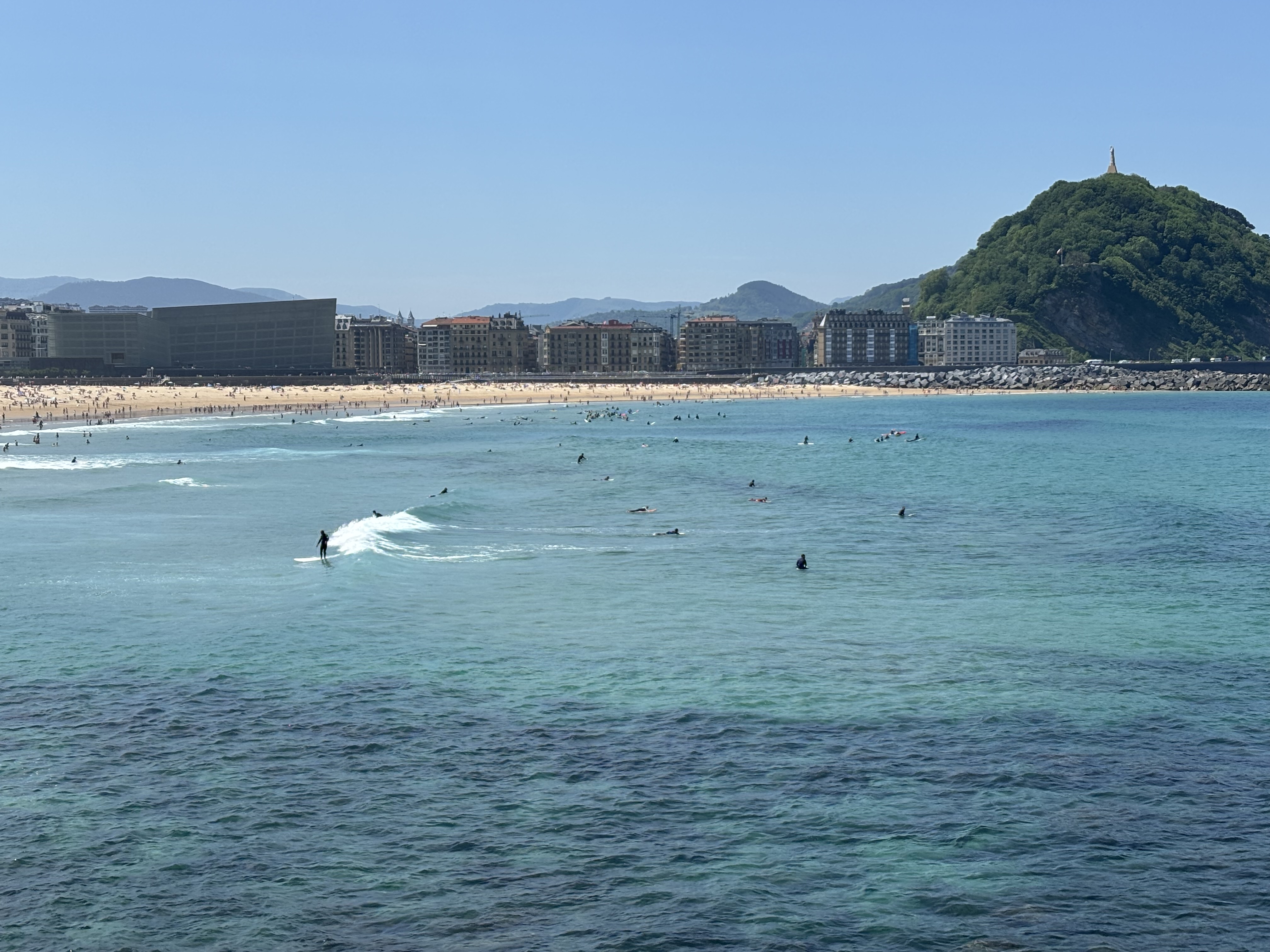
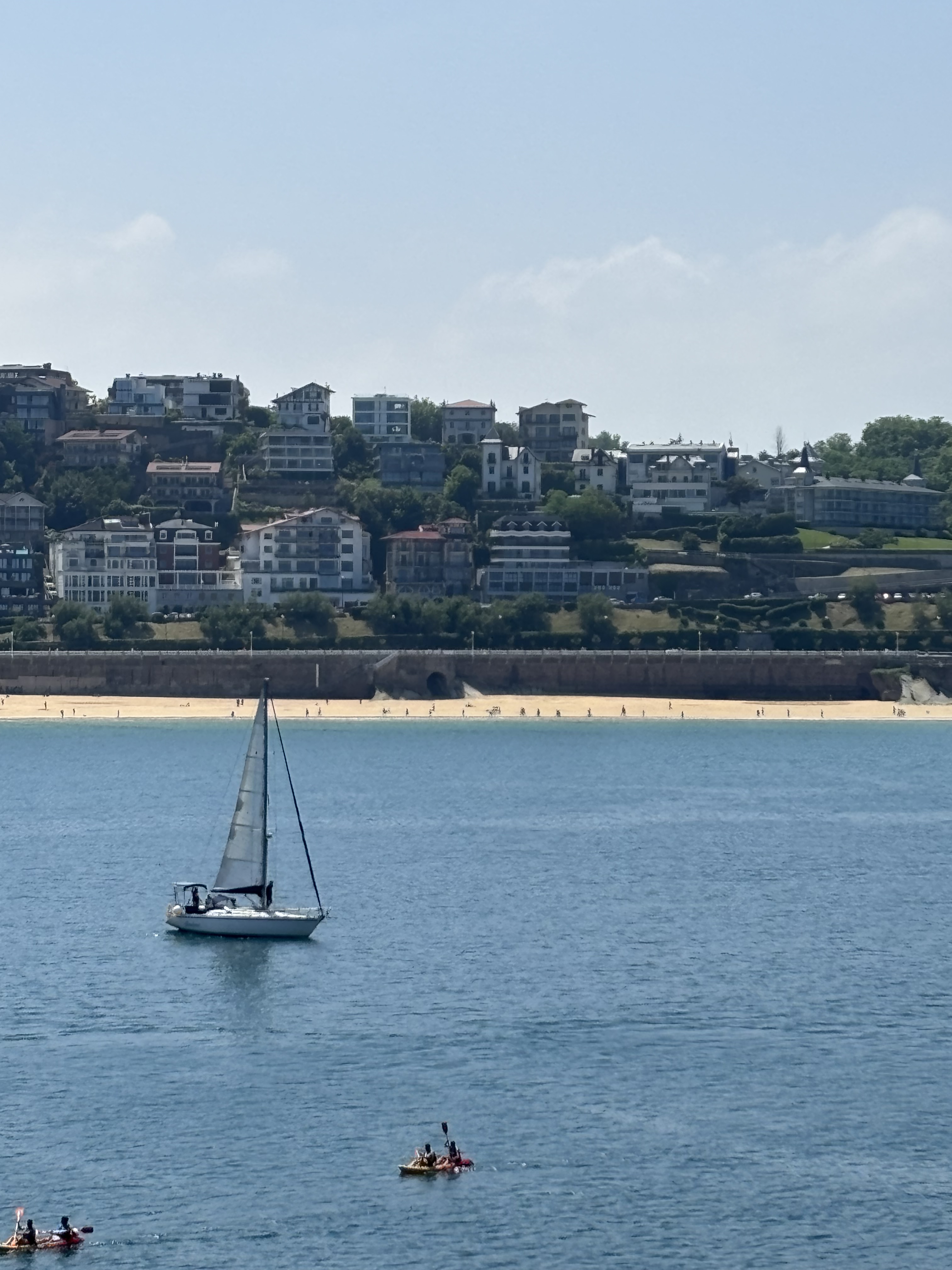
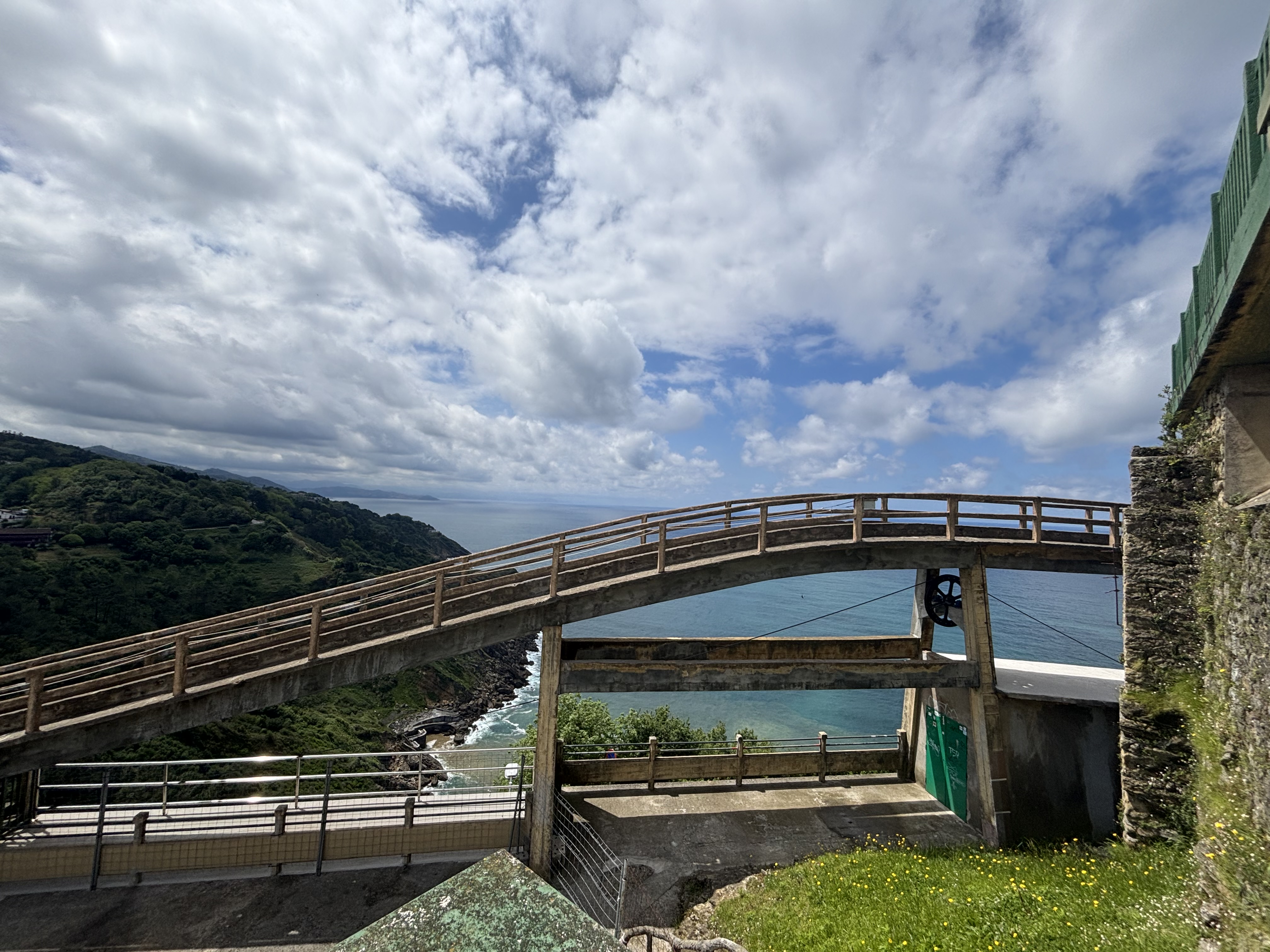
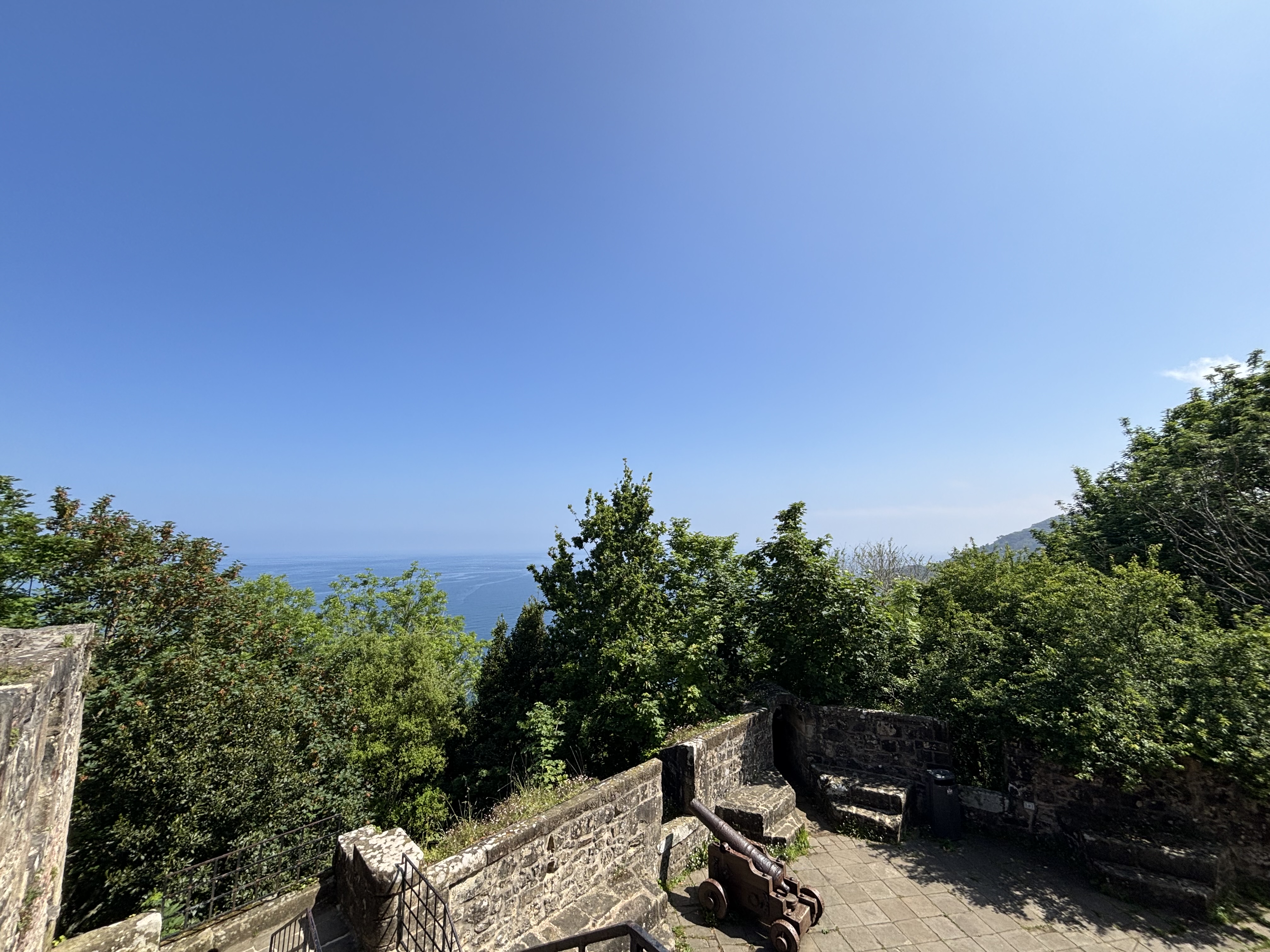
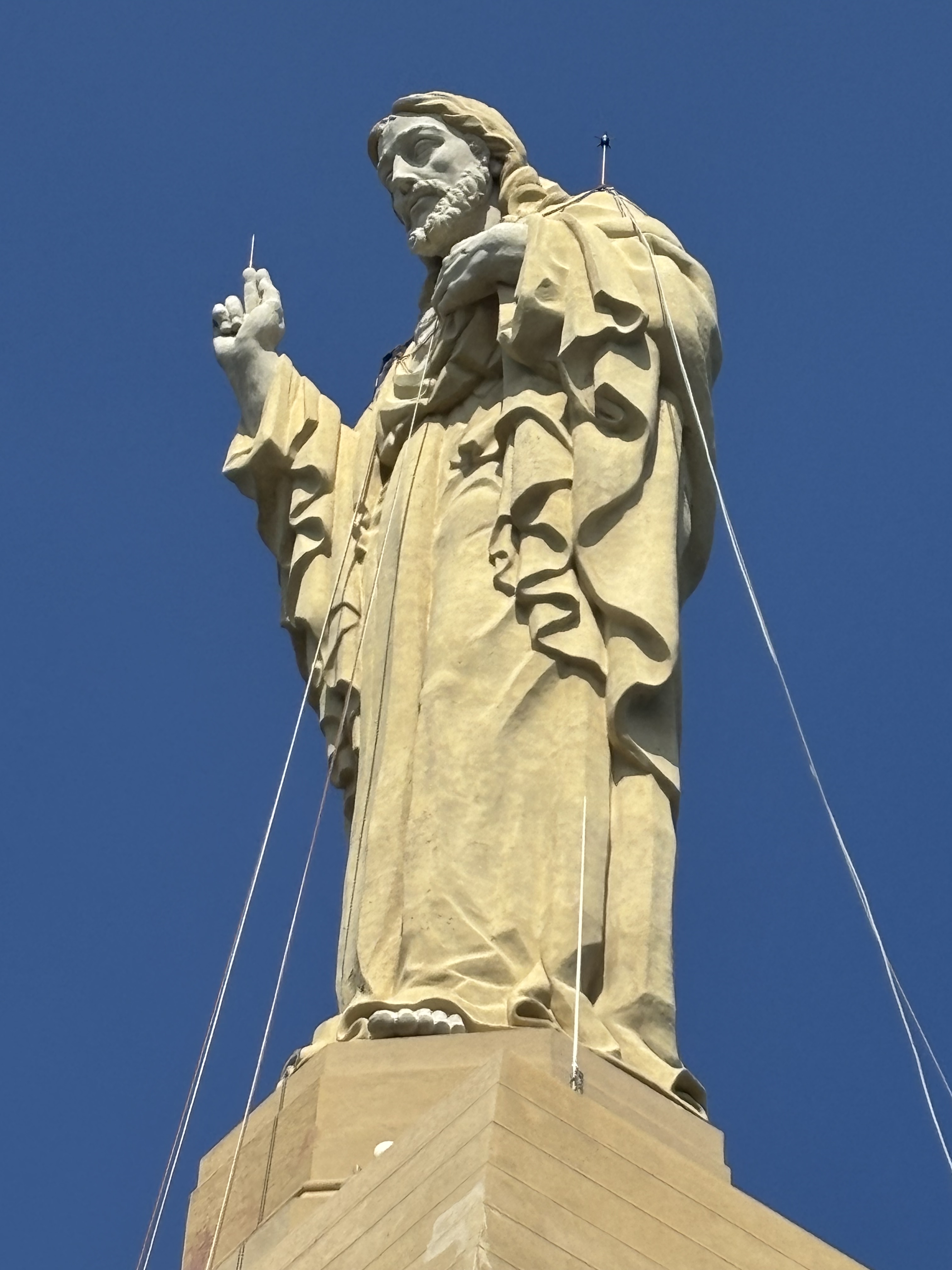
The mountain between the two beaches features a giant statute of Jesus at the very top, holding what looks an awful lot like a pintxo toothpick. Of course, there is a castle at the top, a bar and restaurant a little further down and a wide walkway at the bottom that goes all the way around the mountain. The mountain on the other side of La Concha is best reached by one of the oldest funiculars still in existence, and someone had the crazy idea to build a medieval-themed amusement park at the top. The mountain on the other side of Zurriola provides the most challenging hike to the top and rewards you with perhaps the most breathtaking views of the ocean and city below, but the views honestly are stunning from almost any vantage point.

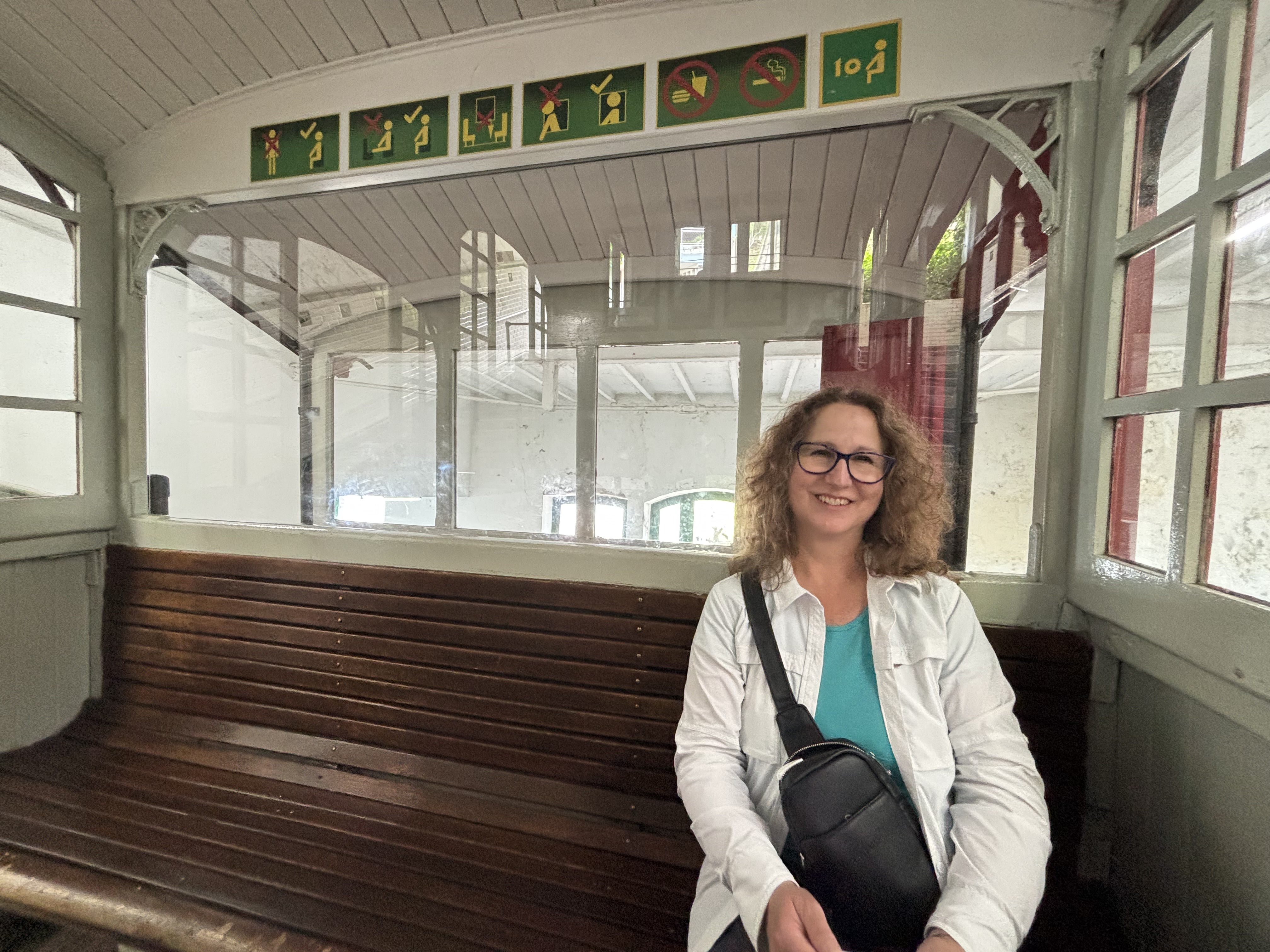
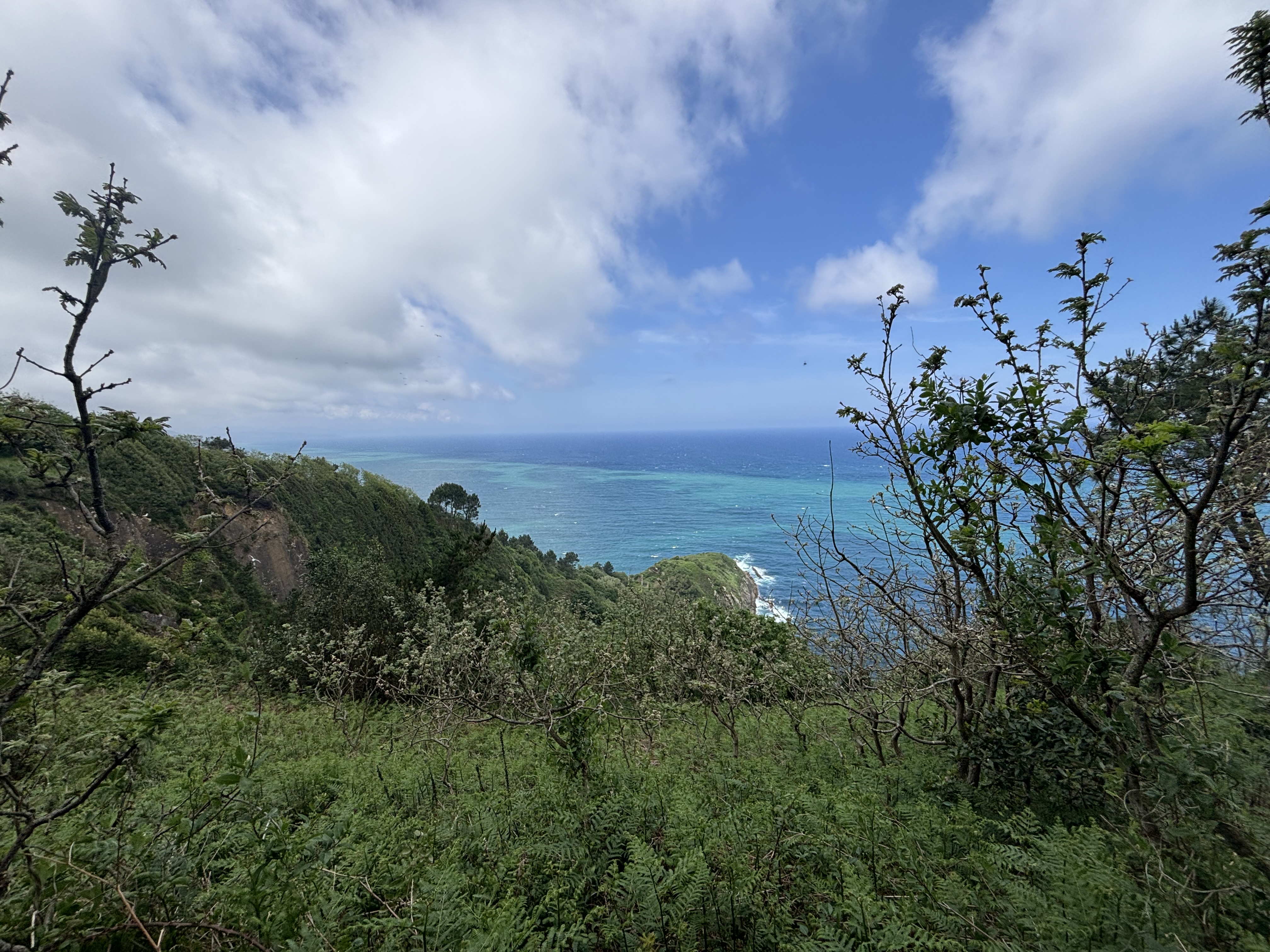
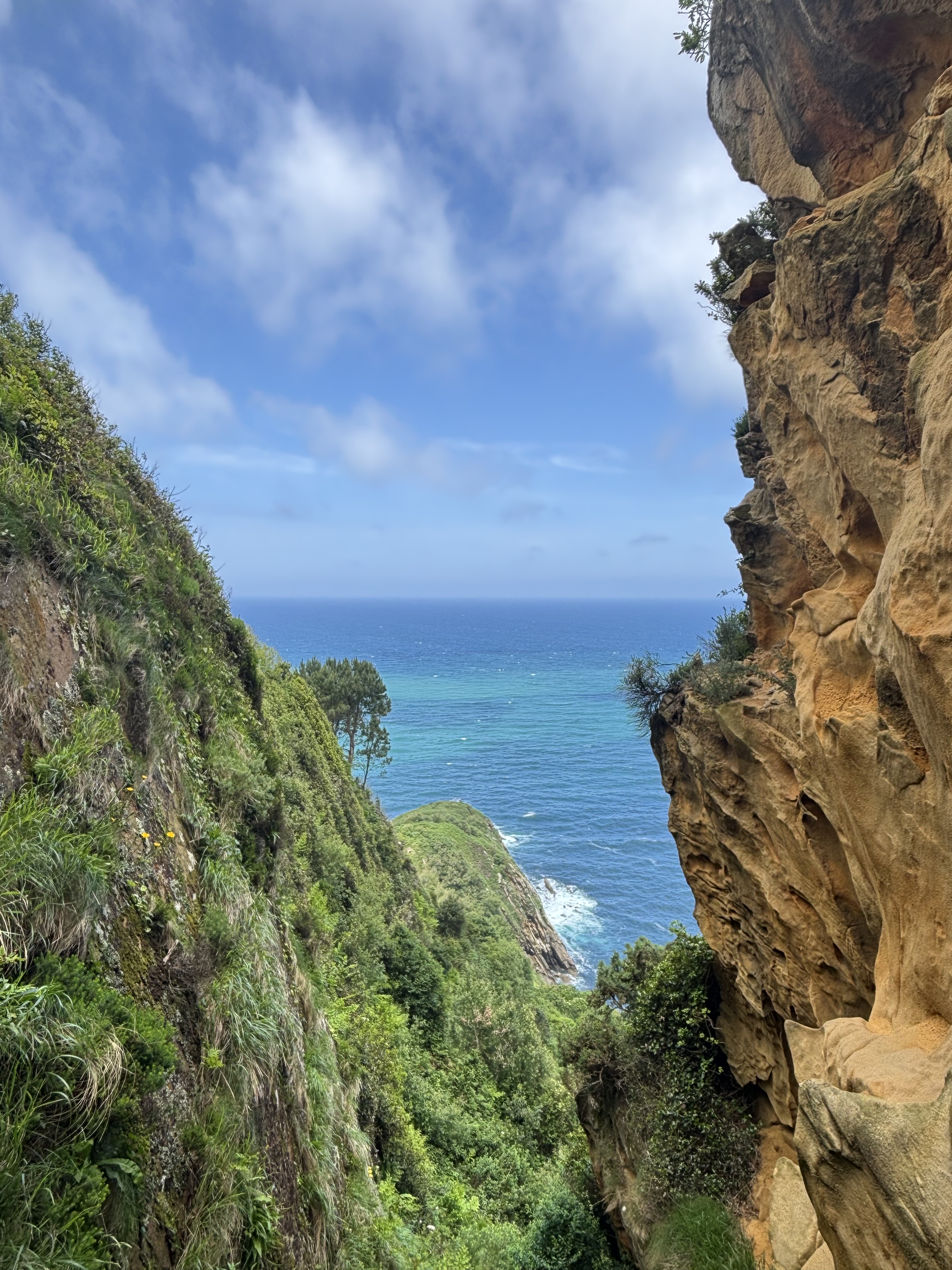

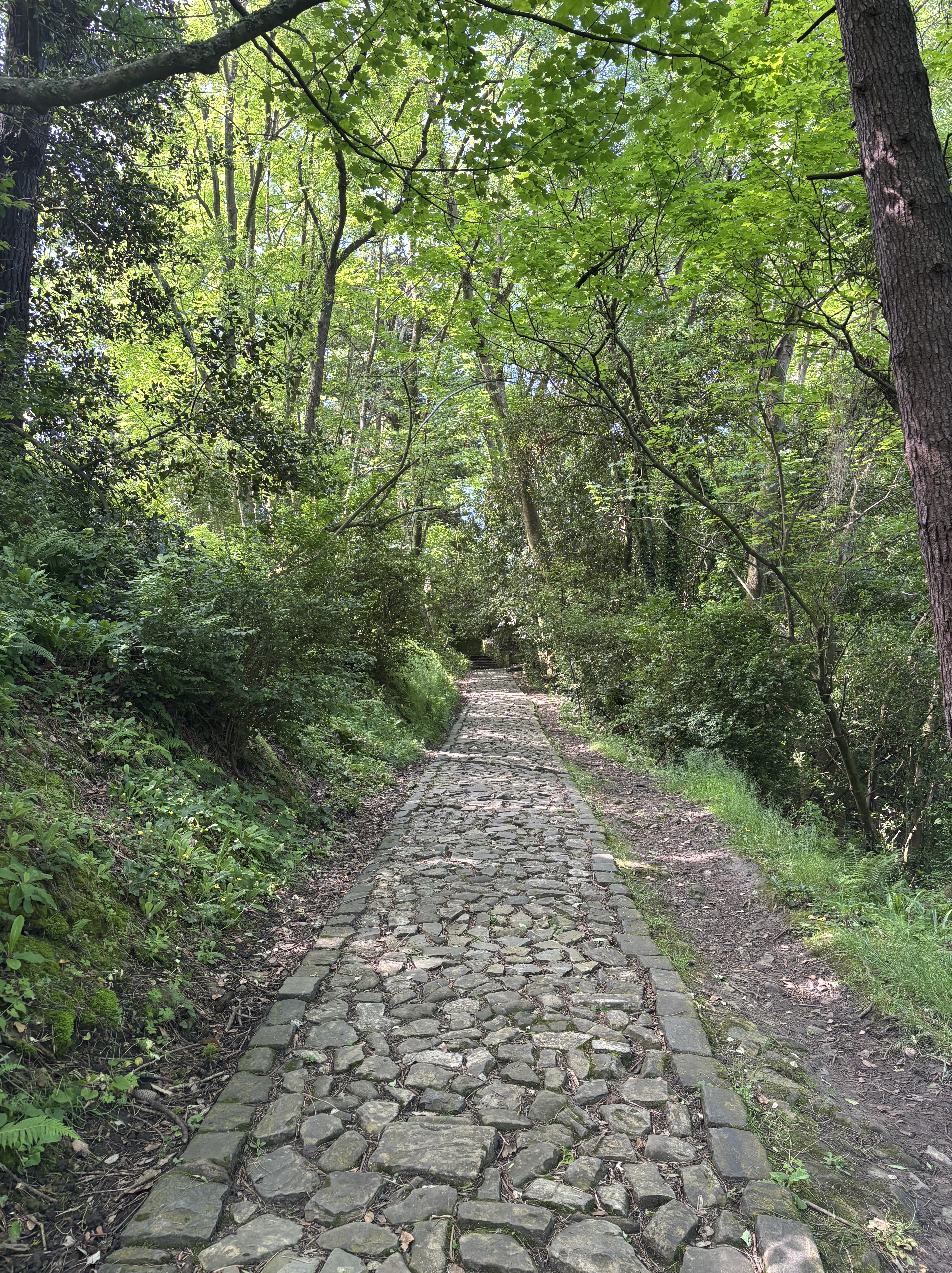
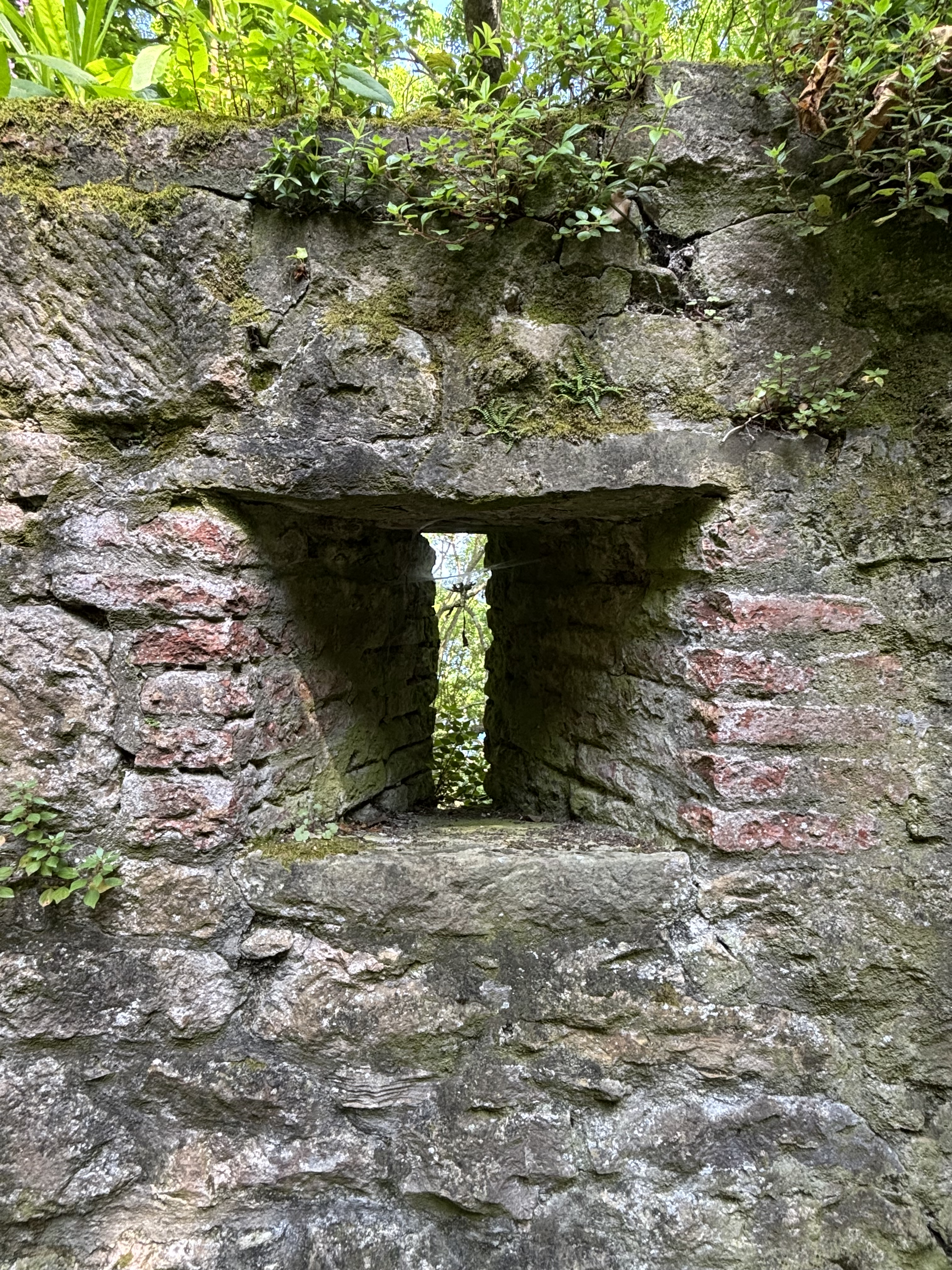
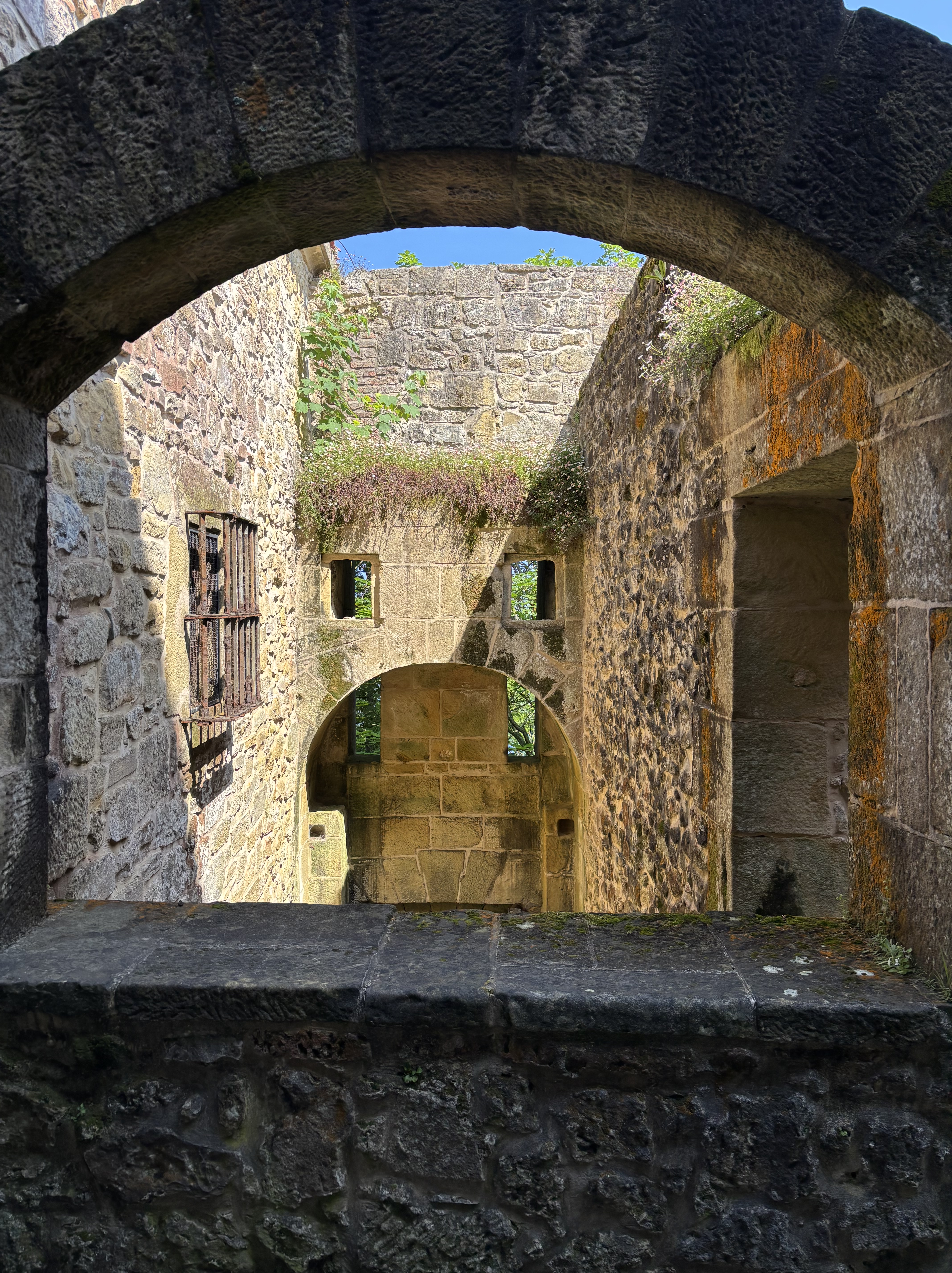
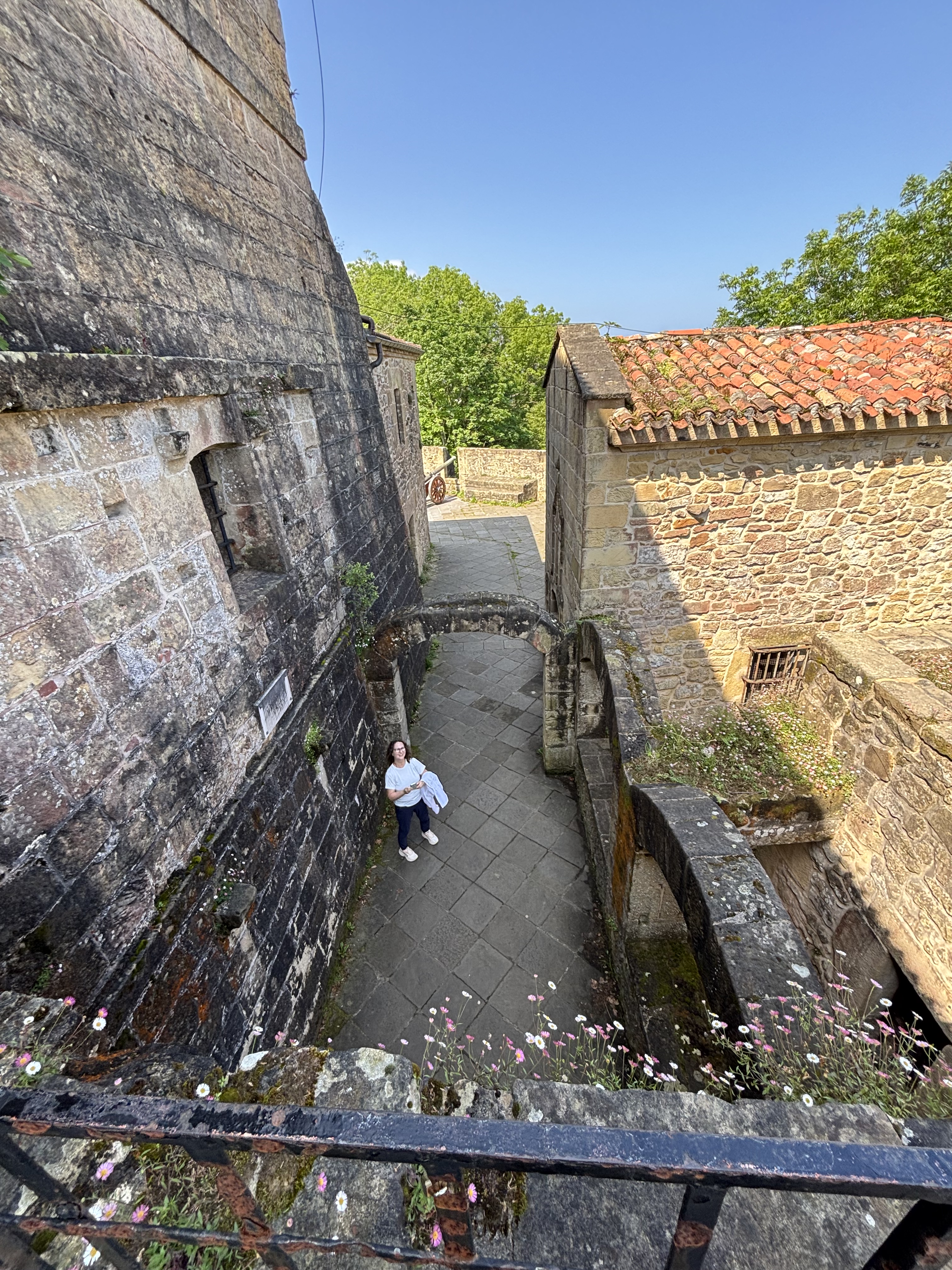
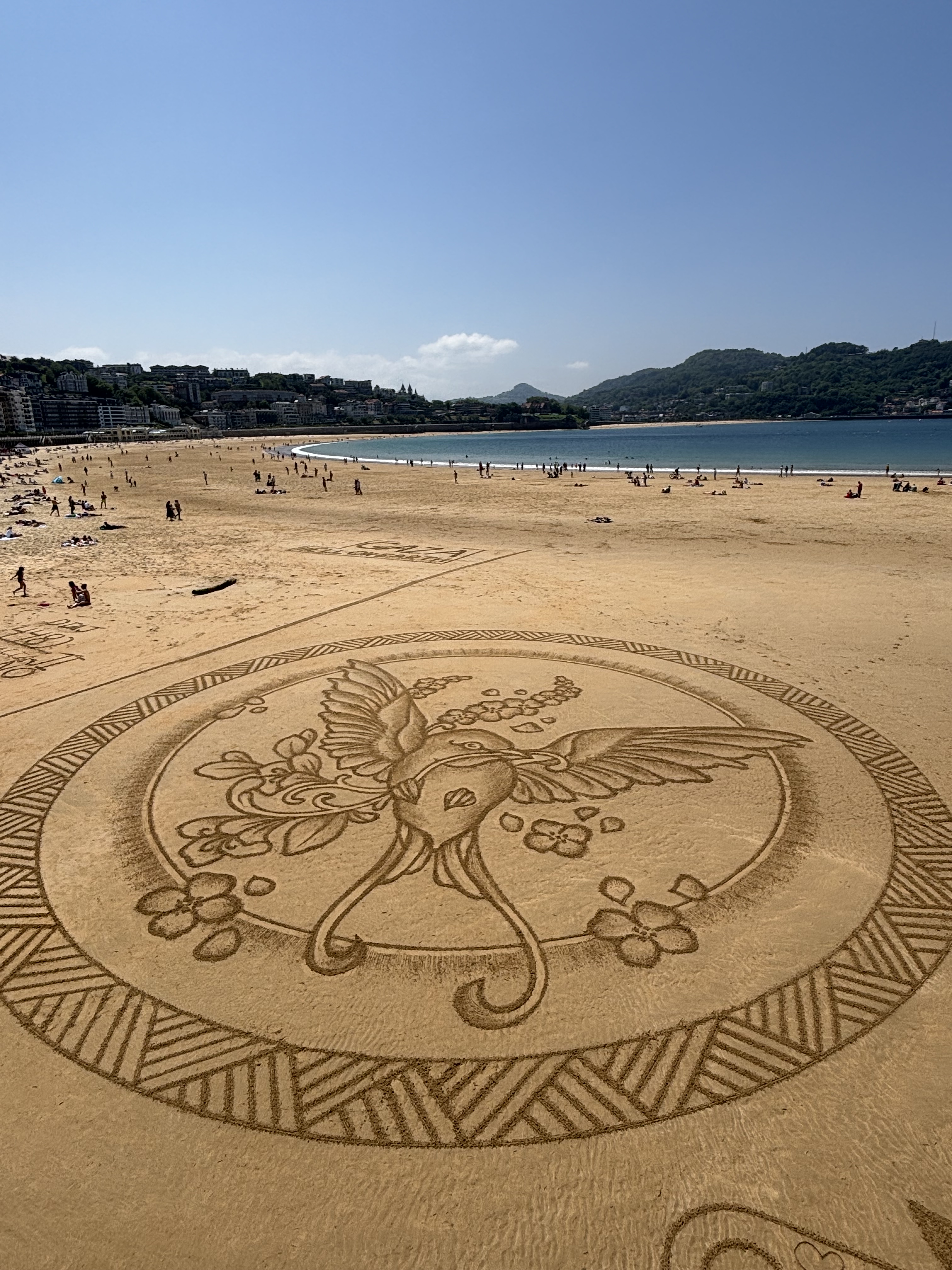
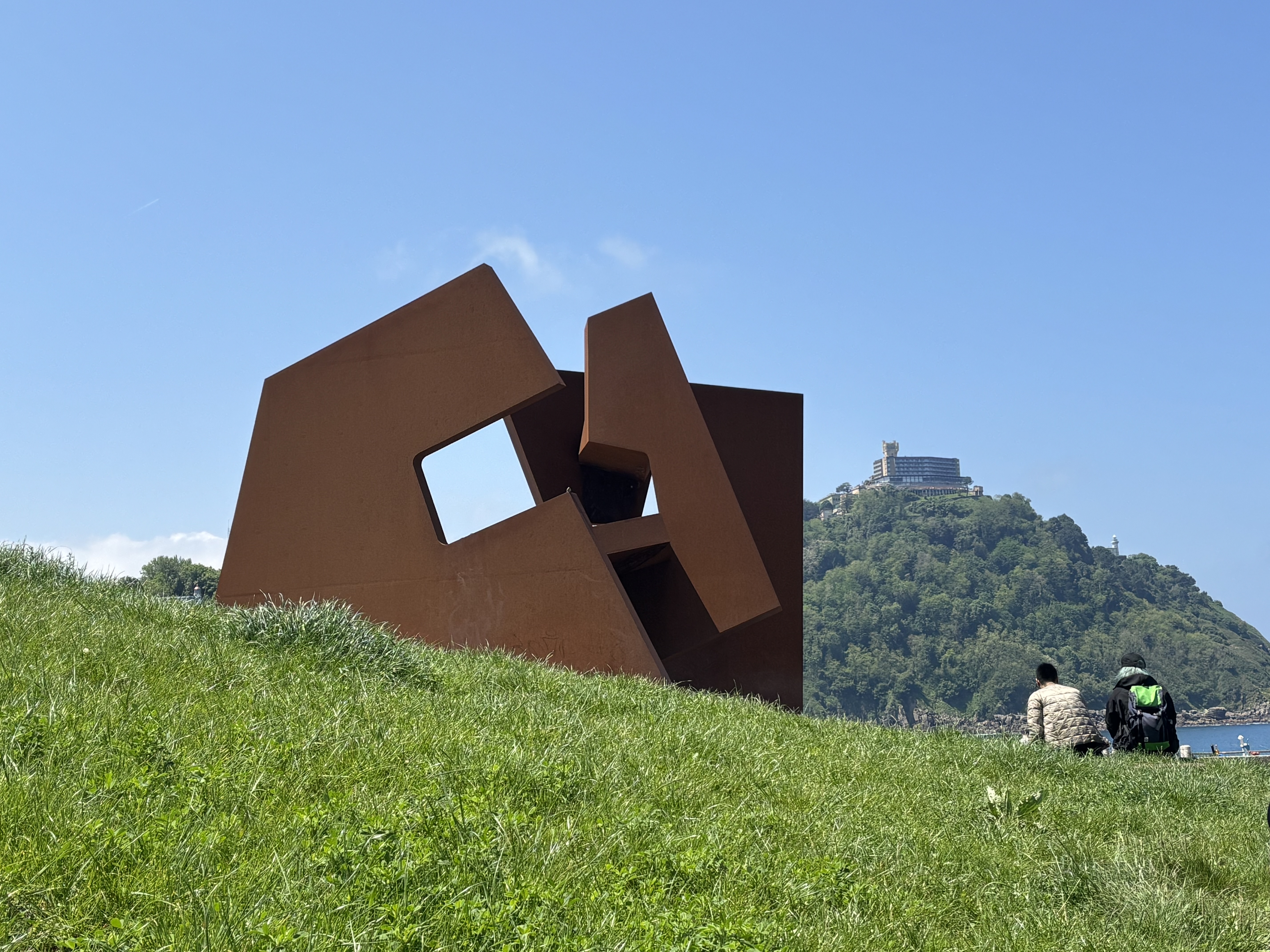
The art and architecture is quite enchanting too, with the latter consisting of a greatest hits from the last 200 years, as a conscious decision was made in the early 1800’s (after a fire destroyed everything except one street) to knock down the old city walls, expand the city’s footprint and market it as a highly desirable tourist destination. Mission accomplished. It became the favorite vacation destination of Spanish (and other) royalty in the late 1800’s, and they built some lovely palaces around town. These days, there’s not much sign of royalty, but it generally does seem to be a little posher class of tourist than you typically encounter on a beach vacation.
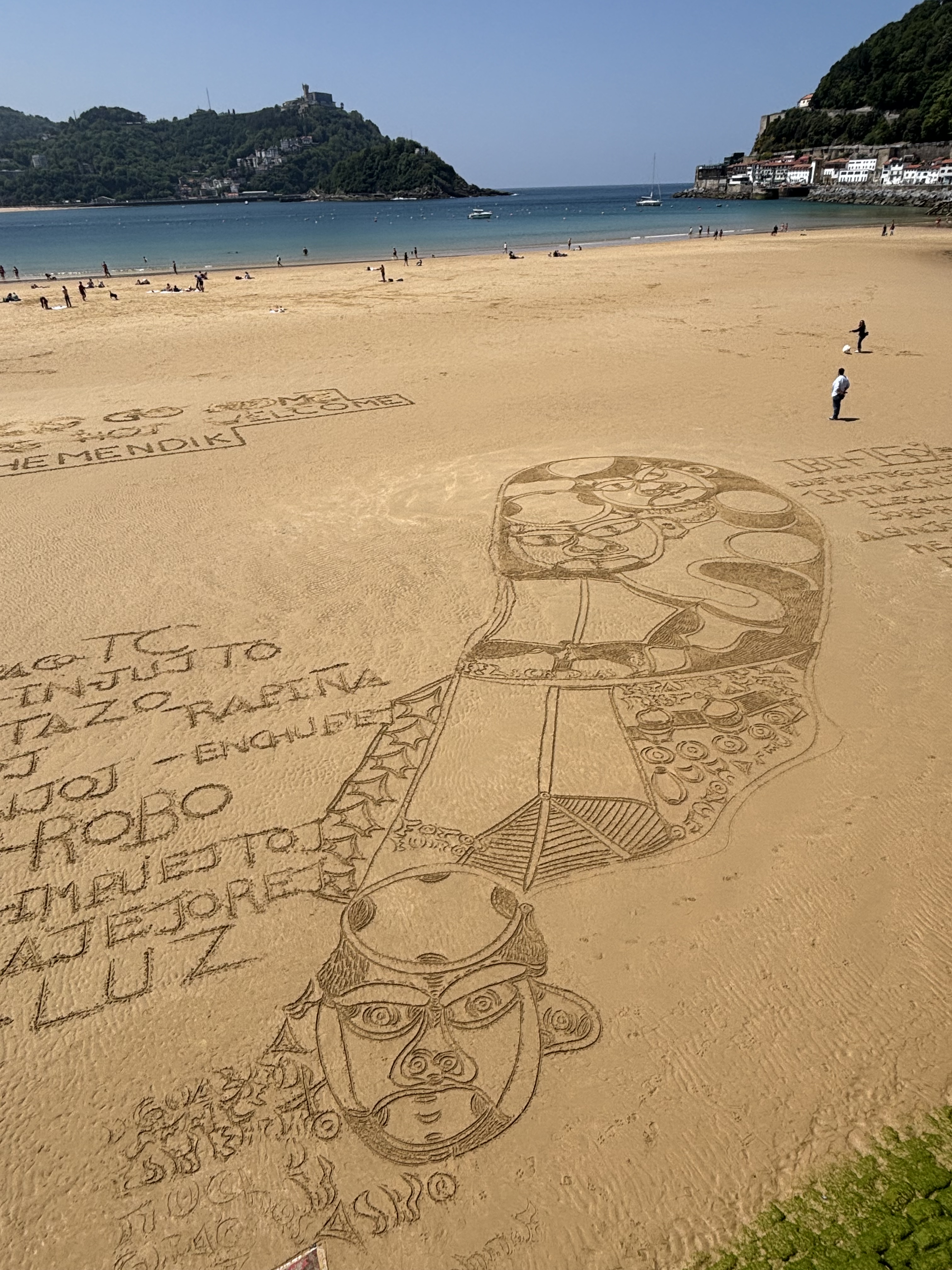
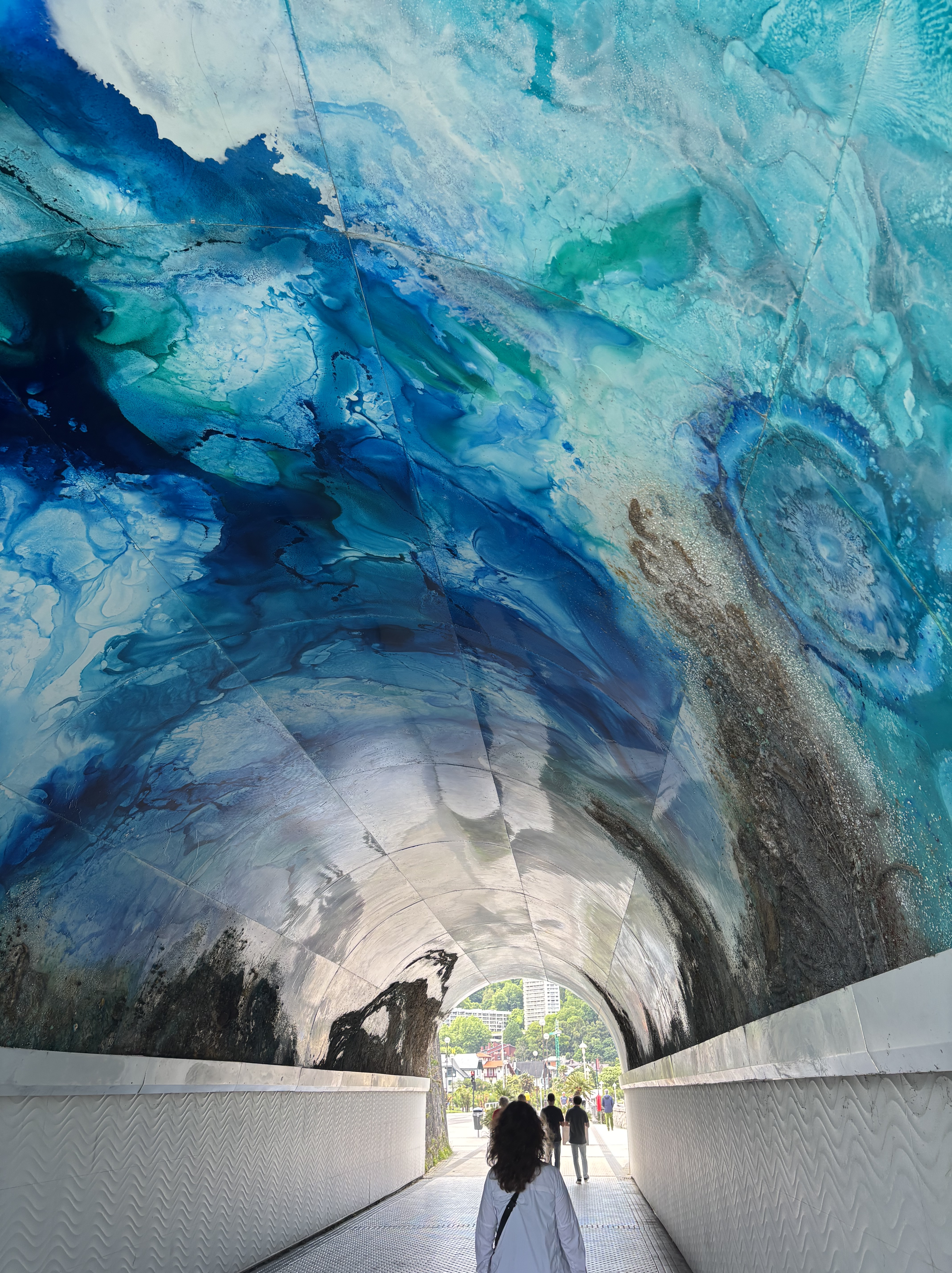
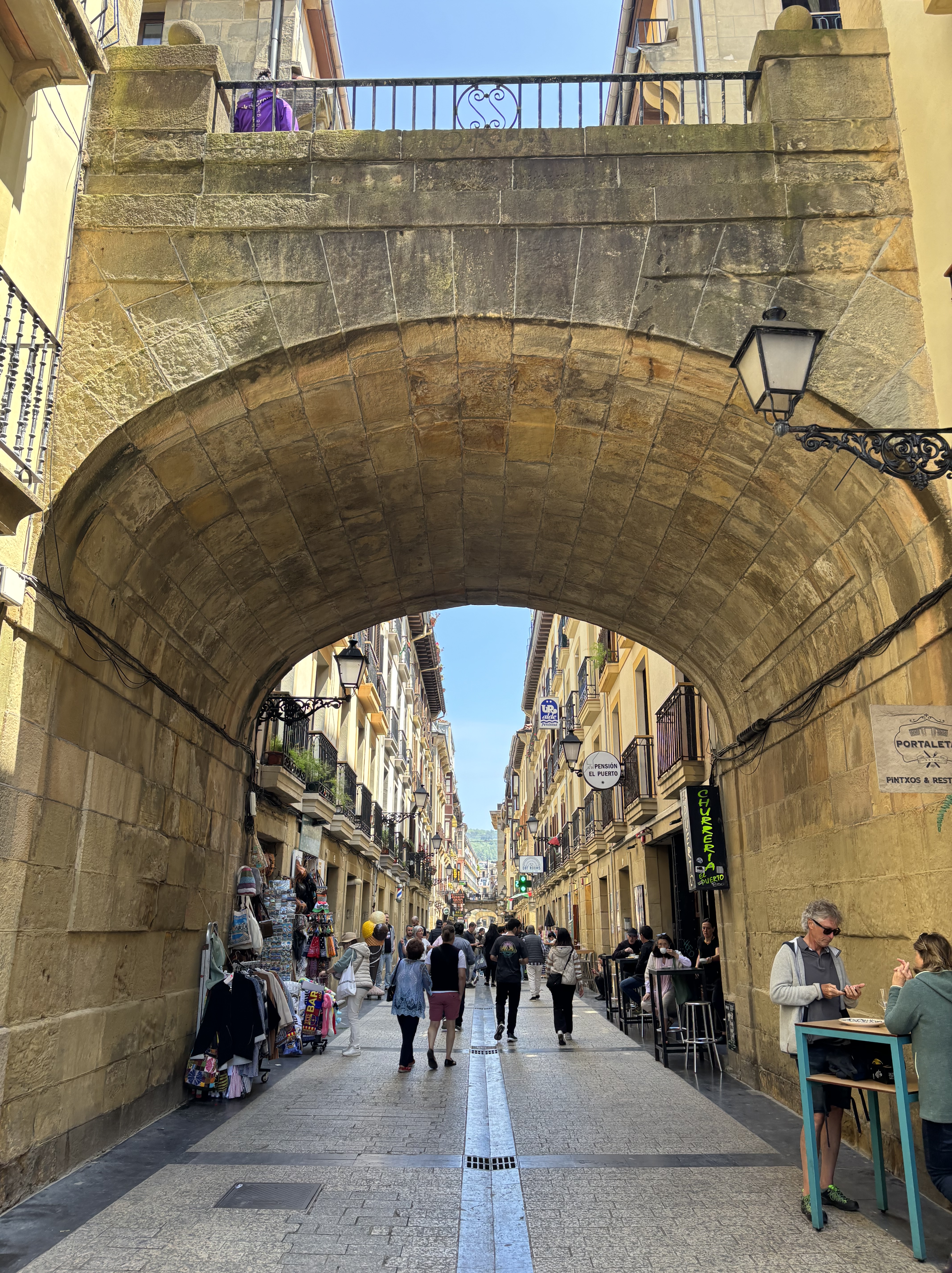
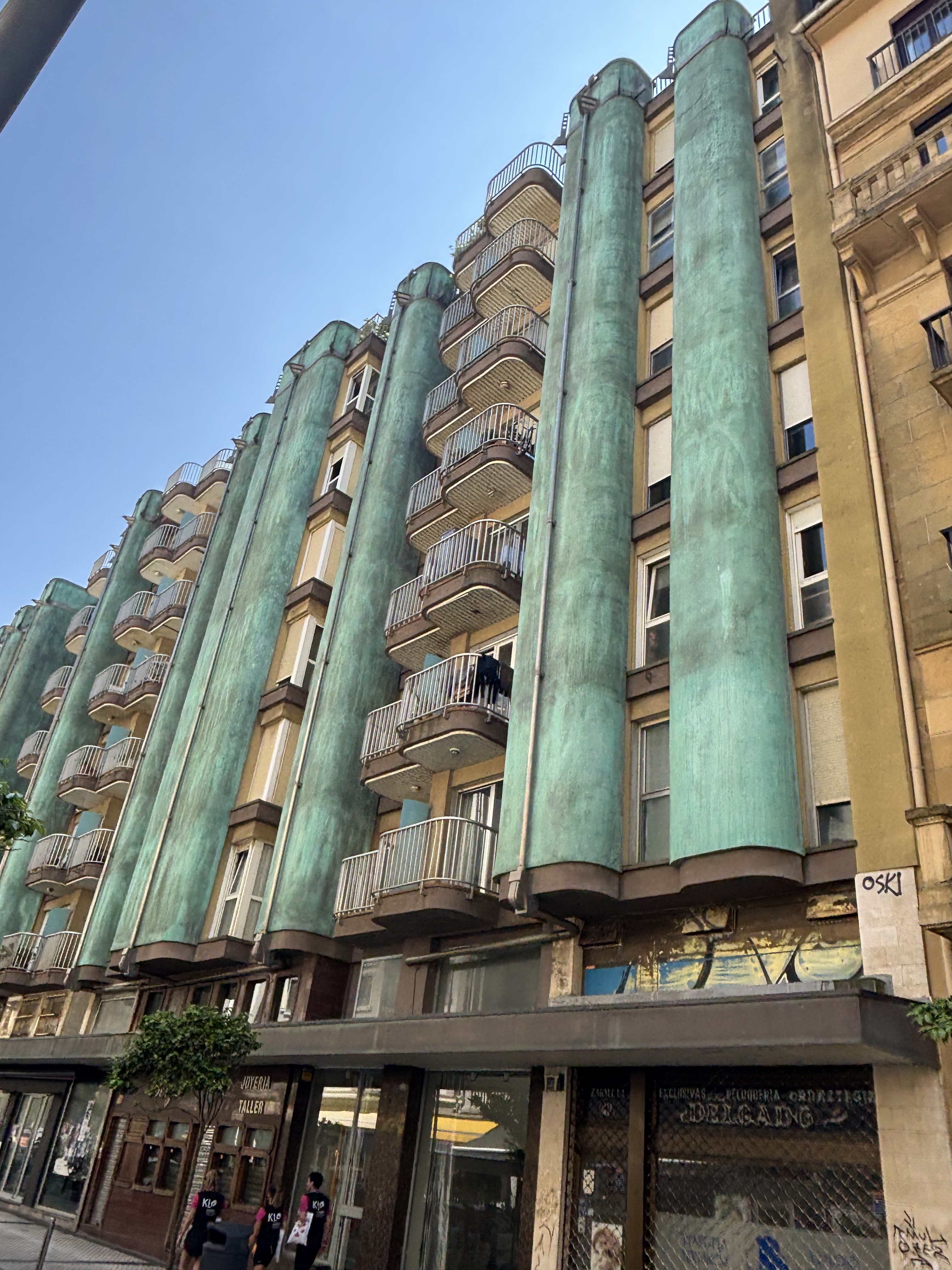
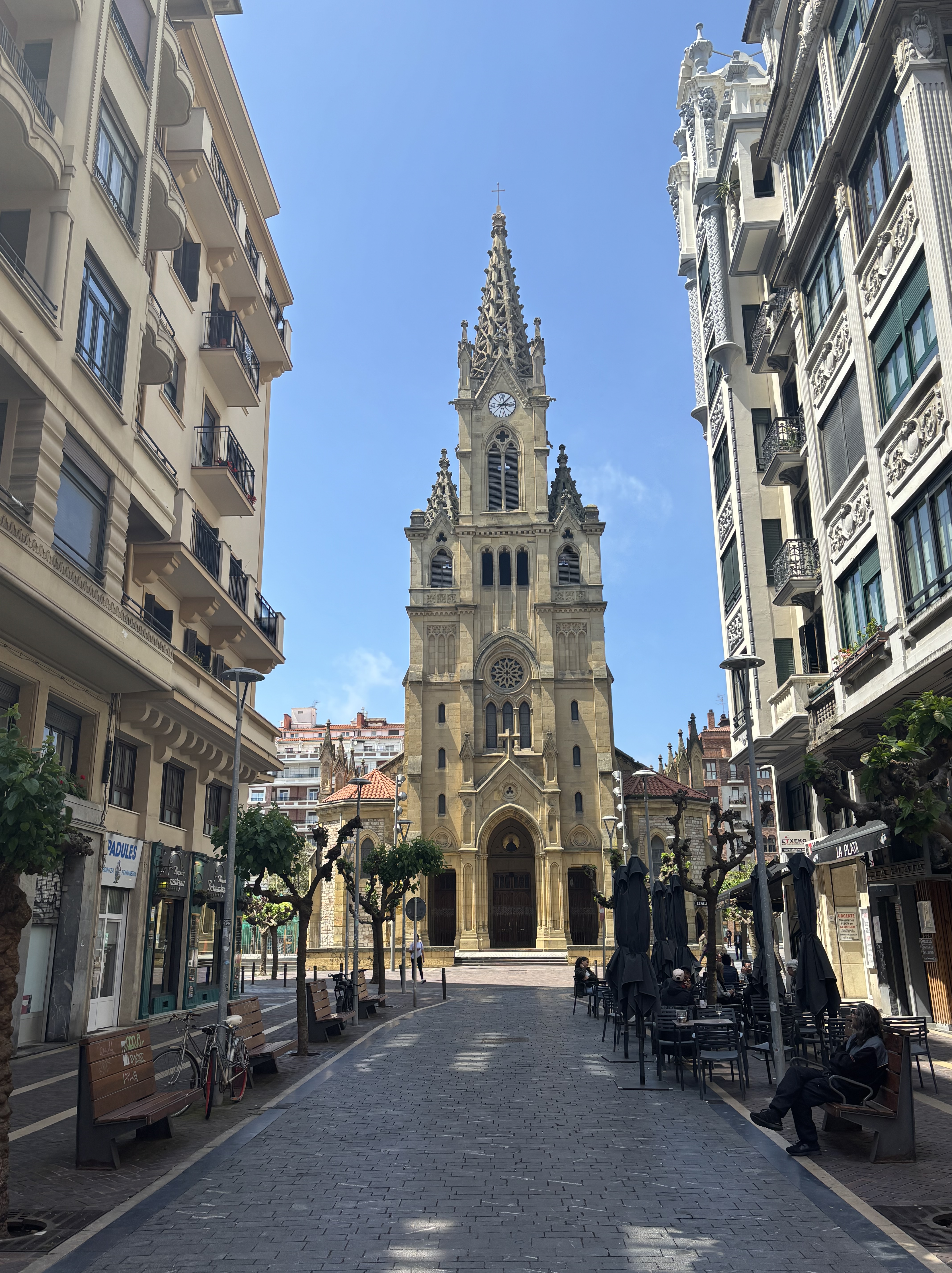
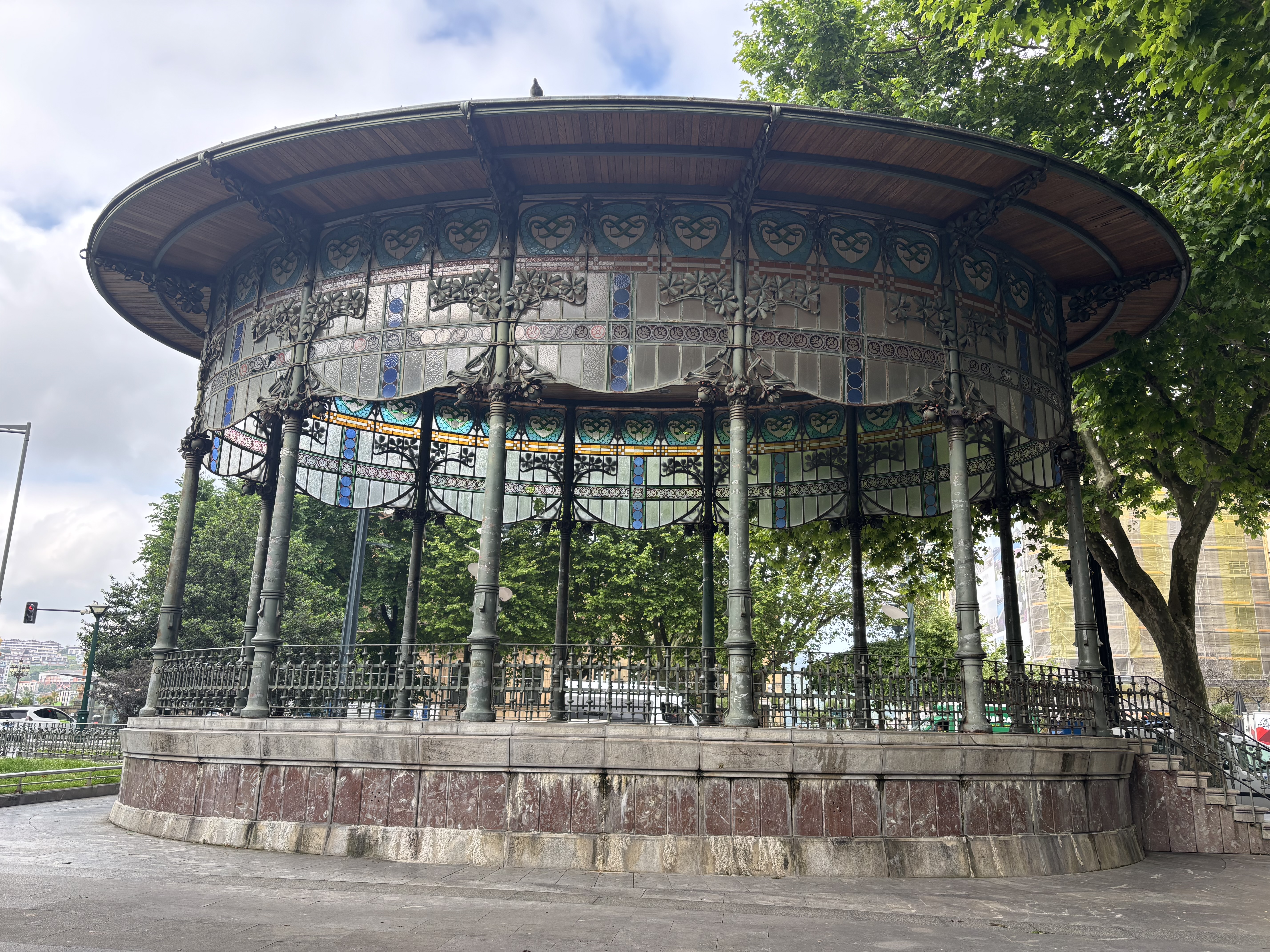
We say “generally” because the town was invaded for a couple of nights by loud, drunk, destructive British football fans who were here for the Europa League Championship match being played an hour away in Bilbao. The shopkeepers in the old town smartly closed everything early the night of the game so the little menaces had nowhere to go and no one to harass when they got back to Donosti. It was amusing to hear them roaming the streets at midnight trying to figure out what happened.
We have really enjoyed roaming the pedestrian streets of Parte Viejo (the old town) and Gros. The weekends are particularly exciting because you never have to wander far to stumble into live music and dancing. We are staying in PV but have found that we prefer the vibe of Gros. PV is flooded with tourists from around the globe, which detracts a little from the charm factor. Gros is mostly filled with locals, plus a smattering of Spanish tourists and hipster nomads. It is very difficult to find a seat anywhere in PV, but there is a decent amount of indoor and outdoor seating in Gros. Centro is more of a shopping area, so we don’t dwell long there. We haven’t made it to the outlying neighborhoods yet, primarily because they are a (relatively) long walk from our AirBNB and Uber does not exist in Donosti.
But about that food. The dining scene here really is special. It is different from anything we’ve experienced elsewhere in our travels. Affordable, non-touristy, sit-down restaurants are nearly impossible to find in the old town. (We have yet to find one we prefer over a pintxo bar.) Sure, there are plenty of high-end, super-expensive Michelin-starred restaurants in the area. Donostia-San Sebastian boasts the second-most Michelin stars per square kilometer in the world (only behind Kyoto, Japan). That’s 18 stars spread among 10 restaurants within a 10-minute drive of a city about half the size of Tulsa, Oklahoma. But that’s not what we’re here for and is not what we’re talking about.
Pintxo culture is unique but polarizing. Pintxos are similar but unequivocally different than tapas. Pintxos are small portions, often even a little smaller than tapas. (The word originates from the toothpick that traditionally held them together.) We’re told that tapas often come free with a drink in some parts of Spain, but you always pay for pintxos. That said, pintxos are cheap – typically between 2 and 5 Euros each. And the ingredients and technique that frequently go into them are of an exceptional quality. To find new places to try, we rely quite a bit on “Pinxto,” a not-very-creatively named phone app curated by chefs of local Michelin-recognized restaurants that attempts to identify the 99 best pintxos in town at any given time. (The overwhelming majority of bars never make the list, but many are still quite good.) We have had some truly amazing food for less than $5 that equals anything we can find at home at any price point. It really drives home just how bad the price inflation at most restaurants has become.
The polarizing part is how challenging it can be for newbies to figure out the process. You usually have to elbow your way through a crowd to place an order at the bar. Do not expect an organized queue. Table service is simply not a thing in old town pintxo bars, and you should not expect to find a seat. Protocol is to order one drink and eat one or two pintxos relatively quickly, standing at the bar, then pay and move on to the next bar. The bartender usually doesn’t ask your name, give you any kind of ticket or expect you to pay until you are finished eating. They almost all speak impeccable English and will help you if asked, but you need to be decisive when you order or they will move on to someone else. Despite the massive crowds, they somehow always know who you are and what you ordered when you return to request la cuenta. No tip is expected. When ordering, it’s also important not to get distracted by the cold pintxos on display under glass along the bar; you want the hot dishes that are made to order in the kitchen, but the only way to order those often is to read the handwritten scribbles on the chalkboard, which are rarely translated into English or sufficiently legible for Google Lens to save you.
Unfortunately, Stuart gets so excited about every plate put in front of him that he has failed to take many pictures of the culinary craftmanship. And some of the tastiest stuff is hidden in rather unassuming packaging anyway. We will teach Stuart to be more patient when eating over the next couple of weeks and hopefully will have some delectables to share on the globalslowmad Instagram feed. But for now, we’re off to conduct more important research.

 The Global Slowmad
Leave a comment