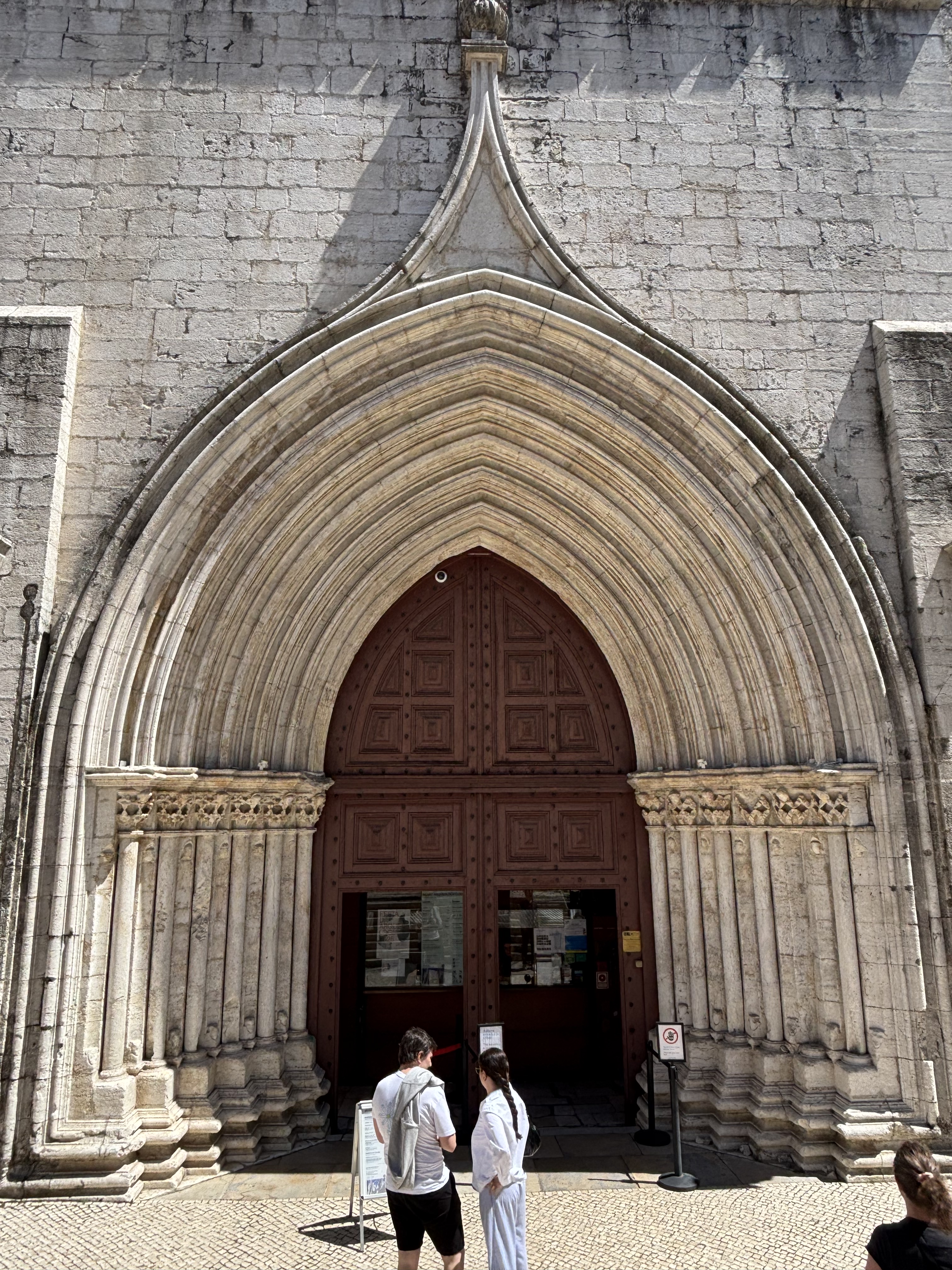
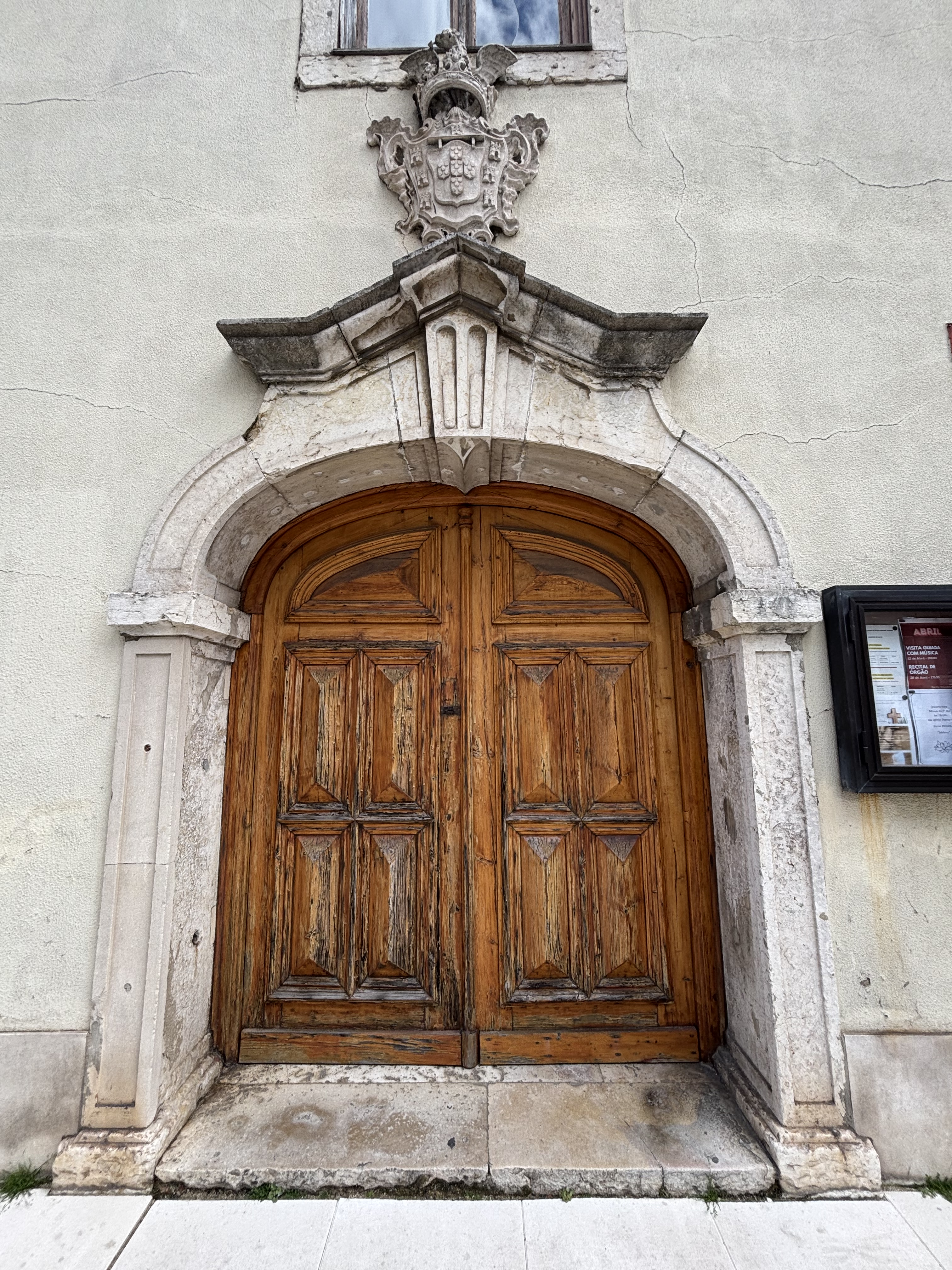
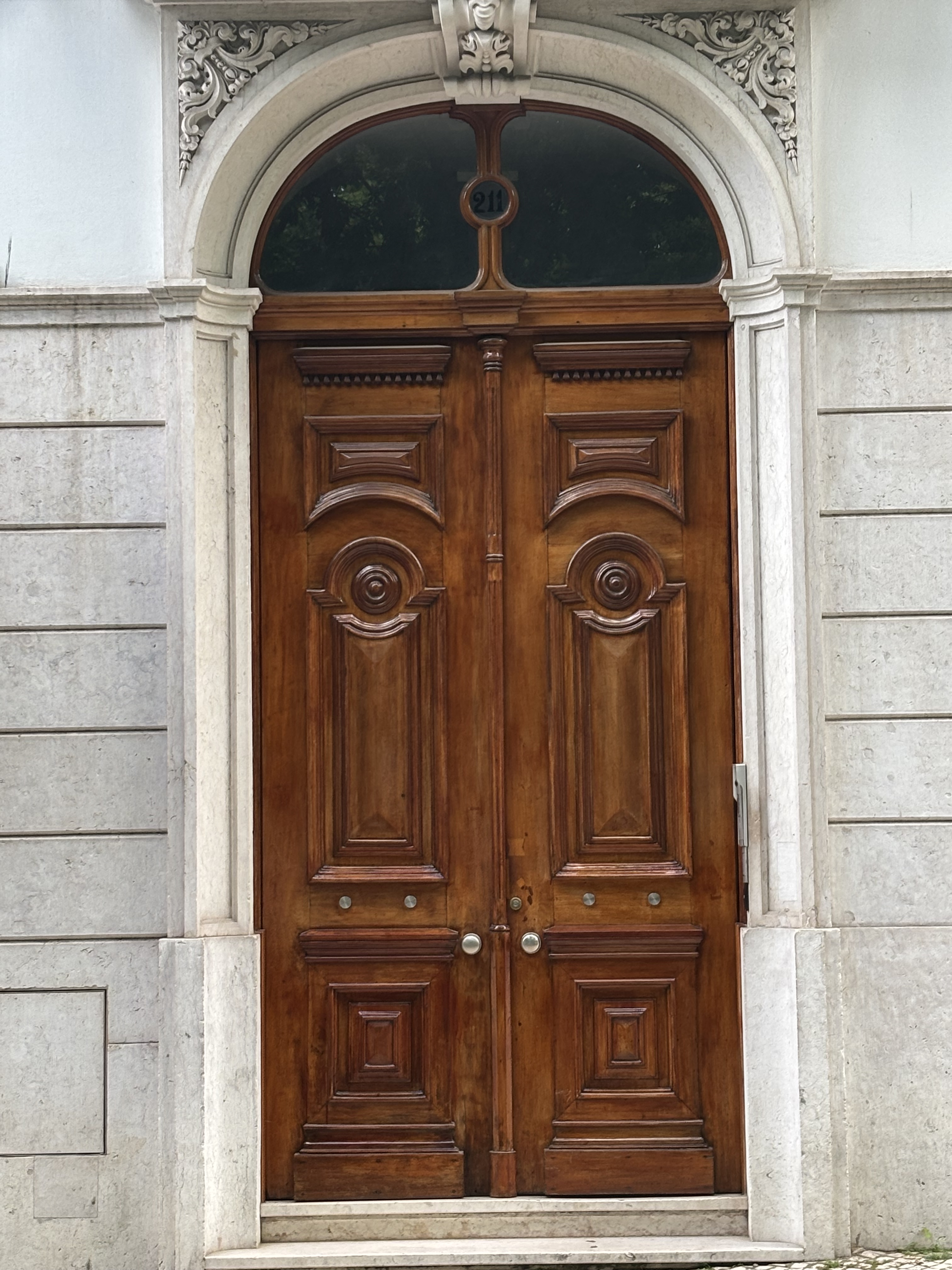
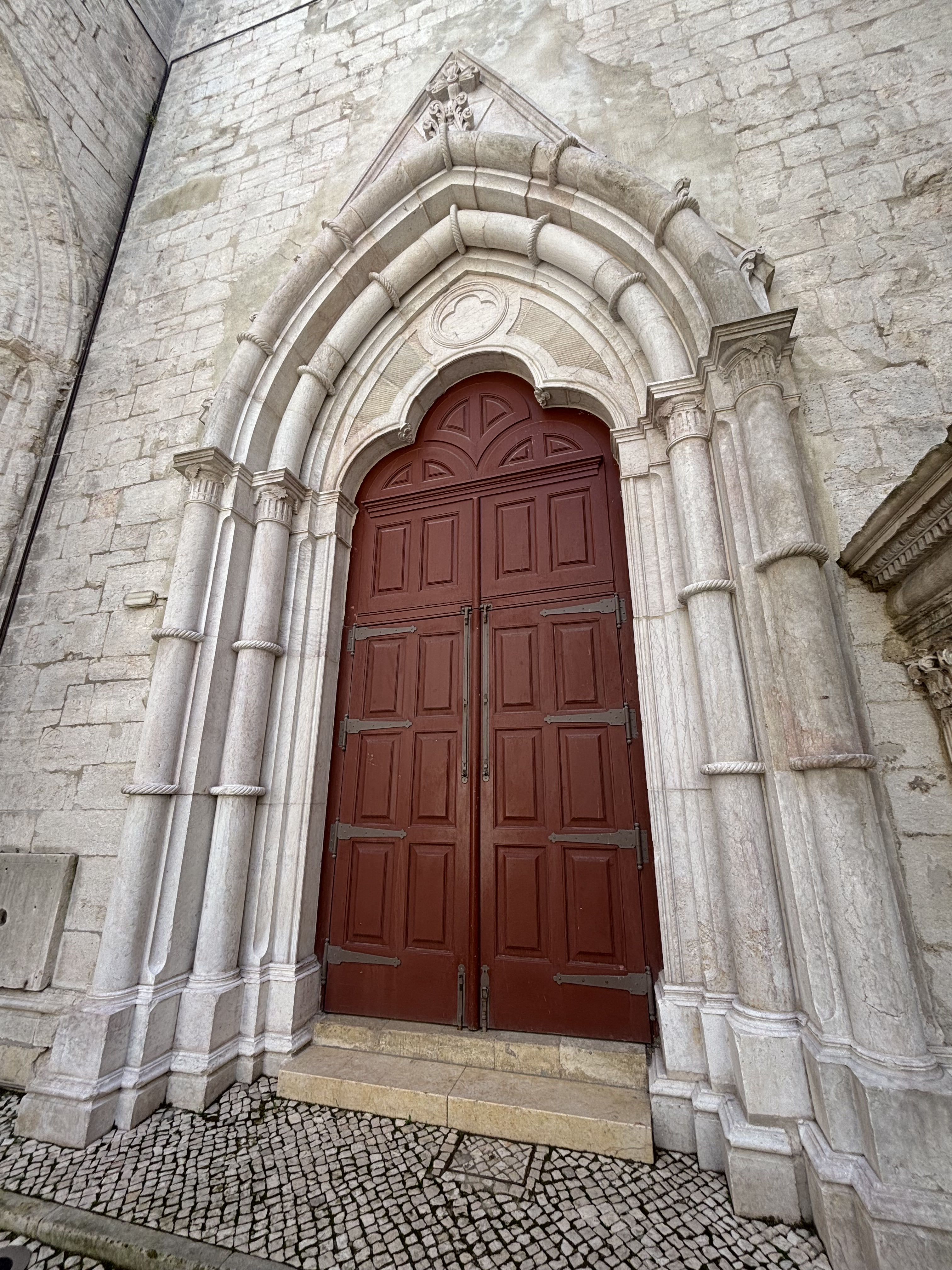
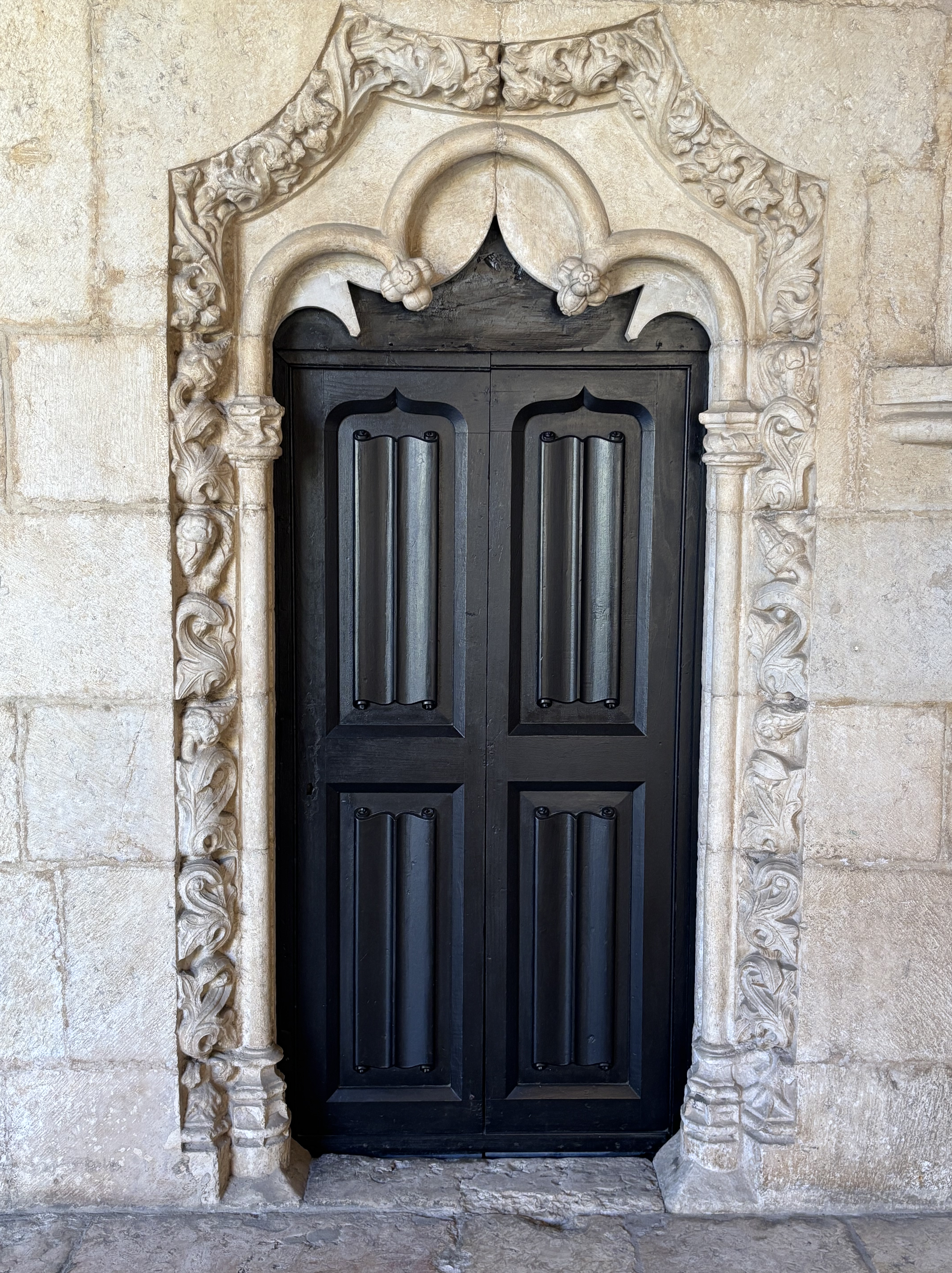
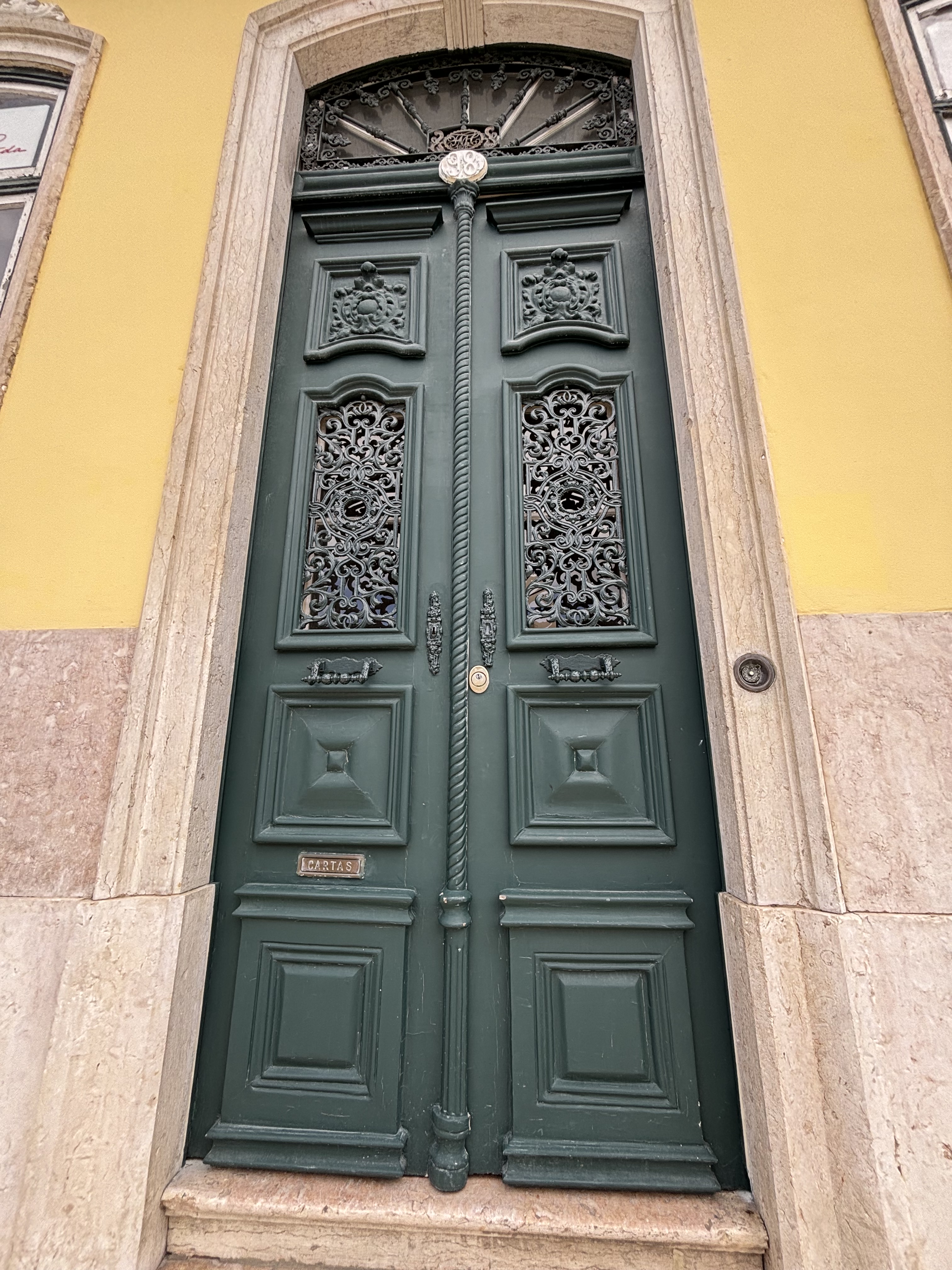
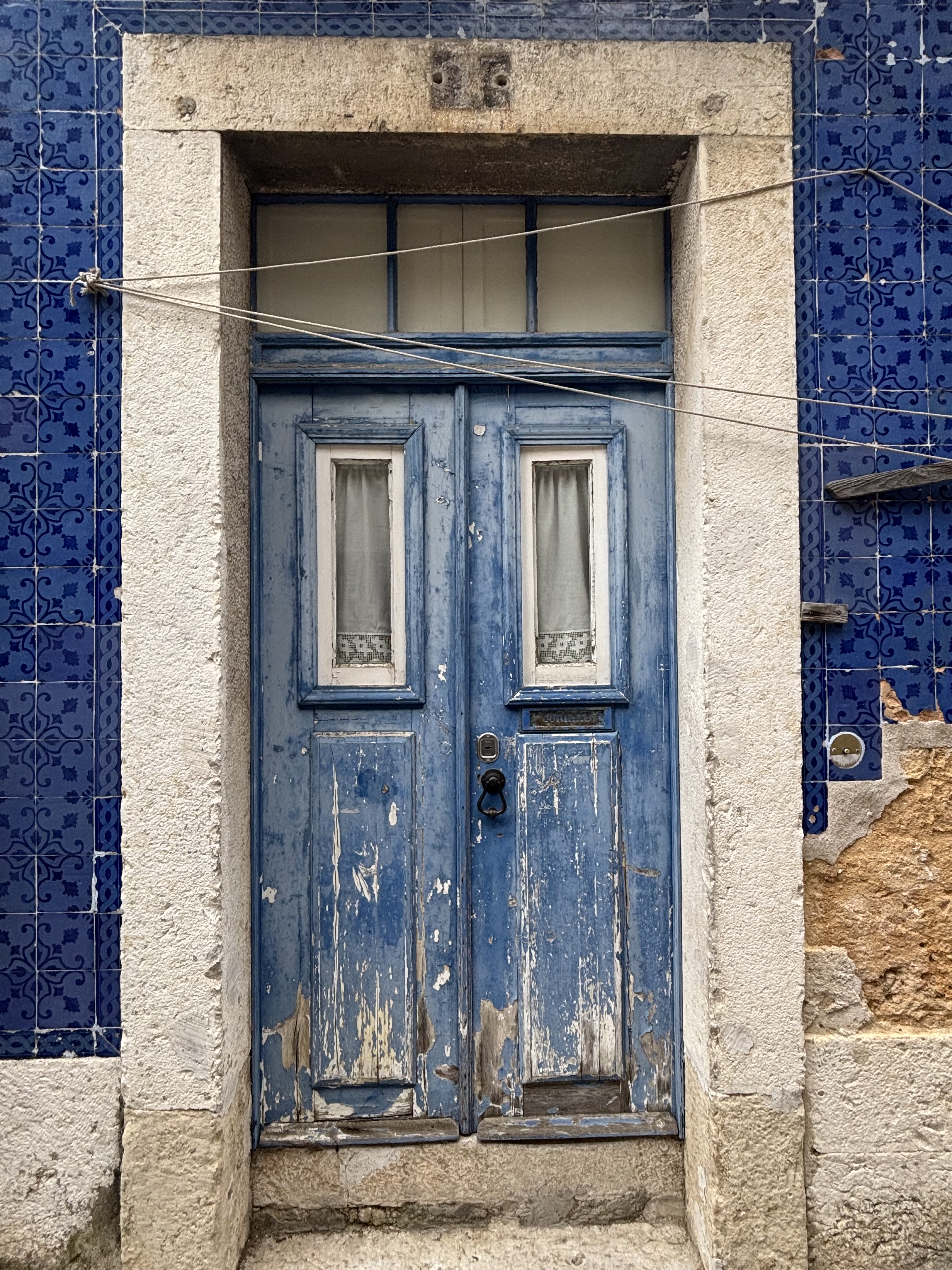
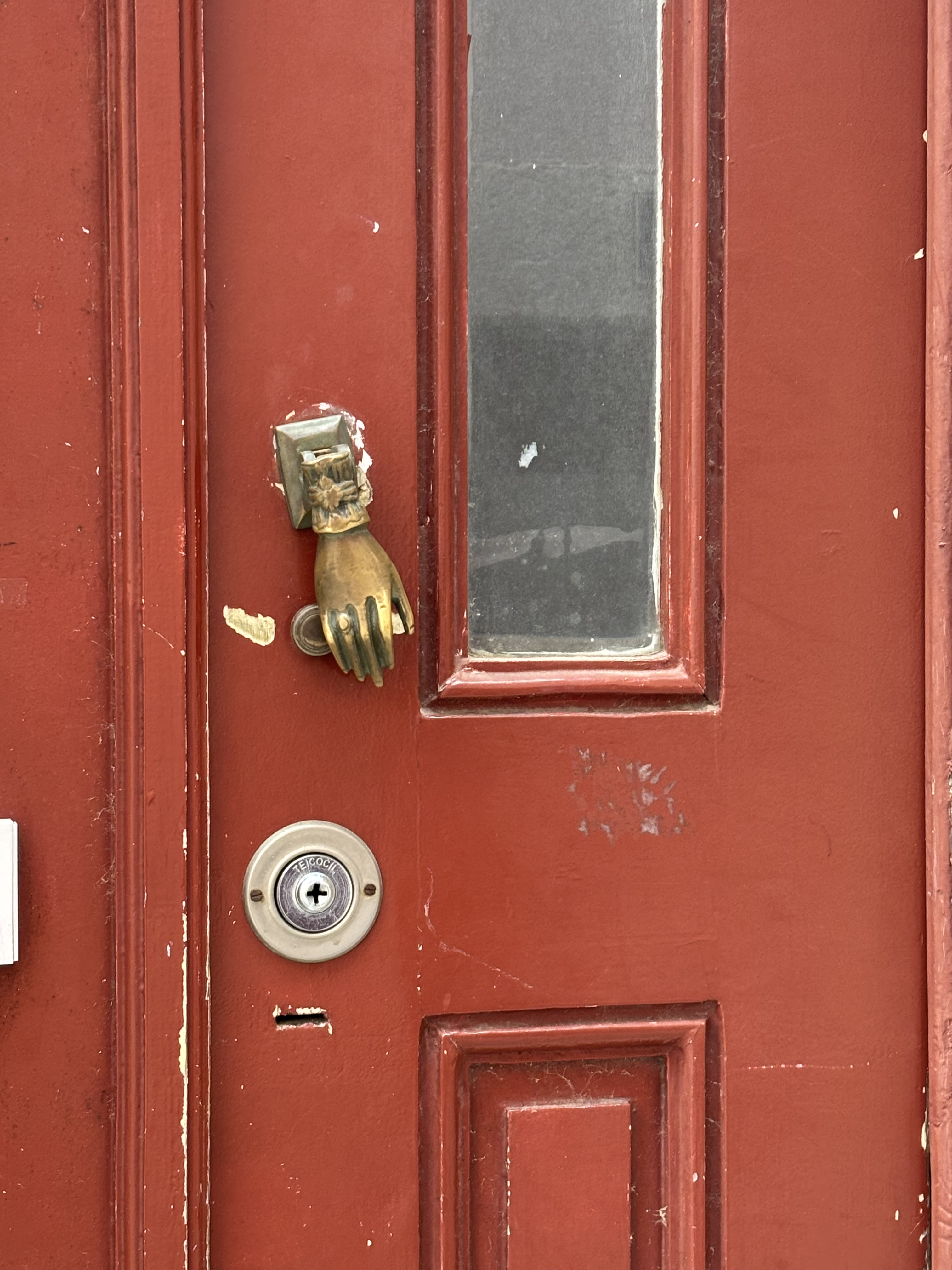
Lisbon has some grand and beautiful old doors.
This is not one of them.
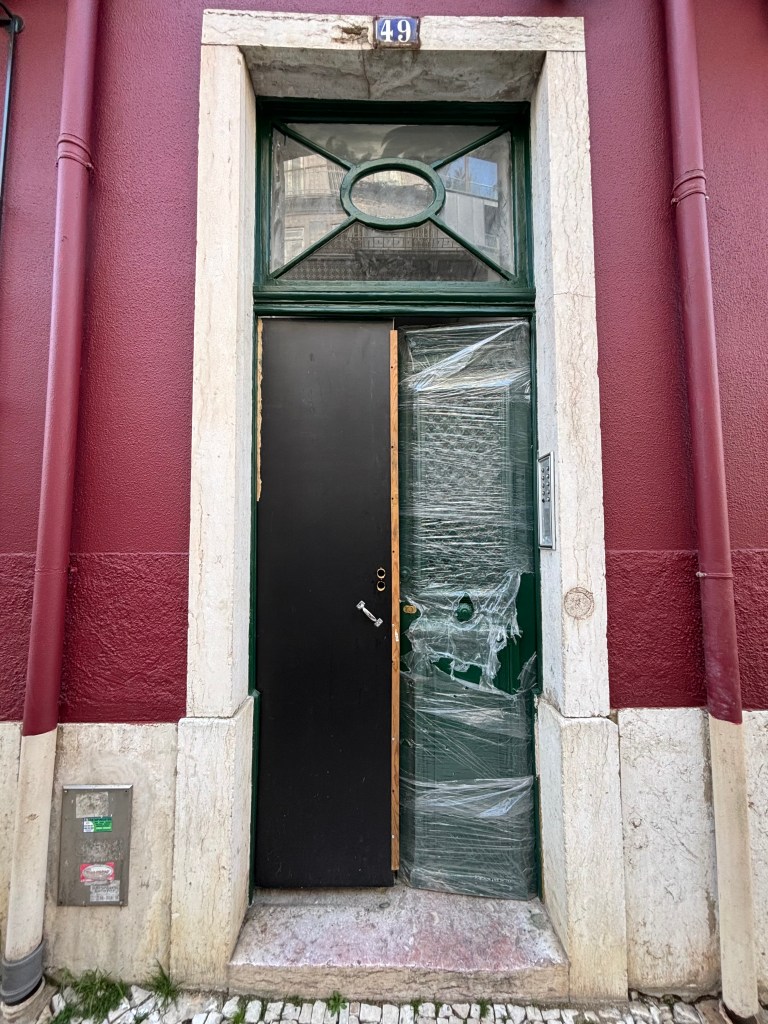
Unfortunately, it’s the one outside our Lisbon apartment. It supposedly has been under repair for months, but we saw no sign of any work being attempted on that door during the first three-and-a-half weeks of our four-week stay. Then, mysteriously, a man showed up one day with a new door. A few minutes of banging, some fresh paint, and a new door had been installed. We’re just thankful the temporary door locked (when the other tenants bothered to close it anyway).
Personal safety does not seem to be a major concern around here. I suspect this is what sociologists mean by the term “high trust” society. Neighbors greet each other on the street. People leave doors and windows open on a regular basis. We walked by a grocery store the other day and were surprised to see a child unattended in a stroller on the sidewalk outside and a delivery driver trying to navigate his way around the little human obstacle while loading his truck. We eventually figured out that a woman just left her child outside while she did her shopping inside.
Construction in Lisbon progresses slowly (if at all). We’ve been told that every time someone starts a new project in this ancient city, they unearth something of historical significance that brings all work to a screeching halt until a team of archaeologists, archivists and attorneys can spend a few years evaluating the discovery before ultimately spending a few more years obtaining the appropriate regulatory approvals to place a plaque by the front door. In the meantime, the owner usually has moved on to the next project. Or died.
In our case, someone does about 15 minutes of construction every morning at the apartment next door, then the place goes silent for another 24 hours. It’s reminiscent of Eldon, the ever-present-but-rarely-busy handyman from Murphy Brown. Perhaps this particular remodeling project is the equivalent of a family heirloom that passes through generation after generation of contractors. At the rate it’s progressing, it’s certainly not going to be completed during our lifetime.
It feels like there should be a little more urgency put into repairing front doors or perhaps completing a few of the half-finished building renovation projects around town to help with the housing situation (locals increasingly cannot afford to live in the city center), but my new theory is that all of the available contractor time and energy is going into fixing the chronically crumbling cobblestone streets and sidewalks. The beauty and charm of the black and tan patterns around town is undeniable.
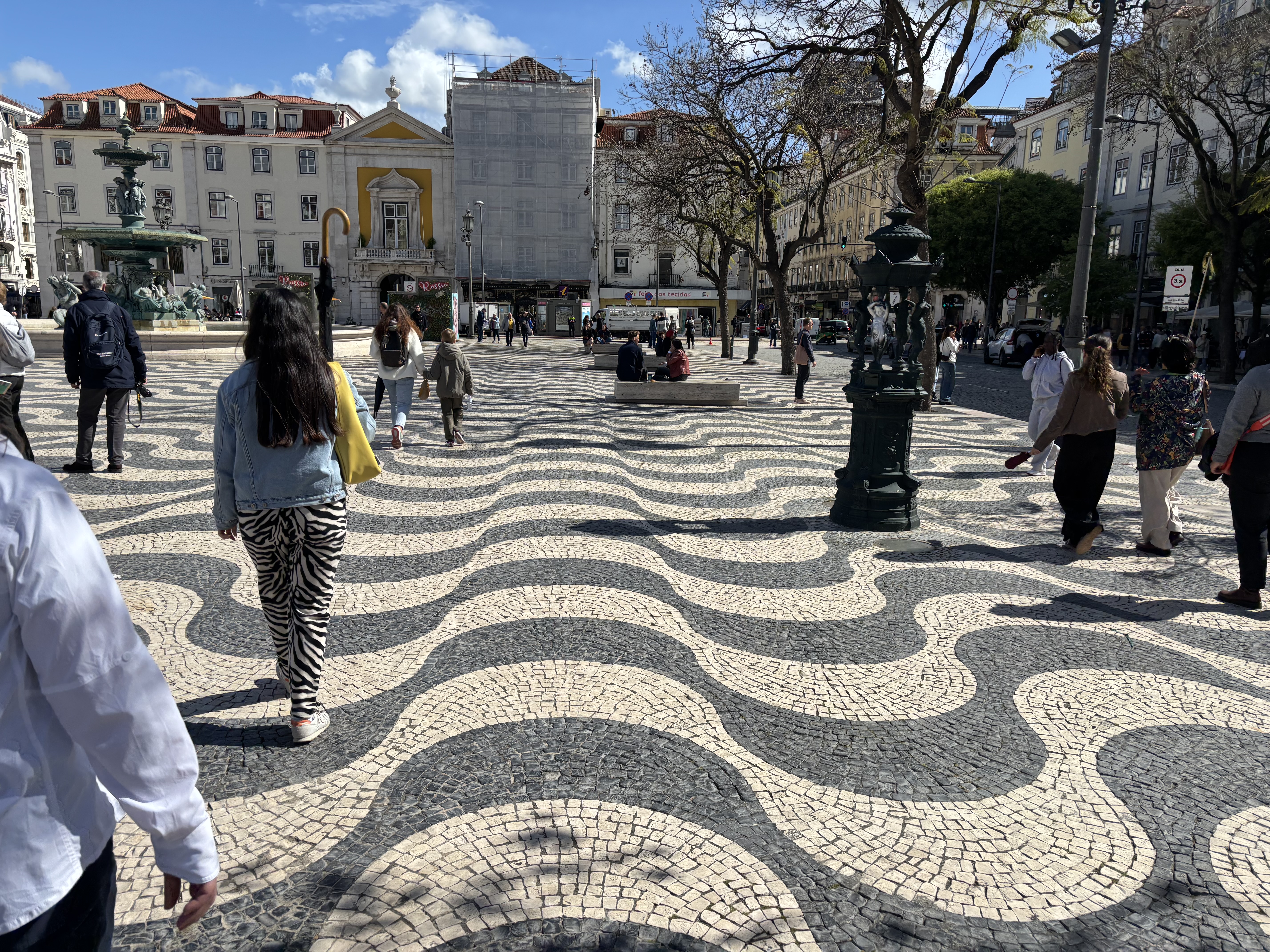
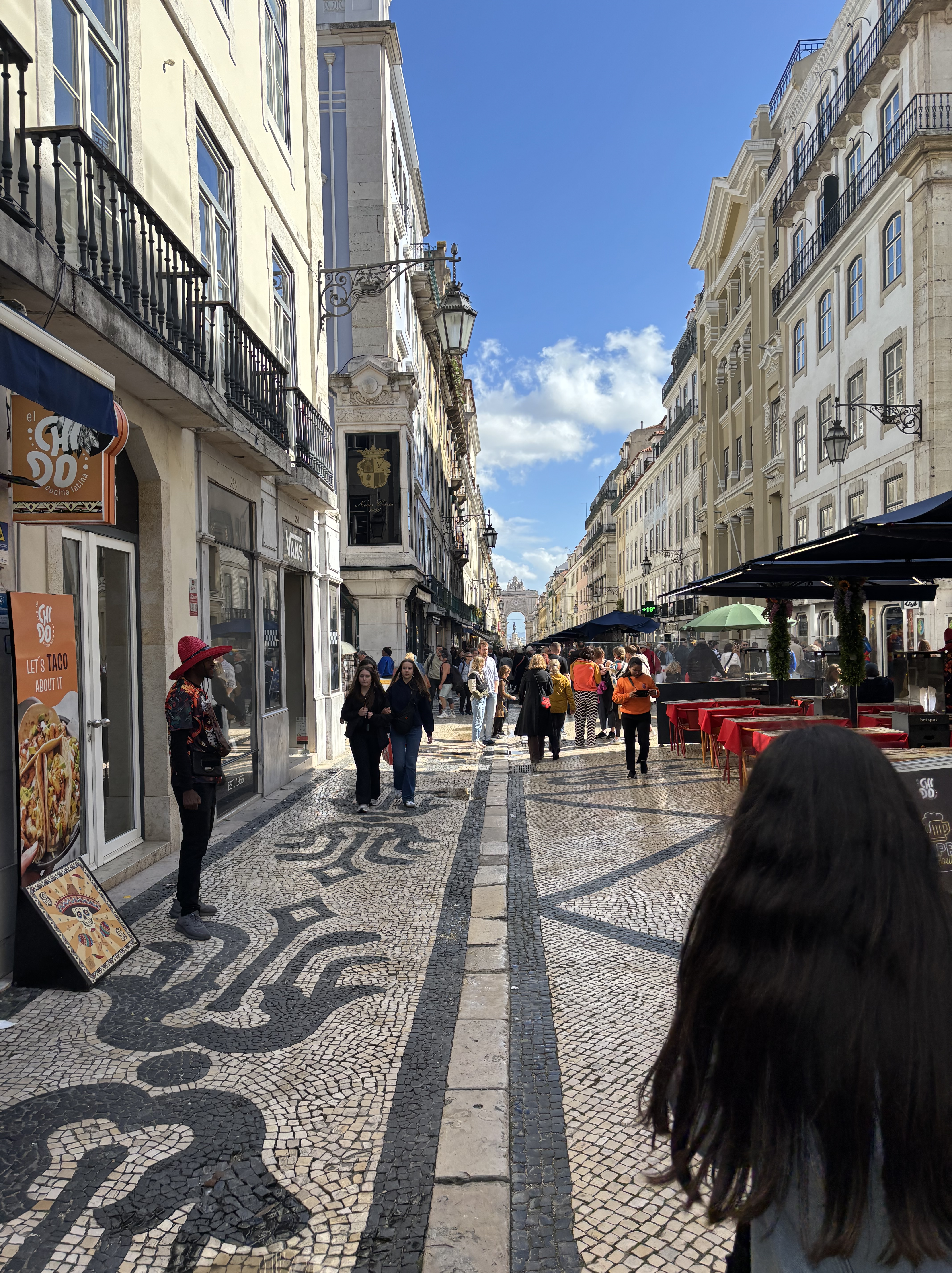
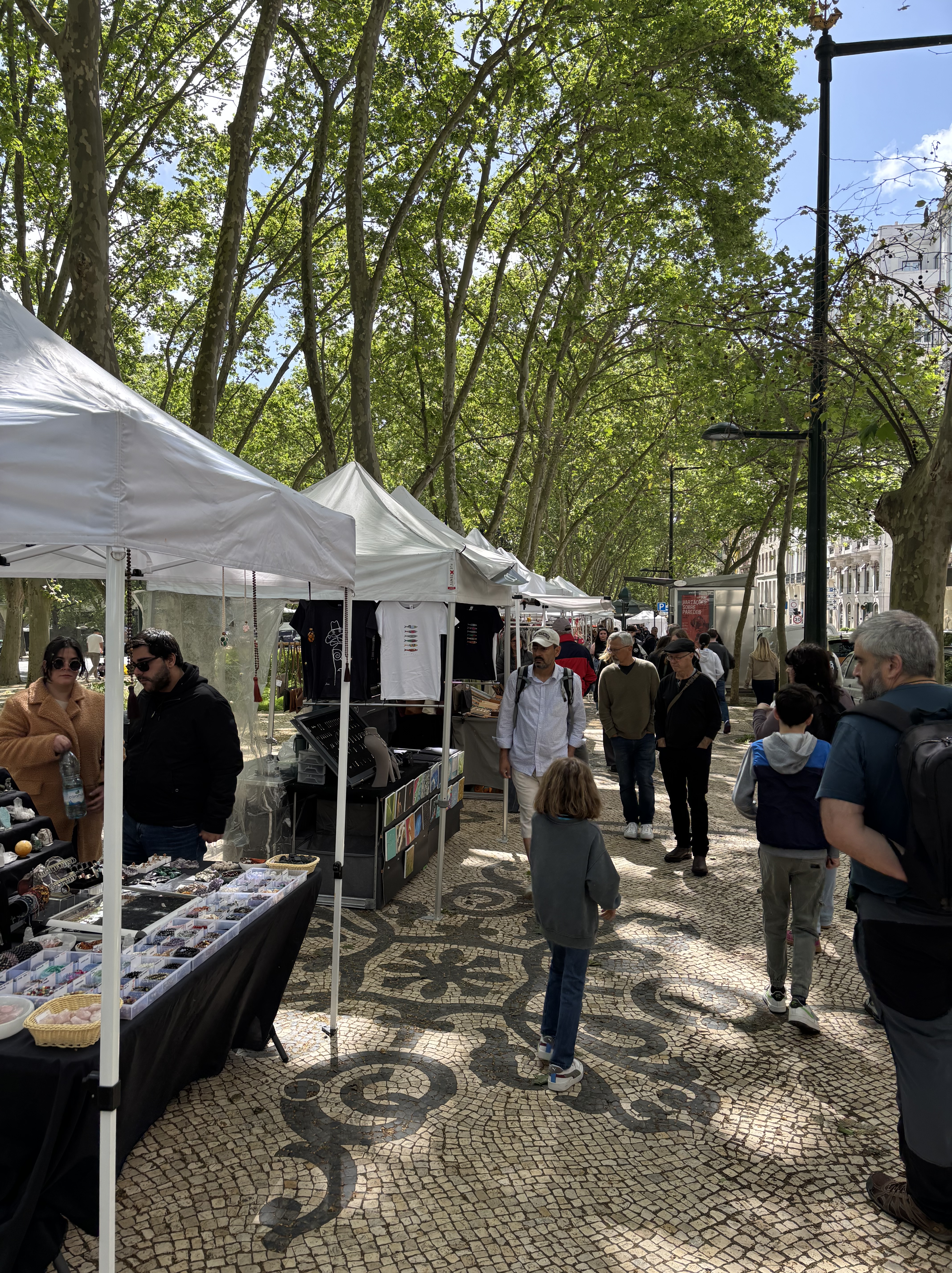
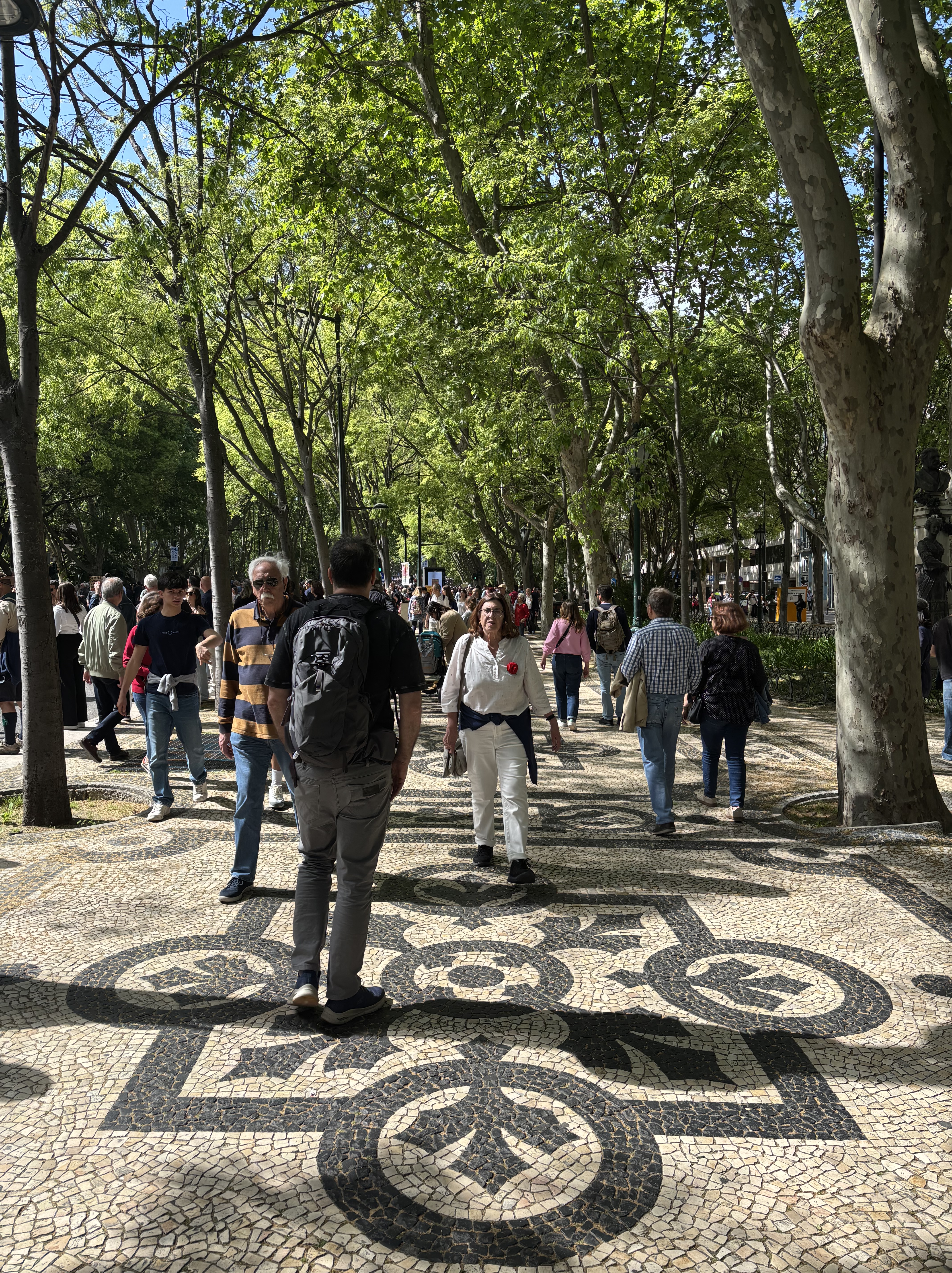
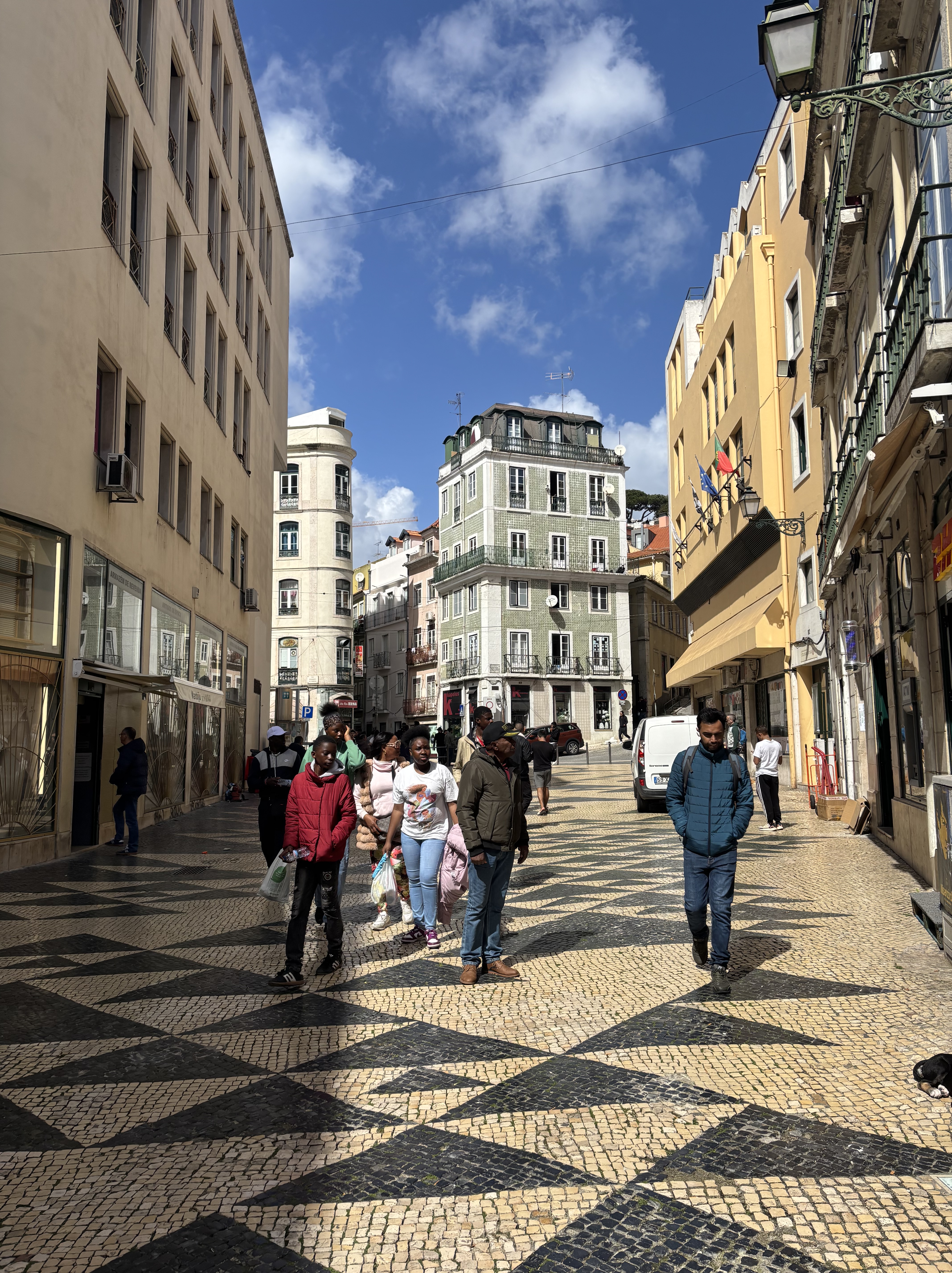
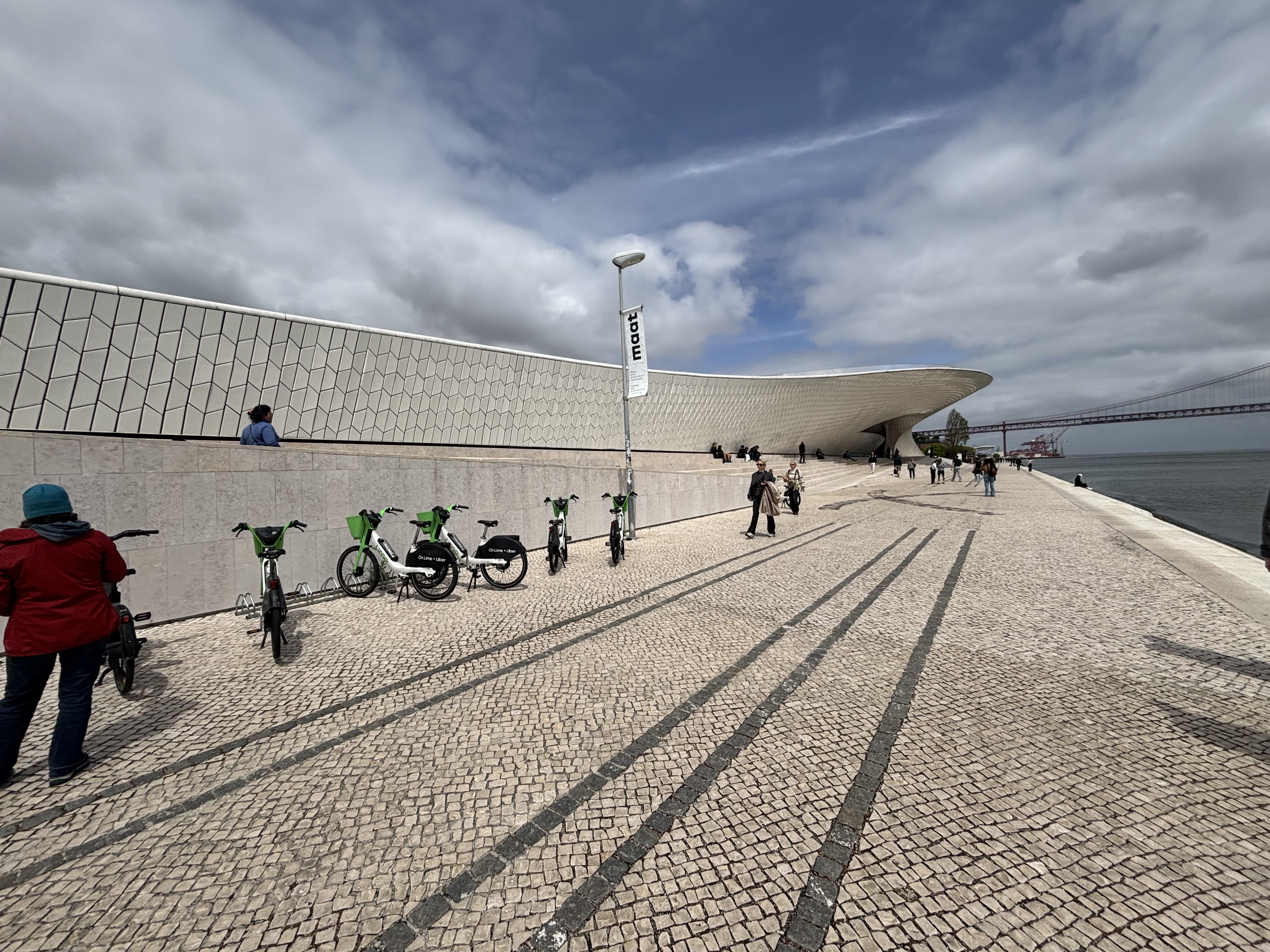

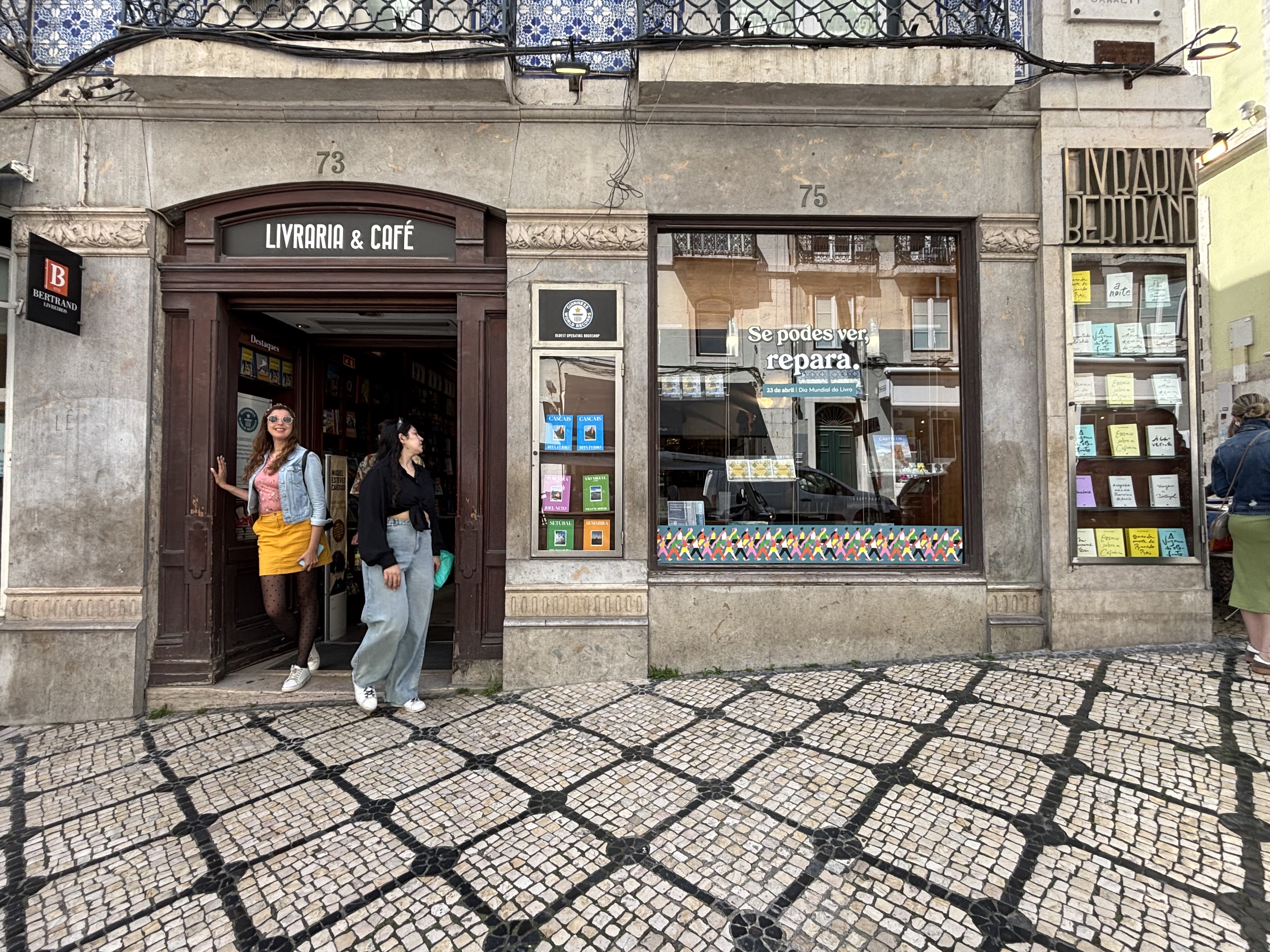
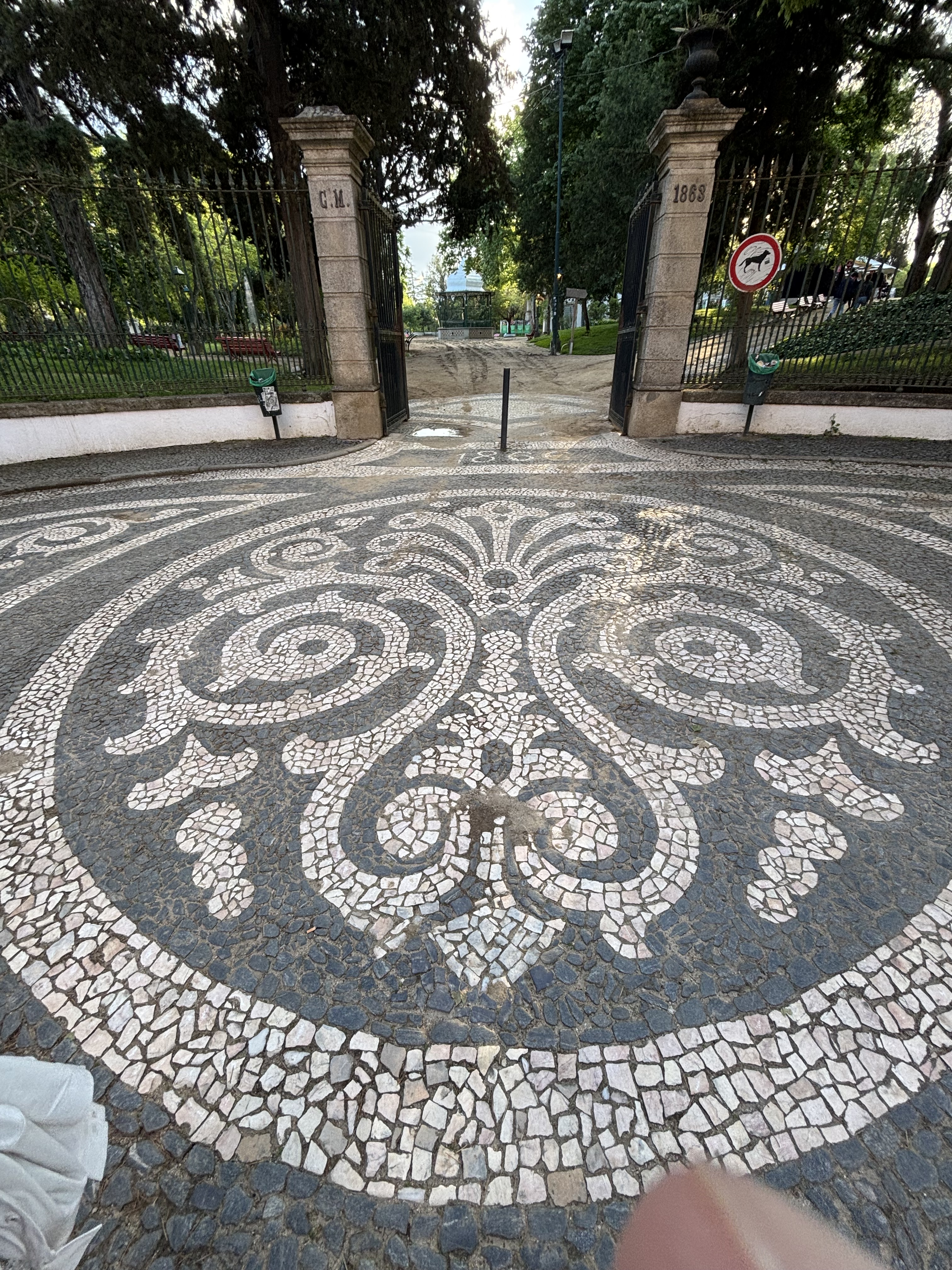
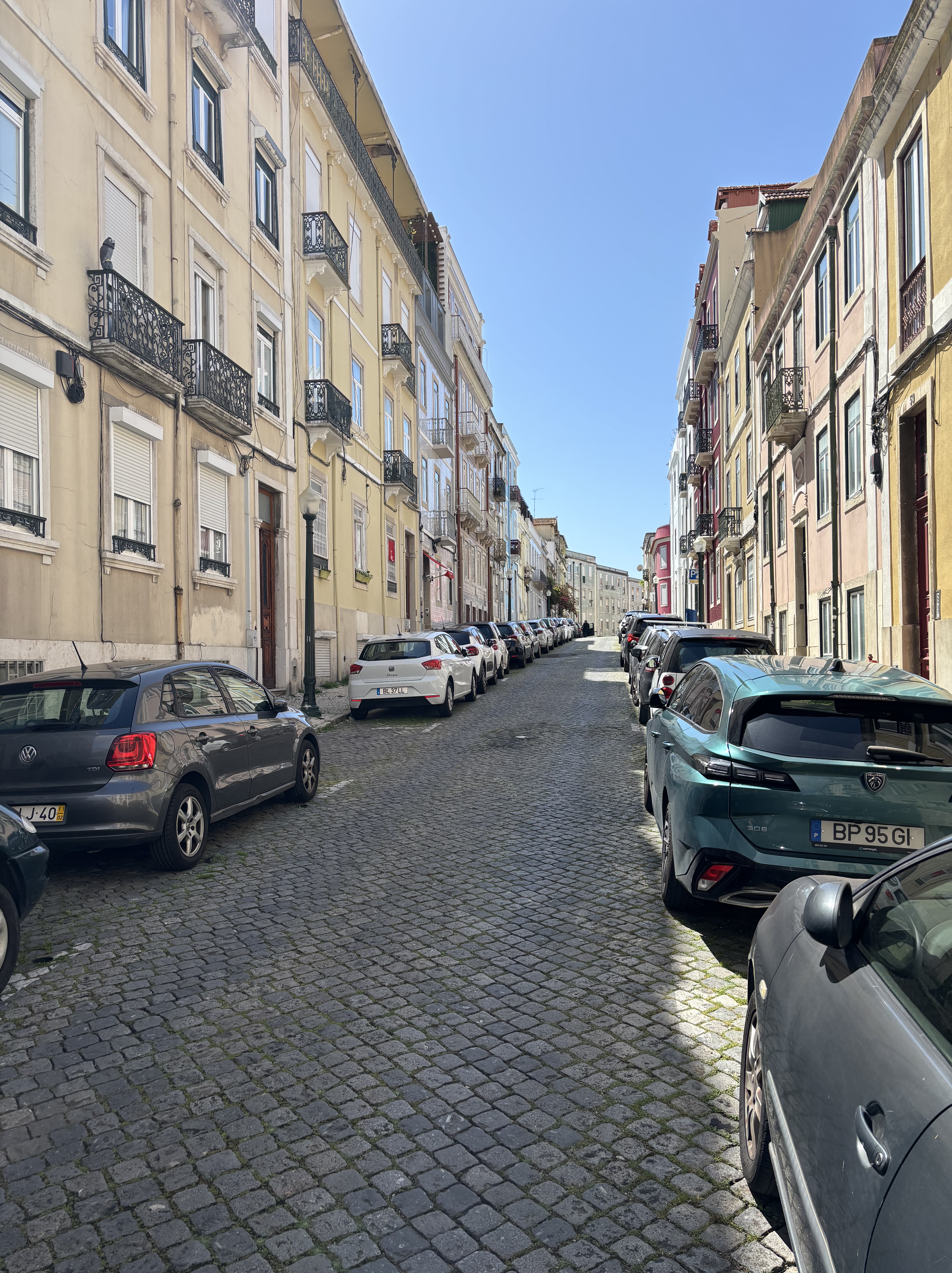
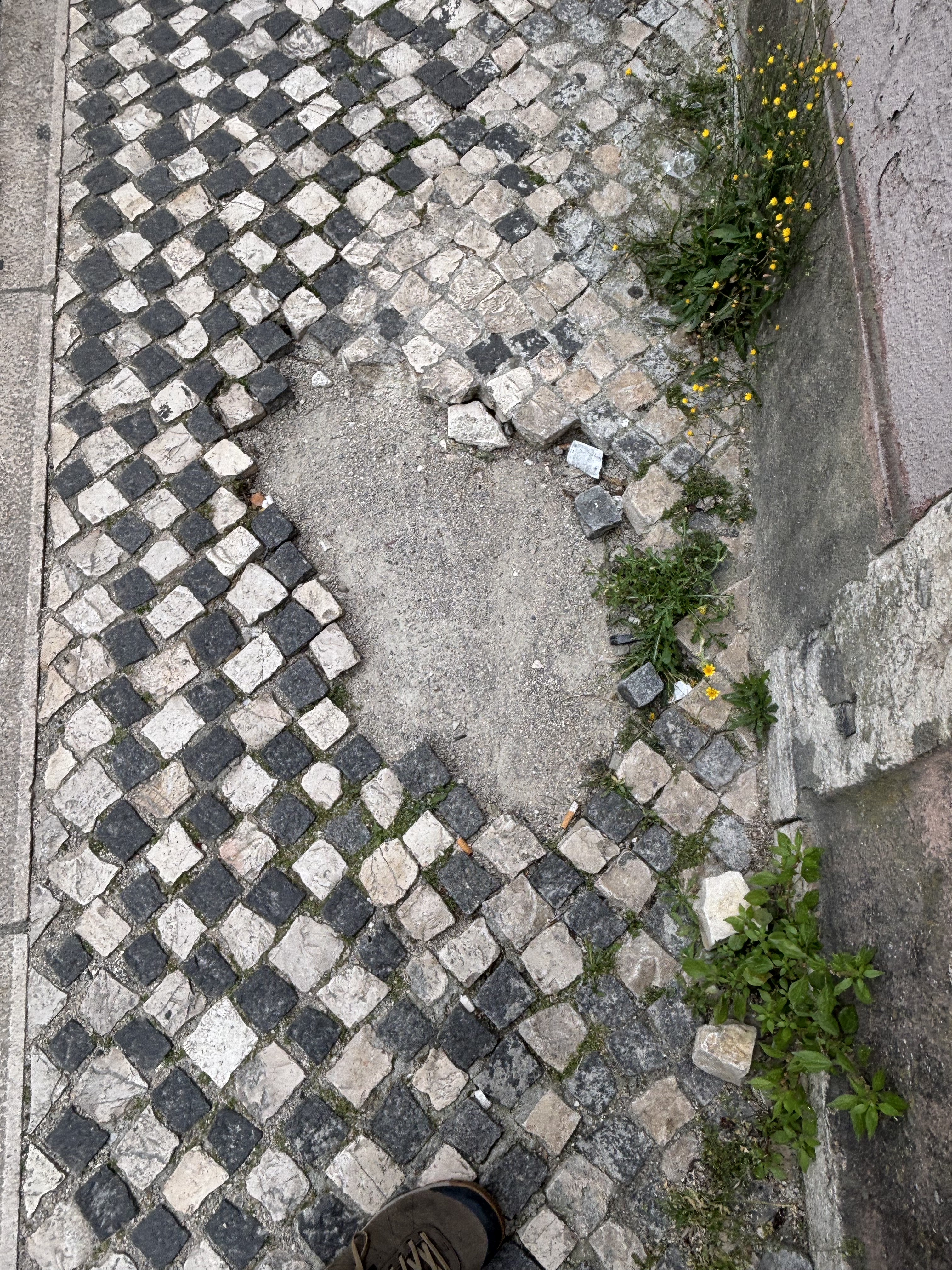
That said, the locals are fully aware that the small limestone blocks shoved into the dirt to form the sidewalks and roads around here are not practical. Artisans must hand-shape each chunk of rock into a rough cube, which is labor-intensive. They are easily dislodged anytime it rains, meaning you have to constantly watch where you are stepping to avoid potholes in the sidewalk. In addition, limestone gets polished and quite slippery with heavy foot traffic, which is not ideal for a city full of hills and devoid of flat ground to walk on. To their credit, work crews are able to repair the sidewalks and roads quickly (which basically consists of shoving rocks back into the dirt). But it’s odd that everyone refuses to even consider the possibility of something more durable or less accident-prone like the cement sidewalks that line your typical American suburb.
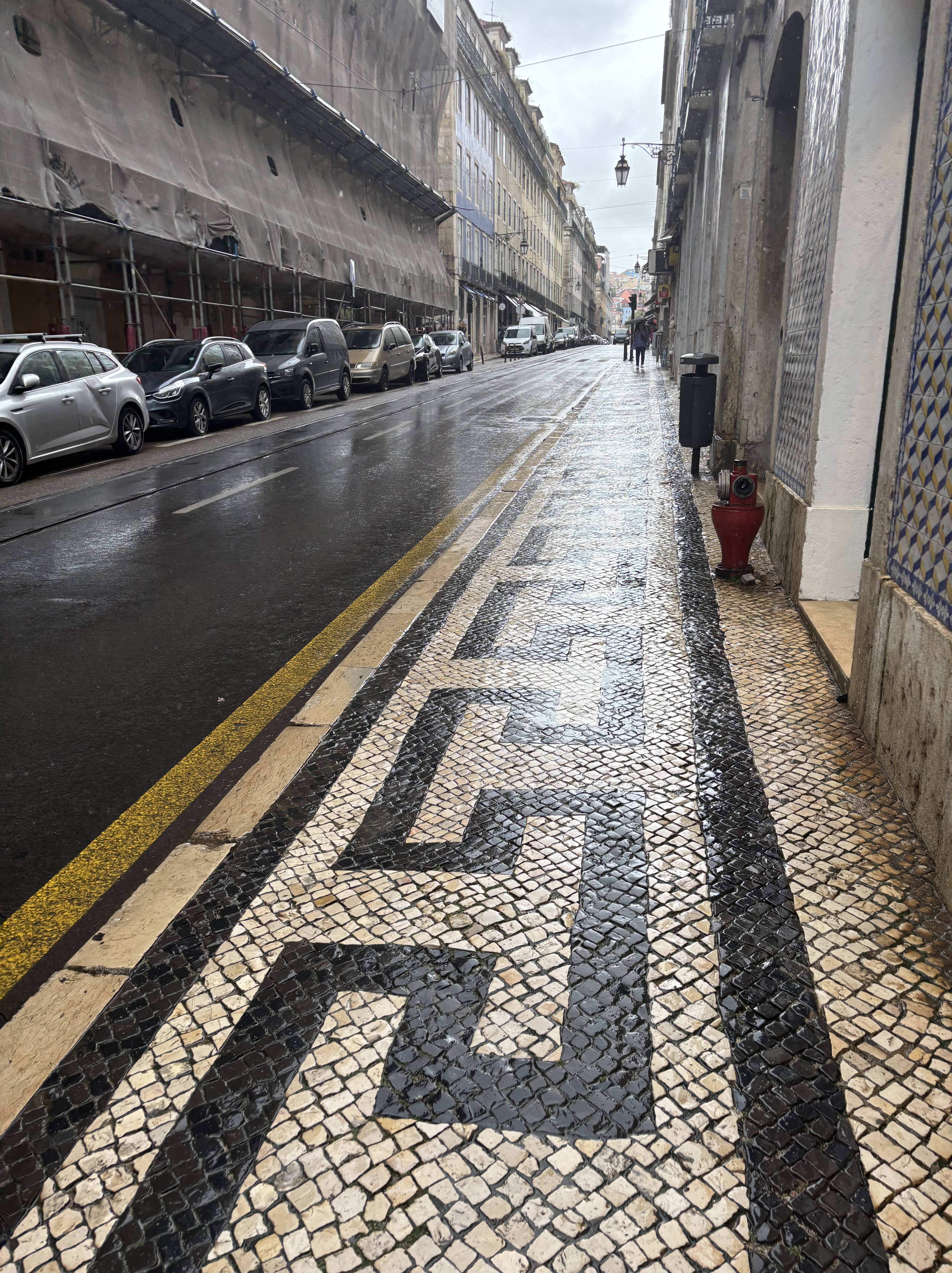
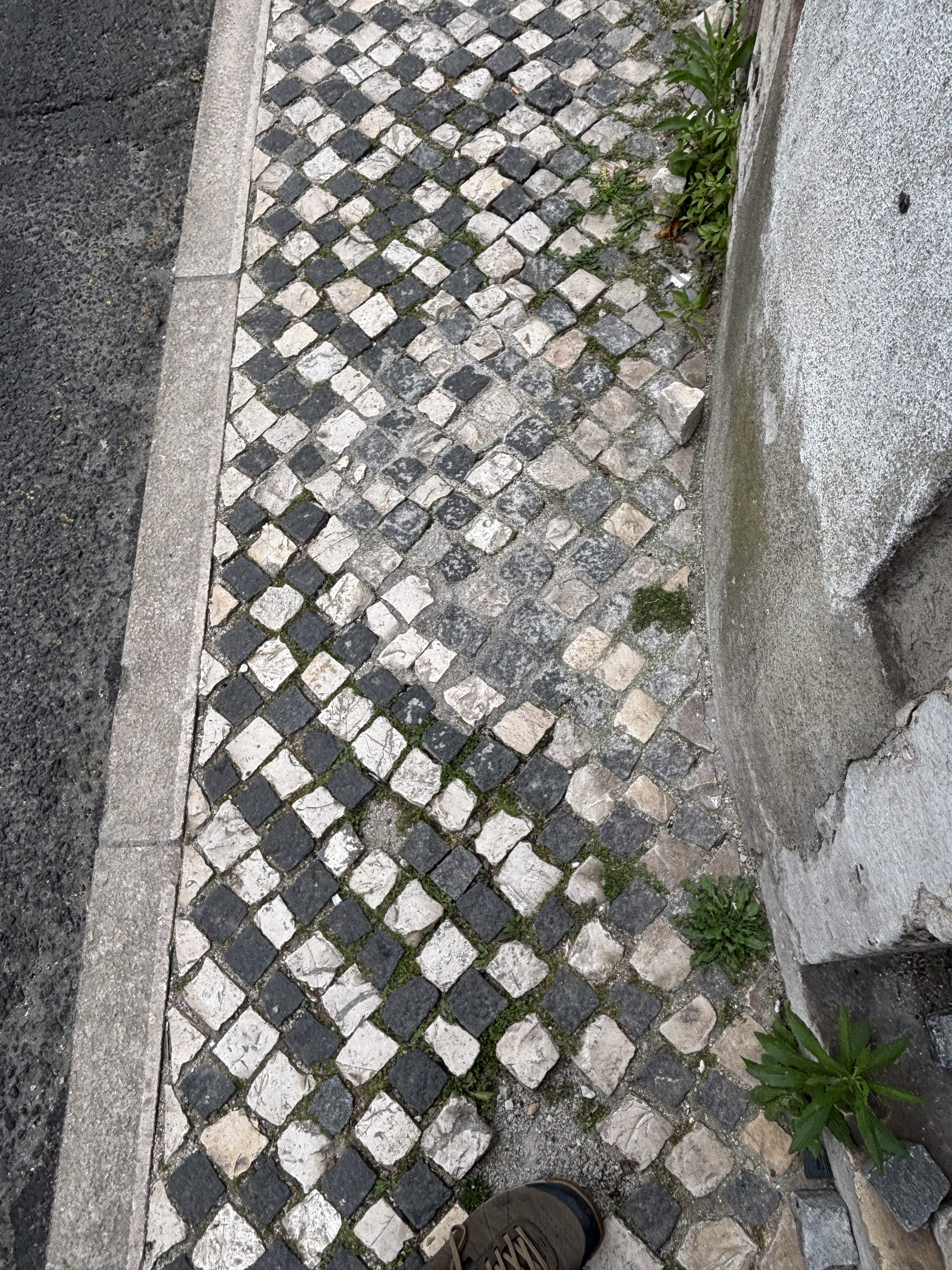
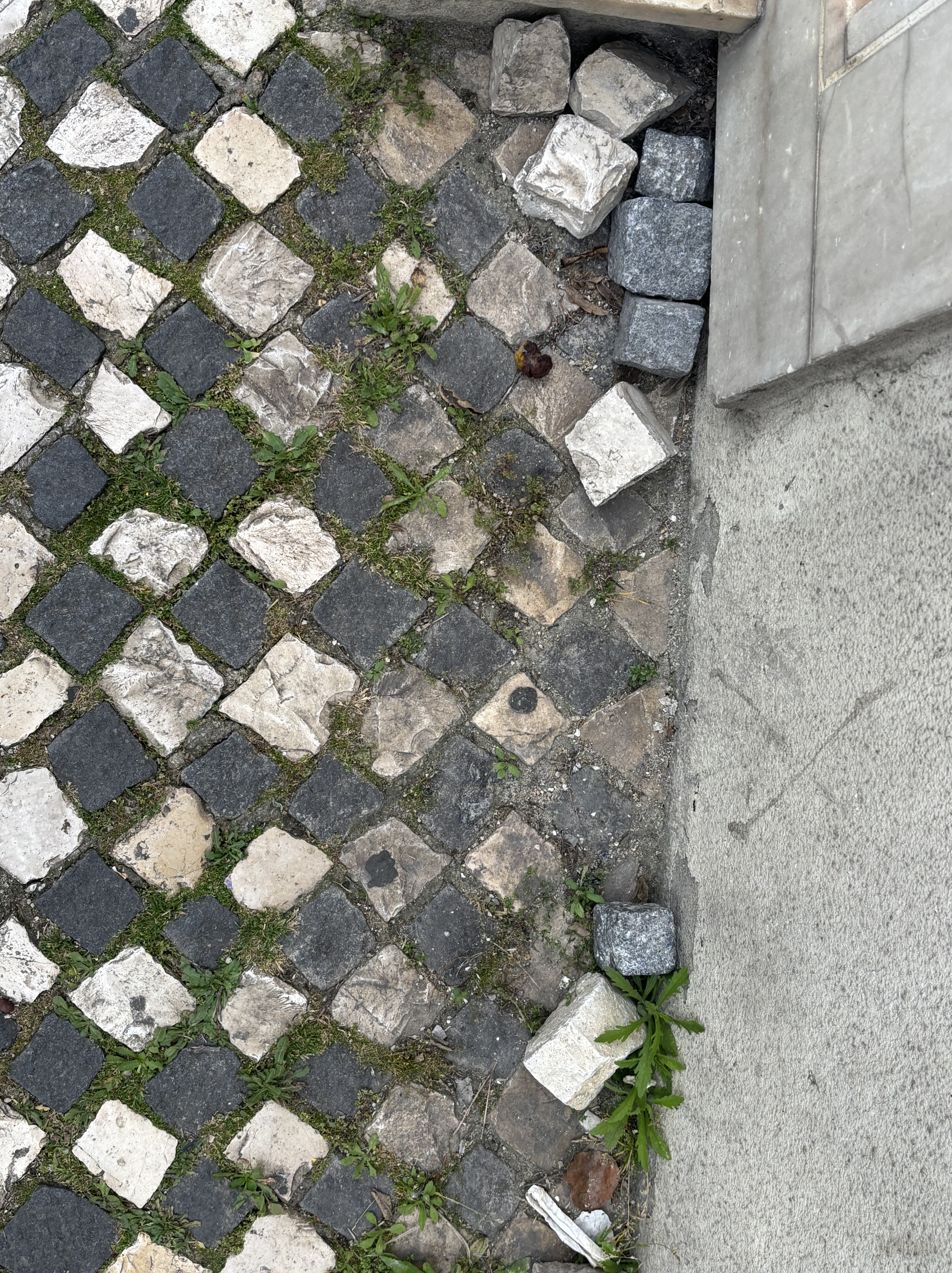
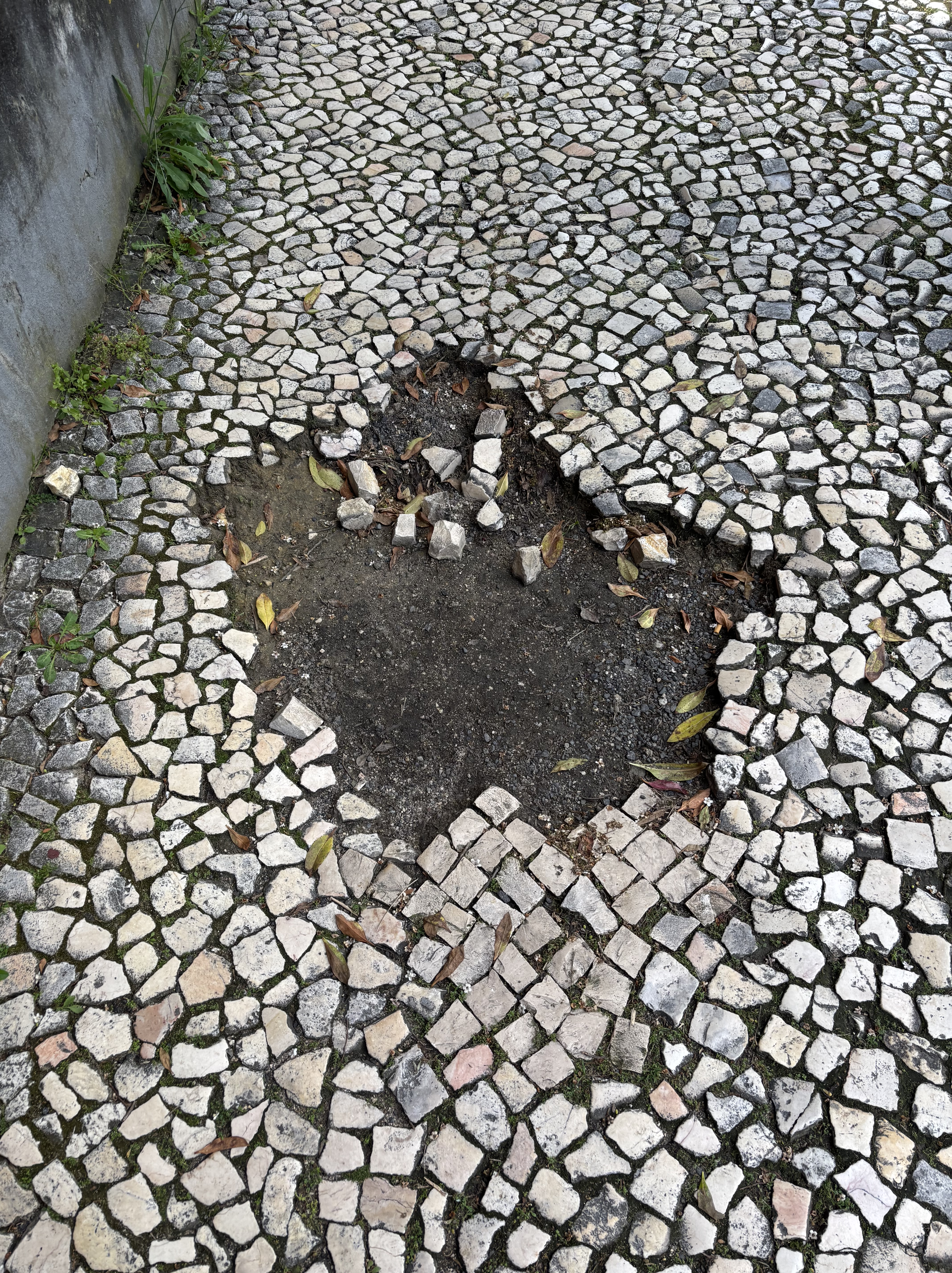
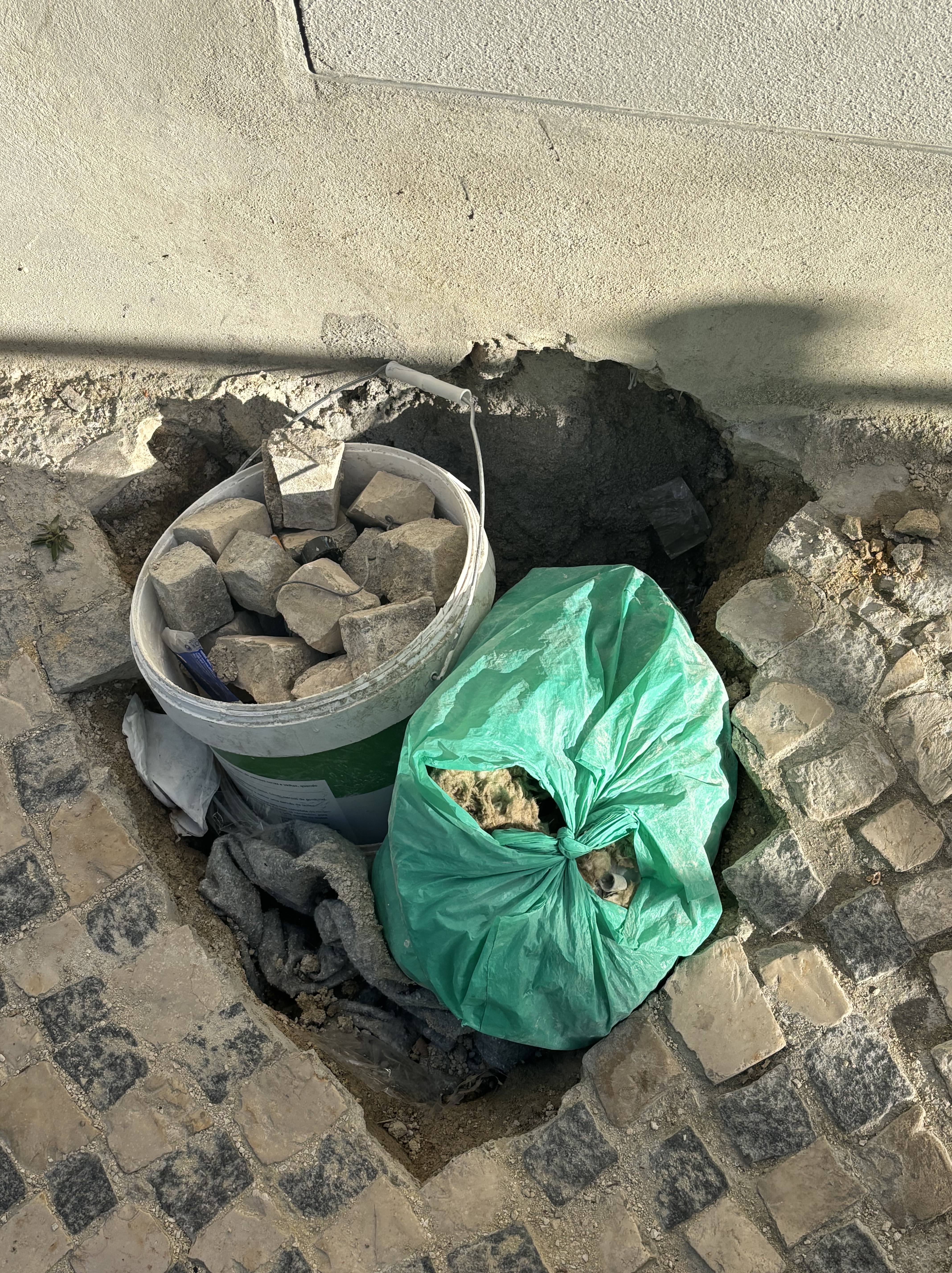
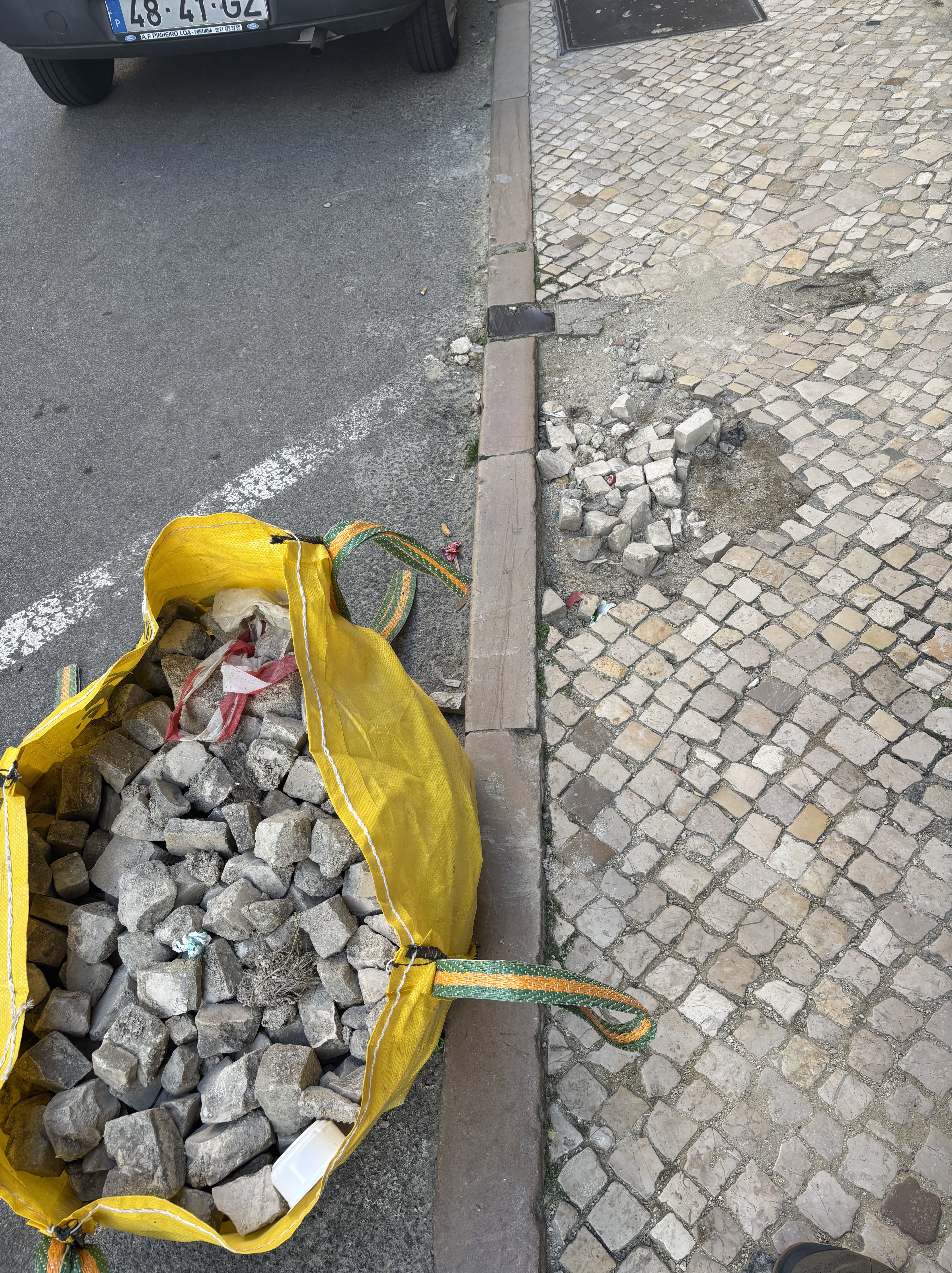
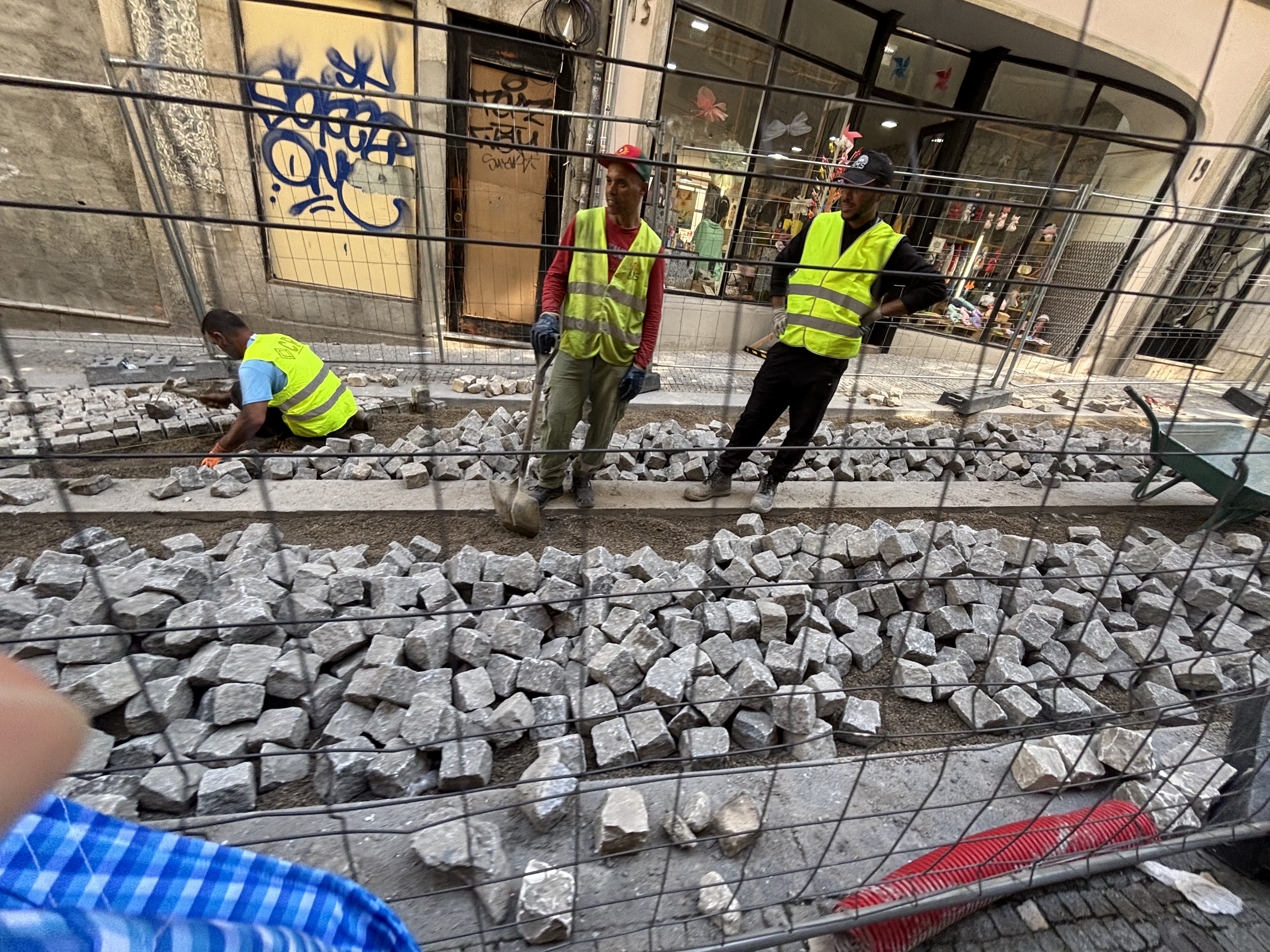
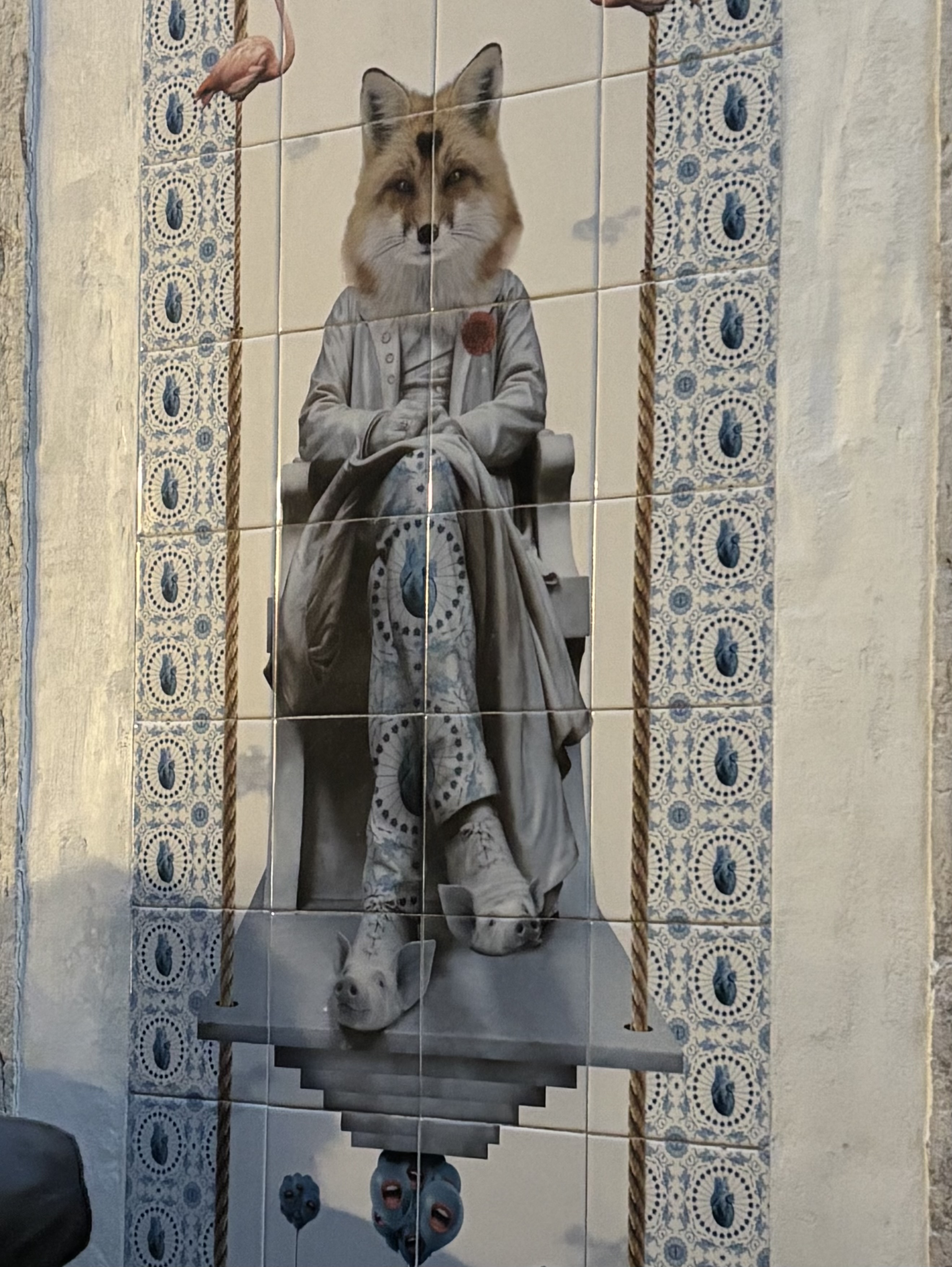
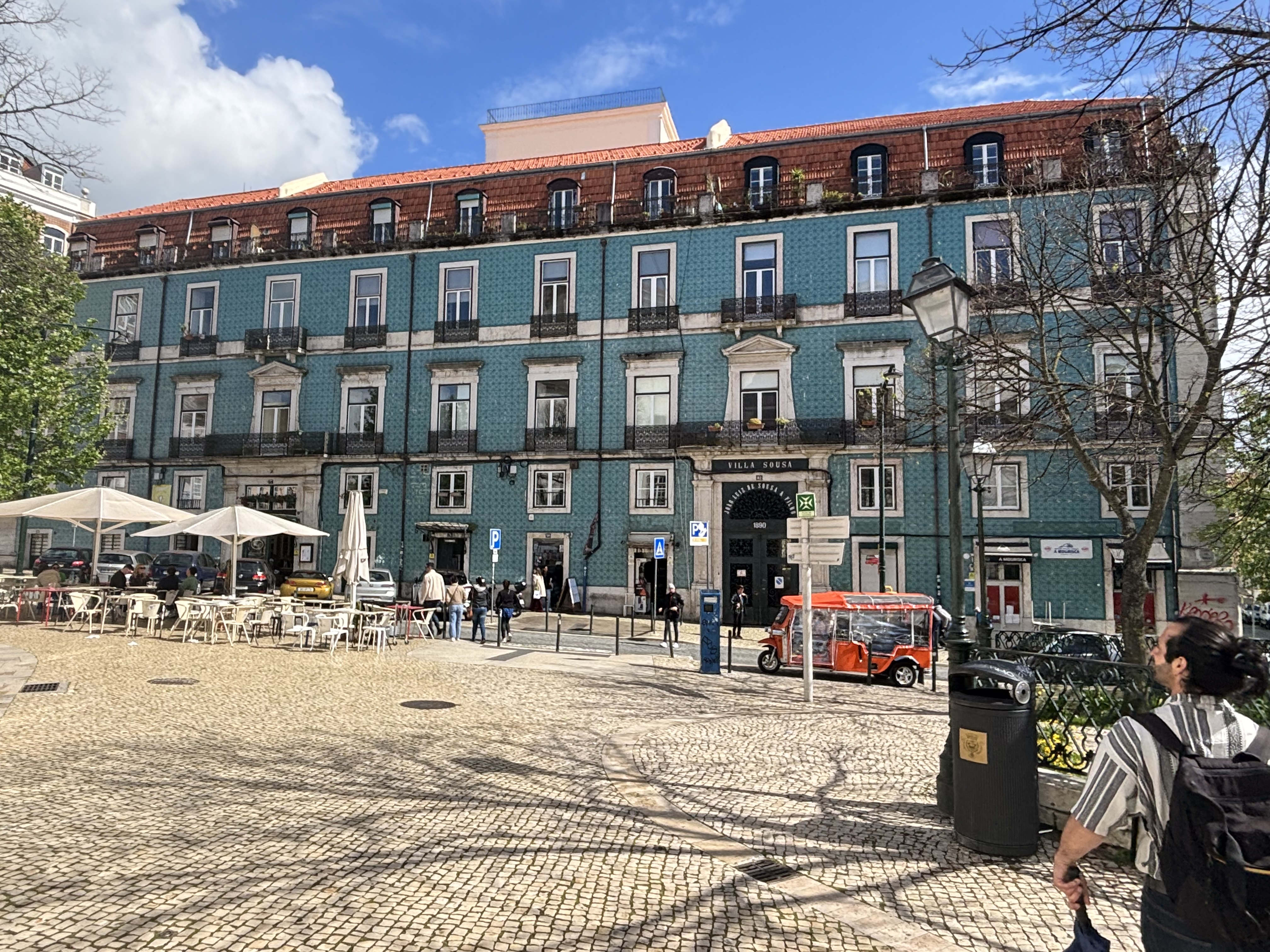
That said, asking Lisboans to use a modern material for their sidewalks would be asking them to ignore a fundamental aspect of their character: they value beauty above practicality. Every design decision in this city was made with an eye toward artistic merit. Engineers be damned. The sidewalks are just one example. The ornate building facades often hide barely functioning utilities. Graffiti is not just tolerated but, in many cases, encouraged and even publicly funded. And the wall tiles. OMG, the tiles.
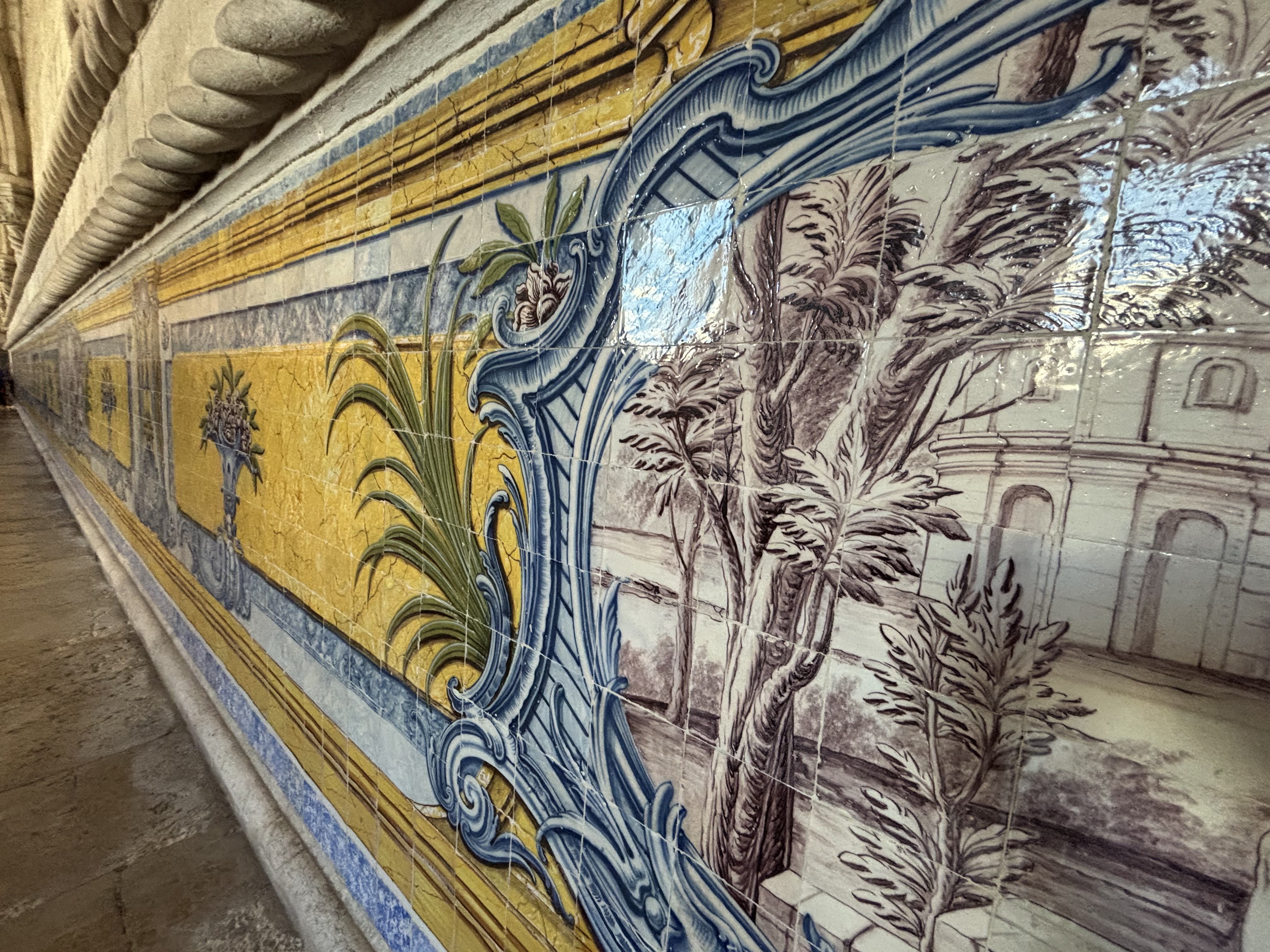
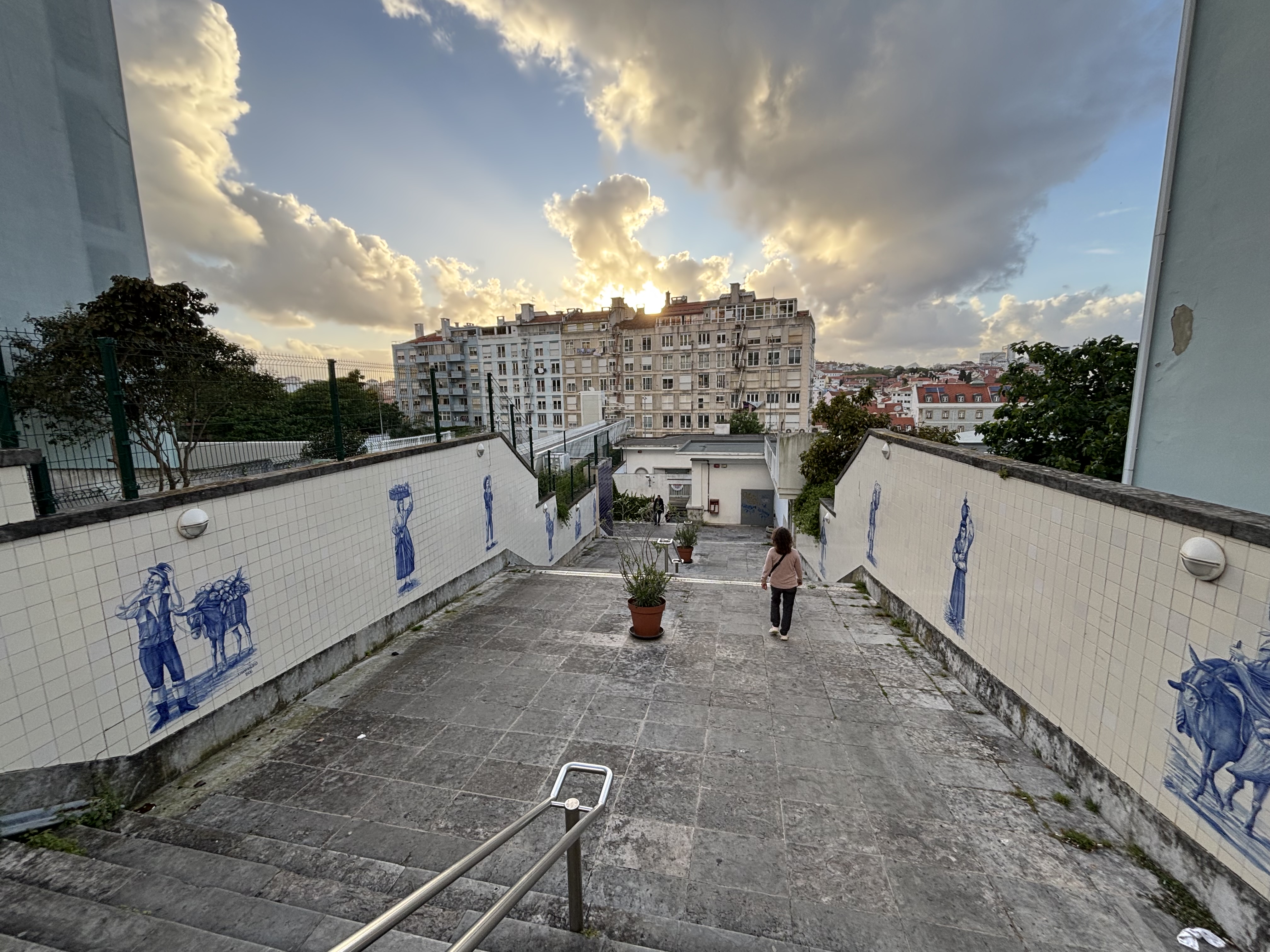
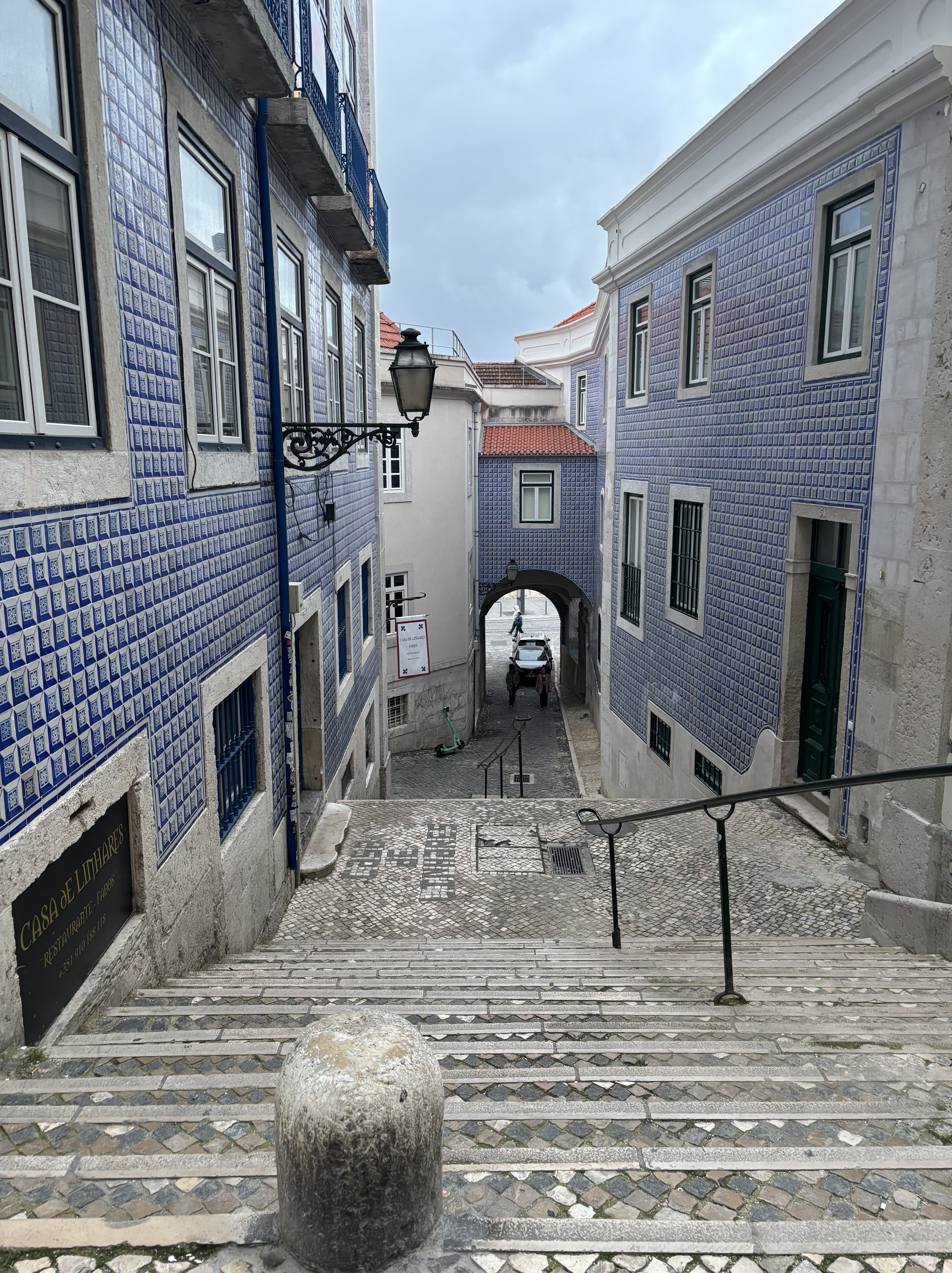
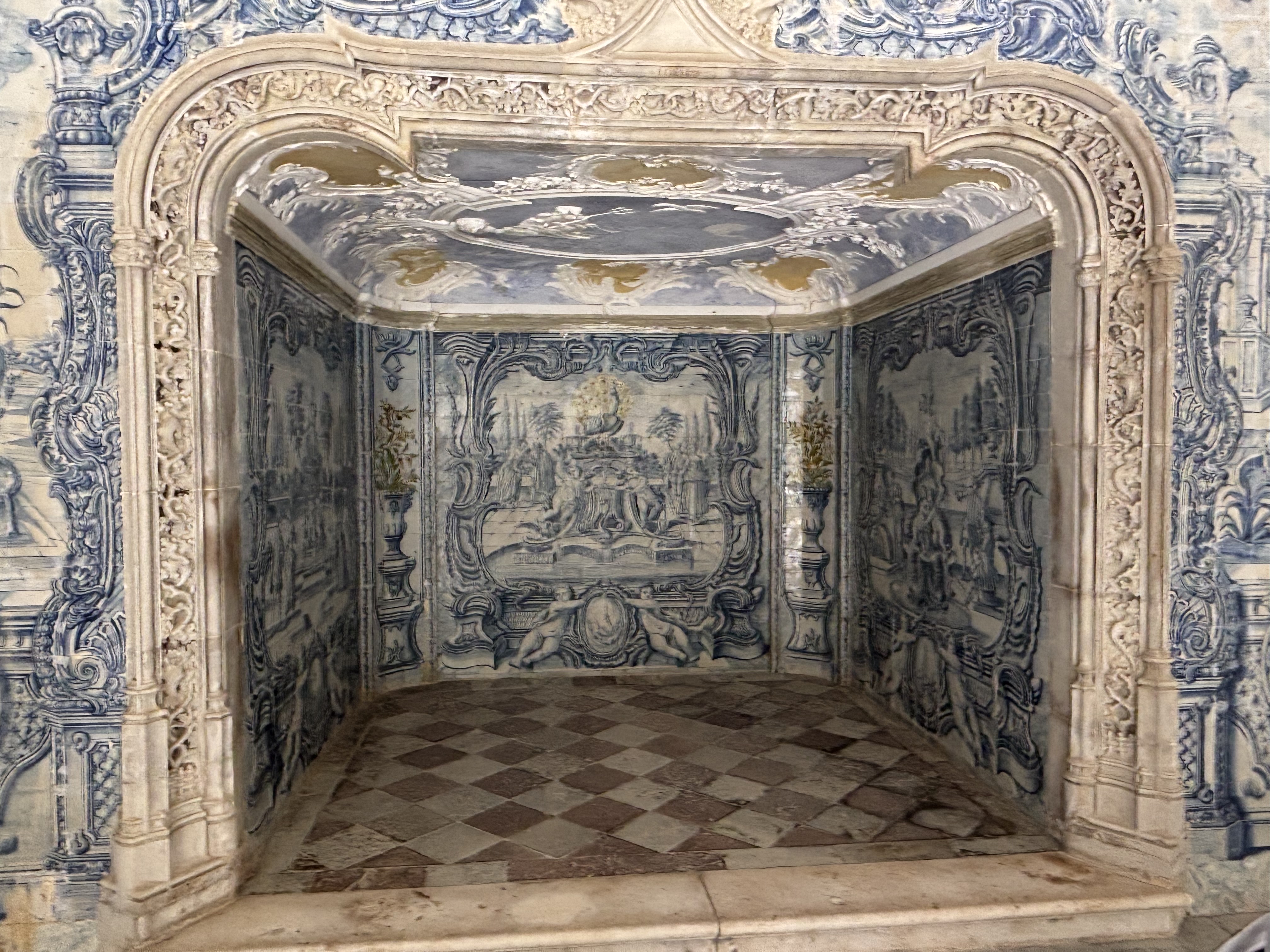
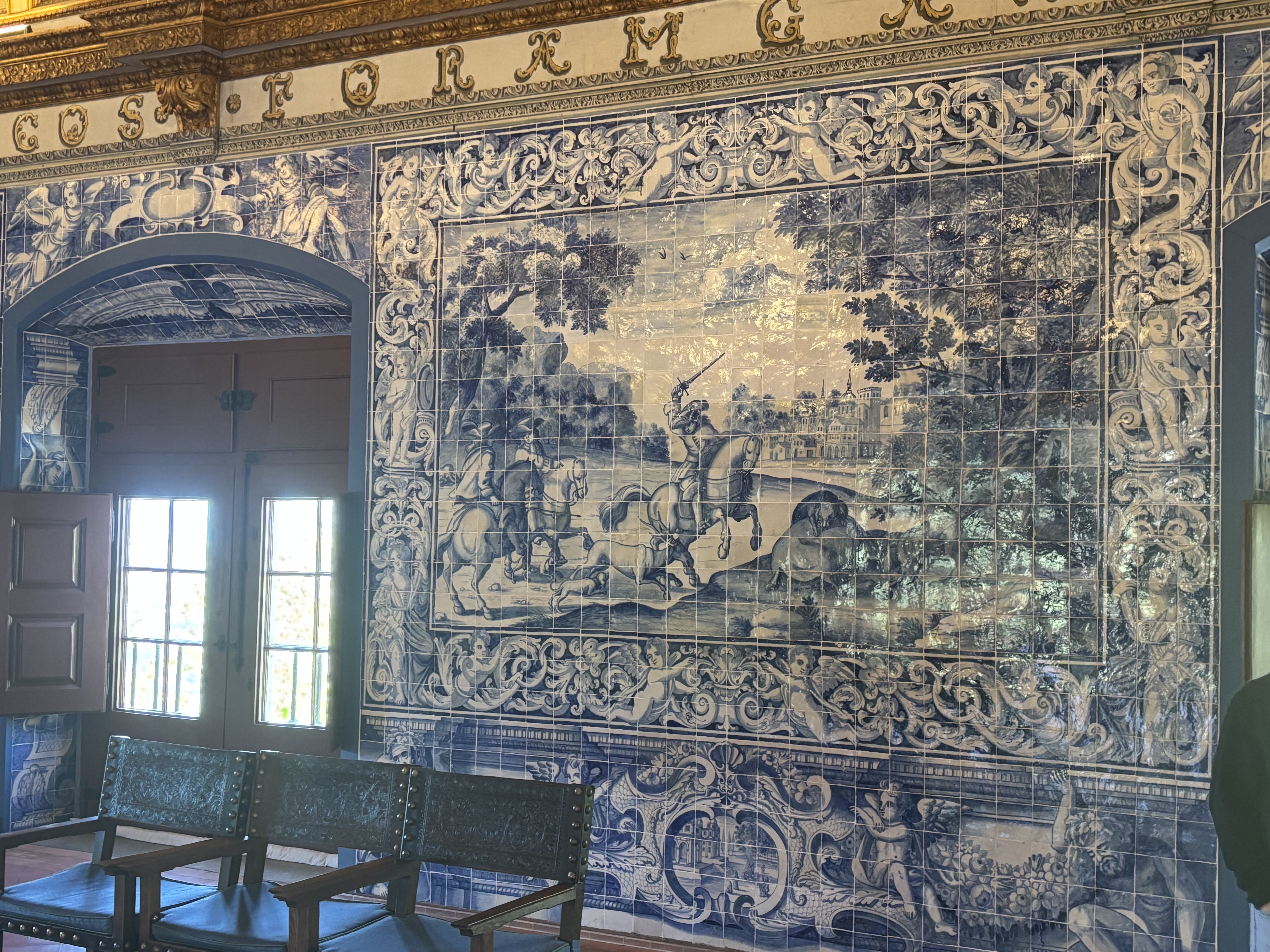
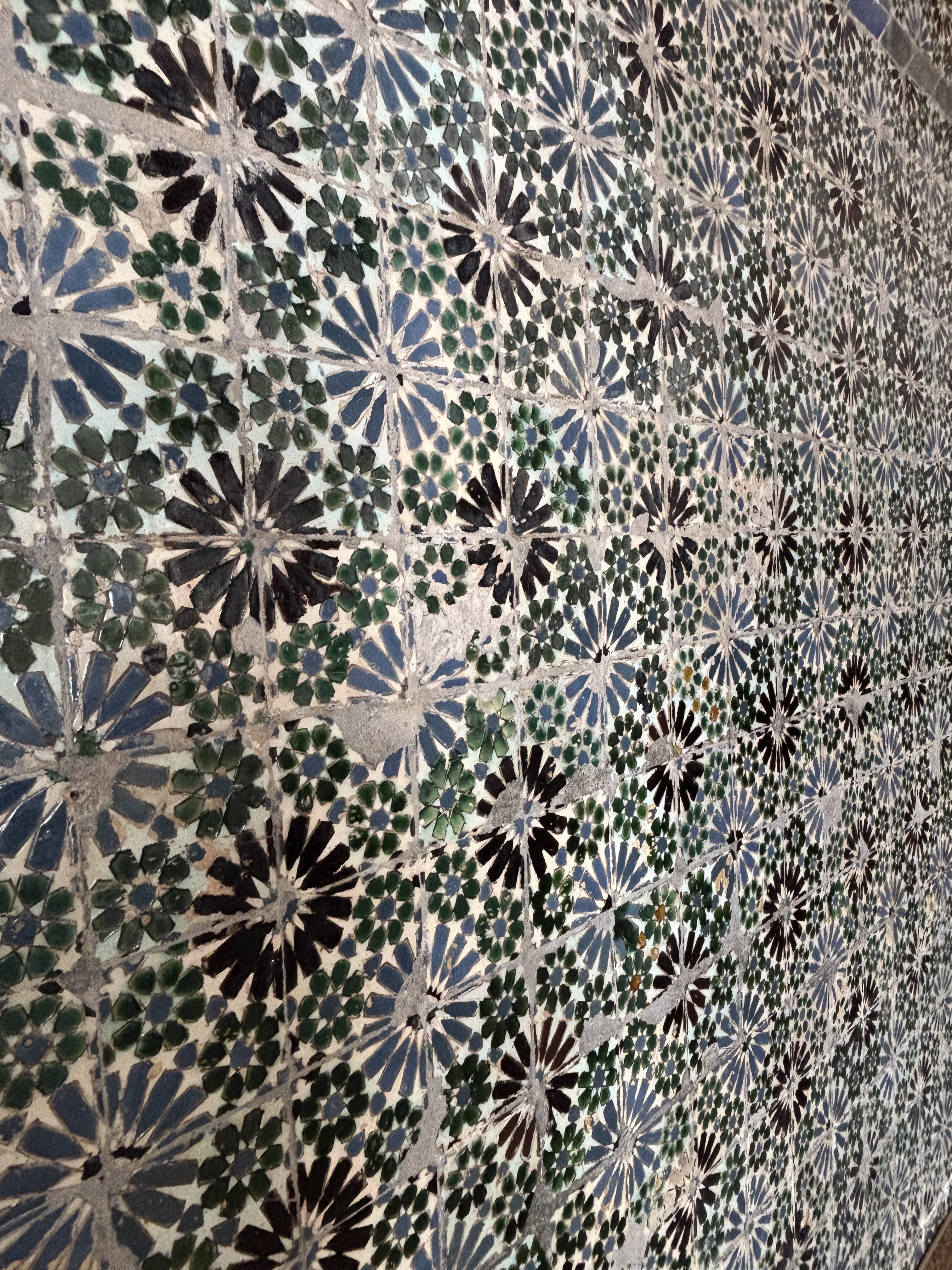
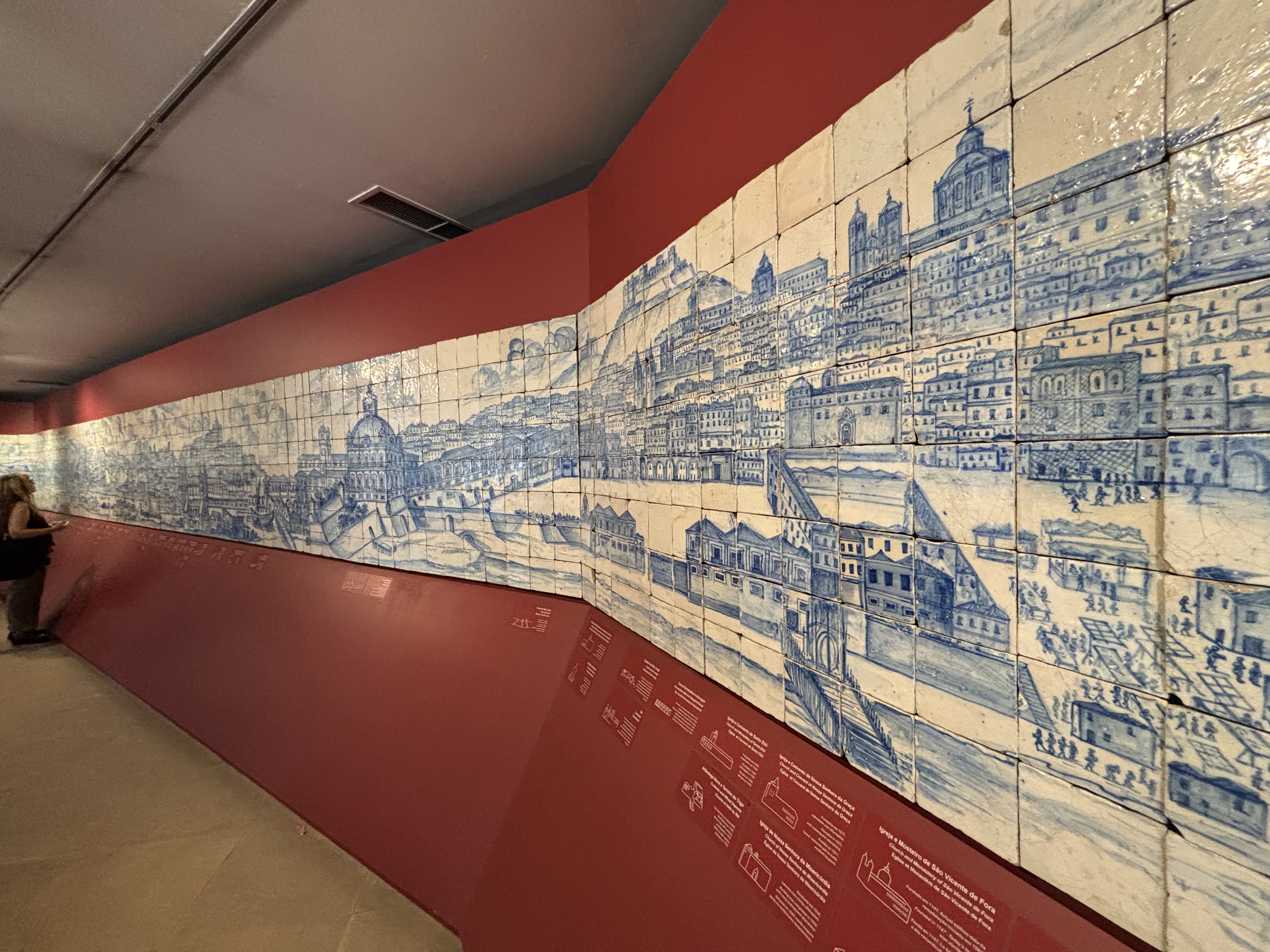
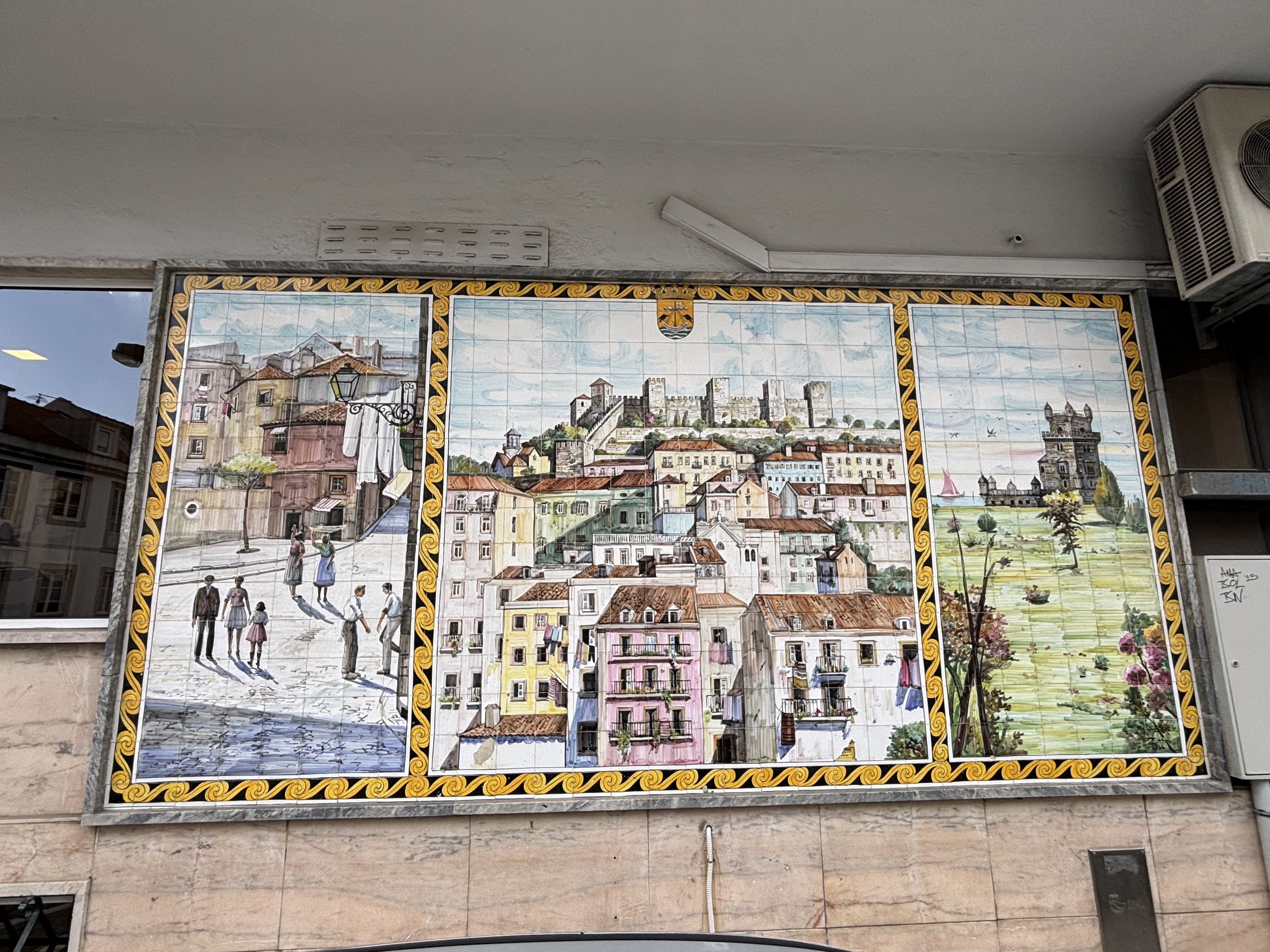
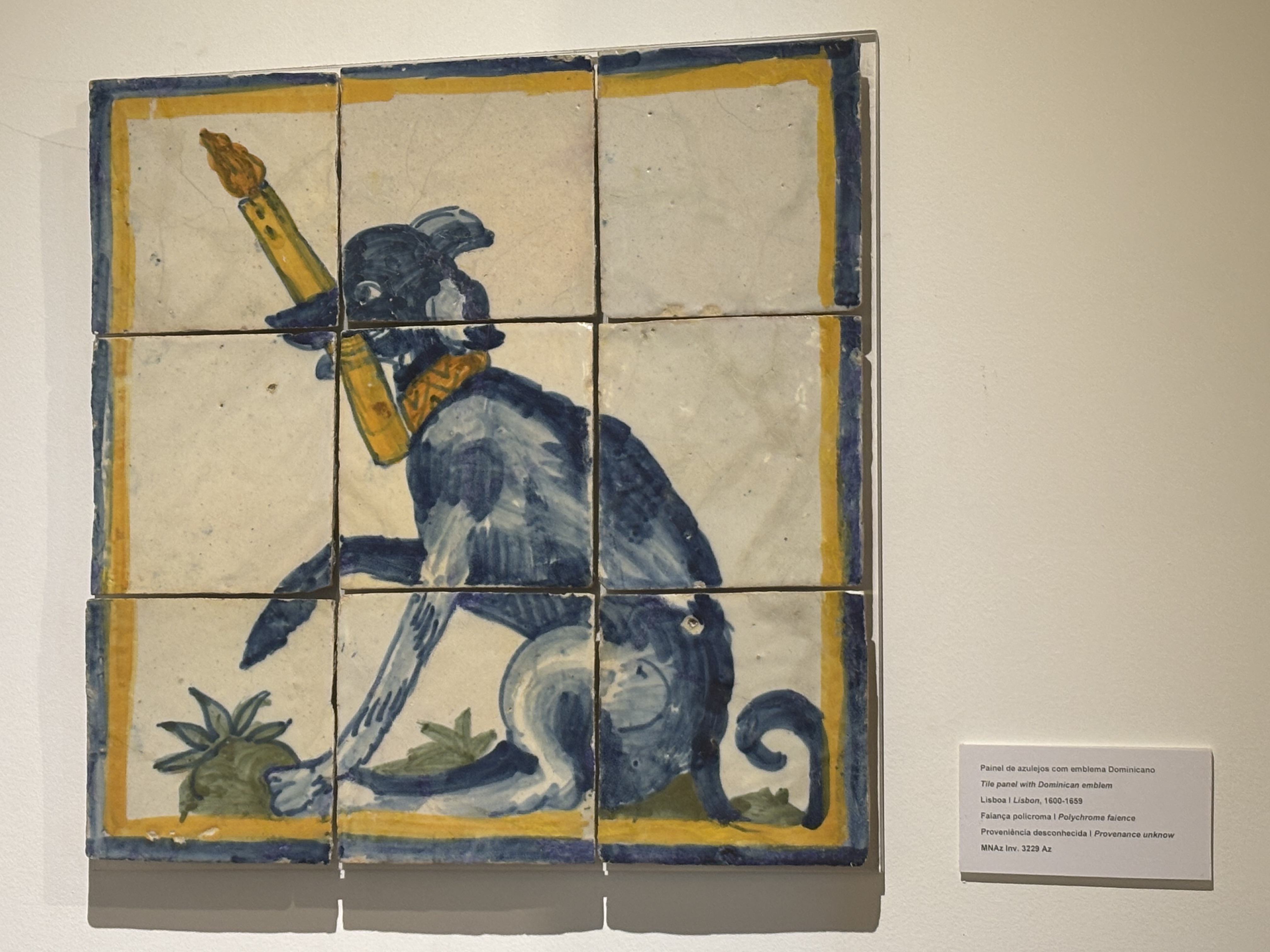
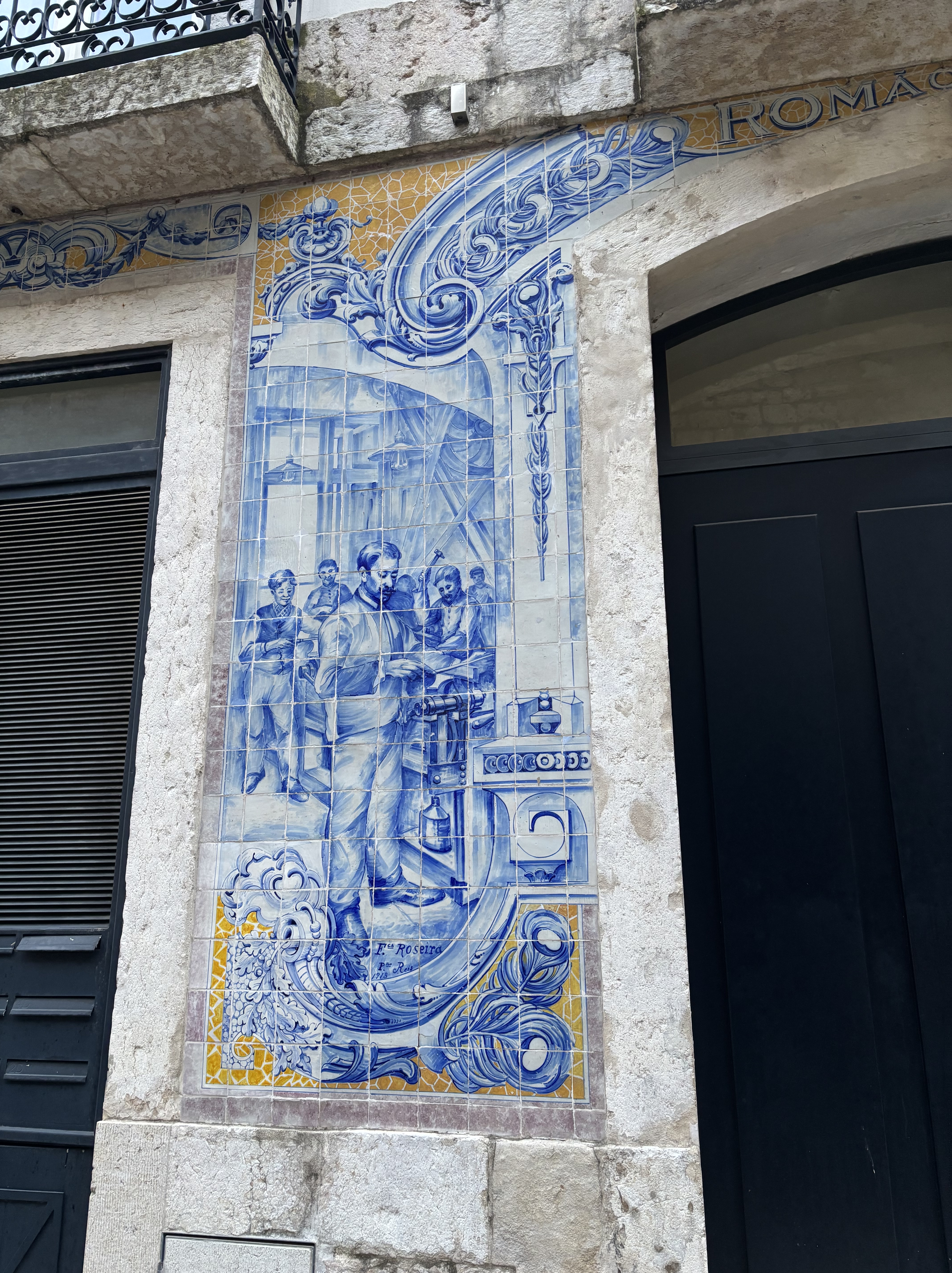
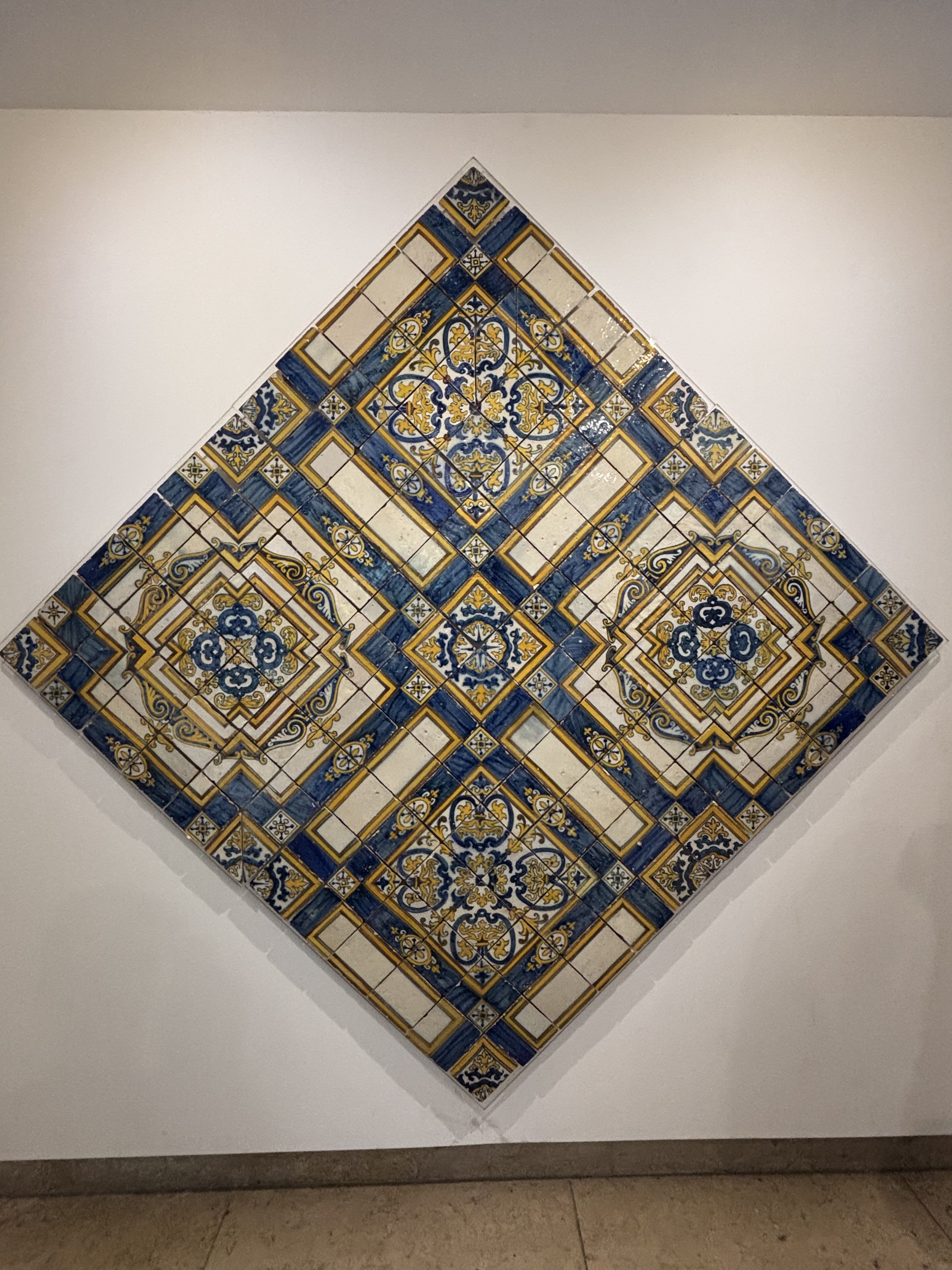
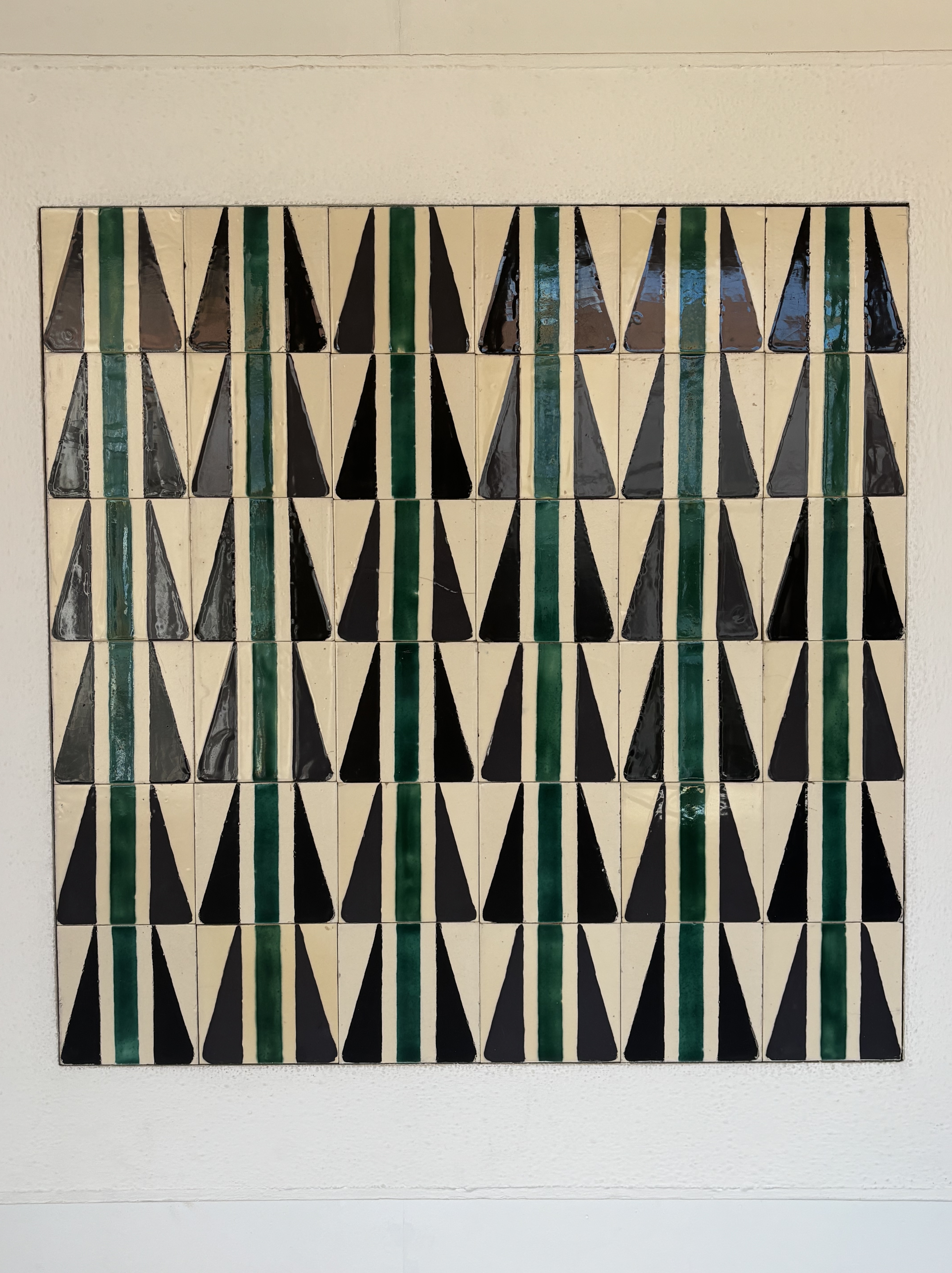
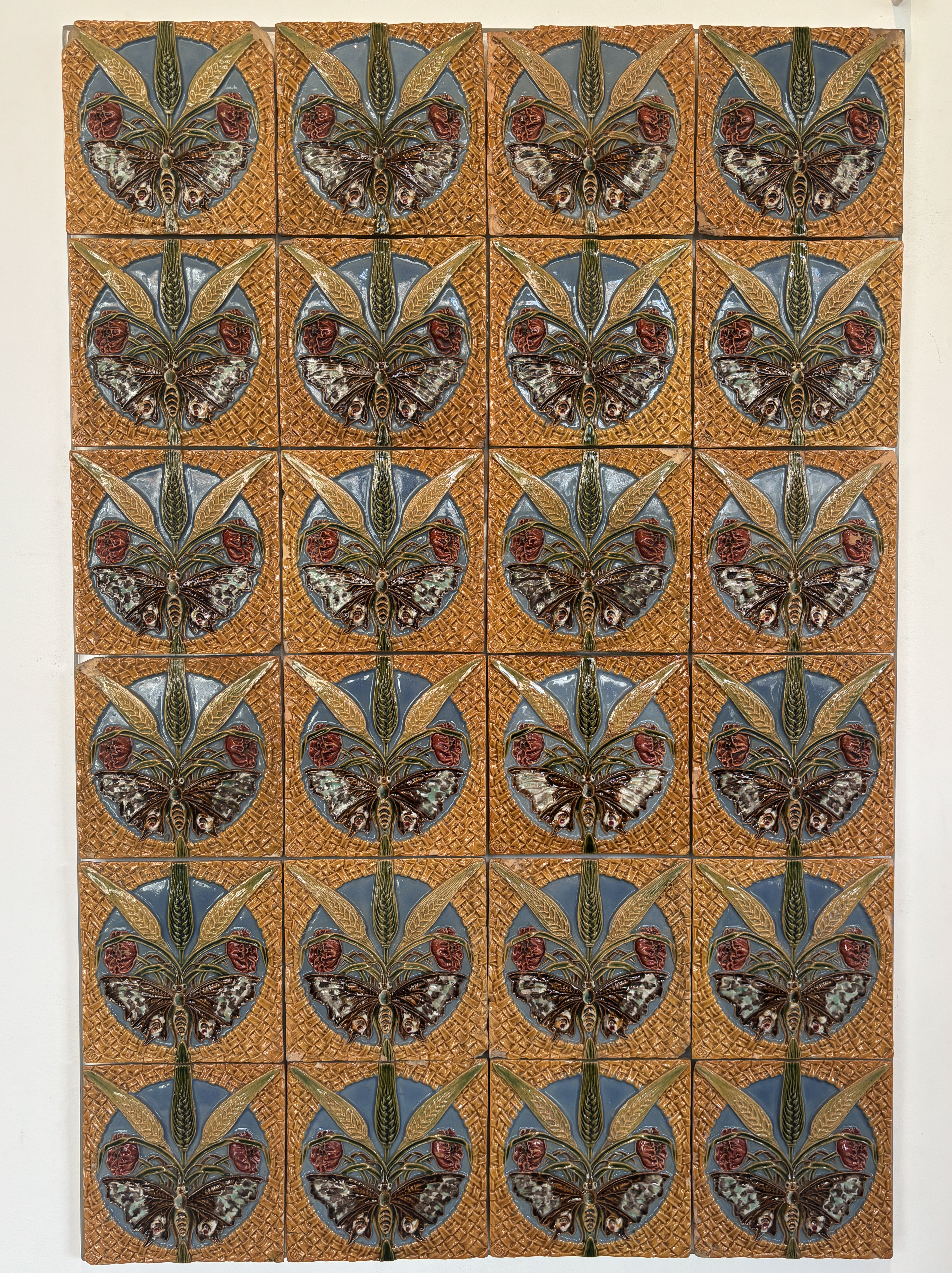
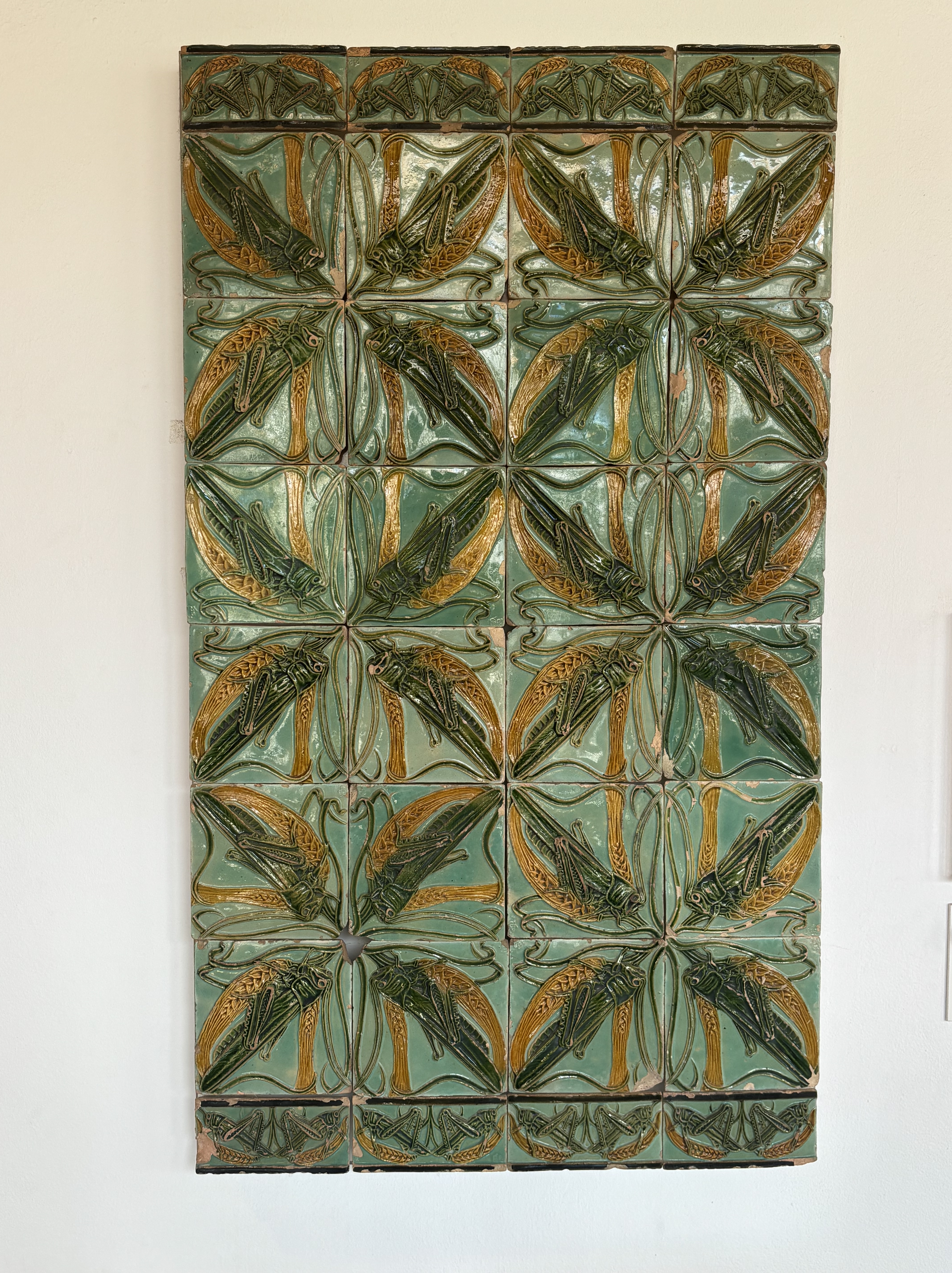
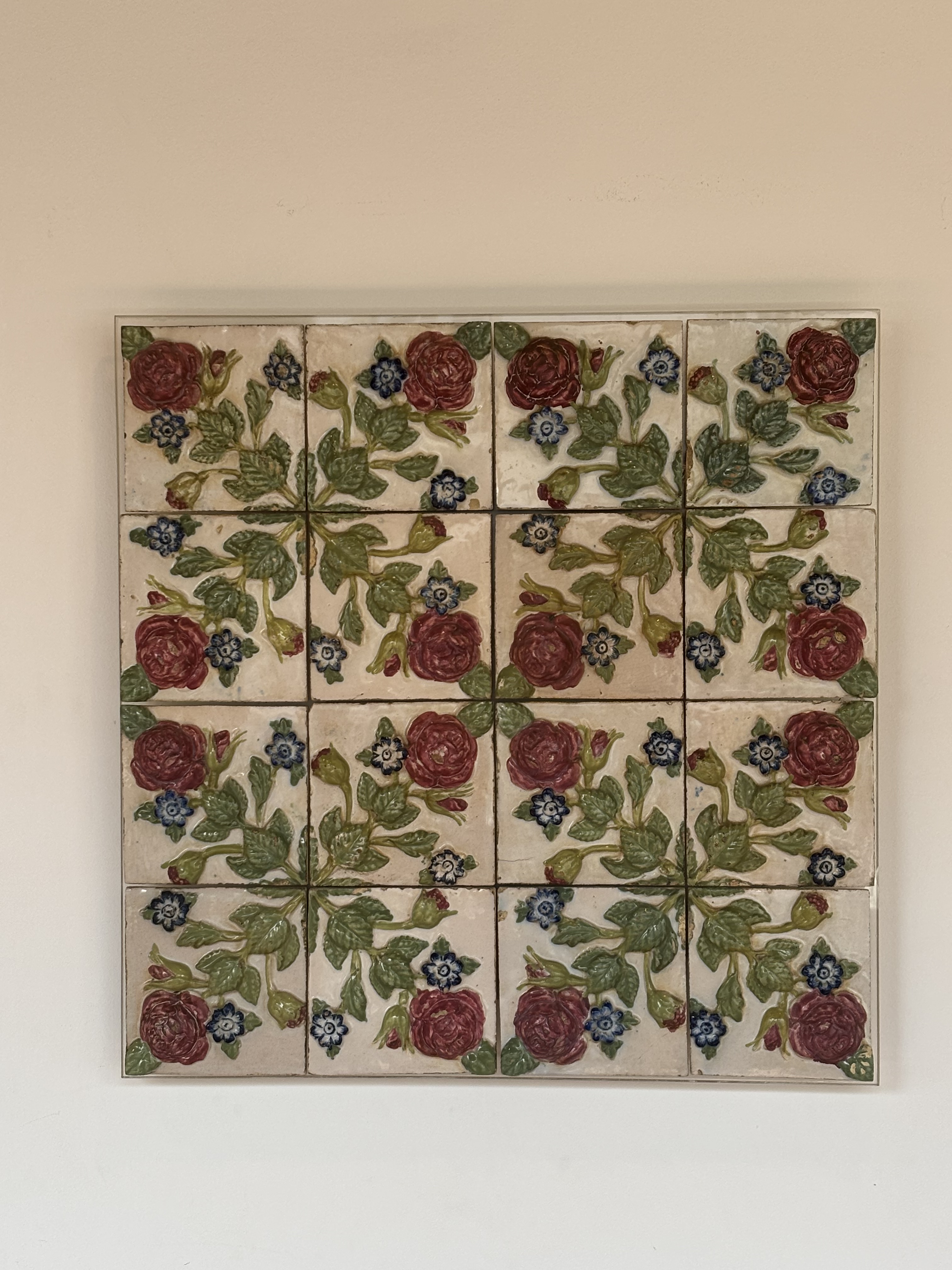
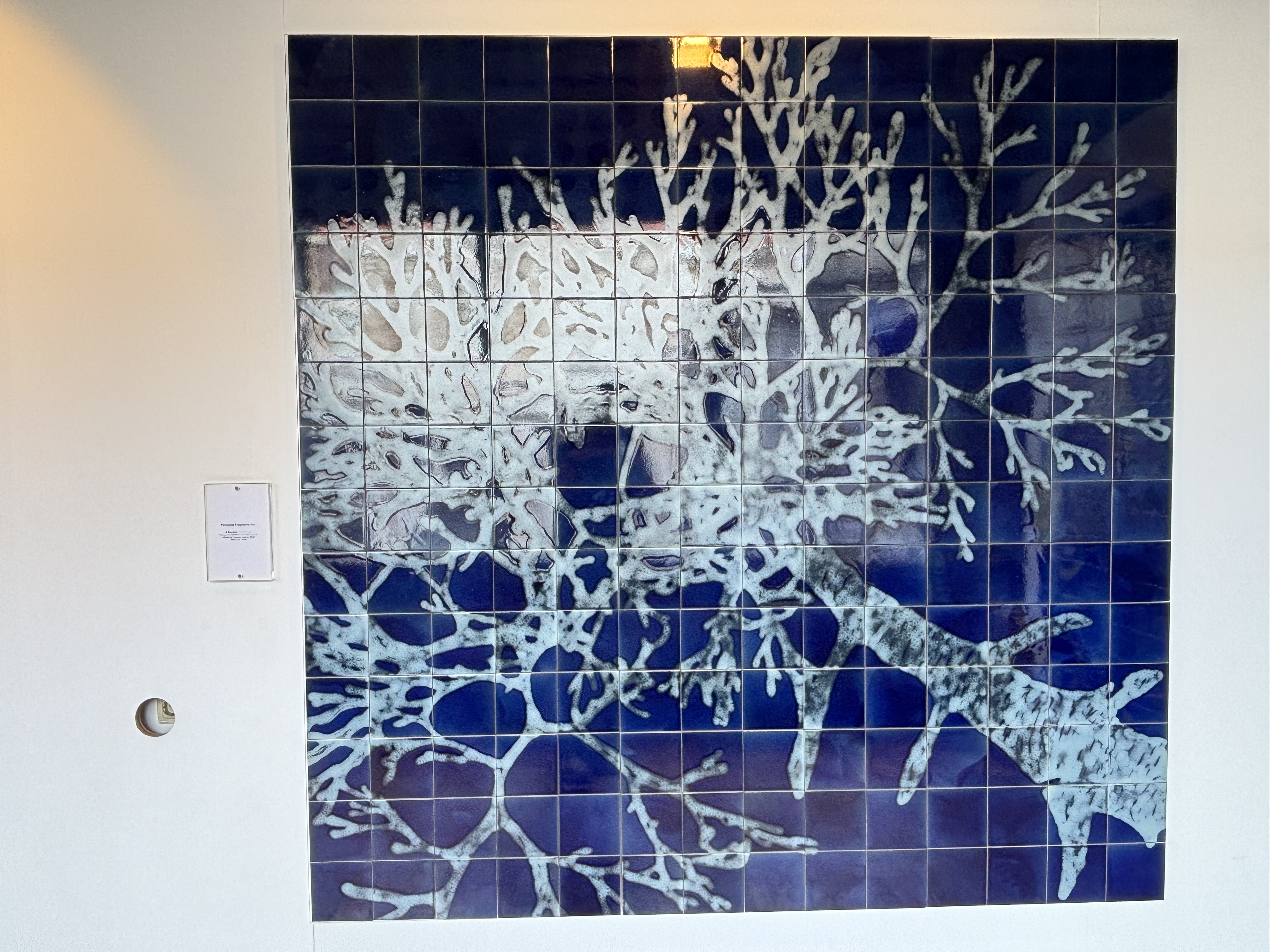
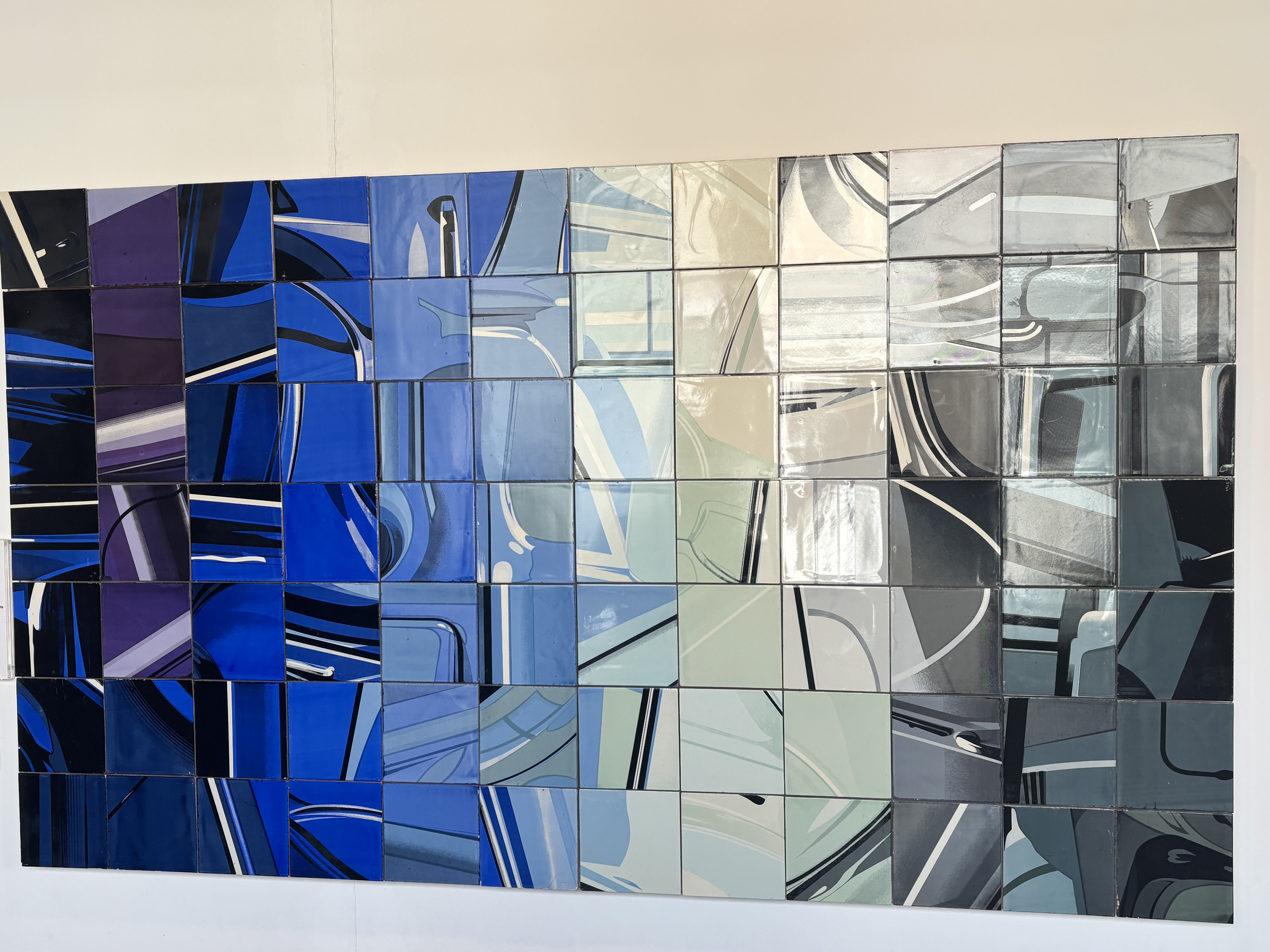
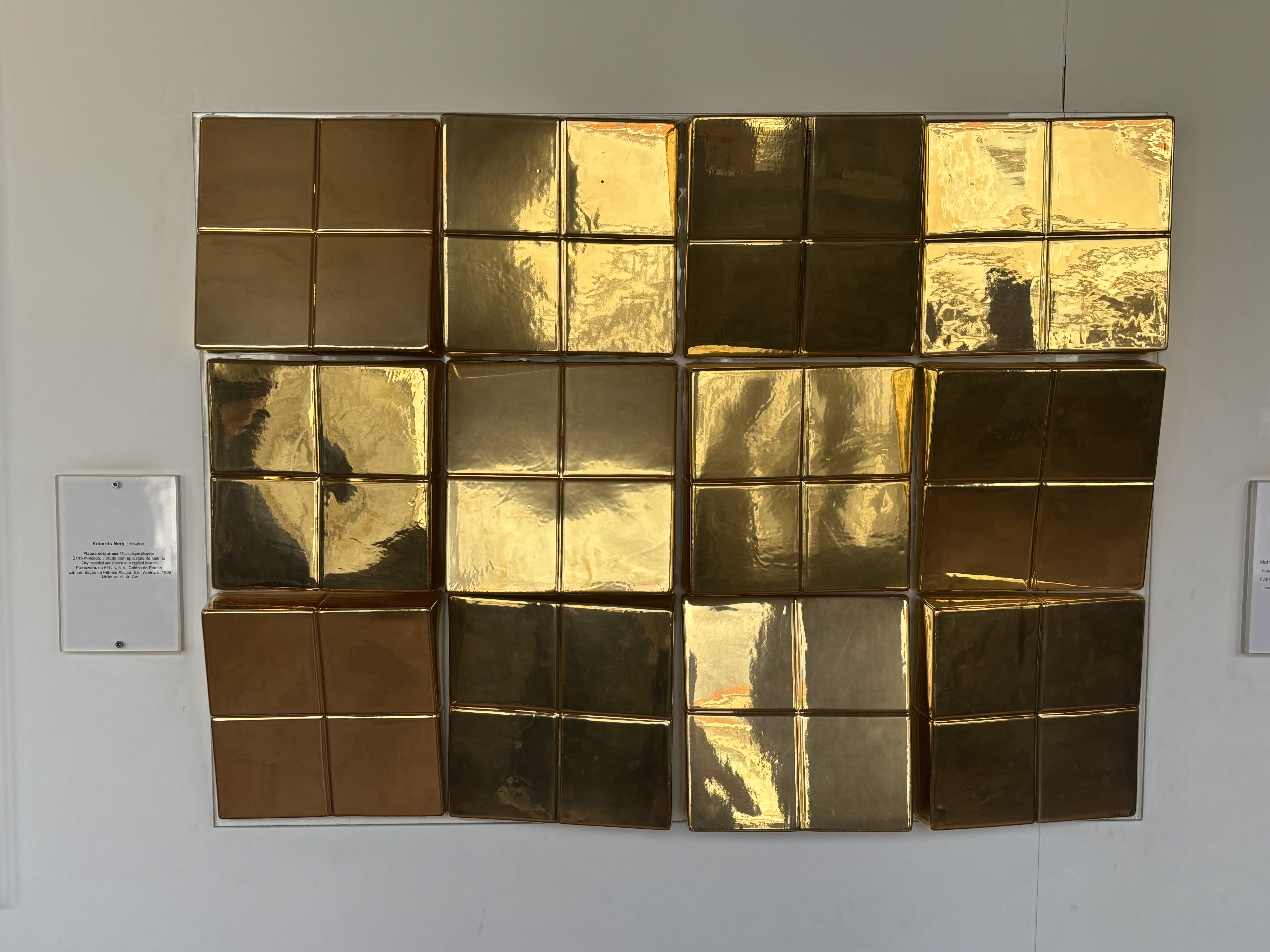
There is a long (roughly 1,000-year) history of decorative ceramic tiles in this city, dating back to the Moorish era. They also have some practical value due to their insulation and humidity control properties, but let’s be real. It’s all about the appearance. We have so thoroughly enjoyed seeing the mind-boggling variety of visually stunning tiles that we even visited the Museo do Azulejo (National Tile Museum) to learn more about the process of making the tiles and how the styles have changed over the centuries. The tiles really deserve a post of their own, but here are a few examples — old and new, functional and purely decorative.


In the end, I suspect the only reason our front door was repaired before we departed Lisbon (or this mortal coil) is because someone decided it was simply too unattractive to be ignored. Oddly enough, the contractor left the temporary door behind in the hallway when he was finished. As the saying goes, when one door closes . . . another door is left behind as a tripping hazard.
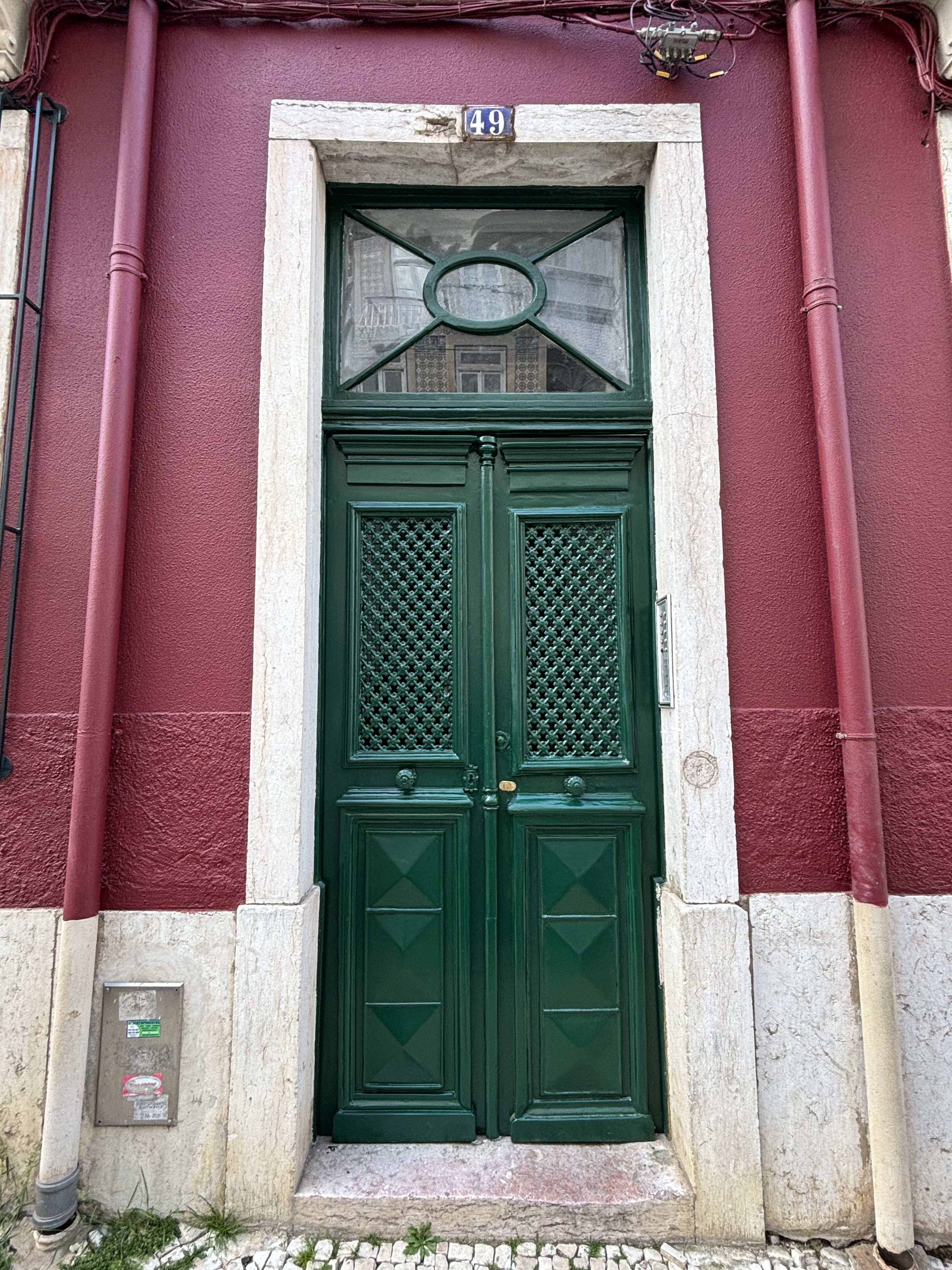

The finished product, inside and out.

 The Global Slowmad
Leave a comment