How did we choose the places we’re going to visit this year? The answer is somehow both more and less scientific than you might think.
In the early (pre-COVID) days of dreaming up our slow travel adventure, Stuart began putting together a list of places that might be fun to visit for an extended stay. This list eventually turned into a spreadsheet for almost 400 cities worldwide, with the following details about each:
| City | Country | Region | Primary Language Spoken |
| Weather (Best Time of Year) | Length of Permitted Stay without Visa | Cost of Living vs Tulsa (from Expatistan) | Cost of Living (Big Mac Index) |
| WHO Health Care Rank | UN Human Development Index Score | Safety Index Score | Global Peace Index Score |
| Social Progress Index Score | Happiness Index Score | Nomadlist Rank | # of Restaurants on TripAdvisor |
| Population | Daily AirBNB Rate – January | Daily AirBNB Rate – July | Darla Likes? (Y/N) |
Stuart’s hypothesis was that each of these data points represents something that impacts the livability of a given location. After compiling the source data, he developed a rating system that assigns a mathematical value to each item. This allowed him to come up with an objective ranking of each potential destination according to absolute desirability and relative value. Unfortunately, he since has figured out that some of these factors can change quickly in response to developments in the world (e.g., Ukraine, White Lotus), and it is quite time-consuming to update the source data, so it ended up being more of a point-in-time snapshot than any kind of reliable, long-term guide.
Putting together a spreadsheet like this is the sort of thing Stuart finds fun and might even be willing to trust to guide his major life decisions, but Darla is a little more practical. She’s not traveling to North Korea right now no matter how high it ranks on Stu’s silly little spreadsheet (it doesn’t, by the way). Ultimately, the spreadsheet really ends up being useful only as an initial screen; each potential destination also needs to feel right to both of us in a purely emotional, intuitive way.
We tend to prioritize places that we’ve never visited but occasionally will include someplace for nostalgia reasons (like our upcoming return to Scotland – the first place we traveled together overseas back in 1998).
We try to arrange our itinerary to group destinations that are in the same region to reduce the number of long-haul flights we have to endure. The timing of when we visit is dictated by travel visa eligibility, AirBNB availability and weather.
We don’t want to go through any lengthy visa approval process that is going to require us to visit an embassy or jeopardize our freedom of movement. For Europe, that means we must limit our time in the Schengen Zone (which basically amounts to continental Europe) to no more than 90 days out of any rolling 180-day period.
We also try to avoid peak tourist season and corresponding peak rental rates. For example, we decided to spend only a week at a minimally furnished aparthotel in Ireland this summer because the inventory of affordable short-term rentals was so limited. But we were excited to discover that we could afford an oceanfront property in Dubrovnik in October when there are fewer tourists.
Finally, it may seem trivial, but we both have grown sensitive to extreme heat and cold in our old age, so we simply don’t want to be anyplace that reasonably can be expected to average less than 55 or more than 85 degrees Fahrenheit during daylight hours. An intolerable climate is a deal-breaker for us. We like to be able to spend time outdoors when we travel, whether hiking in nature, wandering neighborhoods or sitting at a local café. An added bonus: it’s easier to pack when you’re only packing for good weather.
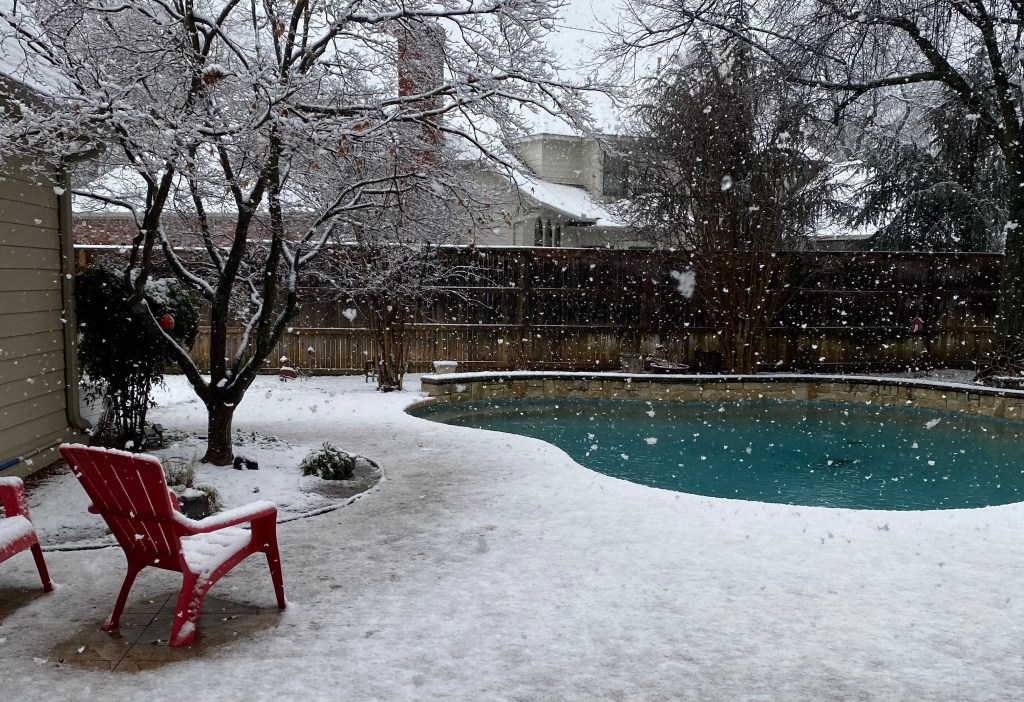
This is not the kind of weather we look for in a poolside vacation.


 The Global Slowmad
Leave a comment